

IN THE POND
15,11 €
Épuisé
EAN :
9780099429340
| Date de parution | 01/04/2001 |
|---|---|
| Poids | 110g |
| Largeur | 111mm |

Distributor Debug Info
| SKU: | 9780099429340 |
| wmi_id_distributeur: | Not set |
| Is Salable (from plugin): | Yes (In Stock) |
| Is Salable (direct MSI check): | Yes (In Stock) |
| Distributor Name: | Par défaut |
| Availability Value: | 0 |
| Availability Label: | Epuisé |
| Match Result: | |
| Default Availability (Config): | 0 - Epuisé |
| Raw Config Mapping: |
Array
(
    [_1772119784121_121] => Array
        (
            [id] => 12707000
            [name] => 12707000
            [availability] => 1
            [activation_attribute] => 1
        )

)
|
Plus d'informations
| EAN | 9780099429340 |
|---|---|
| Titre | IN THE POND |
| ISBN | 0099429349 |
| Auteur | JIN HA |
| Editeur | VINTAGE |
| Largeur | 111 |
| Poids | 110 |
| Date de parution | 20010401 |
| Nombre de pages | 0,00 € |
Pourquoi choisir Molière ?
Efficacité et rapidité Commandé avant 16h livré demain
Économique et pratique Livraison à domicile dès 5,10 €
Facile et sans frais Retrait gratuit en magasin
Sécurité et tranquillité Paiement 100 % sécurisé
Disponibilité et écoute Contactez-nous sur WhatsApp
Du même auteur
-
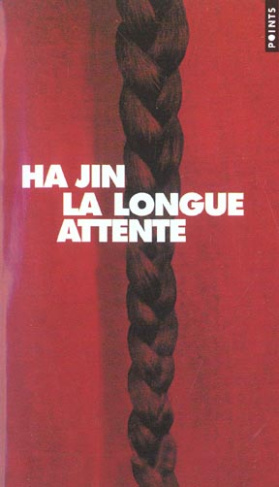
La longue attente
Médecin militaire à l'hôpital de Muji en Mandchourie, Lin Kong est tiraillé entre deux femmes incarnant deux mondes diamétralement opposés: Shuyu, l'épouse que ses parents lui ont choisie jadis, une humble paysanne aux pieds bandés qui tient sa maison et élève leur fille dans son village natal, et Manna Wu, une jeune collègue infirmière éduquée et moderne qui lui inspire un amour passionnel. Mais il doit réprimer les élans de son c?ur, puisque le respect des traditions lui impose de préserver son mariage sans amour et qu'un adultère découvert par les cadres du Parti briserait sa carrière. En conscience, il décide finalement d'aller demander le divorce à son épouse à l'occasion de sa permission estivale. Pendant dix-sept longues années, à chaque retour au village, Lin Kong renouvellera en vain sa demande... Avec pour toile de fond, de 1966 à 1983, une Chine attachée à ses traditions séculaires autant qu'opprimée par la bureaucratie communiste, La Longue Attente explore par touches délicates les affres des amours contrariées face à l'impitoyable marche du temps. Puisant avec subtilité dans son expérience personnelle - vingt ans d'histoire de la Chine et du maoïsme dans une petite ville et dans la vie quotidienne, avec absence de liberté, pénurie de nourriture et de matériel, surveillance permanente, bureaucratie paralysante - c'est le dilemme poignant d'un homme ordinaire que Ha Jin s'attache à décrire, un homme qui passe à côté de l'existence simplement parce qu'il essaie de faire son devoir: d'abord celui que lui dictent la tradition et ses parents, ensuite celui que définit le Parti. Mais ce régime totalitaire qui rend inapte à prendre une décision, à organiser sa vie, qui paralyse la personnalité, ne tue ni n'efface les sentiments profonds, amour, jalousie, violence. Un très beau roman qui explore par touches délicates les affres des amours contrariées face à l'impitoyable marche du temps.ÉPUISÉVOIR PRODUIT7,10 € -
L'ECRIVAIN COMME MIGRANT
Résumé : Le périple de Ha Jin est riche de questions fascinantes sur le langage, l'immigration et la place de la littérature, au sein de nos sociétés en proie à une mondialisation galopante, toutes questions qui occupent une place prépondérante dans L'Ecrivain comme migrant, sa première oeuvre non romanesque. Composé de trois essais, ce livre place la vie et l'ceuvre de Ha Jin en parallèle de celles d'autres exilés littéraires, faisant ainsi naître une conversation entre les cultures et les époques. Il fait référence aux cas d'Alexandre Soljenitsyne et du romancier chinois Lin Yutang, afin d'illustrer la loyauté de l'écrivain envers le pays qui l'a vu naître, tandis que Joseph Conrad et Vladimir Nabokov, qui ont, comme Ha Jin, choisi d'écrire en anglais, sont mis à contribution lors de l'examen du choix conscient d'une langue d'écriture par l'écrivain immigré. Un dernier essai fait appel à V. S. Naipaul et Milan Kundera, afin d'étudier de quelles manières notre époque en perpétuel changement pousse un écrivain immigré à repenser le concept même de patrie. Au fil de la plume, Ha Jin invite d'autres figures littéraires à rejoindre la conversation, comme W. G. Sebald, C. P. Cavafy et Salman Rushdie, altérant et affinant le concept même de littérature d'immigration. A la fois réflexion sur un thème essentiel à l'époque de la mondialisation et fascinant aperçu des écrivains qui peuplent la bibliothèque mentale de Ha Jin, L'Ecrivain comme migrant est une oeuvre critique passionnément engagée, puisant ses racines dans l'exil, mais lui ouvrant également de nouveaux horizons.ÉPUISÉVOIR PRODUIT15,00 € -
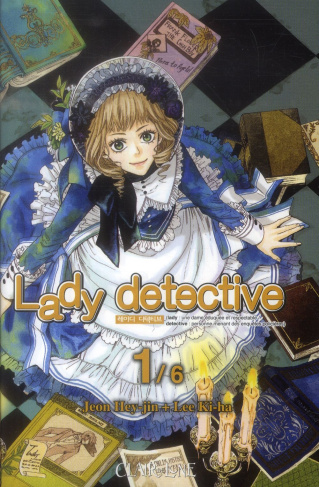
Lady détective/1/
Revue de presse Londres, 1864. Alors que la ville profite de son rayonnement mondial avec les expositions universelles, une grande demeure aristocratique bascule dans le drame avec la mort d'un jeune homme, Sir Thomas. Il revenait tout juste d'une guerre pour découvrir que sa fiancée s'est mariée avec un autre homme. La mise en scène ressemble étonnamment à celle du héros du livre Les Souffrances du jeunes Werther, et la pièce où son cadavre a été retrouvé était fermée de l'intérieur. Tout semble désigner un suicide romantique, c'est en tout cas ce que tout le monde conclut... Tout le monde, sauf une jeune Lady, Elisabeth Newton. Présente sur les lieux au moment de la mort de Sir Thomas, elle déduit très rapidement que ce suicide apparent cache en réalité un meurtre savamment orchestré. Et même si personne ne veut la croire parce qu'elle est une Lady, elle est bien décidée, accompagnée de son majordome l'énigmatique Edwin White, à découvrir la vérité !Les récits d'époque sont souvent un plaisir à suivre, d'autant plus quand ils sont aussi bien emballés que ce Lady Détective, la série de Jeon Hey-Jin et Lee Ki-Ha étant séduisante à plus d'un égard.On entre très vite dans le vif du sujet, en découvrant avec délice Elisabeth, alias Lizzie, une Lady décidément pas comme les autres de son époque. Quand la plupart des femmes aristocrates se contentent de vivre dans l'oisiveté avec insouciance, notre héroïne, elle, se passionne pour les livres, et est elle-même une écrivaine à succès... Seulement, loin des romances et drames passionnels des autres femmes auteures de son époque, elle a préféré se spécialiser dans l'écriture de polars, et c'est surtout dans ce cadre, pour trouver l'inspiration, qu'elle choisit de lever le voile sur le meurtre de Sir Thomas ! Pour cela, elle ne va pas hésiter à aller à l'encontre de ce que voudrait la bienséance pour une Lady, et c'est donc en tripotant allègrement la scène du crime (au point de mettre son doigt dans la blessure du cadavre) et en faisant quelques expériences qu'elle va parvenir à remonter vers la vérité, le tout sous les yeux d'un inspecteur de police qui n'en croit pas yeux, tant la demoiselle met à mal toutes ses convictions sur la logique féminine et sur l'intérêt des femmes.Il faut aussi dire que Lizzie est bien aidée par son majordome, Edwin White, un homme qui forme avec elle un duo aussi plaisant que détonnant. Car sous couvert d'être son majordome, le jeune homme est surtout un ancien avocat extrêmement brillant ayant eu 30 victoires consécutives. Beau et intelligent, il évite certains écueils et captive autant que Lizzie, principalement dans la manière qu'il a de se comporter avec celle-ci. Plus que l'enquête, c'est d'ailleurs cette relation entre les deux héros qui intrigue le plus, et c'est notamment à travers le regard de l'inspecteur que l'on on vient à être très intrigué par ce lien par toujours très net. Un lien visiblement loin de tout amour, avec une Lizzie qui déclare clairement ne pas aimer son majordome qui doit rester à sa place, et un Edwin veillant sur elle plus comme un grand frère et précepteur que comme un potentiel fiancé. Mais un lien néanmoins très étroit, comme le laissent entrevoir les premières informations sur le passé respectif et commun de ces deux être au parcours plutôt atypique dans la haute société londonienne.L'enquête est rondement menée, les personnages principaux sont bourrés de charme et hauts en couleur, mais tout ça ne serait rien sans un excellent background, qui nous plonge avec talent dans le Londres de l'époque. Constamment, les auteures s'appliquent autant à retranscrire le contexte historique de l'époque (surtout dans le milieu aristocratique, mais nous avons aussi une certaine immersion dans des recoins plus pauvres) que certaines mentalités d'alors (la place des femmes, notamment), en passant par l'évocation de plusieurs grands noms anglais et de nombreuses références littéraires ou scientifiques, le tout ayant souvent un véritable rôle à jouer dans la poursuite de l'enquête... En bref, c'est très intéressant en plus d'être très bien huilé !L'ambiance voulue par les auteures est clairement emprunte de légèreté. L'humour, qu'il soit un peu bête, un brin noir (aaah, Lizzie et son doigt dans la plaie du cadavre) ou qu'il se repose sur les personnages, est très présent. Le trait est clair et expressif, mais ne lésine pas pour autant sur des robes, costumes, intérieurs et accessoires d'époque plutôt plaisants. Reste un problème lié au trames, celles-ci étant régulièrement bizarrement utilisée, sentiment sans doute renforcé par une qualité d'impression loin d'être exceptionnelle.Par contre, au-delà de cette qualité d'impression moyenne, le reste de l'édition est plutôt plaisant, surtout en ce qui concerne la traduction, franchement fluide et agréable, et ne comportant que très peu de coquilles, la plus importante étant le nom de l'héroïne, écrit "Elisabeth" alors que sa carte de visite affiche clairement "Elizabeth" avec un "z". Il faudra toutefois accepter de payer 7,95€ pour un petit format à l'impression moyenne, mais la lecture en vaut clairement le coup. (Critique de www.manga-news.com)ÉPUISÉVOIR PRODUIT7,95 € -
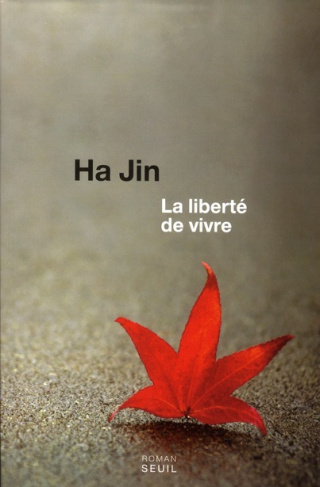
La liberté de vivre
Nan Wu, venu aux États-Unis pour préparer un doctorat avant de rentrer en Chine enseigner, voitses projets bouleversés par la répression de Tian?anmen. Résolu à ce que son fils grandisse loin deson pays natal et de sa violence endémique, Nan abandonne ses études et fait venir auprès de luifemme et enfant. À force de sacrifices et d?efforts, il parvient à racheter un restaurant et unemaison, mais cette apparente réussite sociale ne le guérit pas de ses deux blessures fondamentales: l?absence de passion pour son épouse et ses ambitions de poète, qui cèdent régulièrement devant les contraintes professionnelles et sociales qu?il s?impose par peur du lendemain.Cinquième roman de Ha Jin, La Liberté de vivre est le premier à se dérouler hors de Chine. On yretrouve sa profonde humanité et son style épuré, qui sert aussi bien les descriptions pastoralesque le récit détaillé des vicissitudes d?une vie à la fois banale dans son quotidien et exceptionnelledans son parcours. On y découvre en outre une critique acerbe des deux modèles sociaux entrelesquels est déchiré le héros et une série de vignettes attachantes qui s?assemblent en une fresqueépique où la nostalgie le dispute à l?énergie créatrice. Cette mosaïque de lieux et de personnagescompose le grand roman qui restait à écrire sur la vie quotidienne des Sino-Américains.ÉPUISÉVOIR PRODUIT24,30 €


Du même éditeur
-

BELOVED BELOVED
Extrait I124 WAS SPITEFUL. Full of a baby's venom. The women in the house knew it and so did the children. For years each put up with the spite in his own way, but by 1873 Sethe and her daughter Denver were its only victims. The grandmother, Baby Suggs, was dead, and the sons, Howard and Buglar, had run away by the time they were thirteen years old--as soon as merely looking in a mirror shattered it (that was the signal for Buglar); as soon as two tiny band prints appeared in the cake (that was it for Howard). Neither boy waited to see more; another kettleful of chickpeas smoking in a heap on the floor; soda crackers crumbled and strewn in a line next to the doorsill. Nor did they wait for one of the relief periods: the weeks, months even, when nothing was disturbed. No. Each one fled at once--the moment the house committed what was for him the one insult not to be borne or witnessed a second time. Within two months, in the dead of winter, leaving their grandmother, Baby Suggs; Sethe, their mother; and their little sister, Denver, all by themselves in the gray and white house on Bluestone Road. It didn't have a number then, because Cincinnati didn't stretch that far. In fact, Ohio had been calling itself a state only seventy years when first one brother and then the next stuffed quilt packing into his hat, snatched up his shoes, and crept away from the lively spite the house felt for them.Baby Suggs didn't even raise her head. From her sickbed she heard them go but that wasn't the reason she lay still. It was a wonder to her that her grandsons had taken so long to realize that every house wasn't like the one on Bluestone Road. Suspended between the nastiness of life and the meanness of the dead, she couldn't get interested in leaving life or living it, let alone the fright of two creeping-off boys. Her past had been like her present--intolerable--and since she knew death was anything but forgetfulness, she used the little energy left her for pondering color."Bring a little lavender in, if you got any. Pink, if you don't."And Sethe would oblige her with anything from fabric to her own tongue. Winter in Ohio was especially rough if you had an appetite for color. Sky provided the only drama, and counting on a Cincinnati horizon for life's principal joy was reckless indeed. So Sethe and the girl Denver did what they could, and what the house permitted, for her. Together they waged a perfunctory battle against the outrageous behavior of that place; against turned-over slop jars, smacks on the behind, and gusts of sour air. For they understood the source of the outrage as well as they knew the source of light.Baby Suggs died shortly after the brothers left, with no interest whatsoever in their leave-taking or hers, and right afterward Sethe and Denver decided to end the persecution by calling forth the ghost that tried them so. Perhaps a conversation, they thought, an exchange of views or something would help. So they held hands and said, "Come on. Come on. You may as well just come on."The sideboard took a step forward but nothing else did."Grandma Baby must be stopping it," said Denver. She was ten and still mad at Baby Suggs for dying.Sethe opened her eyes. "I doubt that," she said."Then why don't it come?""You forgetting how little it is," said her mother. "She wasn't even two years old when she died. Too little to understand. Too little to talk much even.""Maybe she don't want to understand," said Denver."Maybe. But if she'd only come, I could make it clear to her." Sethe released her daughter's hand and together they pushed the sideboard back against the wall. Outside a driver whipped his horse into the gallop local people felt necessary when they passed 124."For a baby she throws a powerful spell," said Denver."No more powerful than the way I loved her," Sethe answered and there it was again. The welcoming cool of unchiseled headstones; the one she selected to lean against on tiptoe, her knees wide open as any grave. Pink as a fingernail it was, and sprinkled with glittering chips. Ten minutes, he said. You got ten minutes I'll do it for free.Ten minutes for seven letters. With another ten could she have gotten "Dearly" too? She had not thought to ask him and it bothered her still that it might have been possible--that for twenty minutes, a half hour, say, she could have had the whole thing, every word she heard the preacher say at the funeral (and all there was to say, surely) engraved on her baby's headstone: Dearly Beloved. But what she got, settled for, was the one word that mattered. She thought it would be enough, rutting among the headstones with the engraver, his young son looking on, the anger in his face so old; the appetite in it quite new. That should certainly be enough. Enough to answer one more preacher, one more abolitionist and a town full of disgust.Counting on the stillness of her own soul, she had forgotten the other one: the soul of her baby girl. Who would have thought that a little old baby could harbor so much rage? Rutting among the stones under the eyes of the engraver's son was not enough. Not only did she have to live out her years in a house palsied by the baby's fury at having its throat cut, but those ten minutes she spent pressed up against dawn-colored stone studded with star chips, her knees wide open as the grave, were longer than life, more alive, more pulsating than the baby blood that soaked her fingers like oil."We could move," she suggested once to her mother-in-law."What'd be the point?" asked Baby Suggs. "Not a house in the country ain't packed to its rafters with some dead Negro's grief. We lucky this ghost is a baby. My husband's spirit was to come back in here? or yours? Don't talk to me. You lucky. You got three left. Three pulling at your skirts and just one raising hell from the other side. Be thankful, why don't you? I had eight. Every one of them gone away from me. Four taken, four chased, and all, I expect, worrying somebody's house into evil." Baby Suggs rubbed her eyebrows. "My firstborn. All I can remember of her is how she loved the burned bottom of bread. Can you beat that? Eight children and that's all I remember.""That's all you let yourself remember," Sethe had told her, but she was down to one herself--one alive, that is--the boys chased off by the dead one, and her memory of Buglar was fading fast. Howard at least had a head shape nobody could forget. As for the rest, she worked hard to remember as close to nothing as was safe. Unfortunately her brain was devious. She might be hurrying across a field, running practically, to get to the pump quickly and rinse the chamomile sap from her legs. Nothing else would be in her mind. The picture of the men coming to nurse her was as lifeless as the nerves in her back where the skin buckled like a washboard. Nor was there the faintest scent of ink or the cherry gum and oak bark from which it was made. Nothing. Just the breeze cooling her face as she rushed toward water. And then sopping the chamomile away with pump water and rags, her mind fixed on getting every last bit of sap off--on her carelessness in taking a shortcut across the field just to save a half mile, and not noticing how high the weeds had grown until the itching was all the way to her knees. Then something. The plash of water, the sight of her shoes and stockings awry on the path where she had flung them; or Here Boy lapping in the puddle near her feet, and suddenly there was Sweet Home rolling, rolling, rolling out before her eyes, and although there was not a leaf on that farm that did not make her want to scream, it rolled itself out before her in shameless beauty. It never looked as terrible as it was and it made her wonder if hell was a pretty place too. Fire and brimstone all right, but hidden in lacy groves. Boys hanging from the most beautiful sycamores in the world. It shamed her--remembering the wonderful soughing trees rather than the boys. Try as she might to make it otherwise, the sycamores beat out the children every time and she could not forgive her memory for that.When the last of the chamomile was gone, she went around to the front of the house, collecting her shoes and stockings on the way. As if to punish her further for her terrible memory, sitting on the porch not forty feet away was Paul D, the last of the Sweet Home men. And although she could never mistake his face for another's, she said, "Is that you?""What's left." He stood up and smiled. "How you been, girl, besides barefoot?"When she laughed it came out loose and young. "Messed up my legs back yonder. Chamomile."He made a face as though tasting a teaspoon of something bitter. "I don't want to even hear 'bout it. Always did hate that stuff."Sethe balled up her stockings and jammed them into her pocket. "Come on in.""Porch is fine, Sethe. Cool out here." He sat back down and looked at the meadow on the other side of the road, knowing the eagerness he felt would be in his eyes."Eighteen years," she said softly."Eighteen," he repeated. "And I swear I been walking every one of em. Mind if I join you?" He nodded toward her feet and began unlacing his shoes."You want to soak them? Let me get you a basin of water." She moved closer to him to enter the house."No, uh uh. Can't baby feet. A whole lot more tramping they got to do yet.""You can't leave right away, Paul D. You got to stay awhile.""Well, long enough to see Baby Suggs, anyway. Where is she?"''Dead.''"Aw no. When?""Eight years now. Almost nine.""Was it hard? I hope she didn't die hard."Sethe shook her head. "Soft as cream. Bein... --Ce texte fait référence à une édition épuisée ou non disponible de ce titre.ÉPUISÉVOIR PRODUIT13,60 € -
-
POWERBOOK
Résumé : An e-writer called Ali or Alix will write to order anything you like, provided that you are prepared to enter the story as yourself I and take the risk of leaving it as someone else. You can be the hero of your own life. You can have freedom just for one night. But there is a price. Ali discovers that she too will have to pay it. Set in London, Paris, Capri and Cyberspace, this is a book that reinvents itself as it travels. Using cover-versions, fairy tales, contemporary myths and popular culture, The PowerBook works at the intersection between the real and the imagined. It's territory is you.ÉPUISÉVOIR PRODUIT15,11 € -
BIOGRAPHER S TALE
Extrait I made my decision, abruptly, in the middle of one of Gareth Butcher's famous theoretical seminars. He was quoting Empedocles, in his plangent, airy voice. "Here sprang up many faces without necks, arms wandered without shoulders, unattached, and eyes strayed alone, in need of foreheads." He frequently quoted Empedocles, usually this passage. We were discussing, not for the first time, Lacan's theory of morcellement, the dismemberment of the imagined body. There were twelve postgraduates, including myself, and Professor Ormerod Goode. It was a sunny day and the windows were very dirty. I was looking at the windows, and I thought, I’m not going to go on with this anymore. Just like that. It was May 8th 1994. I know that, because my mother had been buried the week before, and I'd missed the seminar on Frankenstein.I don't think my mother's death had anything to do with my decision, though as I set it down, I see it might be construed that way. It's odd that I can't remember what text we were supposed to be studying on that last day. We'd been doing a lot of not-too-long texts written by women. And also quite a lot of Freud—we'd deconstructed the Wolf Man, and Dora. The fact that I can't remember, though a little humiliating, is symptomatic of the “reasons” for my abrupt decision. All the seminars, in fact, had a fatal family likeness. They were repetitive in the extreme. We found the same clefts and crevices, transgressions and disintegrations, lures and deceptions beneath, no matter what surface we were scrying. I thought, next we will go on to the phantasmagoria of Bosch, and, in his incantatory way, Butcher obliged. I went on looking at the filthy window above his head, and I thought, I must have things. I know a dirty window is an ancient, well-worn trope for intellectual dissatisfaction and scholarly blindness. The thing is, that the thing was also there. A real, very dirty window, shutting out the sun. A thing.I was sitting next to Ormerod Goode. Ormerod Goode and Gareth Butcher were joint Heads of Department that year, and Goode, for reasons never made explicit, made it his business to be present at Butcher's seminars. This attention was not reciprocated, possibly because Goode was an Anglo-Saxon and Ancient Norse expert, specialising in place-names. Gareth Butcher did not like dead languages, and was not proficient in living ones. He read his Foucault and Lacan in translation, like his Heraclitus and his Empedocles. Ormerod Goode contributed little to the seminars, beyond corrections of factual inaccuracies, which he noticed even when he appeared to be asleep. No one cared much for these interventions. Inaccuracies can be subsumed as an inevitable part of postmodern uncertainty, or play, one or the other or both.I liked sitting next to Goode—most of the other students didn't—because he made inscrutable notes in ancient runes. Also he drew elaborate patterns of carved, interlaced plants and creatures—Celtic, Viking, I didn't know—occasionally improper or obscene, always intricate. I liked the runes because I have always liked codes and secret languages, and more simply, because I grew up on Tolkien. I suppose, if the truth were told, I should have to confess that I ended up as a postgraduate student of literature because of an infantile obsession with Gandalf's Middle Earth. I did like poetry too, and I did—in self-defence—always know Tolkien's poems weren't the real thing. I remember discovering T. S. Eliot. And then Donne and Marvell. Long ago and far away. I don't know, to this day, if Ormerod Goode loved or despised Tolkien. Tolkien's people are sexless and Goode's precisely shadowed graffiti were anything but. Plaisir, consommation, jouissance. Glee. He was—no doubt still is—a monumentally larger man. He has a round bald cranium, round gold glasses round round, darkly brown eyes, a round, soft mouth, several chins, a round belly carried comfortably on pillars of legs between columnar arms. I think of him, always, as orotund Ormerod Goode, adding more Os to his plethora, and a nice complex synaesthetic metaphor—an accurate one—to my idea of him. Anyway, there I was, next to him, when I made my decision, and when I took my eyes away from the dirty glass there was his BB pencil, hovering lazily, tracing a figleaf, a vine, a thigh, hair, fingers, round shiny fruit.I found myself walking away beside him, down the corridor, when it was over. I felt a need to confirm my decision by telling someone about it. He walked with a rapid sailing motion, lightly for such a big man. I had almost to run to keep up with him. I should perhaps say, now, that I am a very small man. "Small but perfectly formed" my father would say, several times a day, before his disappearance. He himself was not much bigger. The family name is Nanson; my full name is Phineas Gilbert Nanson—I sign myself always Phineas G. Nanson. When I discovered—in a Latin class when I was thirteen—that nanus was the Latin for dwarf, cognate with the French nain, I felt a frisson of excited recognition. I was a little person, the child of a little person, I had a name in a system, Nanson. I have never felt anything other than pleasure in my small, delicate frame. Its only disadvantage is the number of cushions I need to see over the dashboard when driving. I am adept and nimble on ladders. But keeping up with Ormerod Goode's lazy pace was a problem. I said, into his wake, "I have just made an important decision."He stopped. His moon-face considered mine, thoughtfully."I have decided to give it all up. I’ve decided I don’t want to be a postmodern literary theorist.""We should drink to that," said Ormerod Goode. "Come into my office."His office, like the rest of our run-down department, had dirty windows, and a dusty, no-coloured carpet. It also had two high green leather wing-chairs, a mahogany desk and a tray of spotless glasses which he must have washed himself. He produced a bottle of malt whisky from a bookcase. He poured us each a generous glass, and enquired what had led to this decision, and was it as sudden as it appeared. I replied that it had seemed sudden, at least had surprised me, but that it appeared to be quite firm. "You may be wise," said Ormerod Goode. "Since it was a bolt from the blue, I take it you have no ideas about what you will do with the open life that now lies before you?"I wondered whether to tell him about the dirty window. I said, "I felt an urgent need for a life full of things." I was pleased with the safe, solid Anglo-Saxon word. I had avoided the trap of talking about "reality" and "unreality" for I knew very well that postmodernist literary theory could be described as a reality. People lived in it. I did, however, fatally, add the Latin-derived word, less exact, redundant even, to my precise one. "I need a life full of things," I said. "Full of facts.""Facts," said Ormerod Goode. "Facts." He meditated. "The richness," he said, "the surprise, the shining solidity of a world full of facts. Every established fact—taking its place in a constellation of glittering facts like planets in an empty heaven, declaring here is matter, and there is vacancy—every established fact illuminates the world. True scholarship once aspired to add its modest light to that illumination. To clear a few cobwebs. No more."His round eyes glowed behind his round lenses. I found myself counting the Os in his pronouncements, as though they were coded clues to a new amplitude. The Glenmorangie slid like smooth flame down my throat. I said that a long time ago I had been in love with poetry, but that now I needed things, facts. "Verbum caro factum est," said Ormerod Goode opaquely. "The art of biography is a despised art because it is an art of things, of facts, of arranged facts. By far the greatest work of scholarship in my time, to my knowledge, is Scholes Destry-Scholes’s biographical study of Sir Elmer Bole. But nobody knows it. It is not considered. And yet, the ingenuity, the passion."I remarked, perhaps brashly, that I had always considered biography a bastard form, a dilettante pursuit. Tales told by those incapable of true invention, simple stories for those incapable of true critical insight. Distractions constructed by amateurs for lady readers who would never grapple with The Waves or The Years but liked to feel they had an intimate acquaintance with the Woolfs and with Bloomsbury, from daring talk of semen on skirts to sordid sexual interference with nervous girls. A gossipy form, I said to Ormerod Goode, encouraged by Glenmorangie and nervous emptiness of spirit. There was some truth in that view, he conceded, rising smoothly from his wing-chair and strolling over to his bookcase. But I should consider, said Ormerod Goode, two things.Gossip, on the one hand, is an essential part of human communication, not to be ignored. And on the other, a great biography is a noble thing. Consider, he said, the fact that no human individual resembles another. We are not clones, we are not haplodiploid beings. From egg to eventual decay, each of us is unique. What can be nobler, he reiterated, or more exacting, than to explore, to constitute, to open, a whole man, a whole opus, to us? What resources—scientific, intellectual, psychological, historical, linguistic and geographic—does a man—or a woman—not need, who would hope to do justice to such a task? I know, I know, he said, that most biographies are arid or sugary parodies of what is wanted. And the true masterpiece—such as Destry-Scholes's magnum opus—is not always recognised when it is made, for biographical readers have taste corrupted ...ÉPUISÉVOIR PRODUIT15,11 €


