

POWERBOOK
15,11 €
Épuisé
EAN :
9780099285434
An e-writer called Ali or Alix will write to order anything you like, provided that you are prepared to enter the story as yourself I and take the risk of leaving it as someone else. You can be the hero of your own life. You can have freedom just for one night. But there is a price. Ali discovers that she too will have to pay it. Set in London, Paris, Capri and Cyberspace, this is a book that reinvents itself as it travels. Using cover-versions, fairy tales, contemporary myths and popular culture, The PowerBook works at the intersection between the real and the imagined. It's territory is you.
| Date de parution | 16/08/2001 |
|---|---|
| Poids | 185g |
| Largeur | 129mm |

Distributor Debug Info
| SKU: | 9780099285434 |
| wmi_id_distributeur: | Not set |
| Is Salable (from plugin): | Yes (In Stock) |
| Is Salable (direct MSI check): | Yes (In Stock) |
| Distributor Name: | Par défaut |
| Availability Value: | 0 |
| Availability Label: | Epuisé |
| Match Result: | |
| Default Availability (Config): | 0 - Epuisé |
| Raw Config Mapping: |
Array
(
    [_1772119784121_121] => Array
        (
            [id] => 12707000
            [name] => 12707000
            [availability] => 1
            [activation_attribute] => 1
        )

)
|
Plus d'informations
| EAN | 9780099285434 |
|---|---|
| Titre | POWERBOOK |
| ISBN | 0099285436 |
| Auteur | WINTERSON JEANN |
| Editeur | VINTAGE |
| Largeur | 129 |
| Poids | 185 |
| Date de parution | 20010816 |
| Nombre de pages | 0,00 € |
Pourquoi choisir Molière ?
Efficacité et rapidité Commandé avant 16h livré demain
Économique et pratique Livraison à domicile dès 5,10 €
Facile et sans frais Retrait gratuit en magasin
Sécurité et tranquillité Paiement 100 % sécurisé
Disponibilité et écoute Contactez-nous sur WhatsApp
Du même auteur
-
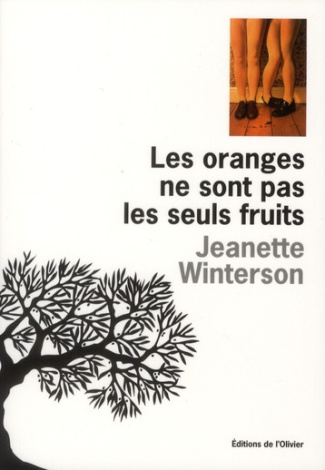
Les oranges ne sont pas les seuls fruits
« Ma mère n?avait pas d?opinions nuancées. Il y avait ses amis et ses ennemis.Ses ennemis étaient : le Diable (sous toutes ses formes), les Voisins d?à côté, le sexe (sous toutes ses formes), les limaces. Ses amis étaient : Dieu, notre chienne, tante Madge, les romans de Charlotte Brontë, les granulés antilimaces, et moi, au début. »Les oranges ne sont pas les seuls fruits recrée sur le mode de la fable l?enfance de Jeanette, double fictionnel de l?auteur. À la maison, les livres sont interdits, le bonheur est suspect. Seul Dieu bénéficie d?un traitement de faveur. Ce premier roman nourri par les légendes arthuriennes ou la Bible célèbre la puissance de l?imaginaire. Tout semble vrai dans ce récit personnel mais tout est inventé, réécrit, passé au tamis de la poésie et de l?humour. Publié en 1985 en Angleterre, Les oranges ne sont pas les seuls fruits a connu un immense succès, devenant rapidement un classique de la littérature contemporaine et un symbole du mouvement féministe.Née en Angleterre en 1959, Jeanette Winterson est romancière et essayiste. Elle a publié notamment Écrit sur le corps, Le Sexe des cerises (Plon, 1993 et 1995) et Pourquoi être heureux quand on peut être normal ? (Éditions de l?Olivier, 2012).« Les livres de Jeanette Winterson, apatrides et sans visage, brillent des multiples reflets de la grande Albion : la majesté de Shakespeare, l?absolutisme de Lawrence, le calme de Woolf ou la farce de Chaucer. C?est une magicienne. »Ali Smith, The ScotsmanÉPUISÉVOIR PRODUIT18,00 € -

La faille du temps
Résumé : Par une nuit de tempête, un Afro-Américain et son fils sont témoins d'un terrible crime. Un homme a été tabassé à mort. Quelques mètres plus loin, à l'abri : un nourrisson dort paisiblement. Abasourdis, craignant la police, les deux hommes décident de fuir en emportant avec eux la mystérieuse petite fille. Dans cette libre adaptation du Conte d'hiver de Shakespeare, Jeanette Winterson offre une superbe réflexion sur le pouvoir destructeur de la jalousie et de l'avidité. Jeanette Winterson est née à Manchester en 1959. Icône féministe, elle est l'auteure de nombreux romans baroques et irrévérencieux, dont Les oranges ne sont pas les seuls fruits, Le Sexe des cerises, Pourquoi être heureux quand on peut être normal ? et Passion, disponibles chez Points. " L'auteure déploie une langue contemporaine et désinhibée. Offrant ainsi une immense jouissance de lecture - authentique remède contre les failles, du temps et du reste. " Maylis Besserie, Le Monde des Livres Traduit de l'anglais (Royaume-Uni) par Céline Leroy.ÉPUISÉVOIR PRODUIT8,90 € -

La passion
Henri est l?aide-cuisinier de Napoléon Bonaparte, chargé de préparer son met préféré: les volailles, que l?empereur dévore. Il devient ensuite soldat, et vit la guerre de l?intérieur. Mais lorsque les troupes françaises s?acheminent péniblement vers la Russie, son adoration pour Napoléon s?effrite. Pendant ce temps, à Venise, Villanelle, fille d?un batelier, mène une vie bien mystérieuse. Elle se travestit en homme, travaille au Casino et connaît une histoire d?amour secrète qui tourne au drame quand elle perd littéralement son coeur, son amante le lui a volé. Les chemins de Villanelle et Henri se croisent à Moscou: c?est là-bas qu?elle a fui l?Italie, et qu?il a déserté son régiment. Entre eux se nouent les fils de la passion, et les deux jeunes gens n?ont désormais qu?un seul but: retrouver le coeur de la jeune femme, pour enfin devenir amants.ÉPUISÉVOIR PRODUIT20,00 € -
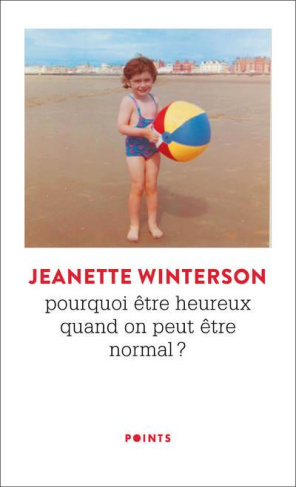
Pourquoi être heureux quand on peut être normal ?
Résumé : " Un grand récit profondément vivant, un bréviaire pour la liberté de penser et d'aimer. " Télérama Depuis qu'elle a été adoptée par Mrs Winterson, Jeanette a toujours lutté. Contre sa mère et sa morale religieuse stricte, contre ceux qui l'empêchent d'aimer et de vivre comme elle l'entend. Heureusement, elle a rencontré les livres. Et les mots sont devenus ses alliés. Jeanette écrit pour réinventer sa vie, s'extirper du gris, apprendre à aimer et être libre enfin. Jeanette Winterson est née à Manchester en 1959. Icône féministe, elle est l'auteur de nombreux romans baroques et irrévérencieux, dont Les oranges ne sont pas les seuls fruits, disponible chez Points. Traduit de l'anglais (Royaume-Uni) par Céline LeroyÉPUISÉVOIR PRODUIT8,40 €


Du même éditeur
-

-
ATOMISED PARTICULES ELEMENTAIRES
Michel Houellebecq's dark and disturbing novel Atomised sees him establish himself as a unique and important voice in European letters. With his first work, Whatever, Houellebecq had created a sassy, street-wise bulletin of disaffected existentialism, and here that voice brilliantly extends its range. Atomised (from the French Les Particules élémentaires) is the story of two half-brothers, Michel and Bruno, who seem to represent two sides of Houellebecq himself (there are more than a few moments in the book where we feel we are reading a strange roman à clef). Michel, a molecular biologist, finds ordinary, human emotions inexplicable, making him seem abstruse and cold. Bruno is his opposite: a frustrated libertine trapped in a body most find repellant but still holding sex up as his most validating moment. Through these skewed archetypes an intricate, sometimes quite moving story of the brothers"lives is formed. Houellebecq obviously has a formidable intellect and, like the best French writers, manages to rail against anthropology, psychoanalysis, New Age philosophy and modern society in general without losing sight of his narrative--indeed the narrative is controlled quite beautifully, the pacing excellent, the switching from one brother's story to the other's done with a quiet grace. While some of Houellebecq's views are at the least questionable, and while there are moments when the conclusions to be drawn from his broadsides are disturbing, this never negates the value of the work. This is an ambitious book in which Houellebecq asks important questions: if sex is continually degraded by its increasing commodification and, concomitantly, genetics increasingly offers us the opportunity for procreation without recourse to it, where does that leave us? How do we navigate ourselves, afloat as we are, in this new moral universe? What does the increasing pace of scientific change mean to the conversations non-scientists have about our lives? What place does something called spirituality, whatever that means, have in this brave, new world? This is a big, bold, clever book that has already achieved more than cult status in France. Houellebecq should be read, and read carefully, if not always believed. --Mark Thwaite"ÉPUISÉVOIR PRODUIT15,11 € -
WAITING
Every summer Lin Kong returned to Goose Village to divorce his wife, Shuyu." Like a fairy tale, Ha Jin's masterful novel of love and politics begins with a formula--and like a fairy tale, Waiting uses its slight, deceptively simple framework to encompass a wide range of truths about the human heart. Lin Kong is a Chinese army doctor trapped in an arranged marriage that embarrasses and repels him. (Shuyu has country ways, a withered face, and most humiliating of all, bound feet.) Nevertheless, he's content with his tidy military life, at least until he falls in love with Manna, a nurse at his hospital. Regulations forbid an army officer to divorce without his wife's consent--until 18 years have passed, that is, after which he is free to marry again. So, year after year Lin asks his wife for his freedom, and year after year he returns from the provincial courthouse: still married, still unable to consummate his relationship with Manna. Nothing feeds love like obstacles placed in its way--right? But Jin's novel answers the question of what might have happened to Romeo and Juliet had their romance been stretched out for several decades. In the initial confusion of his chaste love affair, Lin longs for the peace and quiet of his "old rut." Then killing time becomes its own kind of rut, and in the end, he is forced to conclude that he "waited eighteen years just for the sake of waiting."There's a political allegory here, of course, but it grows naturally from these characters"hearts. Neither Lin nor Manna is especially ideological, and the tumultuous events occurring around them go mostly unnoticed. They meet during a forced military march, and have their first tender moment during an opera about a naval battle. (While the audience shouts,"Down with Japanese Imperialism!"the couple holds hands and gazes dreamily into each other's eyes.) When Lin is in Goose Village one summer, a mutual acquaintance rapes Manna; years later, the rapist appears on a TV report titled"To Get Rich Is Glorious,"after having made thousands in construction. Jin resists hammering ideological ironies like these home, but totalitarianism's effects on Lin are clear: Let me tell you what really happened, the voice said. All those years you waited torpidly, like a sleepwalker, pulled and pushed about by others" opinions, by external pressure, by your illusions, by the official rules you internalized. You were misled by your own frustration and passivity, believing that what you were not allowed to have was what your heart was destined to embrace. Ha Jin himself served in the People's Liberation Army, and in fact left his native country for the U.S. only in 1985. That a non-native speaker can produce English of such translucence and power is truly remarkable--but really, his prose is the least of the miracles here. Improbably, Jin makes an unconsummated 18-year love affair loom as urgent as political terror or war, while history-changing events gain the immediacy of a domestic dilemma. Gracefully phrased, impeccably paced, Waiting is the kind of realist novel you thought was no longer being written. --Mary ParkÉPUISÉVOIR PRODUIT13,00 € -
BIOGRAPHER S TALE
Extrait I made my decision, abruptly, in the middle of one of Gareth Butcher's famous theoretical seminars. He was quoting Empedocles, in his plangent, airy voice. "Here sprang up many faces without necks, arms wandered without shoulders, unattached, and eyes strayed alone, in need of foreheads." He frequently quoted Empedocles, usually this passage. We were discussing, not for the first time, Lacan's theory of morcellement, the dismemberment of the imagined body. There were twelve postgraduates, including myself, and Professor Ormerod Goode. It was a sunny day and the windows were very dirty. I was looking at the windows, and I thought, I’m not going to go on with this anymore. Just like that. It was May 8th 1994. I know that, because my mother had been buried the week before, and I'd missed the seminar on Frankenstein.I don't think my mother's death had anything to do with my decision, though as I set it down, I see it might be construed that way. It's odd that I can't remember what text we were supposed to be studying on that last day. We'd been doing a lot of not-too-long texts written by women. And also quite a lot of Freud—we'd deconstructed the Wolf Man, and Dora. The fact that I can't remember, though a little humiliating, is symptomatic of the “reasons” for my abrupt decision. All the seminars, in fact, had a fatal family likeness. They were repetitive in the extreme. We found the same clefts and crevices, transgressions and disintegrations, lures and deceptions beneath, no matter what surface we were scrying. I thought, next we will go on to the phantasmagoria of Bosch, and, in his incantatory way, Butcher obliged. I went on looking at the filthy window above his head, and I thought, I must have things. I know a dirty window is an ancient, well-worn trope for intellectual dissatisfaction and scholarly blindness. The thing is, that the thing was also there. A real, very dirty window, shutting out the sun. A thing.I was sitting next to Ormerod Goode. Ormerod Goode and Gareth Butcher were joint Heads of Department that year, and Goode, for reasons never made explicit, made it his business to be present at Butcher's seminars. This attention was not reciprocated, possibly because Goode was an Anglo-Saxon and Ancient Norse expert, specialising in place-names. Gareth Butcher did not like dead languages, and was not proficient in living ones. He read his Foucault and Lacan in translation, like his Heraclitus and his Empedocles. Ormerod Goode contributed little to the seminars, beyond corrections of factual inaccuracies, which he noticed even when he appeared to be asleep. No one cared much for these interventions. Inaccuracies can be subsumed as an inevitable part of postmodern uncertainty, or play, one or the other or both.I liked sitting next to Goode—most of the other students didn't—because he made inscrutable notes in ancient runes. Also he drew elaborate patterns of carved, interlaced plants and creatures—Celtic, Viking, I didn't know—occasionally improper or obscene, always intricate. I liked the runes because I have always liked codes and secret languages, and more simply, because I grew up on Tolkien. I suppose, if the truth were told, I should have to confess that I ended up as a postgraduate student of literature because of an infantile obsession with Gandalf's Middle Earth. I did like poetry too, and I did—in self-defence—always know Tolkien's poems weren't the real thing. I remember discovering T. S. Eliot. And then Donne and Marvell. Long ago and far away. I don't know, to this day, if Ormerod Goode loved or despised Tolkien. Tolkien's people are sexless and Goode's precisely shadowed graffiti were anything but. Plaisir, consommation, jouissance. Glee. He was—no doubt still is—a monumentally larger man. He has a round bald cranium, round gold glasses round round, darkly brown eyes, a round, soft mouth, several chins, a round belly carried comfortably on pillars of legs between columnar arms. I think of him, always, as orotund Ormerod Goode, adding more Os to his plethora, and a nice complex synaesthetic metaphor—an accurate one—to my idea of him. Anyway, there I was, next to him, when I made my decision, and when I took my eyes away from the dirty glass there was his BB pencil, hovering lazily, tracing a figleaf, a vine, a thigh, hair, fingers, round shiny fruit.I found myself walking away beside him, down the corridor, when it was over. I felt a need to confirm my decision by telling someone about it. He walked with a rapid sailing motion, lightly for such a big man. I had almost to run to keep up with him. I should perhaps say, now, that I am a very small man. "Small but perfectly formed" my father would say, several times a day, before his disappearance. He himself was not much bigger. The family name is Nanson; my full name is Phineas Gilbert Nanson—I sign myself always Phineas G. Nanson. When I discovered—in a Latin class when I was thirteen—that nanus was the Latin for dwarf, cognate with the French nain, I felt a frisson of excited recognition. I was a little person, the child of a little person, I had a name in a system, Nanson. I have never felt anything other than pleasure in my small, delicate frame. Its only disadvantage is the number of cushions I need to see over the dashboard when driving. I am adept and nimble on ladders. But keeping up with Ormerod Goode's lazy pace was a problem. I said, into his wake, "I have just made an important decision."He stopped. His moon-face considered mine, thoughtfully."I have decided to give it all up. I’ve decided I don’t want to be a postmodern literary theorist.""We should drink to that," said Ormerod Goode. "Come into my office."His office, like the rest of our run-down department, had dirty windows, and a dusty, no-coloured carpet. It also had two high green leather wing-chairs, a mahogany desk and a tray of spotless glasses which he must have washed himself. He produced a bottle of malt whisky from a bookcase. He poured us each a generous glass, and enquired what had led to this decision, and was it as sudden as it appeared. I replied that it had seemed sudden, at least had surprised me, but that it appeared to be quite firm. "You may be wise," said Ormerod Goode. "Since it was a bolt from the blue, I take it you have no ideas about what you will do with the open life that now lies before you?"I wondered whether to tell him about the dirty window. I said, "I felt an urgent need for a life full of things." I was pleased with the safe, solid Anglo-Saxon word. I had avoided the trap of talking about "reality" and "unreality" for I knew very well that postmodernist literary theory could be described as a reality. People lived in it. I did, however, fatally, add the Latin-derived word, less exact, redundant even, to my precise one. "I need a life full of things," I said. "Full of facts.""Facts," said Ormerod Goode. "Facts." He meditated. "The richness," he said, "the surprise, the shining solidity of a world full of facts. Every established fact—taking its place in a constellation of glittering facts like planets in an empty heaven, declaring here is matter, and there is vacancy—every established fact illuminates the world. True scholarship once aspired to add its modest light to that illumination. To clear a few cobwebs. No more."His round eyes glowed behind his round lenses. I found myself counting the Os in his pronouncements, as though they were coded clues to a new amplitude. The Glenmorangie slid like smooth flame down my throat. I said that a long time ago I had been in love with poetry, but that now I needed things, facts. "Verbum caro factum est," said Ormerod Goode opaquely. "The art of biography is a despised art because it is an art of things, of facts, of arranged facts. By far the greatest work of scholarship in my time, to my knowledge, is Scholes Destry-Scholes’s biographical study of Sir Elmer Bole. But nobody knows it. It is not considered. And yet, the ingenuity, the passion."I remarked, perhaps brashly, that I had always considered biography a bastard form, a dilettante pursuit. Tales told by those incapable of true invention, simple stories for those incapable of true critical insight. Distractions constructed by amateurs for lady readers who would never grapple with The Waves or The Years but liked to feel they had an intimate acquaintance with the Woolfs and with Bloomsbury, from daring talk of semen on skirts to sordid sexual interference with nervous girls. A gossipy form, I said to Ormerod Goode, encouraged by Glenmorangie and nervous emptiness of spirit. There was some truth in that view, he conceded, rising smoothly from his wing-chair and strolling over to his bookcase. But I should consider, said Ormerod Goode, two things.Gossip, on the one hand, is an essential part of human communication, not to be ignored. And on the other, a great biography is a noble thing. Consider, he said, the fact that no human individual resembles another. We are not clones, we are not haplodiploid beings. From egg to eventual decay, each of us is unique. What can be nobler, he reiterated, or more exacting, than to explore, to constitute, to open, a whole man, a whole opus, to us? What resources—scientific, intellectual, psychological, historical, linguistic and geographic—does a man—or a woman—not need, who would hope to do justice to such a task? I know, I know, he said, that most biographies are arid or sugary parodies of what is wanted. And the true masterpiece—such as Destry-Scholes's magnum opus—is not always recognised when it is made, for biographical readers have taste corrupted ...ÉPUISÉVOIR PRODUIT15,11 €


