

RIGHTS OF DESIRE LES DROITS DU DESIR
15,11 €
Épuisé
EAN :
9780099285731
| Date de parution | 13/09/2001 |
|---|---|
| Poids | 230g |
| Largeur | 128mm |

Distributor Debug Info
| SKU: | 9780099285731 |
| wmi_id_distributeur: | Not set |
| Is Salable (from plugin): | Yes (In Stock) |
| Is Salable (direct MSI check): | Yes (In Stock) |
| Distributor Name: | Par défaut |
| Availability Value: | 0 |
| Availability Label: | Epuisé |
| Match Result: | |
| Default Availability (Config): | 0 - Epuisé |
| Raw Config Mapping: |
Array
(
    [_1772119784121_121] => Array
        (
            [id] => 12707000
            [name] => 12707000
            [availability] => 1
            [activation_attribute] => 1
        )

)
|
Plus d'informations
| EAN | 9780099285731 |
|---|---|
| Titre | RIGHTS OF DESIRE LES DROITS DU DESIR |
| ISBN | 0099285738 |
| Auteur | BRINK ANDRE |
| Editeur | VINTAGE |
| Largeur | 128 |
| Poids | 230 |
| Date de parution | 20010913 |
| Nombre de pages | 0,00 € |
Pourquoi choisir Molière ?
Efficacité et rapidité Commandé avant 16h livré demain
Économique et pratique Livraison à domicile dès 5,10 €
Facile et sans frais Retrait gratuit en magasin
Sécurité et tranquillité Paiement 100 % sécurisé
Disponibilité et écoute Contactez-nous sur WhatsApp
Du même auteur
-
Au plus noir de la nuit
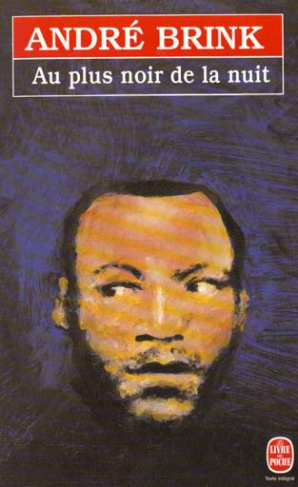
Depuis Pleure, ô pays bien-aimé d'Alan Paton, ce roman est sans doute le plus révolutionnaire que nous ait donné la littérature sud-africaine. Le narrateur et héros principal, Malan, est un acteur noir. Il a eu le tort d'aimer une Blanche et d'être aimé d'elle. Il a été arrêté, torturé, condamné à mort. C'est dans sa cellule qu'il écrit l'histoire de sa vie et par là même celle de son peuple. Si l'on veut savoir ce que fut l'apartheid en Afrique du Sud, il faut lire ce terrible roman d'amour.ÉPUISÉVOIR PRODUIT11,10 € -

Les Droits du désir
Une grande maison un peu délabrée dans un quartier résidentiel du Cap, dont l'aspect assoupi n'est que de façade. Un veuf vieillissant, blanc, ex-bibliothécaire, privé de son poste par les orientations du nouveau pouvoir en Afrique du Sud. Surgit, un soir d'orage, Tessa, jeune, belle, tendue, aussi insaisissable que la nouvelle république. Et l'improbable se produit: alors qu'il ne croyait plus avoir de raisons de vivre, Ruben Olivier tombe passionnément amoureux de cette fille qui, pur produit du temps présent, le fait douter de son passé. Avec ce magnifique roman d'amour, qui inscrit en filigrane un bilan sans concession de l'Afrique du Sud d'aujourd'hui, André Brink confirme sa place au premier rang des grands écrivains de la littérature mondiale.ÉPUISÉVOIR PRODUIT9,00 € -
Les imaginations du sable
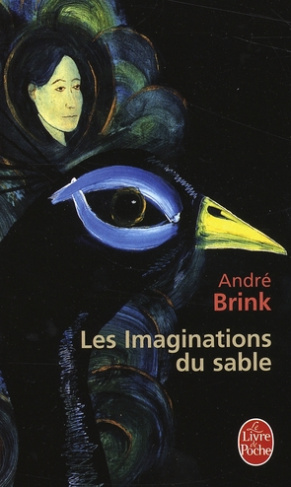
Kristien s'était juré de ne plus revenir dans son pays, l'Afrique du Sud, révoltée par l'apartheid comme par la frilosité des progressistes. Durant dix ans, elle a vécu sur un autre continent une vie librement choisie de femme moderne. Il faut l'appel d'Ouma, sa grand-mère, grièvement blessée dans un attentat, pour la convaincre de revenir.Ouma entreprend de lui conter la vie des neuf générations de femmes qui les ont précédées. Neuf générations de rebelles, qui tissent les mille et une nuits de l'Afrique du Sud. De Kamma, changée en arbre, à Lottie, disparue à la recherche de son ombre, de Samuel, qui étrangla son mari dans ses cheveux, à Rachel, enfermée dans une cave, peintre de fresques scandaleuses et ineffaçables, ces destinées prises entre légende et histoire incarnent l'insoumission des femmes à la brutalité coloniale et raciste.Leur héritage? Un imaginaire commun à tous, Blancs et Noirs, enraciné dans le même amour de la terre africaine.ÉPUISÉVOIR PRODUIT8,10 € -
Retour au jardin du Luxembourg. Littérature et politique en Afrique du Sud 1982-1998
Résumé : Romancier célèbre mais aussi journaliste, critique, professeur, André Brink a été à la fois un protagoniste et un témoin de l'étonnante transition de son pays d'un état policier à une démocratie naissante. Sorte de suite à Sur un banc du Luxembourg, publié il y a quelque quinze ans, les textes réunis ici ont été écrits de 1982 à 1998, période charnière au cours de laquelle l'Afrique du Sud a décidé de faire table rase d'habitudes séculaires. On y retrouve, en même temps que la preuve constante de l'engagement total de l'auteur pour la liberté politique et individuelle, les problèmes particuliers rencontrés par les intellectuels sud-africains. Définir le rôle de l'écrivain dans la société a cessé alors d'être un thème de débat virtuel pour devenir une nécessité. Le monde des lettres s'est vu confronté à l'impérieuse exigence d'ouvrir les portes du pouvoir, d'en être les passeurs, en un mot de " réinventer un continent. "ÉPUISÉVOIR PRODUIT24,70 €


Du même éditeur
-

BIOGRAPHER S TALE
Extrait I made my decision, abruptly, in the middle of one of Gareth Butcher's famous theoretical seminars. He was quoting Empedocles, in his plangent, airy voice. "Here sprang up many faces without necks, arms wandered without shoulders, unattached, and eyes strayed alone, in need of foreheads." He frequently quoted Empedocles, usually this passage. We were discussing, not for the first time, Lacan's theory of morcellement, the dismemberment of the imagined body. There were twelve postgraduates, including myself, and Professor Ormerod Goode. It was a sunny day and the windows were very dirty. I was looking at the windows, and I thought, I’m not going to go on with this anymore. Just like that. It was May 8th 1994. I know that, because my mother had been buried the week before, and I'd missed the seminar on Frankenstein.I don't think my mother's death had anything to do with my decision, though as I set it down, I see it might be construed that way. It's odd that I can't remember what text we were supposed to be studying on that last day. We'd been doing a lot of not-too-long texts written by women. And also quite a lot of Freud—we'd deconstructed the Wolf Man, and Dora. The fact that I can't remember, though a little humiliating, is symptomatic of the “reasons” for my abrupt decision. All the seminars, in fact, had a fatal family likeness. They were repetitive in the extreme. We found the same clefts and crevices, transgressions and disintegrations, lures and deceptions beneath, no matter what surface we were scrying. I thought, next we will go on to the phantasmagoria of Bosch, and, in his incantatory way, Butcher obliged. I went on looking at the filthy window above his head, and I thought, I must have things. I know a dirty window is an ancient, well-worn trope for intellectual dissatisfaction and scholarly blindness. The thing is, that the thing was also there. A real, very dirty window, shutting out the sun. A thing.I was sitting next to Ormerod Goode. Ormerod Goode and Gareth Butcher were joint Heads of Department that year, and Goode, for reasons never made explicit, made it his business to be present at Butcher's seminars. This attention was not reciprocated, possibly because Goode was an Anglo-Saxon and Ancient Norse expert, specialising in place-names. Gareth Butcher did not like dead languages, and was not proficient in living ones. He read his Foucault and Lacan in translation, like his Heraclitus and his Empedocles. Ormerod Goode contributed little to the seminars, beyond corrections of factual inaccuracies, which he noticed even when he appeared to be asleep. No one cared much for these interventions. Inaccuracies can be subsumed as an inevitable part of postmodern uncertainty, or play, one or the other or both.I liked sitting next to Goode—most of the other students didn't—because he made inscrutable notes in ancient runes. Also he drew elaborate patterns of carved, interlaced plants and creatures—Celtic, Viking, I didn't know—occasionally improper or obscene, always intricate. I liked the runes because I have always liked codes and secret languages, and more simply, because I grew up on Tolkien. I suppose, if the truth were told, I should have to confess that I ended up as a postgraduate student of literature because of an infantile obsession with Gandalf's Middle Earth. I did like poetry too, and I did—in self-defence—always know Tolkien's poems weren't the real thing. I remember discovering T. S. Eliot. And then Donne and Marvell. Long ago and far away. I don't know, to this day, if Ormerod Goode loved or despised Tolkien. Tolkien's people are sexless and Goode's precisely shadowed graffiti were anything but. Plaisir, consommation, jouissance. Glee. He was—no doubt still is—a monumentally larger man. He has a round bald cranium, round gold glasses round round, darkly brown eyes, a round, soft mouth, several chins, a round belly carried comfortably on pillars of legs between columnar arms. I think of him, always, as orotund Ormerod Goode, adding more Os to his plethora, and a nice complex synaesthetic metaphor—an accurate one—to my idea of him. Anyway, there I was, next to him, when I made my decision, and when I took my eyes away from the dirty glass there was his BB pencil, hovering lazily, tracing a figleaf, a vine, a thigh, hair, fingers, round shiny fruit.I found myself walking away beside him, down the corridor, when it was over. I felt a need to confirm my decision by telling someone about it. He walked with a rapid sailing motion, lightly for such a big man. I had almost to run to keep up with him. I should perhaps say, now, that I am a very small man. "Small but perfectly formed" my father would say, several times a day, before his disappearance. He himself was not much bigger. The family name is Nanson; my full name is Phineas Gilbert Nanson—I sign myself always Phineas G. Nanson. When I discovered—in a Latin class when I was thirteen—that nanus was the Latin for dwarf, cognate with the French nain, I felt a frisson of excited recognition. I was a little person, the child of a little person, I had a name in a system, Nanson. I have never felt anything other than pleasure in my small, delicate frame. Its only disadvantage is the number of cushions I need to see over the dashboard when driving. I am adept and nimble on ladders. But keeping up with Ormerod Goode's lazy pace was a problem. I said, into his wake, "I have just made an important decision."He stopped. His moon-face considered mine, thoughtfully."I have decided to give it all up. I’ve decided I don’t want to be a postmodern literary theorist.""We should drink to that," said Ormerod Goode. "Come into my office."His office, like the rest of our run-down department, had dirty windows, and a dusty, no-coloured carpet. It also had two high green leather wing-chairs, a mahogany desk and a tray of spotless glasses which he must have washed himself. He produced a bottle of malt whisky from a bookcase. He poured us each a generous glass, and enquired what had led to this decision, and was it as sudden as it appeared. I replied that it had seemed sudden, at least had surprised me, but that it appeared to be quite firm. "You may be wise," said Ormerod Goode. "Since it was a bolt from the blue, I take it you have no ideas about what you will do with the open life that now lies before you?"I wondered whether to tell him about the dirty window. I said, "I felt an urgent need for a life full of things." I was pleased with the safe, solid Anglo-Saxon word. I had avoided the trap of talking about "reality" and "unreality" for I knew very well that postmodernist literary theory could be described as a reality. People lived in it. I did, however, fatally, add the Latin-derived word, less exact, redundant even, to my precise one. "I need a life full of things," I said. "Full of facts.""Facts," said Ormerod Goode. "Facts." He meditated. "The richness," he said, "the surprise, the shining solidity of a world full of facts. Every established fact—taking its place in a constellation of glittering facts like planets in an empty heaven, declaring here is matter, and there is vacancy—every established fact illuminates the world. True scholarship once aspired to add its modest light to that illumination. To clear a few cobwebs. No more."His round eyes glowed behind his round lenses. I found myself counting the Os in his pronouncements, as though they were coded clues to a new amplitude. The Glenmorangie slid like smooth flame down my throat. I said that a long time ago I had been in love with poetry, but that now I needed things, facts. "Verbum caro factum est," said Ormerod Goode opaquely. "The art of biography is a despised art because it is an art of things, of facts, of arranged facts. By far the greatest work of scholarship in my time, to my knowledge, is Scholes Destry-Scholes’s biographical study of Sir Elmer Bole. But nobody knows it. It is not considered. And yet, the ingenuity, the passion."I remarked, perhaps brashly, that I had always considered biography a bastard form, a dilettante pursuit. Tales told by those incapable of true invention, simple stories for those incapable of true critical insight. Distractions constructed by amateurs for lady readers who would never grapple with The Waves or The Years but liked to feel they had an intimate acquaintance with the Woolfs and with Bloomsbury, from daring talk of semen on skirts to sordid sexual interference with nervous girls. A gossipy form, I said to Ormerod Goode, encouraged by Glenmorangie and nervous emptiness of spirit. There was some truth in that view, he conceded, rising smoothly from his wing-chair and strolling over to his bookcase. But I should consider, said Ormerod Goode, two things.Gossip, on the one hand, is an essential part of human communication, not to be ignored. And on the other, a great biography is a noble thing. Consider, he said, the fact that no human individual resembles another. We are not clones, we are not haplodiploid beings. From egg to eventual decay, each of us is unique. What can be nobler, he reiterated, or more exacting, than to explore, to constitute, to open, a whole man, a whole opus, to us? What resources—scientific, intellectual, psychological, historical, linguistic and geographic—does a man—or a woman—not need, who would hope to do justice to such a task? I know, I know, he said, that most biographies are arid or sugary parodies of what is wanted. And the true masterpiece—such as Destry-Scholes's magnum opus—is not always recognised when it is made, for biographical readers have taste corrupted ...ÉPUISÉVOIR PRODUIT15,11 € -
MUSIC AND SILENCE MUSIQUE ET SILENCE
Extrait Lilac and LindenA lamp is lit.Until this moment, when the flame of the lamp flares blue, then settles to steady yellow inside its ornate globe, the young man had been impressed by the profound darkness into which, upon his late-night arrival at the palace of Rosenborg, he had suddenly stepped. Tired from his long sea journey, his eyes stinging, his walk unsteady, he had been questioning the nature of this darkness. For it seemed to him not merely an external phenomenon, having to do with an actual absence of light, but rather as though it emanated from within him, as if he had finally crossed the threshold of his own absence of hope.Now, he is relieved to see the walls of a panelled room take shape around him. A voice says: 'This is the Vinterstue. The Winter Room.'The lamp is lifted up. Held high, it burns more brightly, as though sustained by purer air, and the young man sees a shadow cast onto the wall. It is a long, slanting shadow and so he knows it is his own. It appears to have a deformity, a hump, occurring along its spine from below the shoulder-blades to just above the waist. But this is the shadow's trickery. The young man is Peter Claire, the lutenist, and the curvature on his back is his lute.He is standing near a pair of lions, made of silver. Their eyes seem to watch him in the flickering gloom. Beyond them he can see a table and some tall chairs. But Peter Claire is separate from everything, cannot lean on any object, cannot rest. And now, the lamp moves and he must follow.'It may be', says a tall gentleman, who hurries on, carrying the light, 'that His Majesty, King Christian, will command you to play for him tonight. He is not well and his physicians have prescribed music. Therefore, members of the royal orchestra must be ready to perform at all times, day and night. I thought it best to advise you of this straight away.'Peter Claire's feelings of dismay increase. He begins to curse himself, to berate his own ambition for bringing him here to Denmark, for taking him so far from the places and people he had loved. He is at the end of his journey and yet he feels lost. Within this arrival some terrifying departure lies concealed. And suddenly, with peculiar speed, the lamp moves and everything in the room seems to rearrange itself. Peter Claire sees his shadow on the wall become elongated, stretching upwards for a few seconds towards the ceiling before being swallowed by the darkness, with no trace of it remaining.Then the end of a corridor is reached and the gentleman stops before a door. He knocks and waits, putting a finger to his lips and leaning close against the door to listen for the command from within. It comes at last, a voice deep and slow, and Peter Claire finds himself, in the next minute, standing before King Christian, who is sitting in a chair in his night-shirt. Before him, on a small table, is a pair of scales and by these a clutch of silver coins.The English lutenist bows as the King looks up and Peter Claire will always remember that, as King Christian first glimpses him in this dark middle of a winter's night, there comes into His Majesty's eyes a look of astonishment and, staring intently at the lute player's face, he whispers a single word: 'Bror.''I beg your pardon, Sir ...?' says Peter Claire.'Nothing,' says the King. 'A ghost. Denmark is full of ghosts. Did no one warn you?''No, Your Majesty.''Never mind. You will see them for yourself. We are one of the oldest nations on earth. But you should know that it is a time of storms here, of confusion, of incomprehension, of bitter boiling muddle.''Of muddle, Sir?''Yes. This is why I am weighing silver. I weigh the same pieces over and over again, to ensure that there is no error. No possibility of error. I am trying, piece by piece and day by day, to reimpose order upon chaos.'Peter Claire does not know how to reply to this and he is aware that the tall gentleman, without his noticing, has gone from the room, leaving him alone with the King, who now pushes the scales aside and settles himself more comfortably in the chair.King Christian lifts his head and asks: 'How old are you, Mr Claire? Where do you come from?'A fire is burning in the room, which is the Skrivestue, the King's study, and the small chamber smells sweetly of applewood and leather.Peter Claire replies that he is twenty-seven and that his parents live in the town of Harwich on the east coast of England. He adds that the sea in winter can be unforgiving there.'Unforgiving. Unforgiving!' says the King. 'Well, we must hurry on, pass over or skirt around that word. Unforgiving. But I tell you, lutenist, I am tortured by lice. Do not look alarmed. Not in my hair or on my pillow. I mean by cowards, rascals, liars, sots, cheats and lechers. Where are the philosophers? That is what I constantly ask.'Peter Claire hesitates before answering.'No need to reply,' says the King. 'For they are all gone from Denmark. There is not one left.'Then His Majesty stands up and moves towards the fire where Peter Claire is standing, and takes up a lamp and holds it near the young man's face. He examines the face and Peter Claire lowers his eyes because he has been warned not to stare at the King. This King is ugly. King Charles I of England, King Louis XIII of France, these are handsome men at this perilous moment in history, but King Christian IV of Denmark - all-powerful, brave and cultured as he is reported to be - has a face like a loaf.The lutenist, to whom, by cruel contrast, nature has given an angel's countenance, can smell wine on the King's breath. But he does not dare to move, not even when the King reaches up and tenderly touches his cheek with his hand. Peter Claire, with his blond hair and his eyes the colour of the sea, has been considered handsome from childhood. He wears this handsomeness lightly, frequently forgetting about it, as though almost impatient for time to take it away. He once overheard his sister Charlotte praying to God to be given his face in exchange for hers. He thought, it is really of little value to me; far better it were hers. And yet now, in this unfamiliar place, when his own thoughts are so sombre and dark, the lute player finds that his physical beauty is once again the subject of unexpected scrutiny.'I see. I see,' whispers the King. 'God has exaggerated, as He so often seems to do. Beware the attentions of my wife, Kirsten, who is a fool for yellow hair. I advise a mask when you are in her presence. And all beauty vanishes away, but of course you know that, I needn't underline the self-evident.''I know that beauty vanishes, Sir.''Of course you do. Well, you had better play for me. I suppose you know that we had your Mr Dowland here at court. The conundrum there was that such beautiful music could come from so agitated a soul. The man was all ambition and hatred, yet his ayres were as delicate as rain. We would sit there and blub, and Master Dowland would kill us with his furious look. I told my mother to take him to one side and say: ''Dowland, this will not do and cannot be tolerated,'' but he told her music can only be born out of fire and fury. What do you think about that?'Peter Claire is silent for a moment. For a reason he can't name, this question consoles him and he feels his agitation diminish by a fraction. 'I think that it is born out of fire and fury, Sir,' he says, 'but also out of the antitheses to these - out of cold reason and calm.''This sounds logical. But of course we do not really know where music comes from or why, or when the first note of it was heard. And we shall never know. It is the human soul, speaking without words. But it seems to cure pain - this is an honest fact. I yearn, by the way, for everything to be transparent, honest and true. So why do you not play me one of Dowland's Lachrimae? Economy of means was his gift and this I dote upon. His music leaves no room for exhibitionism on the part of the performer.'Peter Claire unslings his lute from his back and holds it close against his body. His ear (in which he wears a tiny jewel once given to him by an Irish countess) strains to hear, as he plucks and tunes. King Christian sighs, waiting for the sweet melody to begin. He is a heavy man. Any alteration of his body's position seems to cause him a fleeting moment of discomfort.Now Peter Claire arranges his body into the stance he must always adopt when he performs: leaning forward from the hips, head out, chin down, right arm forming a caressing half-circle, so that the instrument is held at the exact centre of his being. Only in this way can he feel that the music emanates from him. He begins to play. He hears the purity of the sound and suspects that this, alone, is what will count with the King of Denmark.When the song is over he glances at the King, but the King doesn't move. His wide hands clutch the arms of the chair. From the left side of his dark head falls a long, thin plait of hair, fastened with a pearl. 'In springtime,' Christian says suddenly, 'Copenhagen used to smell of lilac and of linden. I do not know where this heavenly scent has gone.'Kirsten Munk, Consort of King Christian IV of Denmark: From Her Private PapersWell, for my thirtieth birthday, I have been given a new Looking-glass which I thought I would adore. I thought I would dote upon this new Glass of mine. But there is an error in it, an undoubted fault in its silvering, so that the wicked object makes me look fat. I have sent for a hammer.My birthday gifts, I here record, were not as marvellous as the givers of them pretended they were. My poor old Lord and Master, the King, knowing my fondness for gold, gave me a little gold Statue of himself mounted on a gold horse and bearing a gold tilting pole. The horse, being in a prancing attitude, has his front legs lifted from the ground, so that the foolish thing would fall over, were it not for a small Harlequin pretending to run beside...ÉPUISÉVOIR PRODUIT14,50 € -
WAITING
Every summer Lin Kong returned to Goose Village to divorce his wife, Shuyu." Like a fairy tale, Ha Jin's masterful novel of love and politics begins with a formula--and like a fairy tale, Waiting uses its slight, deceptively simple framework to encompass a wide range of truths about the human heart. Lin Kong is a Chinese army doctor trapped in an arranged marriage that embarrasses and repels him. (Shuyu has country ways, a withered face, and most humiliating of all, bound feet.) Nevertheless, he's content with his tidy military life, at least until he falls in love with Manna, a nurse at his hospital. Regulations forbid an army officer to divorce without his wife's consent--until 18 years have passed, that is, after which he is free to marry again. So, year after year Lin asks his wife for his freedom, and year after year he returns from the provincial courthouse: still married, still unable to consummate his relationship with Manna. Nothing feeds love like obstacles placed in its way--right? But Jin's novel answers the question of what might have happened to Romeo and Juliet had their romance been stretched out for several decades. In the initial confusion of his chaste love affair, Lin longs for the peace and quiet of his "old rut." Then killing time becomes its own kind of rut, and in the end, he is forced to conclude that he "waited eighteen years just for the sake of waiting."There's a political allegory here, of course, but it grows naturally from these characters"hearts. Neither Lin nor Manna is especially ideological, and the tumultuous events occurring around them go mostly unnoticed. They meet during a forced military march, and have their first tender moment during an opera about a naval battle. (While the audience shouts,"Down with Japanese Imperialism!"the couple holds hands and gazes dreamily into each other's eyes.) When Lin is in Goose Village one summer, a mutual acquaintance rapes Manna; years later, the rapist appears on a TV report titled"To Get Rich Is Glorious,"after having made thousands in construction. Jin resists hammering ideological ironies like these home, but totalitarianism's effects on Lin are clear: Let me tell you what really happened, the voice said. All those years you waited torpidly, like a sleepwalker, pulled and pushed about by others" opinions, by external pressure, by your illusions, by the official rules you internalized. You were misled by your own frustration and passivity, believing that what you were not allowed to have was what your heart was destined to embrace. Ha Jin himself served in the People's Liberation Army, and in fact left his native country for the U.S. only in 1985. That a non-native speaker can produce English of such translucence and power is truly remarkable--but really, his prose is the least of the miracles here. Improbably, Jin makes an unconsummated 18-year love affair loom as urgent as political terror or war, while history-changing events gain the immediacy of a domestic dilemma. Gracefully phrased, impeccably paced, Waiting is the kind of realist novel you thought was no longer being written. --Mary ParkÉPUISÉVOIR PRODUIT13,00 € -


