

MUSIC AND SILENCE MUSIQUE ET SILENCE
Extrait Lilac and LindenA lamp is lit.Until this moment, when the flame of the lamp flares blue, then settles to steady yellow inside its ornate globe, the young man had been impressed by the profound darkness into which, upon his late-night arrival at the palace of Rosenborg, he had suddenly stepped. Tired from his long sea journey, his eyes stinging, his walk unsteady, he had been questioning the nature of this darkness. For it seemed to him not merely an external phenomenon, having to do with an actual absence of light, but rather as though it emanated from within him, as if he had finally crossed the threshold of his own absence of hope.Now, he is relieved to see the walls of a panelled room take shape around him. A voice says: 'This is the Vinterstue. The Winter Room.'The lamp is lifted up. Held high, it burns more brightly, as though sustained by purer air, and the young man sees a shadow cast onto the wall. It is a long, slanting shadow and so he knows it is his own. It appears to have a deformity, a hump, occurring along its spine from below the shoulder-blades to just above the waist. But this is the shadow's trickery. The young man is Peter Claire, the lutenist, and the curvature on his back is his lute.He is standing near a pair of lions, made of silver. Their eyes seem to watch him in the flickering gloom. Beyond them he can see a table and some tall chairs. But Peter Claire is separate from everything, cannot lean on any object, cannot rest. And now, the lamp moves and he must follow.'It may be', says a tall gentleman, who hurries on, carrying the light, 'that His Majesty, King Christian, will command you to play for him tonight. He is not well and his physicians have prescribed music. Therefore, members of the royal orchestra must be ready to perform at all times, day and night. I thought it best to advise you of this straight away.'Peter Claire's feelings of dismay increase. He begins to curse himself, to berate his own ambition for bringing him here to Denmark, for taking him so far from the places and people he had loved. He is at the end of his journey and yet he feels lost. Within this arrival some terrifying departure lies concealed. And suddenly, with peculiar speed, the lamp moves and everything in the room seems to rearrange itself. Peter Claire sees his shadow on the wall become elongated, stretching upwards for a few seconds towards the ceiling before being swallowed by the darkness, with no trace of it remaining.Then the end of a corridor is reached and the gentleman stops before a door. He knocks and waits, putting a finger to his lips and leaning close against the door to listen for the command from within. It comes at last, a voice deep and slow, and Peter Claire finds himself, in the next minute, standing before King Christian, who is sitting in a chair in his night-shirt. Before him, on a small table, is a pair of scales and by these a clutch of silver coins.The English lutenist bows as the King looks up and Peter Claire will always remember that, as King Christian first glimpses him in this dark middle of a winter's night, there comes into His Majesty's eyes a look of astonishment and, staring intently at the lute player's face, he whispers a single word: 'Bror.''I beg your pardon, Sir ...?' says Peter Claire.'Nothing,' says the King. 'A ghost. Denmark is full of ghosts. Did no one warn you?''No, Your Majesty.''Never mind. You will see them for yourself. We are one of the oldest nations on earth. But you should know that it is a time of storms here, of confusion, of incomprehension, of bitter boiling muddle.''Of muddle, Sir?''Yes. This is why I am weighing silver. I weigh the same pieces over and over again, to ensure that there is no error. No possibility of error. I am trying, piece by piece and day by day, to reimpose order upon chaos.'Peter Claire does not know how to reply to this and he is aware that the tall gentleman, without his noticing, has gone from the room, leaving him alone with the King, who now pushes the scales aside and settles himself more comfortably in the chair.King Christian lifts his head and asks: 'How old are you, Mr Claire? Where do you come from?'A fire is burning in the room, which is the Skrivestue, the King's study, and the small chamber smells sweetly of applewood and leather.Peter Claire replies that he is twenty-seven and that his parents live in the town of Harwich on the east coast of England. He adds that the sea in winter can be unforgiving there.'Unforgiving. Unforgiving!' says the King. 'Well, we must hurry on, pass over or skirt around that word. Unforgiving. But I tell you, lutenist, I am tortured by lice. Do not look alarmed. Not in my hair or on my pillow. I mean by cowards, rascals, liars, sots, cheats and lechers. Where are the philosophers? That is what I constantly ask.'Peter Claire hesitates before answering.'No need to reply,' says the King. 'For they are all gone from Denmark. There is not one left.'Then His Majesty stands up and moves towards the fire where Peter Claire is standing, and takes up a lamp and holds it near the young man's face. He examines the face and Peter Claire lowers his eyes because he has been warned not to stare at the King. This King is ugly. King Charles I of England, King Louis XIII of France, these are handsome men at this perilous moment in history, but King Christian IV of Denmark - all-powerful, brave and cultured as he is reported to be - has a face like a loaf.The lutenist, to whom, by cruel contrast, nature has given an angel's countenance, can smell wine on the King's breath. But he does not dare to move, not even when the King reaches up and tenderly touches his cheek with his hand. Peter Claire, with his blond hair and his eyes the colour of the sea, has been considered handsome from childhood. He wears this handsomeness lightly, frequently forgetting about it, as though almost impatient for time to take it away. He once overheard his sister Charlotte praying to God to be given his face in exchange for hers. He thought, it is really of little value to me; far better it were hers. And yet now, in this unfamiliar place, when his own thoughts are so sombre and dark, the lute player finds that his physical beauty is once again the subject of unexpected scrutiny.'I see. I see,' whispers the King. 'God has exaggerated, as He so often seems to do. Beware the attentions of my wife, Kirsten, who is a fool for yellow hair. I advise a mask when you are in her presence. And all beauty vanishes away, but of course you know that, I needn't underline the self-evident.''I know that beauty vanishes, Sir.''Of course you do. Well, you had better play for me. I suppose you know that we had your Mr Dowland here at court. The conundrum there was that such beautiful music could come from so agitated a soul. The man was all ambition and hatred, yet his ayres were as delicate as rain. We would sit there and blub, and Master Dowland would kill us with his furious look. I told my mother to take him to one side and say: ''Dowland, this will not do and cannot be tolerated,'' but he told her music can only be born out of fire and fury. What do you think about that?'Peter Claire is silent for a moment. For a reason he can't name, this question consoles him and he feels his agitation diminish by a fraction. 'I think that it is born out of fire and fury, Sir,' he says, 'but also out of the antitheses to these - out of cold reason and calm.''This sounds logical. But of course we do not really know where music comes from or why, or when the first note of it was heard. And we shall never know. It is the human soul, speaking without words. But it seems to cure pain - this is an honest fact. I yearn, by the way, for everything to be transparent, honest and true. So why do you not play me one of Dowland's Lachrimae? Economy of means was his gift and this I dote upon. His music leaves no room for exhibitionism on the part of the performer.'Peter Claire unslings his lute from his back and holds it close against his body. His ear (in which he wears a tiny jewel once given to him by an Irish countess) strains to hear, as he plucks and tunes. King Christian sighs, waiting for the sweet melody to begin. He is a heavy man. Any alteration of his body's position seems to cause him a fleeting moment of discomfort.Now Peter Claire arranges his body into the stance he must always adopt when he performs: leaning forward from the hips, head out, chin down, right arm forming a caressing half-circle, so that the instrument is held at the exact centre of his being. Only in this way can he feel that the music emanates from him. He begins to play. He hears the purity of the sound and suspects that this, alone, is what will count with the King of Denmark.When the song is over he glances at the King, but the King doesn't move. His wide hands clutch the arms of the chair. From the left side of his dark head falls a long, thin plait of hair, fastened with a pearl. 'In springtime,' Christian says suddenly, 'Copenhagen used to smell of lilac and of linden. I do not know where this heavenly scent has gone.'Kirsten Munk, Consort of King Christian IV of Denmark: From Her Private PapersWell, for my thirtieth birthday, I have been given a new Looking-glass which I thought I would adore. I thought I would dote upon this new Glass of mine. But there is an error in it, an undoubted fault in its silvering, so that the wicked object makes me look fat. I have sent for a hammer.My birthday gifts, I here record, were not as marvellous as the givers of them pretended they were. My poor old Lord and Master, the King, knowing my fondness for gold, gave me a little gold Statue of himself mounted on a gold horse and bearing a gold tilting pole. The horse, being in a prancing attitude, has his front legs lifted from the ground, so that the foolish thing would fall over, were it not for a small Harlequin pretending to run beside...
| Date de parution | 15/09/2000 |
|---|---|
| Poids | 323g |
| Largeur | 129mm |

| SKU: | 9780099268550 |
| wmi_id_distributeur: | Not set |
| Is Salable (from plugin): | No (Out of Stock) |
| Is Salable (direct MSI check): | No (Out of Stock) |
| Distributor Name: | Par défaut |
| Availability Value: | 0 |
| Availability Label: | Epuisé |
| Match Result: | |
| Default Availability (Config): | 0 - Epuisé |
| Raw Config Mapping: |
Array
(
    [_1772119784121_121] => Array
        (
            [id] => 12707000
            [name] => 12707000
            [availability] => 1
            [activation_attribute] => 1
        )

)
|
| EAN | 9780099268550 |
|---|---|
| Titre | MUSIC AND SILENCE MUSIQUE ET SILENCE |
| ISBN | 0099268558 |
| Auteur | TREMAIN ROSE |
| Editeur | VINTAGE |
| Largeur | 129 |
| Poids | 323 |
| Date de parution | 20000915 |
| Nombre de pages | 0,00 € |
Pourquoi choisir Molière ?
Du même auteur
-
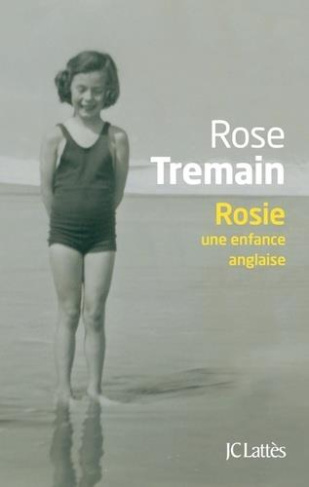
Rosie. Une enfance anglaise
Dans ce récit charmant, intime, souvent émouvant, l'auteur retrace ses plus jeunes années jusqu'à ce qu'à l'âge de dix-sept ans elle s'émancipe de sa famille et vienne vivre à Paris. Son enfance n'a pas toujours été heureuse. La petite Rosie et sa soeur Jo, ont été éduquées par leur Nanny adorée, Véra, seule adulte à leur avoir réellement donné l'affection et l'amour que leurs parents n'ont pas su leur offrir. Le père est absent, la mère, Jamie, au tempérament autoritaire, est distante, elle ne veut pas être dérangée. Pendant les longs séjours à la campagne, les adultes fument, boivent, jouent aux cartes, lisent le Times, font des mots croisés, en attendant les repas servis par les domestiques. Heureusement, les vacances chez les grands-parents, dans la demeure du Hampshire, se déroulent dans la joie. Le lieu est un véritable paradis, les deux petites filles jouissent d'une grande libert. Il y a les cousins Jonathan et Rober et le jardinier, qui leur fait découvrir les beautés et les secrets du jardin. Mais à l'âge de dix ans, tout change pour la petite Rosie. Elle perd son père, il faut quitter l'appartement de Londres, l'école, les amies, et le plus douloureux, sa chère Véra, qui lui a tenu lieu de mère. Adolescente, elle part en pension en Suisse, apprend le français, fait les vendanges, apprend la sténo et la dactylo, fait du ski. Son éducation si parfaite la prépare à épouser un homme riche... elle ne songe pas encore à l'écriture, mais plutôt au dessin. Son voeu le plus cher : " Aller quelque part et trouver sa place dans le monde ". En 1961, elle vient à Paris et s'inscrit à la Sorbonne. Son destin est tracé.ÉPUISÉVOIR PRODUIT21,60 € -
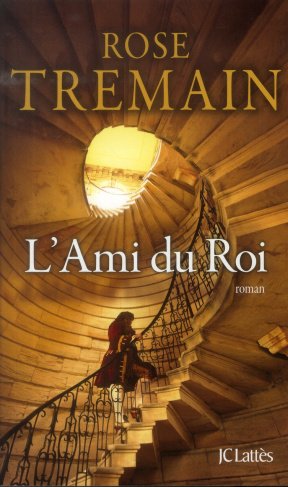
L'ami du roi
Une des plus grandes romancières anglaises contemporaines. Ses uvres ont été traduites dans 30 langues. Nominée pour le Booker Prize pour Le Don du roi, elle a reçu le Prix Femina Étranger pour Le Royaume interdit, le Whitbread Prize pour Musique et silence et le Orange Prize pour Le Retour.Elle a été anoblie par la Reine, et vit dans le Norfolk avec le biographe Richard Holmes.ÉPUISÉVOIR PRODUIT24,70 € -

La couleur des rêves
La Couleur des rêves est l'histoire de Joseph et de son épouse Harriett qui quittent l'Angleterre à la fin du XIXème siècle et partent à la recherche d'une vie meilleure et plus prospère en Nouvelle-Zélande afin d'échapper à leur passé. A leur arrivée, ils rencontrent des voisins, pionniers eux aussi, qui leur déconseillent de s'installer dans les collines où l'hiver est rude et l'environnement inhospitalier. Joseph s'obstine néanmoins à y construire sa maison pour y loger sa femme et sa belle-mère qui les a accompagnés. Mais quand Joseph découvre de l'or dans une rivière, il décide de partir une bonne fois pour toutes à la recherche de sa fortune, en laissant derrière lui une épouse pour laquelle il n'éprouve guère de sentiments amoureux. De son côté, Harriett s'est prise d'affection pour le jeune fils des voisins, Edward. Quand celui-ci tombe gravement malade, il demande à Harriett d'aller voir son ancienne nourrice maori qui, selon ses rêves, serait en grand danger. La jeune femme entreprend alors un long voyage, non seulement pour retrouver la nourrice mais aussi à la recherche de son mari. Elle va rencontrer en chemin un jardinier chinois, Pao, venu également faire fortune dans ces contrées lointaines, en ayant abandonné sa famille derrière lui. Isolés dans une grotte par le mauvais temps, Pao et Harriett vont vivre une intense passion. Avec comme toile de fond une ruée vers l'or qui soulève cupidité et violence, et des paysages d'une exceptionnelle beauté, l'auteur met en scène des personnages infiniment humains capables du meilleur comme du pire.ÉPUISÉVOIR PRODUIT22,00 € -
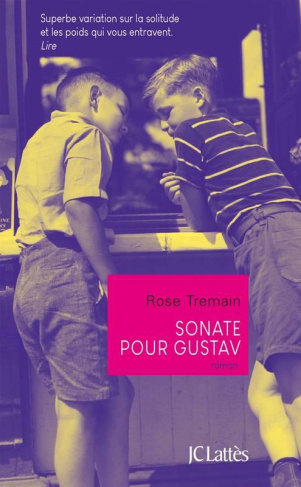
Sonate pour Gustav
Résumé : Gustav, élevé par une mère aigrie et mal aimante, a grandi dans une petite bourgade suisse après la Seconde Guerre mondiale. Son père a disparu sans qu'il en connaisse les circonstances. Anton vient, lui, d'une famille aisée de réfugiés juifs. Enfant prodige, il rêve d'une grande carrière de pianiste, mais est trop fragile émotionnellement pour accomplir son destin. Entre ces deux jeunes garçons, pris dans leur tourmente familiale respective, vont se tisser des liens d'amitié et une complicité qui résisteront au temps, et permettront a chacun de guérir les cicatrices du coeur et de l'âme. Ce roman subtil et pudique, parfois déchirant, sur les imperfections de la vie, est devenu un best-seller en Angleterre, avec 130000 exemplaires vendus.ÉPUISÉVOIR PRODUIT9,70 €


Du même éditeur
-

POWERBOOK
Résumé : An e-writer called Ali or Alix will write to order anything you like, provided that you are prepared to enter the story as yourself I and take the risk of leaving it as someone else. You can be the hero of your own life. You can have freedom just for one night. But there is a price. Ali discovers that she too will have to pay it. Set in London, Paris, Capri and Cyberspace, this is a book that reinvents itself as it travels. Using cover-versions, fairy tales, contemporary myths and popular culture, The PowerBook works at the intersection between the real and the imagined. It's territory is you.ÉPUISÉVOIR PRODUIT15,11 € -
-
-
Amsterdam
Extrait Two former lovers of Molly Lane stood waiting outside the crematorium chapel with their backs to the February chill. It had all been said before, but they said it again."She never knew what hit her." "When she did it was too late." "Rapid onset." "Poor Molly." "Mmm."Poor Molly. It began with a tingling in her arm as she raised it outside the Dorchester Grill to stop a cab--a sensation that never went away. Within weeks she was fumbling for the names of things. Parliament, chemistry, propeller she could forgive herself, but less so bed, cream, mirror. It was after the temporary disappearance of acanthus and bresaiola that she sought medical advice, expecting reassurance. Instead, she was sent for tests and, in a sense, never returned. How quickly feisty Molly became the sickroom prisoner of her morose, possessive husband, George. Molly, restaurant critic, gorgeous wit, and photographer, the daring gardener, who had been loved by the foreign secretary and could still turn a perfect cartwheel at the age of forty-six. The speed of her descent into madness and pain became a matter of common gossip: the loss of control of bodily function and with it all sense of humor, and then the tailing off into vagueness interspersed with episodes of ineffectual violence and muffled shrieking.It was the sight now of George emerging from the chapel that caused Molly's lovers to move off farther up the weedy gravel path. They wandered into an arrangement of oval rose beds marked by a sign, THE GARDEN OF REMEMBRANCE. Each plant had been savagely cut back to within a few inches of the frozen ground, a practice Molly used to deplore. The patch of lawn was strewn with flattened cigarette butts, for this was a place where people came to stand about and wait for the funeral party ahead of theirs to clear the building. As they strolled up and down, the two old friends resumed the conversation they had had in various forms a half-dozen times before but that gave them rather more comfort than singing "Pilgrim."Clive Linley had known Molly first, back when they were students in '68 and lived together in a chaotic, shifting household in the Vale of Health."A terrible way to go."He watched his own vaporized breath float off into the gray air. The temperature in central London was said to be twelve degrees today. Twelve. There was something seriously wrong with the world for which neither God nor his absence could be blamed. Man's first disobedience, the Fall, a falling figure, an oboe, nine notes, ten notes. Clive had the gift of perfect pitch and heard them descending from the G. There was no need to write them down.He continued, "I mean, to die that way, with no awareness, like an animal. To be reduced, humiliated, before she could make arrangements, or even say goodbye. It crept up on her, and then . . ."He shrugged. They came to the end of the trampled lawn, turned, and walked back."She would have killed herself rather than end up like that," Vernon Halliday said. He had lived with her for a year in Paris in '74, when he had his first job with Reuters and Molly did something or other for Vogue."Brain-dead and in George's clutches," Clive said.George, the sad, rich publisher who doted on her and whom, to everyone's surprise, she had not left, though she always treated him badly. They looked now to where he stood outside the door, receiving commiseration from a group of mourners. Her death had raised him from general contempt. He appeared to have grown an inch or two, his back had straightened, his voice had deepened, a new dignity had narrowed his pleading, greedy eyes. Refusing to consign her to a home, he had cared for her with his own hands. More to the point, in the early days, when people still wanted to see her, he vetted her visitors. Clive and Vernon were strictly rationed because they were considered to make her excitable and, afterward, depressed about her condition. Another key male, the foreign secretary, was also unwelcome. People began to mutter; there were muted references in a couple of gossip columns. And then it no longer mattered, because the word was she was horribly not herself; people didn't want to go and see her and were glad that George was there to prevent them. Clive and Vernon, however, continued to enjoy loathing him.As they turned about again, the phone in Vernon's pocket rang. He excused himself and stepped aside, leaving his friend to proceed alone. Clive drew his overcoat about him and slowed his pace. There must be over two hundred in the black-suited crowd outside the crematorium now. Soon it would seem rude not to go over and say something to George. He got her finally, when she couldn't recognize her own face in the mirror. He could do nothing about her affairs, but in the end she was entirely his. Clive was losing the sensation in his feet, and as he stamped them the rhythm gave him back the ten-note falling figure, ritardando, a cor anglais, and rising softly against it, contrapuntally, cellos in mirror image. Her face in it. The end. All he wanted now was the warmth, the silence of his studio, the piano, the unfinished score, and to reach the end. He heard Vernon say in parting, "Fine. Rewrite the standfirst and run it on page four. I'll be there in a couple of hours." Then he said to Clive, "Bloody Israelis. We ought to wander over.""I suppose so."But instead they took another turn about the lawn, for they were there, after all, to bury Molly.With a visible effort of concentration, Vernon resisted the anxieties of his office. "She was a lovely girl. Remember the snooker table?"In 1978 a group of friends rented a large house in Scotland for Christmas. Molly and the man she was going about with at the time, a QC named Brady, staged an Adam and Eve tableau on a disused snooker table, he in his Y-fronts, she in bra and panties, a cue rest for a snake and a red ball for an apple. The story handed down, however, the one that had appeared in an obituary and was remembered that way even by some who were present, was that Molly "danced naked on Christmas Eve on a snooker table in a Scottish castle.""A lovely girl," Clive repeated.She had looked right at him when she pretended to bite the apple, and smiled raunchily through her chomping, with one hand on a jutting hip, like a music hall parody of a tart. He thought it was a signal, the way she held his gaze, and sure enough, they were back together that April. She moved into the studio in South Kensington and stayed through the summer. This was about the time her restaurant column was taking off, when she went on television to denounce the Michelin guide as the "kitsch of cuisine." It was also the time of his own first break, the Orchestral Variations at the Festival Hall. Second time round. She probably hadn't changed, but he had. Ten years on, he'd learned enough to let her teach him something. He'd always been of the hammer-and-tongs school. She taught him sexual stealth, the occasional necessity of stillness. Lie still, like this, look at me, really look at me. We're a time bomb. He was almost thirty, by today's standards a late developer. When she found a place of her own and packed her bags, he asked her to marry him. She kissed him, and quoted in his ear, He married a woman to stop her getting away/Now she's there all day. She was right, for when she went he was happier than ever to be alone and wrote the Three Autumn Songs in less than a month."Did you ever learn anything from her?" Clive asked suddenly.In the mid-eighties Vernon too had had a second bite, on holiday on an estate in Umbria. Then he was Rome correspondent for the paper he now edited, and a married man."I can never remember sex," he said after a pause."I'm sure it was brilliant. But I do remember her teaching me all about porcini, picking them, cooking them."Clive assumed this was an evasion and decided against any confidences of his own. He looked toward the chapel entrance. They would have to go across. He surprised himself by saying rather savagely, "You know, I should have married her. When she started to go under, I would have killed her with a pillow or something and saved her from everyone's pity."Vernon was laughing as he steered his friend away from the Garden of Remembrance. "Easily said. I can just see you writing exercise yard anthems for the cons, like what's-her-name, the suffragette.""Ethel Smyth. I'd do a damn better job than she did."The friends of Molly who made up the funeral gathering would have preferred not to be at a crematorium, but George had made it clear there was to be no memorial service. He didn't want to hear these three former lovers publicly comparing notes from the pulpits of St. Martin's or St. James's, or exchanging glances while he made his own speech. As Clive and Vernon approached they heard the familiar gabble of a cockt... --Ce texte fait référence à l'édition Broché .ÉPUISÉVOIR PRODUIT12,99 €


