

Oliver Twist (VO)
6,00 €
En stock
EAN :
9781407145457

Distributor Debug Info
| SKU: | 9781407145457 |
| wmi_id_distributeur: | Not set |
| Is Salable (from plugin): | Yes (In Stock) |
| Is Salable (direct MSI check): | Yes (In Stock) |
| Distributor Name: | Par défaut |
| Availability Value: | 0 |
| Availability Label: | Epuisé |
| Match Result: | |
| Default Availability (Config): | 0 - Epuisé |
| Raw Config Mapping: |
Array
(
    [_1772119784121_121] => Array
        (
            [id] => 12707000
            [name] => 12707000
            [availability] => 1
            [activation_attribute] => 1
        )

)
|
Plus d'informations
| EAN | 9781407145457 |
|---|---|
| Titre | Oliver Twist (VO) |
| Auteur | Dickens Charles |
| Editeur | GARDNERS |
| Largeur | 0 |
| Poids | 300 |
| Date de parution | 20141106 |
| Nombre de pages | 0,00 € |
Pourquoi choisir Molière ?
Efficacité et rapidité Commandé avant 16h livré demain
Économique et pratique Livraison à domicile dès 5,10 €
Facile et sans frais Retrait gratuit en magasin
Sécurité et tranquillité Paiement 100 % sécurisé
Disponibilité et écoute Contactez-nous sur WhatsApp
Du même auteur
-
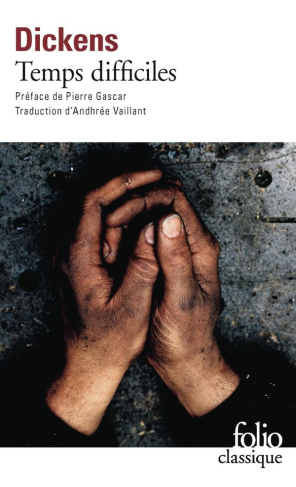
Temps difficiles
Le roman le plus engagé de Dickens. Les Temps difficiles, ce sont les débuts de la révolution industrielle qui transforme l'aimable campagne anglaise en un pandémonium d'usines, de canaux, d'installations minières, de fabriques, d'entrepôts, de banlieues misérables où vit à la limite de la survie le prolétariat le plus exploité qui sans doute fût jamais. Sous un ciel de suie, Coketown, la ville du charbon (Manchester en réalité), est d'autant plus l'image de l'enfer que la classe ouvrière n'y est pas encore organisée et qu'elle apparaît ainsi comme la victime toute désignée de politiciens sans scrupules et d'une bourgeoisie, parfois compatissante et troublée dans son confort moral, mais toujours persuadée de la divinité de ses droits. Le roman de Dickens correspond point pour point à l'analyse qu'en ces mêmes années et dans cette même Angleterre, Fr. Engels entreprenait de la naissance du capitalisme moderne.ÉPUISÉVOIR PRODUIT10,50 € -

Un chant de Noël. Histoire de fantômes pour la Noël
écrit à la suite d?un voyage à Manchester, où Charles Dickens, visionnaire au grand coeur, avait défendu l?éducation comme moyen de lutte contre la pauvreté, Un chant de Noël préfigure les premières réformes pour humaniser le travail dans l?Angleterre industrielle de la reine Victoria. L?histoire de Scrooge, vieil avare grincheux et solitaire que trois fantômes vont convertir, la nuit de Noël, à la gentillesse et à la bonne humeur, continue de séduire petits et grands depuis sa parution en 1843. Drôle et émouvant à la fois, ce conte renoue pour notre plus grand plaisir avec le mythe du paradis terrestre.Notes Biographiques : Né en 1812 et mort en 1870, Charles Dickens est l'un des romanciers anglais les plus populaires dans le monde entier. Issu d'une famille très modeste, Charles Dickens souffre beaucoup de sa condition. Ces difficultés seront la source d'inspiration de la plupart de ses oeuvres, dont les plus connues sont Les aventures de M. Pickwick, David Copperfield et Oliver Twist.EN STOCKCOMMANDER6,75 € -
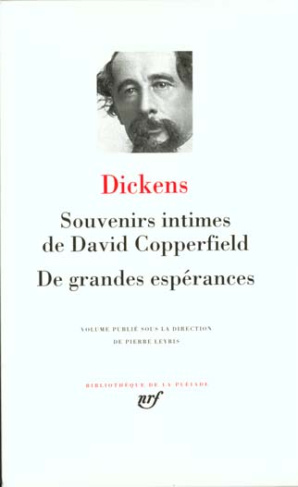
Souvenirs intimes de David Copperfield. De grandes espérances
Traduction de l'anglais par Madeleine Rossel, André Parreaux, Lucien Guitard et Pierre Leyris. Édition de Pierre Leyris. Traduction de Souvenirs intimes de David Copperfield sous la direction de Léon Lemonnier, revue et complétée par Francis Ledoux et Pierre Leyris.ÉPUISÉVOIR PRODUIT69,50 €


Du même éditeur
-

Emma (VO)
Chapter OneEMMA WOODHOUSE, handsome, clever, and rich, with a comfortable home and happy disposition seemed to unite some of the best blessings of existence; and had lived nearly twenty-one years in the world with very little to distress or vex her.She was the youngest of the two daughters of a most affectionate, indulgent father; and had, in consequence of her sister's marriage, been mistress of his house from a very early period. Her mother had died too long ago for her to have more than an indistinct remembrance of her caresses; and her place had been supplied by an excellent woman as governess, who had fallen little short of a mother in affection.Sixteen years had Miss Taylor been in Mr. Woodhouse's family, less as a governess than a friend, very fond of both daughters, but particularly of Emma. Between them it was more the intimacy of sisters. Even before Miss Taylor had ceased to hold the nominal office of governess, the mildness of her temper had hardly allowed her to impose any restraint; and the shadow of authority being now long passed away, they had been living together as friend and friend very mutually attached, and Emma doing just what she liked; highly esteeming Miss Taylor's judgment, but directed chiefly by her own.The real evils, indeed, of Emma's situation were the power of having rather too much her own way, and a disposition to think a little too well of herself: these were the disadvantages which threatened alloy to her many enjoyments. The danger, however, was at present so unperceived, that they did not by any means rank as misfortunes with her.Sorrow came-a gentle sorrow-but not at all in the shape of any disagreeable consciousness. Miss Taylor married. It was Miss Taylor's loss which first brought grief. It was on the wedding day of this beloved friend that Emma first sat in mournful thought of any continuance. The wedding over, and the bride people gone, her father and herself were left to dine together, with no prospect of a third to cheer a long evening. Her father composed himself to sleep after dinner, as usual, and she had then only to sit and think of what she had lost.The event had every promise of happiness for her friend. Mr. Weston was a man of unexceptionable character, easy fortune, suitable age, and pleasant manners; and there was some satisfaction in considering with what self-denying, generous friendship she had always wished and promoted the match; but it was a black morning's work for her. The want of Miss Taylor would be felt every hour of every day. She recalled her past kindness-the kindness, the affection of sixteen years-how she had taught and how she had played with her from five years old-how she had devoted all her powers to attach and amuse her in health-and how nursed her through the various illnesses of childhood. A large debt of gratitude was owing here; but the intercourse of the last seven years, the equal footing and perfect unreserve which had soon followed Isabella's marriage, on their being left to each other, was yet a dearer, tenderer recollection. She had been a friend and companion such as few possessed; intelligent, well-informed, useful, gentle, knowing all the ways of the family, interested in all its concerns, and peculiarly interested in herself, in every pleasure, every scheme of hers; one to whom she could speak every thought as it arose, and who had such an affection for her as could never find fault.How was she to bear the change? It was true that her friend was going only half a mile from them; but Emma was aware that great must be the difference between a Mrs. Weston, only half a mile from them, and a Miss Taylor in the house; and with all her advantages, natural and domestic, she was now in great danger of suffering from intellectual solitude. She dearly loved her father, but he was no companion for her. He could not meet her in conversation, rational or playful.The evil of the actual disparity in their ages (and Mr. Woodhouse had not married early) was much increased by his constitution and habits; for having been a valetudinarian all his life, without activity of mind or body, he was a much older man in ways than in years; and though everywhere beloved for the friendliness of his heart and his amiable temper, his talents could not have recommended him at any time.Her sister, though comparatively but little removed by matrimony, being settled in London, only sixteen miles off, was much beyond her daily reach; and many a long October and November evening must be struggled through at Hartfield, before Christmas brought the next visit from Isabella and her husband, and their little children, to fill the house, and give her pleasant society again.Highbury, the large and populous village almost amounting to a town, to which Hartfield, in spite of its separate lawn, and shrubberies, and name, did really belong, afforded her no equals. The Woodhouses were first in consequence there. All looked up to them. She had many acquaintances in the place, for her father was universally civil, but not one among them who could be accepted in lieu of Miss Taylor for even half a day. It was a melancholy change; and Emma could not but sigh over it, and wish for impossible things, till her father awoke, and made it necessary to be cheerful. His spirits required support. He was a nervous man, easily depressed; fond of everybody that he was used to, and hating to part with them; hating change of every kind. Matrimony, as the origin of change, was always disagreeable; and he was by no means yet reconciled to his own daughter's marrying, nor could ever speak of her but with compassion, though it had been entirely a match of affection, when he was now obliged to part with Miss Taylor too; and from his habits of gentle selfishness, and of being never able to suppose that other people could feel differently from himself, he was very much disposed to think Miss Taylor had done as sad a thing for herself as for them, and would have been a great deal happier if she had spent all the rest of her life at Hartfield. Emma smiled and chatted as cheerfully as she could, to keep him from such thoughts; but when tea came, it was impossible for him not to say exactly as he had said at dinner:"Poor Miss Taylor! I wish she were here again. What a pity it is that Mr. Weston ever thought of her!""I cannot agree with you, papa; you know I cannot. Mr. Weston is such a good-humoured, pleasant, excellent man, that he thoroughly deserves a good wife; and you would not have had Miss Taylor live with us for ever, and bear all my odd humours,1 when she might have a house of her own?""A house of her own! but where is the advantage of a house of her own? This is three times as large; and you have never any odd humours, my dear.""How often we shall be going to see them, and they coming to see us! We shall be always meeting! We must begin; we must go and pay our wedding-visit very soon.""My dear, how am I to get so far? Randalls is such a distance. I could not walk half so far.""No, papa; nobody thought of your walking. We must go in the carriage, to be sure.""The carriage! But James will not like to put the horses to for such a little way; and where are the poor horses to be while we are paying our visit?""They are to be put into Mr. Weston's stable, papa. You know we have settled all that already. We talked it all over with Mr. Weston last night. And as for James, you may be very sure he will always like going to Randalls, because of his daughter's being housemaid there. I only doubt whether he will ever take us anywhere else. That was your doing, papa. You got Hannah that good place. Nobody thought of Hannah till you mentioned her-James is so obliged to you!""I am very glad I did think of her. It was very lucky, for I would not have had poor James think himself slighted upon any account; and I am sure she will make a very good servant; she is a civil, pretty-spoken girl; I have a great opinion of her. Whenever I see her, she always curtseys and asks me how I do, in a very pretty manner; and when you have had her here to do needlework, I observe she always turns the lock of the door the right way and never bangs it. I am sure she will be an excellent servant; and it will be a great comfort to poor Miss Taylor to have somebody about her that she is used to see. Whenever James goes over to his daughter, you know, she will be hearing of us. He will be able to tell her how we all are."Emma spared no exertions to maintain this happier flow of ideas, and hoped, by the help of backgammon, to get her father tolerably through the evening, and be attacked by no regrets but her own. The backgammon-table was placed; but a visitor immediately afterwards walked in and made it unnecessary.Mr. Knightley, a sensible man about seven or eight-and-thirty, was not only a very old and intimate friend of the family, but particularly connected with it, as the elder brother of Isabella's husband. He lived about a mile from Highbury, was a frequent visitor, and always welcome, and at this time more welcome than usual, as coming directly from their mutual connections in London. He had returned to a late dinner after some days"absence, and now walked up to Hartfield to say that all were well in Brunswick Square. It was a happy circumstance, and animated Mr. Woodhouse for some time. Mr. Knightley had a cheerful manner, which always did him good; and his many inquiries after "poor Isabella" and her children were answered most satisfactorily. When this was over, Mr. Woodhouse gratefully observed:"It is very kind of you, Mr. Knightley, to come out at this late hour to call upon us. I am afraid you must have had a shocking walk.""Not at all, sir. It is a beautiful moonlight night; and so mild that I must draw back from your great fire.""But you must have found it very damp and dirty. I wish you may not catch cold."&quo..."EN STOCKCOMMANDER5,00 € -
-
-


De la même catégorie
-
ROMEO AND JULIET
Résumé : Set in a city torn apart by feuds and gang warfare, Shakespeare's immortal drama tells the story of star-crossed lovers, rival dynasties and bloody revenge. Romeo and Juliet is a hymn to youth and the thrill of forbidden love, charged with sexual passion and violence, but also a warning of death : a dazzling combination of bawdy comedy and high tragedy.EN STOCKCOMMANDER12,00 € -
MURDER ON THE ORIENT EXPRESS (VO)
Murder on the Orient Express is a tour-de-force variation on the theme of the English house-party, gathering a remarkable set of characters, each a secretive soul, for a journey on the fabled Orient Express train as it travels from Istanbul to Paris. On hand to resolve the murder of an American passenger is Hercule Poirot, the dapper Belgian detective, dependent only on his wit, who tucks away obscure, seemingly unrelated minutiae in his facile mind. When he determines that the corpse was a renowned child kidnapper/killer, he begins to wonder about connections between the passengers and the victim. A misplaced button, overheard conversations, a monogrammed handkerchief, and an elusive figure clad in a scarlet kimono all become clues as Hercule Poirot interrogates the snow-trapped travelers and comes to his own conclusions. Murder on the Orient Express, with its skill plot construction, adroit writing, and thought-provoking revelations, reminds us that what is "just" is not always what is legal..EN STOCKCOMMANDER9,00 € -
1984 (VO)
George Orwell's dystopian masterpiece, Nineteen Eighty-Four is perhaps the most pervasively influential book of the twentieth century, making famous Big Brother, newspeak and Room 101.'Who controls the past controls the future: who controls the present controls the past'Hidden away in the Record Department of the sprawling Ministry of Truth, Winston Smith skilfully rewrites the past to suit the needs of the Party. Yet he inwardly rebels against the totalitarian world he lives in, which demands absolute obedience and controls him through the all-seeing telescreens and the watchful eye of Big Brother, symbolic head of the Party. In his longing for truth and liberty, Smith begins a secret love affair with a fellow-worker Julia, but soon discovers the true price of freedom is betrayal.Eric Arthur Blair (1903-1950), better known by his pen-name, George Orwell, was born in India, where his father worked for the Civil Service. An author and journalist, Orwell was one of the most prominent and influential figures in twentieth-century literature. His unique political allegory Animal Farm was published in 1945, and it was this novel, together with the dystopia of Nineteen Eighty-Four (1949), which brought him world-wide fame. All his novels and non-fiction, including Burmese Days (1934), Down and Out in Paris and London (1933), The Road to Wigan Pier (1937) and Homage to Catalonia (1938) are published in Penguin Modern Classics. If you enjoyed Nineteen Eighty-Four, you might like Orwell's Animal Farm, also available in Penguin Great Orwell.'His final masterpiece... enthralling and indispensible for understanding modern history'Timothy Garton-Ash, New York Review of Books'The book of the twentieth century... haunts us with an ever-darker relevance'IndependentEN STOCKCOMMANDER10,00 € -
AND THEN THERE WERE NONE (VO)
The World's Bestselling Mystery "Ten..."Ten strangers are lured to an isolated island mansion off the Devon coast by a mysterious "U.N. Owen.""Nine..."At dinner a recorded message accuses each of them in turn of having a guilty secret, and by the end of the night one of the guests is dead."Eight..."Stranded by a violent storm, and haunted by a nursery rhyme counting down one by one... one by one they begin to die."Seven..."Who among them is the killer and will any of them survive?EN STOCKCOMMANDER12,00 €


