Persuasion
7,80 €
Épuisé
EAN :
9782264023834
Sous le vernis d'un genre, chacune des phrases de Jane Austen attaque les conventions, traque les ridicules, et finit avec une grâce exquise par pulvériser la morale bourgeoise, sans avoir l'air d'y toucher. Les héroïnes de Jane Austen lui ressemblent, elles aiment les potins mais détestent bavardages, grossièreté et vulgarité. La pudeur, le tact, la discrétion, l'humour sont les seules convenances qu'elles reconnaissent... Et si Jane Austen mène les jeunes filles au mariage, c'est fortes d'une telle indépendance qu'il faut souhaiter au mari d'être à la hauteur ! A lire yeux baissés et genoux serrés pour goûter en secret le délicieux plaisir de la transgression des interdits.
Catégories
| Nombre de pages | 254 |
|---|---|
| Date de parution | 30/05/1996 |
| Poids | 170g |
| Largeur | 110mm |

Distributor Debug Info
| SKU: | 9782264023834 |
| wmi_id_distributeur: | 21661000 |
| Is Salable (from plugin): | No (Out of Stock) |
| Is Salable (direct MSI check): | No (Out of Stock) |
| Distributor Name: | Par défaut |
| Availability Value: | 0 |
| Availability Label: | Epuisé |
| Match Result: | |
| Default Availability (Config): | 0 - Epuisé |
| Raw Config Mapping: |
Array
(
    [_1772119784121_121] => Array
        (
            [id] => 12707000
            [name] => 12707000
            [availability] => 1
            [activation_attribute] => 1
        )

)
|
Plus d'informations
| EAN | 9782264023834 |
|---|---|
| Titre | Persuasion |
| Auteur | Austen Jane |
| Editeur | 10 X 18 |
| Largeur | 110 |
| Poids | 170 |
| Date de parution | 19960530 |
| Nombre de pages | 254,00 € |
Pourquoi choisir Molière ?
Efficacité et rapidité Commandé avant 16h livré demain
Économique et pratique Livraison à domicile dès 5,10 €
Facile et sans frais Retrait gratuit en magasin
Sécurité et tranquillité Paiement 100 % sécurisé
Disponibilité et écoute Contactez-nous sur WhatsApp
Du même auteur
-
Raison et sentiments
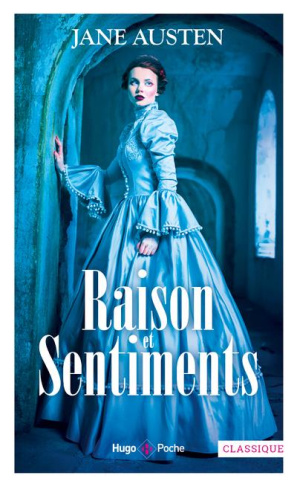
Un classique qui n'a pas pris une ride ! A la mort de leur père, les soeurs Dashwood quittent avec leur mère le comté de Sussex pour s'établir dans la chaumière de Barton, en Devonshire. Pour la raisonnable Elinor et la sensible Maria, toutes deux ravissantes et en âge de se marier, c'est une nouvelle vie qui commence. Traduction : Isabelle de Montolieu (1751-1832). Ecrit vers 1795, Sense and Sensibility parait à Londres en 1811, et sera traduit en français dès 1815. Ce classique de la littérature de la Lady des lettres anglaises qui a influencé nombre d'écrivains majeurs, tels Henry James, Virginia Woolf ou Katherine Mansfield, est considéré comme le premier grand roman anglais du XIXe siècle. De nombreux auteurs de New Romance - Christina Lauren Anna Todd, Audrey Carlan, Mia Sheridan, Laurelin Paige, Brittainy C. Cherry, ou Lexi Ryan... - s'accordent à considérer ce grand classique de la littérature anglaise comme une référence incontournable et une source féconde d'inspiration.ÉPUISÉVOIR PRODUIT6,65 € -

Pride and prejudice (VO)
When Elizabeth Bennet first meets eligible bachelor Fitzwilliam Darcy, she thinks him arrogant and conceited; he is indifferent to her good looks and lively mind. When she later discovers that Darcy has involved himself in the troubled relationship between his friend Bingley and her beloved sister Jane, she is determined to dislike him more than ever. In the sparkling comedy of manners that follows, Jane Austen shows the folly of judging by first impressions and superbly evokes the friendships,gossip and snobberies of provincial middle-class life.EN STOCKCOMMANDER12,00 € -

Du fond de mon coeur. Lettres à ses nièces
Résumé : De Jane Austen on sait peu de choses, les sources de renseignements étant rares. Les lettres qu'elle écrivit à ses trois nièces préférées dressent un portrait émouvant de l'auteur d'Orgueil et préjugés et témoignent de son caractère vif et généreux. Restée célibataire et sans enfants, c'est avec l'affection d'une grande soeur attentionnée qu'elle guide et conseille ses jeunes nièces. Elle leur parle d'écriture, de stratégie amoureuse, de sa vie à la campagne, avec l'humour et l'élégance qui font le sel de ses romans. Ces échanges révèlent une touchante intimité, et l'on acquiert bien vite la conviction que Jane Austen n'avait rien à envier à ses attachantes héroïnes. Austen se montre tendre et enjouée. Ses lettres poursuivent l'exploration de la tension inépuisable entre " raison " et " sentiment ", passion et conventions sociales. Un prolongement attachant de son univers romanesque.EN STOCKCOMMANDER8,80 € -

Emma (VO)
Chapter OneEMMA WOODHOUSE, handsome, clever, and rich, with a comfortable home and happy disposition seemed to unite some of the best blessings of existence; and had lived nearly twenty-one years in the world with very little to distress or vex her.She was the youngest of the two daughters of a most affectionate, indulgent father; and had, in consequence of her sister's marriage, been mistress of his house from a very early period. Her mother had died too long ago for her to have more than an indistinct remembrance of her caresses; and her place had been supplied by an excellent woman as governess, who had fallen little short of a mother in affection.Sixteen years had Miss Taylor been in Mr. Woodhouse's family, less as a governess than a friend, very fond of both daughters, but particularly of Emma. Between them it was more the intimacy of sisters. Even before Miss Taylor had ceased to hold the nominal office of governess, the mildness of her temper had hardly allowed her to impose any restraint; and the shadow of authority being now long passed away, they had been living together as friend and friend very mutually attached, and Emma doing just what she liked; highly esteeming Miss Taylor's judgment, but directed chiefly by her own.The real evils, indeed, of Emma's situation were the power of having rather too much her own way, and a disposition to think a little too well of herself: these were the disadvantages which threatened alloy to her many enjoyments. The danger, however, was at present so unperceived, that they did not by any means rank as misfortunes with her.Sorrow came-a gentle sorrow-but not at all in the shape of any disagreeable consciousness. Miss Taylor married. It was Miss Taylor's loss which first brought grief. It was on the wedding day of this beloved friend that Emma first sat in mournful thought of any continuance. The wedding over, and the bride people gone, her father and herself were left to dine together, with no prospect of a third to cheer a long evening. Her father composed himself to sleep after dinner, as usual, and she had then only to sit and think of what she had lost.The event had every promise of happiness for her friend. Mr. Weston was a man of unexceptionable character, easy fortune, suitable age, and pleasant manners; and there was some satisfaction in considering with what self-denying, generous friendship she had always wished and promoted the match; but it was a black morning's work for her. The want of Miss Taylor would be felt every hour of every day. She recalled her past kindness-the kindness, the affection of sixteen years-how she had taught and how she had played with her from five years old-how she had devoted all her powers to attach and amuse her in health-and how nursed her through the various illnesses of childhood. A large debt of gratitude was owing here; but the intercourse of the last seven years, the equal footing and perfect unreserve which had soon followed Isabella's marriage, on their being left to each other, was yet a dearer, tenderer recollection. She had been a friend and companion such as few possessed; intelligent, well-informed, useful, gentle, knowing all the ways of the family, interested in all its concerns, and peculiarly interested in herself, in every pleasure, every scheme of hers; one to whom she could speak every thought as it arose, and who had such an affection for her as could never find fault.How was she to bear the change? It was true that her friend was going only half a mile from them; but Emma was aware that great must be the difference between a Mrs. Weston, only half a mile from them, and a Miss Taylor in the house; and with all her advantages, natural and domestic, she was now in great danger of suffering from intellectual solitude. She dearly loved her father, but he was no companion for her. He could not meet her in conversation, rational or playful.The evil of the actual disparity in their ages (and Mr. Woodhouse had not married early) was much increased by his constitution and habits; for having been a valetudinarian all his life, without activity of mind or body, he was a much older man in ways than in years; and though everywhere beloved for the friendliness of his heart and his amiable temper, his talents could not have recommended him at any time.Her sister, though comparatively but little removed by matrimony, being settled in London, only sixteen miles off, was much beyond her daily reach; and many a long October and November evening must be struggled through at Hartfield, before Christmas brought the next visit from Isabella and her husband, and their little children, to fill the house, and give her pleasant society again.Highbury, the large and populous village almost amounting to a town, to which Hartfield, in spite of its separate lawn, and shrubberies, and name, did really belong, afforded her no equals. The Woodhouses were first in consequence there. All looked up to them. She had many acquaintances in the place, for her father was universally civil, but not one among them who could be accepted in lieu of Miss Taylor for even half a day. It was a melancholy change; and Emma could not but sigh over it, and wish for impossible things, till her father awoke, and made it necessary to be cheerful. His spirits required support. He was a nervous man, easily depressed; fond of everybody that he was used to, and hating to part with them; hating change of every kind. Matrimony, as the origin of change, was always disagreeable; and he was by no means yet reconciled to his own daughter's marrying, nor could ever speak of her but with compassion, though it had been entirely a match of affection, when he was now obliged to part with Miss Taylor too; and from his habits of gentle selfishness, and of being never able to suppose that other people could feel differently from himself, he was very much disposed to think Miss Taylor had done as sad a thing for herself as for them, and would have been a great deal happier if she had spent all the rest of her life at Hartfield. Emma smiled and chatted as cheerfully as she could, to keep him from such thoughts; but when tea came, it was impossible for him not to say exactly as he had said at dinner:"Poor Miss Taylor! I wish she were here again. What a pity it is that Mr. Weston ever thought of her!""I cannot agree with you, papa; you know I cannot. Mr. Weston is such a good-humoured, pleasant, excellent man, that he thoroughly deserves a good wife; and you would not have had Miss Taylor live with us for ever, and bear all my odd humours,1 when she might have a house of her own?""A house of her own! but where is the advantage of a house of her own? This is three times as large; and you have never any odd humours, my dear.""How often we shall be going to see them, and they coming to see us! We shall be always meeting! We must begin; we must go and pay our wedding-visit very soon.""My dear, how am I to get so far? Randalls is such a distance. I could not walk half so far.""No, papa; nobody thought of your walking. We must go in the carriage, to be sure.""The carriage! But James will not like to put the horses to for such a little way; and where are the poor horses to be while we are paying our visit?""They are to be put into Mr. Weston's stable, papa. You know we have settled all that already. We talked it all over with Mr. Weston last night. And as for James, you may be very sure he will always like going to Randalls, because of his daughter's being housemaid there. I only doubt whether he will ever take us anywhere else. That was your doing, papa. You got Hannah that good place. Nobody thought of Hannah till you mentioned her-James is so obliged to you!""I am very glad I did think of her. It was very lucky, for I would not have had poor James think himself slighted upon any account; and I am sure she will make a very good servant; she is a civil, pretty-spoken girl; I have a great opinion of her. Whenever I see her, she always curtseys and asks me how I do, in a very pretty manner; and when you have had her here to do needlework, I observe she always turns the lock of the door the right way and never bangs it. I am sure she will be an excellent servant; and it will be a great comfort to poor Miss Taylor to have somebody about her that she is used to see. Whenever James goes over to his daughter, you know, she will be hearing of us. He will be able to tell her how we all are."Emma spared no exertions to maintain this happier flow of ideas, and hoped, by the help of backgammon, to get her father tolerably through the evening, and be attacked by no regrets but her own. The backgammon-table was placed; but a visitor immediately afterwards walked in and made it unnecessary.Mr. Knightley, a sensible man about seven or eight-and-thirty, was not only a very old and intimate friend of the family, but particularly connected with it, as the elder brother of Isabella's husband. He lived about a mile from Highbury, was a frequent visitor, and always welcome, and at this time more welcome than usual, as coming directly from their mutual connections in London. He had returned to a late dinner after some days"absence, and now walked up to Hartfield to say that all were well in Brunswick Square. It was a happy circumstance, and animated Mr. Woodhouse for some time. Mr. Knightley had a cheerful manner, which always did him good; and his many inquiries after "poor Isabella" and her children were answered most satisfactorily. When this was over, Mr. Woodhouse gratefully observed:"It is very kind of you, Mr. Knightley, to come out at this late hour to call upon us. I am afraid you must have had a shocking walk.""Not at all, sir. It is a beautiful moonlight night; and so mild that I must draw back from your great fire.""But you must have found it very damp and dirty. I wish you may not catch cold."&quo..."EN STOCKCOMMANDER5,00 €


De la même catégorie
-

Middlesex
À quarante et un ans, Cal aborde une autre étape de sa vie : intrigué par l'histoire de sa famille, une famille au fort degré de consanguinité, il a décidé de consigner une fois pour toutes l'errance mouvementée à travers le temps de ses lointains parents, et du gène à l'origine de sa « double » nature. Tout a commencé à Smyrne en 1922. Desdémone élève des vers à soie, elle vit avec son frère Lefty qui va les vendre sur le marché. Lorsque les Turcs mettent le feu à la ville, ils fuient et s'embarquent sur un paquebot. C'est l'occasion de « reconstruire » leur vie sur la seule chose finalement qu'ils n'ont pas perdue, leur désir. Durant le long voyage qui les mènera à Detroit, ils se marient, tout en gardant le silence sur la nature incestueuse de leur union. À Detroit, Lefty ouvre un bar. Leur fils, Milton, le reprend dans les années 50, après avoir épousé sa cousine Tessie. Il le fait prospérer au point de rêver à une autre affaire. Les émeutes sociales de Detroit en juillet 1967 précipitent son projet : le bar brûle et Milton investit dans une fabrique de hot dogs. Il fait fortune et peut enfin s'installer dans les beaux quartiers : il achète la maison la plus excentrique de Grosse Pointe, la banlieue résidentielle de Detroit, une maison « moderne », rue Middlesex. Et il envoie sa fille, Calliope, dans une école pour jeunes filles de bonne famille, jusqu'au jour où elle se lie avec l'une d'elles, une « rousse originaire de Grosse Pointe » qu'elle surnomme « L'Objet Obscur »...EN STOCKCOMMANDER10,80 € -
L'hôtel New Hampshire
Un des ouvrages les plus célèbres de l'auteur du Monde selon Garp, L'Hotel New Hampshire contient tous les éléments que l'on retrouve habituellement dans son oeuvre. En effet, drôle, astucieuse, originale et enthousiasmante est la saga de cette famille peu conventionnelle. Nostalgique et passionnée est la voix de John Berry, le narrateur qui parle sans équivoque du rêve de son père : tenir un hôtel. La famille Berry, les deux parents et leurs cinq enfants, ainsi qu'un ours et un chien, vont ainsi vivre des péripéties hilarantes dans trois hôtels différents, sur deux continents. Avec gravité, parfois, et toujours avec un humour grinçant, Irving fascine le lecteur au travers de cette histoire peu banale. Frank, l'aîné, Franny, la plus étrange, John, Lily et Egg le cadet sont les héros d'aventures loufoques. Des déboires de leur labrador Sorrow, d'abord empaillé puis victime d'un cruel accident d'avion, aux désirs incestueux de John et Franny, c'est un monde étrange selon Irving auquel nous sommes ici confrontés. Ce roman fait d'Irving l'un des écrivains les plus talentueux et imaginatifs de sa génération.ÉPUISÉVOIR PRODUIT10,80 € -
La femme aux melons
Sur le dessus de cheminée, dominant l'âtre, la Femme aux melons de Cézanne et sa sueur jumelle les contemplaient, placides, belles, apparemment identiques. Cyrus s'approcha en secouant la tête: - Vraiment, Nico, je vous félicite. C'est tout à fait extraordinaire. Dites-moi un secret: combien ça vous prend de temps de... - Cyrus! Ayant entendu le bruit d'un moteur, André avait jeté un coup d'oeil par la fenêtre...'"ÉPUISÉVOIR PRODUIT7,60 € -
A livre ouvert. Les carnets intimes de Logan Mountsuart
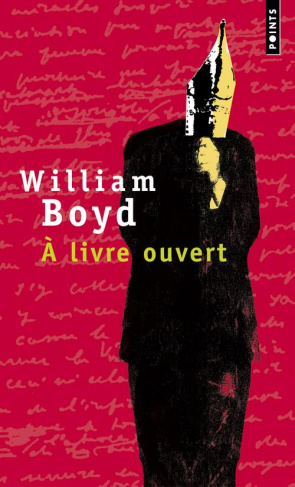
La vie de l'écrivain Logan Mountstuart est un perpétuel recommencement. Tour à tour journaliste, indic et critique d'art, il rencontre Hemingway, travaille sous les ordres de Ian Fleming et se lie d'amitié avec Picasso. De l'Angleterre au Nigéria, en passant par New York et Paris, il revêt tous les costumes et devient le témoin privilégié des plus grands événements du XXe siècle...William Boyd est né en 1952, au Ghana. Il a enseigné la littérature à Oxford avant de se consacrer à la l'écriture. Il est l'auteur de nouvelles et d'une dizaine de romans, salués par la critique et disponibles en Points, ainsi que son recueil de nouvelles L'amour fait mal." Est-ce que À livre ouvert est le meilleur roman de William Boyd ? Ne suffit-il pas de savoir qu'il est magistral, ambitieux, terriblement original et émouvant ? "LireTraduit de l'anglais par Christiane BesseÉPUISÉVOIR PRODUIT10,80 €