La femme aux melons
7,60 €
Épuisé
EAN :
9782020362412
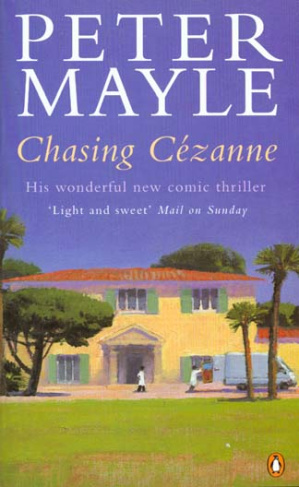
Sur le dessus de cheminée, dominant l'âtre, la Femme aux melons de Cézanne et sa sueur jumelle les contemplaient, placides, belles, apparemment identiques. Cyrus s'approcha en secouant la tête: - Vraiment, Nico, je vous félicite. C'est tout à fait extraordinaire. Dites-moi un secret: combien ça vous prend de temps de... - Cyrus! Ayant entendu le bruit d'un moteur, André avait jeté un coup d'oeil par la fenêtre...'"
Catégories
| Nombre de pages | 295 |
|---|---|
| Date de parution | 14/04/2000 |
| Poids | 182g |
| Largeur | 109mm |

Distributor Debug Info
| SKU: | 9782020362412 |
| wmi_id_distributeur: | Not set |
| Is Salable (from plugin): | Yes (In Stock) |
| Is Salable (direct MSI check): | Yes (In Stock) |
| Distributor Name: | Par défaut |
| Availability Value: | 0 |
| Availability Label: | Epuisé |
| Match Result: | |
| Default Availability (Config): | 0 - Epuisé |
| Raw Config Mapping: |
Array
(
    [_1772119784121_121] => Array
        (
            [id] => 12707000
            [name] => 12707000
            [availability] => 1
            [activation_attribute] => 1
        )

)
|
Plus d'informations
| EAN | 9782020362412 |
|---|---|
| Titre | La femme aux melons |
| ISBN | 2020362414 |
| Auteur | Mayle Peter |
| Editeur | POINTS |
| Largeur | 109 |
| Poids | 182 |
| Date de parution | 20000414 |
| Nombre de pages | 295,00 € |
Pourquoi choisir Molière ?
Efficacité et rapidité Commandé avant 16h livré demain
Économique et pratique Livraison à domicile dès 5,10 €
Facile et sans frais Retrait gratuit en magasin
Sécurité et tranquillité Paiement 100 % sécurisé
Disponibilité et écoute Contactez-nous sur WhatsApp
Du même auteur
-
-
YEAR IN PROVENCE (A) ANNEE EN PROVENCE (UNE)
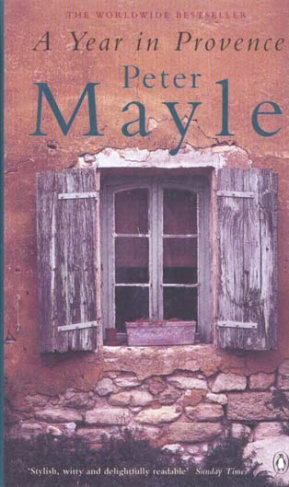
Extrait THE YEAR BEGAN with lunch.We have always found that New Year's Eve, with its eleventh-hour excesses and doomed resolutions, is a dismal occasion for all the forced jollity and midnight toasts and kisses. And so, when we heard that over in the village of Lacoste, a few miles away, the proprietor of Le Simiane was offering a six-course lunch with pink champagne to his amiable clientele, it seemed like a much more cheerful way to start the next twelve months.By 12:30 the little stone-walled restaurant was full. There were some serious stomachs to be seen-entire families with the embonpoint that comes from spending two or three diligent hours every day at the table, eyes down and conversation postponed in the observance of France's favorite ritual. The proprietor of the restaurant, a man who had somehow perfected the art of hovering despite his considerable size, was dressed for the day in a velvet smoking jacket and bow tie. His mustache, sleek with pomade, quivered with enthusiasm as he rhapsodized over the menu: foie gras, lobster mousse, beef en cro?te, salads dressed in virgin oil, hand-picked cheeses, desserts of a miraculous lightness, digestifs. It was a gastronomic aria which he performed at each table, kissing the tips of his fingers so often that he must have blistered his lips.The final "bon app?tit" died away and a companionable near-silence descended on the restaurant as the food received its due attention. While we ate, my wife and I thought of previous New Year's Days, most of them spent under impenetrable cloud in England. It was hard to associate the sunshine and dense blue sky outside with the first of January but, as everyone kept telling us, it was quite normal. After all, we were in Provence.We had been here often before as tourists, desperate for our annual ration of two or three weeks of true heat and sharp light. Always when we left, with peeling noses and regret, we promised ourselves that one day we would live here. We had talked about it during the long gray winters and the damp green summers, looked with an addict's longing at photographs of village markets and vineyards, dreamed of being woken up by the sun slanting through the bedroom window. And now, somewhat to our surprise, we had done it. We had committed ourselves. We had bought a house, taken French lessons, said our good-byes, shipped over our two dogs, and become foreigners.In the end, it had happened quickly-almost impulsively-because of the house. We saw it one afternoon and had mentally moved in by dinner.It was set above the country road that runs between the two medieval hill villages of M?nerbes and Bonnieux, at the end of a dirt track through cherry trees and vines. It was a mas, or farmhouse, built from local stone which two hundred years of wind and sun had weathered to a color somewhere between pale honey and pale gray. It had started life in the eighteenth century as one room and, in the haphazard manner of agricultural buildings, had spread to accommodate children, grandmothers, goats, and farm implements until it had become an irregular three-story house. Everything about it was solid. The spiral staircase which rose from the wine cave to the top floor was cut from massive slabs of stone. The walls, some of them a meter thick, were built to keep out the winds of the Mistral which, they say, can blow the ears off a donkey. Attached to the back of the house was an enclosed courtyard, and beyond that a bleached white stone swimming pool. There were three wells, there were established shade trees and slim green cypresses, hedges of rosemary, a giant almond tree. In the afternoon sun, with the wooden shutters half-closed like sleepy eyelids, it was irresistible.It was also immune, as much as any house could be, from the creeping horrors of property development. The French have a weakness for erecting jolies villas wherever building regulations permit, and sometimes where they don't, particularly in areas of hitherto unspoiled and beautiful countryside. We had seen them in a ghastly rash around the old market town of Apt, boxes made from that special kind of livid pink cement which remains livid no matter what the weather may throw at it. Very few areas of rural France are safe unless they have been officially protected, and one of the great attractions of this house was that it sat within the boundaries of a national park, sacred to the French heritage and out of bounds to concrete mixers.The Lub?ron Mountains rise up immediately behind the house to a high point of nearly 3,500 feet and run in deep folds for about forty miles from west to east. Cedars and pines and scrub oak keep them perpetually green and provide cover for boar, rabbits, and game birds. Wild flowers, thyme, lavender, and mushrooms grow between the rocks and under the trees, and from the summit on a clear day the view is of the Basses-Alpes on one side and the Mediterranean on the other. For most of the year, it is possible to walk for eight or nine hours without seeing a car or a human being. It is a 247,000-acre extension of the back garden, a paradise for the dogs and a permanent barricade against assault from the rear by unforeseen neighbors.Neighbors, we have found, take on an importance in the country that they don't begin to have in cities. You can live for years in an apartment in London or New York and barely speak to the people who live six inches away from you on the other side of a wall. In the country, separated from the next house though you may be by hundreds of yards, your neighbors are part of your life, and you are part of theirs. If you happen to be foreign and therefore slightly exotic, you are inspected with more than usual interest. And if, in addition, you inherit a long-standing and delicate agricultural arrangement, you are quickly made aware that your attitudes and decisions have a direct effect on another family's well-being.We had been introduced to our new neighbors by the couple from whom we bought the house, over a five-hour dinner marked by a tremendous goodwill on all sides and an almost total lack of comprehension on our part. The language spoken was French, but it was not the French we had studied in textbooks and heard on cassettes; it was a rich, soupy patois, emanating from somewhere at the back of the throat and passing through a scrambling process in the nasal passages before coming out as speech. Half-familiar sounds could be dimly recognized as words through the swirls and eddies of Proven?al: demain became demang, vin became vang, maison became mesong. That by itself would not have been a problem had the words been spoken at normal conversational speed and without further embroidery, but they were delivered like bullets from a machine gun, often with an extra vowel tacked on to the end for good luck. Thus an offer of more bread-page-one stuff in French for beginners-emerged as a single twanging question. Encoredupanga?Fortunately for us, the good humor and niceness of our neighbors were apparent even if what they were saying was a mystery. Henriette was a brown, pretty woman with a permanent smile and a sprinter's enthusiasm for reaching the finish line of each sentence in record time. Her husband, Faustin-or Faustang, as we thought his name was spelled for many weeks-was large and gentle, unhurried in his movements and relatively slow with his words. He had been born in the valley, he had spent his life in the valley, and he would die in the valley. His father, P?p? Andr?, who lived next to him, had shot his last boar at the age of eighty and had given up hunting to take up the bicycle. Twice a week he would pedal to the village for his groceries and his gossip. They seemed to be a contented family.They had, however, a concern about us, not only as neighbors but as prospective partners, and, through the fumes of marc and black tobacco and the even thicker fog of the accent, we eventually got to the bottom of it.Most of the six acres of land we had bought with the house was planted with vines, and these had been looked after for years under the traditional system of m?tayage: the owner of the land pays the capital costs of new vine stock and fertilizer, while the farmer does the work of spraying, cropping, and pruning. At the end of the season, the farmer takes two-thirds of the profits and the owner one-third. If the property changes hands, the arrangement comes up for review, and there was Faustin's concern. It was well known that many of the properties in the Lub?ron were bought as r?sidences secondaires, used for holidays and amusement, their good agricultural land turned into elaborately planted gardens. There were even cases of the ultimate blasphemy, when vines had been grubbed up to make way for tennis courts. Tennis courts! Faustin shrugged with disbelief, shoulders and eyebrows going up in unison as he contemplated the extraordinary idea of exchanging precious vines for the curious pleasures of chasing a little ball around in the heat.He needn't have worried. We loved the vines-the ordered regularity of them against the sprawl of the mountain, the way they changed from bright green to darker green to yellow and red as spring and summer turned to autumn, the blue smoke in the pruning season as the clippings were burned, the pruned stumps studding the bare fields in the winter-they were meant to be here. Tennis courts and landscaped gardens weren't. (Nor, for that matter, was our swimming pool, but at least it hadn't replaced any vines.) And, besides, there was the wine. We had the option of taking our profit in cash or in the bottle, and in an average year our share of the crop would be nearly a thousand litres of good ordinary red and pink. As emphatically as we could in our unsteady French, we told Faustin that we would be delighted to continue the existing arrangement. He beamed. He could see that we would all get along very well together. One day, we might even be able to talk to each other.THE PROPRIETOR of Le Simiane wished us a happy new year and hovered in the doorway as we stood in the narrow street, blinking into the sun."Not bad, eh?" he said, with a flourish of one velvet-clad arm which took in the village, the ruins of the Marquis de Sade's ch?teau perched above, the view across to the mountains and the bright, clean sky. It was a casually possessive gesture, as if he was showing us a corner of his personal estate. "One is fortunate to be in Provence."Yes indeed, we thought, one certainly was. If this was winter we wouldn't be needing all the foul-weather paraphernalia-boots and coats and inch-thick sweaters-that we had brought over from England. We drove home, warm and well fed, making bets on how soon we could take the first swim of the year, and feeling a smug sympathy for those poor souls in harsher climates who had to suffer real winters.Meanwhile, a thousand miles to the north, the wind that had started in Siberia was picking up speed for the final part of its journey. We had heard stories about the Mistral. It drove people, and animals, mad. It was an extenuating circumstance in crimes of violence. It blew for fifteen days on end, uprooting trees, overturning cars, smashing windows, tossing old ladies into the gutter, splintering telegraph poles, moaning through houses like a cold and baleful ghost, causing la grippe, domestic squabbles, absenteeism from work, toothache, migraine-every problem in Provence that couldn't be blamed on the politicians was the fault of the s?cr? vent which the Proven?aux spoke about with a kind of masochistic pride.Typical Gallic exaggeration, we thought. If they had to put up with the gales that come off the English Channel and bend the rain so that it hits you in the face almost horizontally, then they might know what a real wind was like. We listened to their stories and, to humor the tellers, pretended to be impressed.And so we were poorly prepared when the first Mistral of the year came howling down the Rh?ne valley, turned left, and smacked into the west side of the house with enough force to skim roof tiles into the swimming pool and rip a window that had carelessly been left open off its hinges. The temperature dropped twenty degrees in twenty-four hours. It went to zero, then six below. Readings taken in Marseilles showed a wind speed of 180 kilometers an hour. My wife was cooking in an overcoat. I was trying to type in gloves. We stopped talking about our first swim and thought wistfully about central heating. And then one morning, with the sound of branches snapping, the pipes burst one after the other under the pressure of water that had frozen in them overnight.They hung off the wall, swollen and stopped up with ice, and Monsieur Menicucci studied them with his professional plumber's eye."Oh l? l?," he said. "Oh l? l?." He turned to his young apprentice, whom he invariably addressed as jeune homme or jeune. "You see what we have here, jeune. Naked pipes. No insulation. C?te d'Azur plumbing. In Cannes, in Nice, it would do, but here . . ."He made a clucking sound of disapproval and wagged his finger under jeune's nose to underline the difference between the soft winters of the coast and the biting cold in which we were now standing, and pulled his woolen bonnet firmly down over his ears. He was short and compact, built for plumbing, as he would say, because he could squeeze himself into constricted spaces that more ungainly men would find inaccessible. While we waited for jeune to set up the blowtorch, Monsieur Menicucci delivered the first of a series of lectures and collected pens?es which I would listen to with increasing enjoyment throughout the coming year. Today, we had a geophysical dissertation on the increasing severity of Proven?al winters.For three years in a row, winters had been noticeably harder than anyone could remember-cold enough, in fact, to kill ancient olive trees. It was, to use the phrase that comes out in Provence whenever the sun goes in, pas normal. But why? Monsieur Menicucci gave me a token two seconds to ponder this phenomenon before warming to his thesis, tapping me with a finger from time to time to make sure I was paying attention.It was clear, he said, that the winds which brought the cold down from Russia were arriving in Provence with greater velocity than before, taking less time to reach their destination and therefore having less time to warm up en route. And the reason for this-Monsieur Menicucci allowed himself a brief but dramatic pause-was a change in the configuration of the earth's crust. Mais oui. Somewhere between Siberia and M?nerbes the curvature of the earth had flattened, enabling the wind to take a more direct route south. It was entirely logical. Unfortunately, part two of the lecture (Why the Earth Is Becoming Flatter) was interrupted by a crack of another burst pipe, and my education was put aside for some virtuoso work with the blowtorch. --Ce texte fait référence à l'édition Broché .ÉPUISÉVOIR PRODUIT10,50 € -

-


Du même éditeur
-

LA CITE DE DIEU. Volume 3, livres XVIII à XXII
Quand Rome est mise à sac (410 ans ap. J. -C.), un soupçon naît chez les Romains adversaires du christianisme : serait-il responsable du déclin de Rome ? Augustin relève le défi de cette interrogation. La force et l'originalité de La Cité de Dieu consistent à proposer un principe pour éclairer le jugement, pour comprendre des événements inédits qui instaurent de nouveaux équilibres. Augustin distingue en effet entre le devenir de deux cités : la cité de Dieu et la cité terrestre. Leur destin ne doit pas être confondu : le règne du Christ et la domination terrestre ne sont pas la même chose. La paix de Dieu et celle des hommes ne se recouvrent pas. La cité de Dieu est certes présente dans l'Eglise, et donc dans le monde : elle n'y est pas "réalisée" et ne le sera jamais. Bien au contraire, la cité de Dieu représente un principe critique par rapport à la cité de la terre. En celle-ci, tout - y compris donc l'empire romain - doit être relativisé, même si, dans la perspective du Jugement dernier, tout garde une valeur unique. Le chrétien vit dans cette ambiguïté, constitutive pour lui, de deux histoires. Les résonances politiques, religieuses, culturelles de La Cité de Dieu, dont c'est la première traduction intégrale en "poche", ont été immenses dans l'histoire de l'Occident.ÉPUISÉVOIR PRODUIT10,20 € -
Physique quantique et représentation du monde
Erwin Schrödinger, le grand pionnier de la théorie quantique, est-il vraiment mort en 1961 ? On peut légitimement en douter à la lecture des textes ici rassemblés, qui montrent que sa pensée n'a rien perdu de son actualité. Il y évoque la "barbarie de la spécialisation" et la nécessaire intégration de la science à la culture, convaincu que la recherche scientifique doit aller de pair avec l'"enquête" philosophique et la réflexion épistémologique. Il y parle de la science d'une voix étonnamment proche, avec cet inimitable mélange de profondeur et de légèreté, et ce lumineux sens de l'analogie qui a fait le succès du célèbre article (inédit en français) du "Chat de Schrödinger". Un chat qu'il faut bien - comme Schrödinger lui-même - imaginer à la fois mort et vivant. Né à Vienne. Son oeuvre de physicien culmine en 1926 avec la formation de l'"équation Schrödinger", élément décisif de la théorie quantique qui venait alors d'être crée. Ce travail lui vaut le prix Nobel en 1933. En 1939, il émigre en Irlande, où il demeure jusqu'en 1956. Passionné par la philosophie depuis son adolescence, il s'y consacre presque exclusivement à plusieurs reprises durant sa vie.ÉPUISÉVOIR PRODUIT9,30 € -
LA CITE DE DIEU. Volume 1, livres I à X
Quand Rome est mise à sac (410 ans ap. J. -C.), un soupçon naît chez les Romains adversaires du christianisme : serait-il responsable du déclin de Rome ? Augustin relève le défi de cette interrogation. La force et l'originalité de La Cité de Dieu consistent à proposer un principe pour éclairer le jugement, pour comprendre des événements inédits qui instaurent de nouveaux équilibres. Augustin distingue en effet entre le devenir de deux cités : la cité de Dieu et la cité terrestre. Leur destin ne doit pas être confondu : le règne du Christ et la domination terrestre ne sont pas la même chose. La paix de Dieu et celle des hommes ne se recouvrent pas. La cité de Dieu est certes présente dans l'Eglise, et donc dans le monde : elle n'y est pas "réalisée" et ne le sera jamais. Bien au contraire, la cité de Dieu représente un principe critique par rapport à la cité de la terre. En celle-ci, tout - y compris donc l'empire romain - doit être relativisé, même si, dans la perspective du Jugement dernier, tout garde une valeur unique. Le chrétien vit dans cette ambiguïté, constitutive pour lui, de deux histoires. Les résonances politiques, religieuses, culturelles de La Cité de Dieu, dont c'est la première traduction intégrale en "poche", ont été immenses dans l'histoire de l'Occident.ÉPUISÉVOIR PRODUIT11,40 € -
L'ingénieux hidalgo Don Quichotte de la Manche. Tome 1
Traduit de l'espagnol par César Oudin, François Rosset et Jean Cassou. Édition de Jean Cassou.ÉPUISÉVOIR PRODUIT8,90 €


De la même catégorie
-
Middlesex
À quarante et un ans, Cal aborde une autre étape de sa vie : intrigué par l'histoire de sa famille, une famille au fort degré de consanguinité, il a décidé de consigner une fois pour toutes l'errance mouvementée à travers le temps de ses lointains parents, et du gène à l'origine de sa « double » nature. Tout a commencé à Smyrne en 1922. Desdémone élève des vers à soie, elle vit avec son frère Lefty qui va les vendre sur le marché. Lorsque les Turcs mettent le feu à la ville, ils fuient et s'embarquent sur un paquebot. C'est l'occasion de « reconstruire » leur vie sur la seule chose finalement qu'ils n'ont pas perdue, leur désir. Durant le long voyage qui les mènera à Detroit, ils se marient, tout en gardant le silence sur la nature incestueuse de leur union. À Detroit, Lefty ouvre un bar. Leur fils, Milton, le reprend dans les années 50, après avoir épousé sa cousine Tessie. Il le fait prospérer au point de rêver à une autre affaire. Les émeutes sociales de Detroit en juillet 1967 précipitent son projet : le bar brûle et Milton investit dans une fabrique de hot dogs. Il fait fortune et peut enfin s'installer dans les beaux quartiers : il achète la maison la plus excentrique de Grosse Pointe, la banlieue résidentielle de Detroit, une maison « moderne », rue Middlesex. Et il envoie sa fille, Calliope, dans une école pour jeunes filles de bonne famille, jusqu'au jour où elle se lie avec l'une d'elles, une « rousse originaire de Grosse Pointe » qu'elle surnomme « L'Objet Obscur »...EN STOCKCOMMANDER10,80 € -
Liberté pour les ours !
Résumé : Siggy et Graff, les deux narrateurs farfelus de ce roman, sont une version moderne de Don Quichotte et Sancho Pança. Seules différences : ils sillonnent la campagne autrichienne sur une énorme moto et se battent pour la libération des animaux du zoo de Vienne. Avec sa richesse, sa vitalité, sa fraîcheur, Liberté pour les ours !, premier roman de John Irving, cache cependant une intrigue plus grave : celle qui explore l'histoire, tour à tour tragique et grotesque, de l'Europe centrale de ces cinq dernières décennies.ÉPUISÉVOIR PRODUIT9,90 € -
Armadillo
Un matin d'hiver, Lorimer Black, jeune, beau, sûr de lui - en apparence -, découvre l'homme avec lequel il avait rendez-vous pendu parmi les décombres de son usine. Tout va alors basculer dans la vie de Lorimer. Privé de son emploi, de ses amitiés, de ressources et de sommeil, l'ex-expert en sinistres auprès d'une compagnie d'assurances se retrouve désarmé dans une société cynique et malhonnête. Avec Londres en toile de fond, le septième roman de William Boyd est une anatomie comiquement révélatrice de la nature déconcertante de la vie contemporaine. A la fois ironique et émouvant, Armadillo explore des zones qui nous touchent tous: la quête vaine des certitudes, l'immense besoin de sécurité et la soif éternelle d'aimer quelqu'un d'un amour payé de retour...ÉPUISÉVOIR PRODUIT7,90 € -
A livre ouvert. Les carnets intimes de Logan Mountsuart
La vie de l'écrivain Logan Mountstuart est un perpétuel recommencement. Tour à tour journaliste, indic et critique d'art, il rencontre Hemingway, travaille sous les ordres de Ian Fleming et se lie d'amitié avec Picasso. De l'Angleterre au Nigéria, en passant par New York et Paris, il revêt tous les costumes et devient le témoin privilégié des plus grands événements du XXe siècle...William Boyd est né en 1952, au Ghana. Il a enseigné la littérature à Oxford avant de se consacrer à la l'écriture. Il est l'auteur de nouvelles et d'une dizaine de romans, salués par la critique et disponibles en Points, ainsi que son recueil de nouvelles L'amour fait mal." Est-ce que À livre ouvert est le meilleur roman de William Boyd ? Ne suffit-il pas de savoir qu'il est magistral, ambitieux, terriblement original et émouvant ? "LireTraduit de l'anglais par Christiane BesseÉPUISÉVOIR PRODUIT10,80 €