

Mansfield Park (English)
Extrait Chapter I About thirty years ago Miss Maria Ward, of Huntingdon, with only seven thousand pounds, had the good luck to captivate Sir Thomas Bertram, of Mansfield Park, in the county of Northampton, and to be thereby raised to the rank of a baronet's lady, with all the comforts and consequences of an handsome house and large income. All Huntingdon exclaimed on the greatness of the match, and her uncle, the lawyer, himself, allowed her to be at least three thousand pounds short of any equitable claim to it. She had two sisters to be benefited by her elevation; and such of their acquaintance as thought Miss Ward and Miss Frances quite as handsome as Miss Maria, did not scruple to predict their marrying with almost equal advantage. But there certainly are not so many men of large fortune in the world as there are pretty women to deserve them. Miss Ward, at the end of half a dozen years, found herself obliged to be attached to the Rev. Mr. Norris, a friend of her brother-in-law, with scarcely any private fortune, and Miss Frances fared yet worse. Miss Ward's match, indeed, when it came to the point, was not contemptible: Sir Thomas being happily able to give his friend an income in the living of Mansfield; and Mr. and Mrs. Norris began their career of conjugal felicity with very little less than a thousand a year. But Miss Frances married, in the common phrase, to disoblige her family, and by fixing on a lieutenant of marines, without education, fortune, or connexions, did it very thoroughly. She could hardly have made a more untoward choice. Sir Thomas Bertram had interest, which, from principle as well as pride—from a general wish of doing right, and a desire of seeing all that were connected with him in situations of respectability, he would have been glad to exert for the advantage of Lady Bertram's sister; but her husband's profession was such as no interest could reach; and before he had time to devise any other method of assisting them, an absolute breach between the sisters had taken place. It was the natural result of the conduct of each party, and such as a very imprudent marriage almost always produces. To save herself from useless remonstrance, Mrs. Price never wrote to her family on the subject till actually married. Lady Bertram, who was a woman of very tranquil feelings, and a temper remarkably easy and indolent, would have contented herself with merely giving up her sister, and thinking no more of the matter; but Mrs. Norris had a spirit of activity, which could not be satisfied till she had written a long and angry letter to Fanny, to point out the folly of her conduct, and threaten her with all its possible ill consequences. Mrs. Price, in her turn, was injured and angry; and an answer, which comprehended each sister in its bitterness, and bestowed such very disrespectful reflections on the pride of Sir Thomas as Mrs. Norris could not possibly keep to herself, put an end to all intercourse between them for a considerable period. Their homes were so distant, and the circles in which they moved so distinct, as almost to preclude the means of ever hearing of each other's existence during the eleven following years, or, at least, to make it very wonderful to Sir Thomas that Mrs. Norris should ever have it in her power to tell them, as she now and then did, in an angry voice, that Fanny had got another child. By the end of eleven years, however, Mrs. Price could no longer afford to cherish pride or resentment, or to lose one connexion that might possibly assist her. A large and still increasing family, an husband disabled for active service, but not the less equal to company and good liquor, and a very small income to supply their wants, made her eager to regain the friends she had so carelessly sacrificed; and she addressed Lady Bertram in a letter which spoke so much contrition and despondence, such a superfluity of children, and such a want of almost everything else, as could not but dispose them all to a reconciliation. She was preparing for her ninth lying-in; and after bewailing the circumstance, and imploring their countenance as sponsors to the expected child, she could not conceal how important she felt they might be to the future maintenance of the eight already in being. Her eldest was a boy of ten years old, a fine spirited fellow, who longed to be out in the world; but what could she do? Was there any chance of his being hereafter useful to Sir Thomas in the concerns of his West Indian property? No situation would be beneath him—or what did Sir Thomas think of Woolwich? or how could a boy be sent out to the East? The letter was not unproductive. It re-established peace and kindness. Sir Thomas sent friendly advice and professions, Lady Bertram dispatched money and baby-linen, and Mrs. Norris wrote the letters. Such were its immediate effects, and within a twelvemonth a more important advantage to Mrs. Price resulted from it. Mrs. Norris was often observing to the others that she could not get her poor sister and her family out of her head, and that, much as they had all done for her, she seemed to be wanting to do more; and at length she could not but own it to be her wish that poor Mrs. Price should be relieved from the charge and expense of one child entirely out of her great number. "What if they were among them to undertake the care of her eldest daughter, a girl now nine years old, of an age to require more attention than her poor mother could possibly give? The trouble and expense of it to them would be nothing, compared with the benevolence of the action." Lady Bertram agreed with her instantly. "I think we cannot do better," said she; "let us send for the child." Sir Thomas could not give so instantaneous and unqualified a consent. He debated and hesitated;—it was a serious charge;— a girl so brought up must be adequately provided for, or there would be cruelty instead of kindness in taking her from her family. He thought of his own four children—of his two sons—of cousins in love, etc.;—but no sooner had he deliberately begun to state his objections, than Mrs. Norris interrupted him with a reply to them all, whether stated or not. "My dear Sir Thomas, I perfectly comprehend you, and do justice to the generosity and delicacy of your notions, which indeed are quite of a piece with your general conduct; and I entirely agree with you in the main as to the propriety of doing everything one could by way of providing for a child one had in a manner taken into one's own hands; and I am sure I should be the last person in the world to withhold my mite upon such an occasion. Having no children of my own, who should I look to in any little matter I may ever have to bestow, but the children of my sisters?— and I am sure Mr. Norris is too just—but you know I am a woman of few words and professions. Do not let us be frightened from a good deed by a trifle. Give a girl an education, and introduce her properly into the world, and ten to one but she has the means of settling well, without farther expense to anybody. A niece of ours, Sir Thomas, I may say, or at least of yours, would not grow up in this neighbourhood without many advantages. I don't say she would be so handsome as her cousins. I dare say she would not; but she would be introduced into the society of this country under such very favourable circumstances as, in all human probability, would get her a creditable establishment. You are thinking of your sons— but do not you know that, of all things upon earth, that is the least likely to happen, brought up as they would be, always together like brothers and sisters? It is morally impossible. I never knew an instance of it. It is, in fact, the only sure way of providing against the connexion. Suppose her a pretty girl, and seen by Tom or Edmund for the first time seven years hence, and I dare say there would be mischief. The very idea of her having been suffered to grow up at a distance from us all in poverty and neglect, would be enough to make either of the dear, sweet-tempered boys in love with her. But breed her up with them from this time, and suppose her even to have the beauty of an angel, and she will never be more to either than a sister." "There is a great deal of truth in what you say," replied Sir Thomas, "and far be it from me to throw any fanciful impediment in the way of a plan which would be so consistent with the relative situations of each. I only meant to observe that it ought not to be lightly engaged in, and that to make it really serviceable to Mrs. Price, and creditable to ourselves, we must secure to the child, or consider ourselves engaged to secure to her hereafter, as circumstances may arise, the provision of a gentlewoman, if no such establishment should offer as you are so sanguine in expecting." "I thoroughly understand you," cried Mrs. Norris, "you are everything that is generous and considerate, and I am sure we shall never disagree on this point. Whatever I can do, as you well know, I am always ready enough to do for the good of those I love; and, though I could never feel for this little girl the hundredth part of the regard I bear your own dear children, nor consider her, in any respect, so much my own, I should hate myself if I were capable of neglecting her. Is not she a sister's child? and could I bear to see her want while I had a bit of bread to give her? My dear Sir Thomas, with all my faults I have a warm heart; and, poor as I am, would rather deny myself the necessaries of life than do an ungenerous thing. So, if you are not against it, I will write to my poor sister tomorrow, and make the proposal; and, as soon as matters are settled, Iwill engage to get the child to Mansfield; you shall have no trouble about it. My own trouble, you know, I never regard. I will send Nanny to London on purpose, and she may have a bed at her cousin the saddler's, and the child be appointed to meet her there. They may easily get her from Portsmouth to town by the coach, under the care of any creditable person that may chance to be going. I dare say there is always some reputable tradesman's wife or other going up." Except to the attack on Nanny's cousin, Sir Thomas no longer made any objection, and a more respectable, though less economical rendezvous being accordingly substituted, everything was considered as settled, and the pleasures of so benevolent a scheme were already enjoyed. The division of gratifying sensations ought not, in strict justice, to have been equal; for Sir Thomas was fully resolved to be the real and consistent patron of the selected child, and Mrs. Norris had not the least intention of being at any expense whatever in her maintenance. As far as walking, talking, and contriving reached, she was thoroughly benevolent, and nobody knew better how to dictate liberality to others; but her love of money was equal to her love of directing, and she knew quite as well how to save her own as to spend that of her friends. Having married on a narrower income than she had been used to look forward to, she had, from the first, fancied a very strict line of economy necessary; and what was begun as a matter of prudence, soon grew into a matter of choice, as an object of that needful solicitude which there were no children to supply. Had there been a family to provide for, Mrs. Norris might never have saved her money; but having no care of that kind, there was nothing to impede her frugality, or lessen the comfort of making a yearly addition to an income which they had never lived up to. Under this infatuating principle, counteracted by no real affection for her sister, it was impossible for her to aim at more than the credit of projecting and arranging so expensive a charity; though perhaps she might so little know herself as to walk home to the Parsonage, after this conversation, in the happy belief of being the most liberal-minded sister and aunt in the world. When the subject was brought forward again, her views were more fully explained; and, in reply to Lady Bertram's calm inquiry of "Where shall the child come to first, sister, to you or to us?" Sir Thomas heard with some surprise that it would be totally out of Mrs. Norris's power to take any share in the personal charge of her. He had been considering her as a particularly welcome addition at the Parsonage, as a desirable companion to an aunt who had no children of her own; but he found himself wholly mistaken. Mrs. Norris was sorry to say that the little girl's staying with them, at least as things then were, was quite out of the question. Poor Mr. Norris's indifferent state of health made it an impossibility: he could no more bear the noise of a child than he could fly; if, indeed, he should ever get well of his gouty complaints, it would be a different matter: she should then be glad to take her turn, and think nothing of the inconvenience; but just now, poor Mr. Norris took up every moment of her time, and the very mention of such a thing she was sure would distract him. "Then she had better come to us," said Lady Bertram, with the utmost composure. After a short pause Sir Thomas added with dignity, "Yes, let her home be in this house. We will endeavour to do our duty by her, and she will, at least, have the advantage of companions of her own age, and of a regular instructress." "Very true," cried Mrs. Norris, "which are both very important considerations; and it will be just the same to Miss Lee whether she has three girls to teach, or only two—there can be no difference. I only wish I could be more useful; but you see I do all in my power. I am not one of those that spare their own trouble; and Nanny shall fetch her, however it may put me to inconvenience to have my chief counsellor away for three days. I suppose, sister, you will put the child in the little white attic, near the old nurseries. It will be much the best place for her, so near Miss Lee, and not far from the girls, and close by the housemaids, who could either of them help to dress her, you know, and take care of her clothes, for I suppose you would not think it fair to expect Ellis to wait on her as well as the others. Indeed, I do not see that you could possibly place her anywhere else." Lady Bertram made no opposition. "I hope she will prove a well-disposed girl," continued Mrs. Norris, "and be sensible of her uncommon good fortune in having such friends." "Should her disposition be really bad," said Sir Thomas, "we must not, for our own children's sake, continue her in the family; but there is no reason to expect so great an evil. We shall probably see much to wish altered in her, and must prepare ourselves for gross ignorance, some meanness of opinions, and very distressing vulgarity of manner; but these are not incurable faults—nor, I trust, can they be dangerous for her associates. Had my daughters been younger than herself, I should have considered the introduction of such a companion as a matter of very serious moment; but, as it is, I hope there can be nothing to fear for them, and everything to hope for her, from the association." "That is exactly what I think," cried Mrs. Norris, "and what I was saying to my husband this morning. It will be an education for the child, said I, only being with her cousins; if Miss Lee taught her nothing, she would learn to be good and clever from them." "I hope she will not tease my poor pug," said Lady Bertram; "I have but just got Julia to leave it alone." "There will be some difficulty in our way, Mrs. Norris," observed Sir Thomas, "as to the distinction proper to be made between the girls as they grow up: how to preserve in the minds of my daughters the consciousness of what they are, without making them think too lowly of their cousin; and how, without depressing her spirits too far, to make her remember that she is not a Miss Bertram. I should wish to see them very good friends, and would, on no account, authorise in my girls the smallest degree of arrogance towards their relation; but still they cannot be equals. Their rank, fortune, rights, and expectations will always be different. It is a point of great delicacy, and you must assist us in our endeavours to choose exactly the right line of conduct." Mrs. Norris was quite at his service; and though she perfectly agreed with him as to its being a most difficult thing, encouraged him to hope that between them it would be easily managed. It will be readily believed that Mrs. Norris did not write to her sister in vain. Mrs. Price seemed rather surprised that a girl should be fixed on, when she had so many fine boys, but accepted the offer most thankfully, assuring them of her daughter's being a very well-disposed, good-humoured girl, and trusting they would never have cause to throw her off. She spoke of her farther as somewhat delicate and puny, but was sanguine in the hope of her being materially better for change of air. Poor woman! she probably thought change of air might agree with many of her children.

| SKU: | 9781853260322 |
| wmi_id_distributeur: | Not set |
| Is Salable (from plugin): | No (Out of Stock) |
| Is Salable (direct MSI check): | No (Out of Stock) |
| Distributor Name: | Par défaut |
| Availability Value: | 0 |
| Availability Label: | Epuisé |
| Match Result: | |
| Default Availability (Config): | 0 - Epuisé |
| Raw Config Mapping: |
Array
(
    [_1770218903198_198] => Array
        (
            [id] => 21661000
            [name] => Interforum
            [availability] => 1
            [activation_attribute] => 1
        )

    [_1770219428824_824] => Array
        (
            [id] => 09556601
            [name] => Dilibel
            [availability] => 1
            [activation_attribute] => 1
        )

    [_1770219486613_613] => Array
        (
            [id] => 38616001
            [name] => Dilisco
            [availability] => 2
            [activation_attribute] => 1
        )

    [_1770219517848_848] => Array
        (
            [id] => 12707000
            [name] => UD
            [availability] => 1
            [activation_attribute] => 1
        )

    [_1770219533049_49] => Array
        (
            [id] => 26005000
            [name] => Sodis
            [availability] => 1
            [activation_attribute] => 1
        )

    [_1770219549008_8] => Array
        (
            [id] => 90001000
            [name] => MDS
            [availability] => 1
            [activation_attribute] => 1
        )

    [_1770219556792_792] => Array
        (
            [id] => 24072900
            [name] => MDS Belgique
            [availability] => 1
            [activation_attribute] => 1
        )

    [_1770219706436_436] => Array
        (
            [id] => 13541001
            [name] => Assimil
            [availability] => 2
            [activation_attribute] => 1
        )

    [_1770219714596_596] => Array
        (
            [id] => 22645800
            [name] => Makassar
            [availability] => 2
            [activation_attribute] => 1
        )

    [_1770219727203_203] => Array
        (
            [id] => 22647400
            [name] => DG
            [availability] => 0
            [activation_attribute] => 1
        )

    [_1770219736780_780] => Array
        (
            [id] => 22653500
            [name] => ETAI
            [availability] => 2
            [activation_attribute] => 1
        )

    [_1770219746896_896] => Array
        (
            [id] => 22660400
            [name] => BREAL
            [availability] => 2
            [activation_attribute] => 1
        )

    [_1770219757671_671] => Array
        (
            [id] => 22682300
            [name] => BLDD
            [availability] => 2
            [activation_attribute] => 1
        )

    [_1770219767798_798] => Array
        (
            [id] => 22698201
            [name] => Vilo
            [availability] => 2
            [activation_attribute] => 1
        )

    [_1770219775919_919] => Array
        (
            [id] => 22751800
            [name] => Honoré Champion
            [availability] => 2
            [activation_attribute] => 1
        )

    [_1770219787375_375] => Array
        (
            [id] => 23934600
            [name] => Vrin
            [availability] => 2
            [activation_attribute] => 1
        )

    [_1770219797559_559] => Array
        (
            [id] => 23975200
            [name] => Telelivre
            [availability] => 1
            [activation_attribute] => 1
        )

    [_1770219803915_915] => Array
        (
            [id] => 24005002
            [name] => PU Namur
            [availability] => 1
            [activation_attribute] => 1
        )

    [_1770219820034_34] => Array
        (
            [id] => 24050017
            [name] => Poesie Amay
            [availability] => 2
            [activation_attribute] => 1
        )

    [_1770219842458_458] => Array
        (
            [id] => 24802300
            [name] => DOD
            [availability] => 2
            [activation_attribute] => 1
        )

    [_1770219851762_762] => Array
        (
            [id] => 27298000
            [name] => Ellipse
            [availability] => 2
            [activation_attribute] => 1
        )

    [_1770219860602_602] => Array
        (
            [id] => 29029400
            [name] => Harmonia
            [availability] => 2
            [activation_attribute] => 1
        )

    [_1770219873566_566] => Array
        (
            [id] => 24050011
            [name] => VAN IN
            [availability] => 3
            [activation_attribute] => 1
        )

    [_1770219882558_558] => Array
        (
            [id] => 90000416
            [name] => Pelckmans
            [availability] => 3
            [activation_attribute] => 1
        )

    [_1770219891902_902] => Array
        (
            [id] => 24050006
            [name] => Plantyn
            [availability] => 3
            [activation_attribute] => 1
        )

    [_1770653324864_864] => Array
        (
            [id] => DILIBEL
            [name] => DILIBEL
            [availability] => 1
            [activation_attribute] => 1
        )

    [_1770653379000_0] => Array
        (
            [id] => 17
            [name] => Patrimoine
            [availability] => 0
            [activation_attribute] => 1
        )

    [_1770653666245_245] => Array
        (
            [id] => 24050023
            [name] => CRISP
            [availability] => 0
            [activation_attribute] => 1
        )

    [_1770653677698_698] => Array
        (
            [id] => 24050048
            [name] => Ciaco
            [availability] => 3
            [activation_attribute] => 1
        )

    [_1770653684036_36] => Array
        (
            [id] => 24050098
            [name] => Badeaux
            [availability] => 3
            [activation_attribute] => 1
        )

    [_1770653692034_34] => Array
        (
            [id] => 24050114
            [name] => TIMPERMAN
            [availability] => 0
            [activation_attribute] => 1
        )

    [_1770653717298_298] => Array
        (
            [id] => 24072900
            [name] => MDS Belgique
            [availability] => 2
            [activation_attribute] => 1
        )

    [_1770653724193_193] => Array
        (
            [id] => 24103700
            [name] => Pollen
            [availability] => 2
            [activation_attribute] => 1
        )

    [_1770653732158_158] => Array
        (
            [id] => 24114900
            [name] => Cepadues
            [availability] => 2
            [activation_attribute] => 1
        )

    [_1770653739081_81] => Array
        (
            [id] => 24169400
            [name] => Weyrich
            [availability] => 3
            [activation_attribute] => 1
        )

    [_1770653745140_140] => Array
        (
            [id] => 24175300
            [name] => Telelivre
            [availability] => 1
            [activation_attribute] => 1
        )

    [_1770653751256_256] => Array
        (
            [id] => 24192500
            [name] => Harmattan
            [availability] => 3
            [activation_attribute] => 1
        )

    [_1770653810996_996] => Array
        (
            [id] => 90000416
            [name] => Pelckmans
            [availability] => 2
            [activation_attribute] => 1
        )

    [_1770653816720_720] => Array
        (
            [id] => 90000424
            [name] => Distrimedia
            [availability] => 2
            [activation_attribute] => 1
        )

    [_1770906222379_379] => Array
        (
            [id] => DG-EXODI
            [name] => DG-EXODI
            [availability] => 0
            [activation_attribute] => 1
        )

    [_1772104574446_446] => Array
        (
            [id] => HANIBAL
            [name] => Hannibal
            [availability] => 0
            [activation_attribute] => 1
        )

)
|
| EAN | 9781853260322 |
|---|---|
| Titre | Mansfield Park (English) |
| ISBN | 1853260320 |
| Auteur | Austen Jane |
| Editeur | WORDSWORTH |
| Largeur | 0 |
| Poids | 101 |
| Date de parution | 20010405 |
| Nombre de pages | 0,00 € |
Pourquoi choisir Molière ?
Du même auteur
-

Orgueil et préjugés
Pour les Anglaises du XIXe siècle, hors du mariage, point de salut! Romanesques en diable, les démêlés de la caustique Elizabeth Bennett et du vaniteux Mr Darcy n'ont pas pris une ride! Mais il faut parfois savoir renoncer à son orgueil. Et accepter la tombée des masques pour voir clair dans la nuit. Un classique universel, drôle et émouvant.ÉPUISÉVOIR PRODUIT6,90 € -
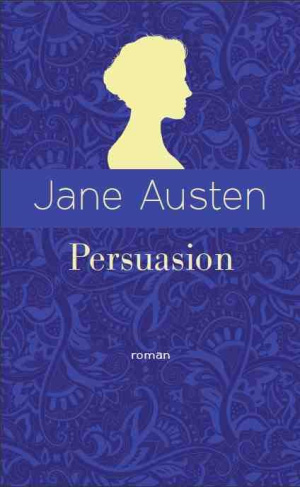
Persuasion. Edition collector
Anne, une jeune aristocrate, a repoussé les avances d'un homme qu'elle ne jugeait pas de sa condition... Serait-elle trop influençable ? L'ultime chef-d'oeuvre de Jane Austen paru à titre posthume en 1818.ÉPUISÉVOIR PRODUIT7,50 € -

Emma (VO)
Chapter OneEMMA WOODHOUSE, handsome, clever, and rich, with a comfortable home and happy disposition seemed to unite some of the best blessings of existence; and had lived nearly twenty-one years in the world with very little to distress or vex her.She was the youngest of the two daughters of a most affectionate, indulgent father; and had, in consequence of her sister's marriage, been mistress of his house from a very early period. Her mother had died too long ago for her to have more than an indistinct remembrance of her caresses; and her place had been supplied by an excellent woman as governess, who had fallen little short of a mother in affection.Sixteen years had Miss Taylor been in Mr. Woodhouse's family, less as a governess than a friend, very fond of both daughters, but particularly of Emma. Between them it was more the intimacy of sisters. Even before Miss Taylor had ceased to hold the nominal office of governess, the mildness of her temper had hardly allowed her to impose any restraint; and the shadow of authority being now long passed away, they had been living together as friend and friend very mutually attached, and Emma doing just what she liked; highly esteeming Miss Taylor's judgment, but directed chiefly by her own.The real evils, indeed, of Emma's situation were the power of having rather too much her own way, and a disposition to think a little too well of herself: these were the disadvantages which threatened alloy to her many enjoyments. The danger, however, was at present so unperceived, that they did not by any means rank as misfortunes with her.Sorrow came-a gentle sorrow-but not at all in the shape of any disagreeable consciousness. Miss Taylor married. It was Miss Taylor's loss which first brought grief. It was on the wedding day of this beloved friend that Emma first sat in mournful thought of any continuance. The wedding over, and the bride people gone, her father and herself were left to dine together, with no prospect of a third to cheer a long evening. Her father composed himself to sleep after dinner, as usual, and she had then only to sit and think of what she had lost.The event had every promise of happiness for her friend. Mr. Weston was a man of unexceptionable character, easy fortune, suitable age, and pleasant manners; and there was some satisfaction in considering with what self-denying, generous friendship she had always wished and promoted the match; but it was a black morning's work for her. The want of Miss Taylor would be felt every hour of every day. She recalled her past kindness-the kindness, the affection of sixteen years-how she had taught and how she had played with her from five years old-how she had devoted all her powers to attach and amuse her in health-and how nursed her through the various illnesses of childhood. A large debt of gratitude was owing here; but the intercourse of the last seven years, the equal footing and perfect unreserve which had soon followed Isabella's marriage, on their being left to each other, was yet a dearer, tenderer recollection. She had been a friend and companion such as few possessed; intelligent, well-informed, useful, gentle, knowing all the ways of the family, interested in all its concerns, and peculiarly interested in herself, in every pleasure, every scheme of hers; one to whom she could speak every thought as it arose, and who had such an affection for her as could never find fault.How was she to bear the change? It was true that her friend was going only half a mile from them; but Emma was aware that great must be the difference between a Mrs. Weston, only half a mile from them, and a Miss Taylor in the house; and with all her advantages, natural and domestic, she was now in great danger of suffering from intellectual solitude. She dearly loved her father, but he was no companion for her. He could not meet her in conversation, rational or playful.The evil of the actual disparity in their ages (and Mr. Woodhouse had not married early) was much increased by his constitution and habits; for having been a valetudinarian all his life, without activity of mind or body, he was a much older man in ways than in years; and though everywhere beloved for the friendliness of his heart and his amiable temper, his talents could not have recommended him at any time.Her sister, though comparatively but little removed by matrimony, being settled in London, only sixteen miles off, was much beyond her daily reach; and many a long October and November evening must be struggled through at Hartfield, before Christmas brought the next visit from Isabella and her husband, and their little children, to fill the house, and give her pleasant society again.Highbury, the large and populous village almost amounting to a town, to which Hartfield, in spite of its separate lawn, and shrubberies, and name, did really belong, afforded her no equals. The Woodhouses were first in consequence there. All looked up to them. She had many acquaintances in the place, for her father was universally civil, but not one among them who could be accepted in lieu of Miss Taylor for even half a day. It was a melancholy change; and Emma could not but sigh over it, and wish for impossible things, till her father awoke, and made it necessary to be cheerful. His spirits required support. He was a nervous man, easily depressed; fond of everybody that he was used to, and hating to part with them; hating change of every kind. Matrimony, as the origin of change, was always disagreeable; and he was by no means yet reconciled to his own daughter's marrying, nor could ever speak of her but with compassion, though it had been entirely a match of affection, when he was now obliged to part with Miss Taylor too; and from his habits of gentle selfishness, and of being never able to suppose that other people could feel differently from himself, he was very much disposed to think Miss Taylor had done as sad a thing for herself as for them, and would have been a great deal happier if she had spent all the rest of her life at Hartfield. Emma smiled and chatted as cheerfully as she could, to keep him from such thoughts; but when tea came, it was impossible for him not to say exactly as he had said at dinner:"Poor Miss Taylor! I wish she were here again. What a pity it is that Mr. Weston ever thought of her!""I cannot agree with you, papa; you know I cannot. Mr. Weston is such a good-humoured, pleasant, excellent man, that he thoroughly deserves a good wife; and you would not have had Miss Taylor live with us for ever, and bear all my odd humours,1 when she might have a house of her own?""A house of her own! but where is the advantage of a house of her own? This is three times as large; and you have never any odd humours, my dear.""How often we shall be going to see them, and they coming to see us! We shall be always meeting! We must begin; we must go and pay our wedding-visit very soon.""My dear, how am I to get so far? Randalls is such a distance. I could not walk half so far.""No, papa; nobody thought of your walking. We must go in the carriage, to be sure.""The carriage! But James will not like to put the horses to for such a little way; and where are the poor horses to be while we are paying our visit?""They are to be put into Mr. Weston's stable, papa. You know we have settled all that already. We talked it all over with Mr. Weston last night. And as for James, you may be very sure he will always like going to Randalls, because of his daughter's being housemaid there. I only doubt whether he will ever take us anywhere else. That was your doing, papa. You got Hannah that good place. Nobody thought of Hannah till you mentioned her-James is so obliged to you!""I am very glad I did think of her. It was very lucky, for I would not have had poor James think himself slighted upon any account; and I am sure she will make a very good servant; she is a civil, pretty-spoken girl; I have a great opinion of her. Whenever I see her, she always curtseys and asks me how I do, in a very pretty manner; and when you have had her here to do needlework, I observe she always turns the lock of the door the right way and never bangs it. I am sure she will be an excellent servant; and it will be a great comfort to poor Miss Taylor to have somebody about her that she is used to see. Whenever James goes over to his daughter, you know, she will be hearing of us. He will be able to tell her how we all are."Emma spared no exertions to maintain this happier flow of ideas, and hoped, by the help of backgammon, to get her father tolerably through the evening, and be attacked by no regrets but her own. The backgammon-table was placed; but a visitor immediately afterwards walked in and made it unnecessary.Mr. Knightley, a sensible man about seven or eight-and-thirty, was not only a very old and intimate friend of the family, but particularly connected with it, as the elder brother of Isabella's husband. He lived about a mile from Highbury, was a frequent visitor, and always welcome, and at this time more welcome than usual, as coming directly from their mutual connections in London. He had returned to a late dinner after some days"absence, and now walked up to Hartfield to say that all were well in Brunswick Square. It was a happy circumstance, and animated Mr. Woodhouse for some time. Mr. Knightley had a cheerful manner, which always did him good; and his many inquiries after "poor Isabella" and her children were answered most satisfactorily. When this was over, Mr. Woodhouse gratefully observed:"It is very kind of you, Mr. Knightley, to come out at this late hour to call upon us. I am afraid you must have had a shocking walk.""Not at all, sir. It is a beautiful moonlight night; and so mild that I must draw back from your great fire.""But you must have found it very damp and dirty. I wish you may not catch cold."&quo..."EN STOCKCOMMANDER5,00 € -

Pride and prejudice (VO)
When Elizabeth Bennet first meets eligible bachelor Fitzwilliam Darcy, she thinks him arrogant and conceited; he is indifferent to her good looks and lively mind. When she later discovers that Darcy has involved himself in the troubled relationship between his friend Bingley and her beloved sister Jane, she is determined to dislike him more than ever. In the sparkling comedy of manners that follows, Jane Austen shows the folly of judging by first impressions and superbly evokes the friendships,gossip and snobberies of provincial middle-class life.EN STOCKCOMMANDER12,00 €


Du même éditeur
-
A portrait of the artist as a young man
A masterpiece of subjectivity, a fictionalized memoir, a coming-of-age prose-poem, this brilliant novella introduces Joyce's alter ego, Stephen Daedelus, the hero of Ulysses, and begins the narrative experimentation that would help change the concept of literary narrative forever. It describes Stephen's formative years in Dublin; as Stephen matures, so does the writing, until it sparkles with clarity. The style presents numerous, almost insurmountable, problems for the oral interpreter, particularly one with the limited vocal range of John Lynch. But Lynch pays no attention to the problems. Instead, he identifies so completely with Daedelus, throws himself so lustily into the book, that it is as if the passionate young artist himself is bursting out of your speakers. Y.R. Winner of AUDIOFILE Earphones Award © AudioFile 2001, Portland, Maine-- Copyright - AudioFile, Portland, MaineÉPUISÉVOIR PRODUIT3,50 € -
-
-
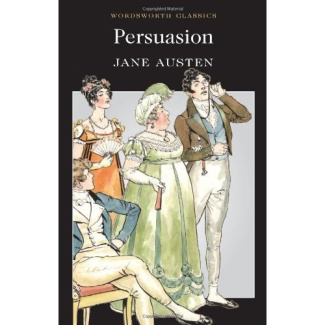
Persuasion (VO)
Extrait Sir Walter Elliot, of Kellynch Hall, in Somersetshire, was a man who, for his own amusement, never took up any book but the Baronetage; there he found occupation for an idle hour, and consolation in a distressed one; there his faculties were roused into admiration and respect by contemplating the limited remnant of the earliest patents; there any unwelcome sensations arising from domestic affairs changed naturally into pity and contempt as he turned over the almost endless creations of the last century; and there, if every other leaf were powerless, he could read his own history with an interest which never failed. This was the page at which the favourite volume always opened:--'ELLIOT OF KELLYNCH HALL''Walter Elliot, born March 1, 1760, married July 15, 1784, Elizabeth, daughter of James Stevenson, Esq., of South Park, in the county of Gloucester; by which lady (who died 1800) he has issue, Elizabeth, born June 1, 1785; Anne, born August 9, 1787; a still-born son, November 5, 1789; Mary, born November 20, 1791.'Precisely such had the paragraph originally stood from the printer's hands; but Sir Walter had improved it by adding, for the information of himself and his family, these words, after the date of Mary's birth:--'Married, December 16, 1810, Charles, son and heir of Charles Musgrove, Esq., of Uppercross, in the county of Somerset,' and by inserting most accurately the day of the month on which he had lost his wife. Then followed the history and rise of the ancient and respectable family in the usual terms; how it had been first settled in Cheshire, how mentioned in Dugdale, serving the office of high sheriff, representing a borough in three successive parliaments, exertions of loyalty, and dignity of baronet, in the first year of Charles II with all the Marys and Elizabeths they had married; forming altogether two handsome quarto pages, and concluding with the arms and motto:--'Principal seat, Kellynch Hall, in the county of Somerset,' and Sir Walter's handwriting again in this finale:--'Heir presumptive, William Walter Elliot, Esq., great-grandson of the second Sir Walter.''Vanity was the beginning and end of Sir Walter Elliot's character: vanity of person and of situation. He had been remarkably handsome in his youth, and at fifty-four was still a very fine man. Few women could think more of their personal appearance than he did, nor could the valet of any new-made lord be more delighted with the place he held in society. He considered the blessing of beauty as inferior only to the blessing of a baronetcy; and the Sir Walter Elliot, who united these gifts, was the constant object of his warmest respect and devotion. His good looks and his rank had one fair claim on his attachment, since to them he must have owed a wife of very superior character to anything deserved by his own. Lady Elliot had been an excellent woman, sensible and amiable, whose judgment and conduct, if they might be pardoned the youthful infatuation which made her Lady Elliot, had never required indulgence afterwards. She had humoured, or softened, or concealed his failings, and promoted his real respectability for seventeen years; and though not the very happiest being in the world herself, had found enough in her duties, her friends, and her children, to attach her to life, and make it no matter of indifference to her when she was called on to quit them. Three girls, the two eldest sixteen and fourteen, was an awful legacy for a mother to bequeath, an awful charge rather, to confide to the authority and guidance of a conceited, silly father. She had, however, one very intimate friend, a sensible, deserving woman, who had been brought, by strong attachment to herself, to settle close by her, in the village of Kellynch; and on her kindness and advice Lady Elliot mainly relied for the best help and maintenance of the good principles and instruction which she had been anxiously giving her daughters. This friend and Sir Walter did not marry, whatever might have been anticipated on that head by their acquaintance. Thirteen years had passed away since Lady Elliot's death, and they were still near neighbours and intimate friends, and one remained a widower, the other a widow. That Lady Russell, of steady age and character, and extremely well provided for, should have no thought of a second marriage, needs no apology to the public, which is rather apt to be unreasonably discontented when a woman does marry again, than when she does not; but Sir Walter's continuing in singleness requires explanation. Be it known, then, that Sir Walter, like a good father (having met with one or two private disappointments in very unreasonable applications), prided himself on remaining single for his dear daughter's sake. For one daughter, his eldest, he would really have given up anything, which he had not been very much tempted to do. Elizabeth had succeeded at sixteen to all that was possible of her mother's rights and consequence; and being very handsome, and very like himself, her influence had always been great, and they had gone on together most happily. His two other children were of very inferior value. Mary had acquired a little artificial importance by becoming Mrs. Charles Musgrove; but Anne, with an elegance of mind and sweetness of character, which must have placed her high with any people of real understanding, was nobody with either father or sister; her word had no weight, her convenience was always to give way--she was only Anne. To Lady Russell, indeed, she was a most dear and highly valued goddaughter, favourite, and friend. Lady Russell loved them all, but it was only in Anne that she could fancy the mother to revive again. A few years before Anne Elliot had been a very pretty girl, but her bloom had vanished early; and as, even in its height, her father had found little to admire in her (so totally different were her delicate features and mild dark eyes from his own), there could be nothing in them, now that she was faded and thin, to excite his esteem. He had never indulged much hope, he had now none, of ever reading her name in any other page of his favourite work. All equality of alliance must rest with Elizabeth, for Mary had merely connected herself with an old country family of respectability and large fortune, and had, therefore, given all the honour and received none: Elizabeth would, one day or other, marry suitably. It sometimes happens that a woman is handsomer at twenty-nine than she was ten years before; and, generally speaking, if there has been neither ill-health nor anxiety, it is a time of life at which scarcely any charm is lost. It was so with Elizabeth, still the same handsome Miss Elliot that she had begun to be thirteen years ago, and Sir Walter might be excused, therefore, in forgetting her age, or, at least, be deemed only half a fool, for thinking himself and Elizabeth as blooming as ever, amidst the wreck of the good looks of everybody else; for he could plainly see how old all the rest of his family and acquaintance were growing. Anne haggard, Mary coarse, every face in the neighbourhood worsting, and the rapid increase of the crow's foot about Lady Russell's temples had long been a distress to him. Elizabeth did not quite equal her father in personal contentment. Thirteen years had seen her mistress of Kellynch Hall, presiding and directing with a self-possession and decision which could never have given the idea of her being younger than she was. For thirteen years had she been doing the honours, and laying down the domestic law at home, and leading the way to the chaise and four, and walking immediately after Lady Russell out of all the drawing-rooms and dining-rooms in the country. Thirteen winters' revolving frosts had seen her opening every ball of credit which a scanty neighbourhood afforded, and thirteen springs shown their blossoms, as she travelled up to London with her father, for a few weeks' annual enjoyment of the great world. She had the remembrance of all this, she had the consciousness of being nine-and-twenty to give her some regrets and some apprehensions; she was fully satisfied of being still quite as handsome as ever, but she felt her approach to the years of danger, and would have rejoiced to be certain of being properly solicited by baronet-blood within the next twelvemonth or two. Then might she again take up the book of books with as much enjoyment as in her early youth, but now she liked it not. Always to be presented with the date of her own birth and see no marriage follow but that of a youngest sister, made the book an evil; and more than once, when her father had left it open on the table near her, had she closed it, with averted eyes, and pushed it away. She had had a disappointment, moreover, which that book and especially the history of her own family, must ever present the remembrance of. The heir presumptive, the very William Walter Elliot, Esq., whose rights had been so generally supported by her father, had disappointed her. She had, while a very young girl, as soon as she had known him to be, in the event of her having no brother, the future baronet, meant to marry him, and her father had always meant that she should. He had not been known to them as a boy; but soon after Lady Elliot's death, Sir Walter had sought the acquaintance, and though his overtures had not been met with any warmth, he had persevered in seeking it, making allowance for the modest drawing-back of youth; and, in one of their spring excursions to London, when Elizabeth was in her first bloom, Mr. Elliot had been forced into the introduction. He was at that time a very young man, just engaged in the study of the law; and Elizabeth found him extremely agreeable, and every plan in his favour was confirmed. He was invited to Kellynch Hall; he was talked of and expected all the rest of the year; but he never came. The following spring he was seen again in town, found equally agreeable, again encouraged, invited, and expected, and again he did not come; and the next tidings were tha... --Ce texte fait référence à l'édition Broché .EN STOCKCOMMANDER5,00 €


De la même catégorie
-
Of mice and men (VO)
Gary Sinise's reading of John Steinbeck's Of Mice and Men is nothing short of magnificent. Moving effortlessly from an eloquent, understated narrative voice to each character's quite particular presence, Sinise demonstrates a true command of the medium. At times, Sinise is so convincing that one is hard-pressed to believe that a single reader could be responsible for so many varied characterizations. Thanks to such a skilled reading, this audio edition captures every nuance of Steinbeck's austere prose and the full power of the novel's tragic denouement. Top to bottom, it's a masterful retelling of an American classic. R.W.B. (c)AudioFile, Portland, MaineEN STOCKCOMMANDER13,00 € -
Pride and prejudice (VO)
When Elizabeth Bennet first meets eligible bachelor Fitzwilliam Darcy, she thinks him arrogant and conceited; he is indifferent to her good looks and lively mind. When she later discovers that Darcy has involved himself in the troubled relationship between his friend Bingley and her beloved sister Jane, she is determined to dislike him more than ever. In the sparkling comedy of manners that follows, Jane Austen shows the folly of judging by first impressions and superbly evokes the friendships,gossip and snobberies of provincial middle-class life.EN STOCKCOMMANDER12,00 € -
ROMEO AND JULIET
Résumé : Set in a city torn apart by feuds and gang warfare, Shakespeare's immortal drama tells the story of star-crossed lovers, rival dynasties and bloody revenge. Romeo and Juliet is a hymn to youth and the thrill of forbidden love, charged with sexual passion and violence, but also a warning of death : a dazzling combination of bawdy comedy and high tragedy.EN STOCKCOMMANDER12,00 € -
Authorised Happiness Vol. 1
Résumé : Quand la notion d'état providence dérape, jusqu'où ira l'absurdité bureaucratique dans la recherche du bonheur pour tous ? Une série de tableaux pour des destins qui s'entrecroisent jusqu'à la terrible conclusion qui les rassemblera. Quand la société pousse à son paroxysme les idéaux d'égalité sociale, le résultat peut facilement tomber dans l'absurde. Par exemple, pour éviter les déficits chroniques de la sécurité sociale, quel meilleur moyen que d'interdire aux gens de prendre des risques avec leur santé ? Quitte à instaurer une police médicale et à mettre les contrevenants à l'amende... Trois histoires kafkaïennes à faire peur qui brossent un portrait terrifiant d'un monde trop règlementé.ÉPUISÉVOIR PRODUIT11,74 €


