

POETICAL WORKS
6,00 €
Épuisé
EAN :
9781853264016
(His remarkable autobiographical poem 'The Prelude' was completed in 1805, but was not published until after his death, and it is included in this full edition of Wordsworth's poetry)
| Date de parution | 02/06/1998 |
|---|---|
| Poids | 200g |

Distributor Debug Info
| SKU: | 9781853264016 |
| wmi_id_distributeur: | Not set |
| Is Salable (from plugin): | No (Out of Stock) |
| Is Salable (direct MSI check): | No (Out of Stock) |
| Distributor Name: | Par défaut |
| Availability Value: | 0 |
| Availability Label: | Epuisé |
| Match Result: | |
| Default Availability (Config): | 0 - Epuisé |
| Raw Config Mapping: |
Array
(
    [_1772119784121_121] => Array
        (
            [id] => 12707000
            [name] => 12707000
            [availability] => 1
            [activation_attribute] => 1
        )

)
|
Plus d'informations
| EAN | 9781853264016 |
|---|---|
| Titre | POETICAL WORKS |
| ISBN | 1853264016 |
| Auteur | WORDSWORTH WILL |
| Editeur | WORDSWORTH |
| Largeur | 0 |
| Poids | 200 |
| Date de parution | 19980602 |
| Nombre de pages | 0,00 € |
Pourquoi choisir Molière ?
Efficacité et rapidité Commandé avant 16h livré demain
Économique et pratique Livraison à domicile dès 5,10 €
Facile et sans frais Retrait gratuit en magasin
Sécurité et tranquillité Paiement 100 % sécurisé
Disponibilité et écoute Contactez-nous sur WhatsApp
Du même auteur
-
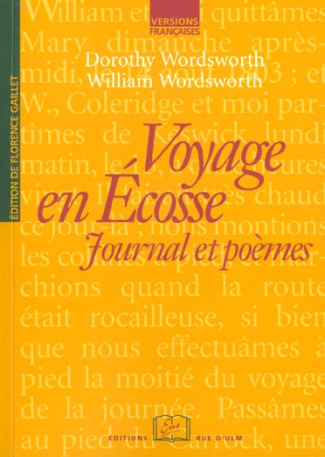
Voyage en Ecosse. Journal et poèmes
Récit de voyage écrit sous forme de journal par Dorothy Wordsworth, les Souvenirs d'un voyage en Ecosse, en l'an 1803 offrent une image vivante de ce pays au moment où il commençait à s'ouvrir aux " étrangers " - aux touristes anglais notamment. Découverte de nouveaux paysages, confrontation avec l'altérité, le périple de 1803 stimula également la créativité de William Wordsworth. Les poèmes qu'il composa alors se trouvent enchâssés dans le texte de Dorothy ; ils s'en détachèrent bientôt pour former le noyau du recueil publié par la suite : En mémoire d'un voyage en Ecosse, 1803. En réunissant les textes de Dorothy et de William Wordsworth, on a souhaité donner au lecteur la possibilité de confronter deux évocations, interdépendantes certes, mais possédant chacune sa propre tonalité.ÉPUISÉVOIR PRODUIT20,00 € -

LE PRELUDE
Oeuvre fondamentale du romantisme anglais, Le Prélude ne fut publié qu'à la mort de William Wordsworth, en 1850. C'est cette version qui est ici traduite, résultat d'un travail constant de révision d'un premier texte achevé en 1805. Souvent lyrique et introspectif, ce poème fascinant est l'un des plus riches de la poésie du monde anglophone. Explorant la période de formation de ses jeunes années, Wordsworth donne libre cours au travail de la mémoire, revenant sur son enfance et son adolescence, mais aussi ses séjours à Londres et l'expérience traumatisante de la Révolution française. Le Prélude, qui connut une postérité immense dans l'histoire de la littérature britannique jusqu'à nos jours, nous offre un portrait du poète, un tableau des sources de la création toujours contemporain par ses thèmes et ses enjeux. Wordsworth y évoque, dans une langue magnifique au rythme déambulatoire envoûtant, l'importance des perceptions au contact de la nature, le développement "moral de l'esprit du créateur, la nature de l'imagination, l'émerveillement devant le spectacle du monde, le saisissement, aussi, devant l'étrange et l'altérité lors d'instants de rencontre privilégiés. Emane de ce texte caractéristique de l'époque romantique, mais à bien des égards toujours marqué par l'esprit des Lumières, un souci constant de l'humain, ainsi qu'une transfiguration du simple et de l'authentique.ÉPUISÉVOIR PRODUIT28,01 € -
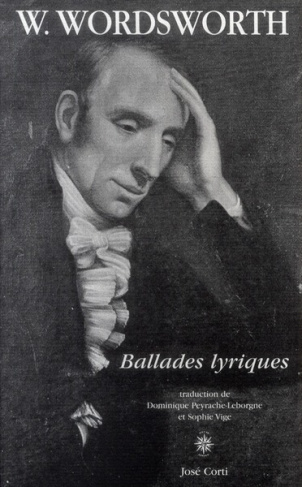
Ballades lyriques. Suivies de Ode : pressentiments d'immortalité, Edition bilingue français-anglais
Le succès du Dit du vieux marin, ballade fantastique de Coleridge, éclipsa pendant longtemps à l'étranger les Ballades Lyriques de Wordsworth, qui furent éditées dans le même recueil, selon le projet commun des deux amis. Ces Ballades Lyriques de 1798 sont à considérer comme l'?uvre de jeunesse d'un poète qui a pourtant déjà publié dans diverses revues et qui commence à avoir en tête un projet théorique bien précis, développé deux ans plus tard dans la première préface de 1800. C'est donc à la fois comme poète et comme théoricien de la poésie qu'il faut considérer celui qui, toute sa vie, remaniera la considérable autobiographie philosophique et poétique du Prélude, dont à bien des égards certains motifs apparaissent déjà dans Les Ballades Lyriques, notamment les bienheureux moments magiques des "spots of time". La progression du recueil retrace aussi un parcours, celui d'un homme du XVIIIe siècle, inspiré par l'esprit des Lumières (le rousseauisme et le godwinisme), celui du poète sensible méditant sur la situation de l'homme en société, sur l'héritage d'une tradition poétique, mais s'engageant aussi progressivement vers une voie de plus en plus personnelle, que l'on dira ensuite romantique: celle de la célébration des humbles, de la chanson triste et simple ou, à l'inverse celle de la comédie. Et il n'est pas de plus grande tendresse, tantôt joyeuse, tantôt douloureuse, que celle qui se dégage des figures d'innocence ou de martyre, telles celles de Johnny dans "Le petit idiot" ou de Martha dans "L'épine". Enfin, c'est par un poème célèbre, et à redécouvrir, que se termine le premier recueil de Wordsworth: le fameux "Tintern Abbey". Par son inspiration formelle, il rappelle l'héritage sacré de Milton, celui des poètes de lanature et de l'imagination au XVIIIe siècle, tels que Thomson, Akenside, Cowper; par son inspiration lyrique, il reste certainement l'?uvre la plus passionnément intimiste, la plus philosophique et la plus sobrement hédoniste du romantisme anglais.ÉPUISÉVOIR PRODUIT22,30 € -
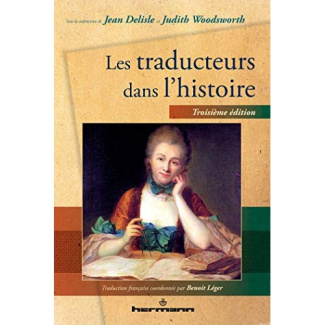
Les traducteurs dans l'histoire. 3e édition
Résumé : Les traducteurs dans l'histoire a été accueilli dès sa première édition comme un ouvrage incontournable. Cette nouvelle édition, revue et enrichie, comporte d'importantes mises à jour et des sections inédites. Elle tient compte aussi des orientations de la recherche contemporaine et offre une interprétation plus nuancée de certains faits historiques. La bibliographie renferme plus de cent nouveaux titres. Cet ouvrage, indispensable pour les étudiants, les chercheurs et les professionnels de la traduction, intéressera tout autant les chercheurs d'autres disciplines et le grand public, car l'histoire de la traduction recoupe celle des cultures et des civilisations.ÉPUISÉVOIR PRODUIT40,40 €


Du même éditeur
-

Mansfield Park (English)
Extrait Chapter I About thirty years ago Miss Maria Ward, of Huntingdon, with only seven thousand pounds, had the good luck to captivate Sir Thomas Bertram, of Mansfield Park, in the county of Northampton, and to be thereby raised to the rank of a baronet's lady, with all the comforts and consequences of an handsome house and large income. All Huntingdon exclaimed on the greatness of the match, and her uncle, the lawyer, himself, allowed her to be at least three thousand pounds short of any equitable claim to it. She had two sisters to be benefited by her elevation; and such of their acquaintance as thought Miss Ward and Miss Frances quite as handsome as Miss Maria, did not scruple to predict their marrying with almost equal advantage. But there certainly are not so many men of large fortune in the world as there are pretty women to deserve them. Miss Ward, at the end of half a dozen years, found herself obliged to be attached to the Rev. Mr. Norris, a friend of her brother-in-law, with scarcely any private fortune, and Miss Frances fared yet worse. Miss Ward's match, indeed, when it came to the point, was not contemptible: Sir Thomas being happily able to give his friend an income in the living of Mansfield; and Mr. and Mrs. Norris began their career of conjugal felicity with very little less than a thousand a year. But Miss Frances married, in the common phrase, to disoblige her family, and by fixing on a lieutenant of marines, without education, fortune, or connexions, did it very thoroughly. She could hardly have made a more untoward choice. Sir Thomas Bertram had interest, which, from principle as well as pride—from a general wish of doing right, and a desire of seeing all that were connected with him in situations of respectability, he would have been glad to exert for the advantage of Lady Bertram's sister; but her husband's profession was such as no interest could reach; and before he had time to devise any other method of assisting them, an absolute breach between the sisters had taken place. It was the natural result of the conduct of each party, and such as a very imprudent marriage almost always produces. To save herself from useless remonstrance, Mrs. Price never wrote to her family on the subject till actually married. Lady Bertram, who was a woman of very tranquil feelings, and a temper remarkably easy and indolent, would have contented herself with merely giving up her sister, and thinking no more of the matter; but Mrs. Norris had a spirit of activity, which could not be satisfied till she had written a long and angry letter to Fanny, to point out the folly of her conduct, and threaten her with all its possible ill consequences. Mrs. Price, in her turn, was injured and angry; and an answer, which comprehended each sister in its bitterness, and bestowed such very disrespectful reflections on the pride of Sir Thomas as Mrs. Norris could not possibly keep to herself, put an end to all intercourse between them for a considerable period. Their homes were so distant, and the circles in which they moved so distinct, as almost to preclude the means of ever hearing of each other's existence during the eleven following years, or, at least, to make it very wonderful to Sir Thomas that Mrs. Norris should ever have it in her power to tell them, as she now and then did, in an angry voice, that Fanny had got another child. By the end of eleven years, however, Mrs. Price could no longer afford to cherish pride or resentment, or to lose one connexion that might possibly assist her. A large and still increasing family, an husband disabled for active service, but not the less equal to company and good liquor, and a very small income to supply their wants, made her eager to regain the friends she had so carelessly sacrificed; and she addressed Lady Bertram in a letter which spoke so much contrition and despondence, such a superfluity of children, and such a want of almost everything else, as could not but dispose them all to a reconciliation. She was preparing for her ninth lying-in; and after bewailing the circumstance, and imploring their countenance as sponsors to the expected child, she could not conceal how important she felt they might be to the future maintenance of the eight already in being. Her eldest was a boy of ten years old, a fine spirited fellow, who longed to be out in the world; but what could she do? Was there any chance of his being hereafter useful to Sir Thomas in the concerns of his West Indian property? No situation would be beneath him—or what did Sir Thomas think of Woolwich? or how could a boy be sent out to the East? The letter was not unproductive. It re-established peace and kindness. Sir Thomas sent friendly advice and professions, Lady Bertram dispatched money and baby-linen, and Mrs. Norris wrote the letters. Such were its immediate effects, and within a twelvemonth a more important advantage to Mrs. Price resulted from it. Mrs. Norris was often observing to the others that she could not get her poor sister and her family out of her head, and that, much as they had all done for her, she seemed to be wanting to do more; and at length she could not but own it to be her wish that poor Mrs. Price should be relieved from the charge and expense of one child entirely out of her great number. "What if they were among them to undertake the care of her eldest daughter, a girl now nine years old, of an age to require more attention than her poor mother could possibly give? The trouble and expense of it to them would be nothing, compared with the benevolence of the action." Lady Bertram agreed with her instantly. "I think we cannot do better," said she; "let us send for the child." Sir Thomas could not give so instantaneous and unqualified a consent. He debated and hesitated;—it was a serious charge;— a girl so brought up must be adequately provided for, or there would be cruelty instead of kindness in taking her from her family. He thought of his own four children—of his two sons—of cousins in love, etc.;—but no sooner had he deliberately begun to state his objections, than Mrs. Norris interrupted him with a reply to them all, whether stated or not. "My dear Sir Thomas, I perfectly comprehend you, and do justice to the generosity and delicacy of your notions, which indeed are quite of a piece with your general conduct; and I entirely agree with you in the main as to the propriety of doing everything one could by way of providing for a child one had in a manner taken into one's own hands; and I am sure I should be the last person in the world to withhold my mite upon such an occasion. Having no children of my own, who should I look to in any little matter I may ever have to bestow, but the children of my sisters?— and I am sure Mr. Norris is too just—but you know I am a woman of few words and professions. Do not let us be frightened from a good deed by a trifle. Give a girl an education, and introduce her properly into the world, and ten to one but she has the means of settling well, without farther expense to anybody. A niece of ours, Sir Thomas, I may say, or at least of yours, would not grow up in this neighbourhood without many advantages. I don't say she would be so handsome as her cousins. I dare say she would not; but she would be introduced into the society of this country under such very favourable circumstances as, in all human probability, would get her a creditable establishment. You are thinking of your sons— but do not you know that, of all things upon earth, that is the least likely to happen, brought up as they would be, always together like brothers and sisters? It is morally impossible. I never knew an instance of it. It is, in fact, the only sure way of providing against the connexion. Suppose her a pretty girl, and seen by Tom or Edmund for the first time seven years hence, and I dare say there would be mischief. The very idea of her having been suffered to grow up at a distance from us all in poverty and neglect, would be enough to make either of the dear, sweet-tempered boys in love with her. But breed her up with them from this time, and suppose her even to have the beauty of an angel, and she will never be more to either than a sister." "There is a great deal of truth in what you say," replied Sir Thomas, "and far be it from me to throw any fanciful impediment in the way of a plan which would be so consistent with the relative situations of each. I only meant to observe that it ought not to be lightly engaged in, and that to make it really serviceable to Mrs. Price, and creditable to ourselves, we must secure to the child, or consider ourselves engaged to secure to her hereafter, as circumstances may arise, the provision of a gentlewoman, if no such establishment should offer as you are so sanguine in expecting." "I thoroughly understand you," cried Mrs. Norris, "you are everything that is generous and considerate, and I am sure we shall never disagree on this point. Whatever I can do, as you well know, I am always ready enough to do for the good of those I love; and, though I could never feel for this little girl the hundredth part of the regard I bear your own dear children, nor consider her, in any respect, so much my own, I should hate myself if I were capable of neglecting her. Is not she a sister's child? and could I bear to see her want while I had a bit of bread to give her? My dear Sir Thomas, with all my faults I have a warm heart; and, poor as I am, would rather deny myself the necessaries of life than do an ungenerous thing. So, if you are not against it, I will write to my poor sister tomorrow, and make the proposal; and, as soon as matters are settled, Iwill engage to get the child to Mansfield; you shall have no trouble about it. My own trouble, you know, I never regard. I will send Nanny to London on purpose, and she may have a bed at her cousin the saddler's, and the child be appointed to meet her there. They may easily get her from Portsmouth to town by the coach, under the care of any creditable person that may chance to be going. I dare say there is always some reputable tradesman's wife or other going up." Except to the attack on Nanny's cousin, Sir Thomas no longer made any objection, and a more respectable, though less economical rendezvous being accordingly substituted, everything was considered as settled, and the pleasures of so benevolent a scheme were already enjoyed. The division of gratifying sensations ought not, in strict justice, to have been equal; for Sir Thomas was fully resolved to be the real and consistent patron of the selected child, and Mrs. Norris had not the least intention of being at any expense whatever in her maintenance. As far as walking, talking, and contriving reached, she was thoroughly benevolent, and nobody knew better how to dictate liberality to others; but her love of money was equal to her love of directing, and she knew quite as well how to save her own as to spend that of her friends. Having married on a narrower income than she had been used to look forward to, she had, from the first, fancied a very strict line of economy necessary; and what was begun as a matter of prudence, soon grew into a matter of choice, as an object of that needful solicitude which there were no children to supply. Had there been a family to provide for, Mrs. Norris might never have saved her money; but having no care of that kind, there was nothing to impede her frugality, or lessen the comfort of making a yearly addition to an income which they had never lived up to. Under this infatuating principle, counteracted by no real affection for her sister, it was impossible for her to aim at more than the credit of projecting and arranging so expensive a charity; though perhaps she might so little know herself as to walk home to the Parsonage, after this conversation, in the happy belief of being the most liberal-minded sister and aunt in the world. When the subject was brought forward again, her views were more fully explained; and, in reply to Lady Bertram's calm inquiry of "Where shall the child come to first, sister, to you or to us?" Sir Thomas heard with some surprise that it would be totally out of Mrs. Norris's power to take any share in the personal charge of her. He had been considering her as a particularly welcome addition at the Parsonage, as a desirable companion to an aunt who had no children of her own; but he found himself wholly mistaken. Mrs. Norris was sorry to say that the little girl's staying with them, at least as things then were, was quite out of the question. Poor Mr. Norris's indifferent state of health made it an impossibility: he could no more bear the noise of a child than he could fly; if, indeed, he should ever get well of his gouty complaints, it would be a different matter: she should then be glad to take her turn, and think nothing of the inconvenience; but just now, poor Mr. Norris took up every moment of her time, and the very mention of such a thing she was sure would distract him. "Then she had better come to us," said Lady Bertram, with the utmost composure. After a short pause Sir Thomas added with dignity, "Yes, let her home be in this house. We will endeavour to do our duty by her, and she will, at least, have the advantage of companions of her own age, and of a regular instructress." "Very true," cried Mrs. Norris, "which are both very important considerations; and it will be just the same to Miss Lee whether she has three girls to teach, or only two—there can be no difference. I only wish I could be more useful; but you see I do all in my power. I am not one of those that spare their own trouble; and Nanny shall fetch her, however it may put me to inconvenience to have my chief counsellor away for three days. I suppose, sister, you will put the child in the little white attic, near the old nurseries. It will be much the best place for her, so near Miss Lee, and not far from the girls, and close by the housemaids, who could either of them help to dress her, you know, and take care of her clothes, for I suppose you would not think it fair to expect Ellis to wait on her as well as the others. Indeed, I do not see that you could possibly place her anywhere else." Lady Bertram made no opposition. "I hope she will prove a well-disposed girl," continued Mrs. Norris, "and be sensible of her uncommon good fortune in having such friends." "Should her disposition be really bad," said Sir Thomas, "we must not, for our own children's sake, continue her in the family; but there is no reason to expect so great an evil. We shall probably see much to wish altered in her, and must prepare ourselves for gross ignorance, some meanness of opinions, and very distressing vulgarity of manner; but these are not incurable faults—nor, I trust, can they be dangerous for her associates. Had my daughters been younger than herself, I should have considered the introduction of such a companion as a matter of very serious moment; but, as it is, I hope there can be nothing to fear for them, and everything to hope for her, from the association." "That is exactly what I think," cried Mrs. Norris, "and what I was saying to my husband this morning. It will be an education for the child, said I, only being with her cousins; if Miss Lee taught her nothing, she would learn to be good and clever from them." "I hope she will not tease my poor pug," said Lady Bertram; "I have but just got Julia to leave it alone." "There will be some difficulty in our way, Mrs. Norris," observed Sir Thomas, "as to the distinction proper to be made between the girls as they grow up: how to preserve in the minds of my daughters the consciousness of what they are, without making them think too lowly of their cousin; and how, without depressing her spirits too far, to make her remember that she is not a Miss Bertram. I should wish to see them very good friends, and would, on no account, authorise in my girls the smallest degree of arrogance towards their relation; but still they cannot be equals. Their rank, fortune, rights, and expectations will always be different. It is a point of great delicacy, and you must assist us in our endeavours to choose exactly the right line of conduct." Mrs. Norris was quite at his service; and though she perfectly agreed with him as to its being a most difficult thing, encouraged him to hope that between them it would be easily managed. It will be readily believed that Mrs. Norris did not write to her sister in vain. Mrs. Price seemed rather surprised that a girl should be fixed on, when she had so many fine boys, but accepted the offer most thankfully, assuring them of her daughter's being a very well-disposed, good-humoured girl, and trusting they would never have cause to throw her off. She spoke of her farther as somewhat delicate and puny, but was sanguine in the hope of her being materially better for change of air. Poor woman! she probably thought change of air might agree with many of her children.ÉPUISÉVOIR PRODUIT3,50 € -
-
-


