

Bridgerton/06/ When He Was Wicked (VO)
13,00 €
En stock
EAN :
9780349429472
A moment so tremendous, so sharp and breathtaking, that one knows one's life will never be the same. For Michael Stirling, London's most infamous bachelor, that moment came the first time he laid eyes on Francesca Bridgerton. After a lifetime of chasing women, of smiling slyly as they chased him, of allowing himself to be caught but never permitting his heart to become engaged, he took one look at Francesca Bridgerton and fell so fast and hard in love it was a wonder he managed to remain standing. Unfortunately for Michael, however, Francesca's surname was to remain Bridgerton for a mere thirty-six hours longer - the occasion of their meeting was, lamentably, a supper celebrating her imminent wedding to his cousin...

Distributor Debug Info
| SKU: | 9780349429472 |
| wmi_id_distributeur: | Not set |
| Is Salable (from plugin): | Yes (In Stock) |
| Is Salable (direct MSI check): | Yes (In Stock) |
| Distributor Name: | Par défaut |
| Availability Value: | 0 |
| Availability Label: | Epuisé |
| Match Result: | |
| Default Availability (Config): | 0 - Epuisé |
| Raw Config Mapping: |
Array
(
    [_1772119784121_121] => Array
        (
            [id] => 12707000
            [name] => 12707000
            [availability] => 1
            [activation_attribute] => 1
        )

)
|
Plus d'informations
| EAN | 9780349429472 |
|---|---|
| Titre | Bridgerton/06/ When He Was Wicked (VO) |
| Auteur | Quinn Julia |
| Editeur | GARDNERS |
| Largeur | 0 |
| Poids | 300 |
| Date de parution | 20211026 |
| Nombre de pages | 0,00 € |
Pourquoi choisir Molière ?
Efficacité et rapidité Commandé avant 16h livré demain
Économique et pratique Livraison à domicile dès 5,10 €
Facile et sans frais Retrait gratuit en magasin
Sécurité et tranquillité Paiement 100 % sécurisé
Disponibilité et écoute Contactez-nous sur WhatsApp
Du même auteur
-

-
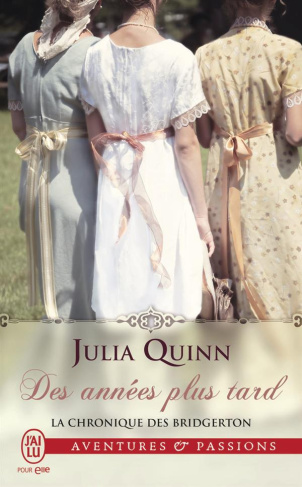
La chronique des Bridgerton/09/Des années plus tard
Que deviennent les héros d'un roman, une fois la dernière page tournée ? Pour Daphné et Simon, après vingt ans d'un mariage idyllique et quatre beaux enfants, c'est un événement inattendu qui bouleverse leur quotidien. Kate et Anthony doivent s'affronter dans une compétition d'un genre un peu particulier. Eloïse découvre un improbable secret. La vie inflige une épreuve à Francesca et Michael. Et même Violet, la matriarche de la famille Bridgerton, va s'apercevoir que les belles histoires n'ont peut-être pas de fin.Notes Biographiques : Diplômée de Harvard, Julie Pottinger opte pour le pseudonyme de "Julia Quinn" pour écrire ses romans. Sa spécialité est l'écriture de romances historiques, principalement celles se déroulant durant la Régence anglaise, s'inspirant ainsi de Jane Austen. Son style diffère de celui des romancières des années 70 et 80 qui selon elle, présentaient des héroïnes "paillassons" obéissant aux ordres de mâles dominants. Même si elle ne s'écarte pas des codes de la romance, Julia Quinn se considère comme féministe. Elle aime briser l'idée reçue selon laquelle les femmes intelligentes ne lisent pas (et n'écrivent pas) de romance.Elle a été récompensée à trois reprises par le prestigieux RITA Award. Ses livres ont été traduits en 37 langues à travers le monde et se sont classés à de nombreuses reprises sur la liste des best-sellers du New York Times. Elle a vendu plus de 10 millions d'exemplaires de ses romans rien qu'aux États-Unis. Son oeuvre la plus populaire est La Chronique des Bridgerton, publiée aux Éditions J'ai lu.La saga met en scène la famille Bridgerton au sein de la haute société londonienne et dont les évènements sont orchestrés par une mystérieuse Lady Whistledown. La série est actuellement disponible sur Netflix et cumule des records de visionnage.ÉPUISÉVOIR PRODUIT7,40 € -

La chronique des Bridgerton Tomes 5 & 6 : Eloïse; Francesca
Résumé : Il se passe toujours quelque chose dans la famille Bridgerton ! Si les mariages des aînés semblent heureux, on apprend qu'Eloïse, la plus rebelle de la fratrie, a quitté Londres pour une destination inconnue. Cette fuite cacherait-elle un nouveau scandale ? Et que dire de Francesca la dernière des filles de la maison Bridgerton ? On prétend que son récent veuvage est moins insupportable lorsque le comte de Kilmartin est là pour sécher ses larmes.EN STOCKCOMMANDER16,90 € -
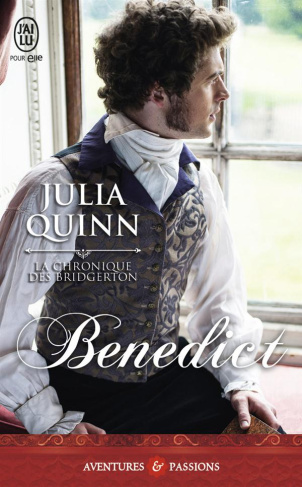
La chronique des Bridgerton/03/Benedict
Résumé : Comme le rapporte la mystérieuse lady Whistledown, , dans sa chronique mondaine, on a vu, lors du bal masqué organisé par les Bridgerton, Benedict, le cadet de la famille, en compagnie d'une ravissante inconnue. Mais à minuit, la belle s'est enfuie. Depuis, il a beau la chercher dans tout Londres, elle semble s'être évaporée. Qui pourrait se douter que sous le masque de soie noire se cachait Sophie Beckett, fille illégitime du comte de Penwood, haïe par sa marâtre qui' la cantonne à l'office ? Quand Benedict croisera de nouveau Sophie, saura-t-il la reconnaître sous ses ys habits de domestique ?ÉPUISÉVOIR PRODUIT7,40 €


Du même éditeur
-

In Pale battalions
Extrait Chapter OneChildhood memories fit their own intricate pattern. They cannot be made to conform to the version of our past we try to impose upon them. Thus I could say that Lord and Lady Powerstock and the home they gave me at Meongate more than compensated for being an orphan, that a silver spoon easily took the place of my mother's smile. I could say it--but every recollection of my early years would deny it.Meongate must once have been the crowded, bustling house of a cheerful family, as the Hallowses must once have been that family. Every favour of nature in its setting where the Hampshire downs met the pastures of the Meon valley, every effort of man in its spacious rooms and landscaped park, had been bestowed on the home of one small child.Yet it was not enough. When I was growing up at Meongate in the early 1920s, most of its grandeur had long since departed. Many of the rooms were shut up and disused, much of the park turned over to farmland. And all the laughing, happy people I imagined filling its empty rooms and treading its neglected lawns had vanished into a past beyond my reach.I grew up with the knowledge that my parents were both dead, my father killed on the Somme, my mother carried off by pneumonia a few days after my birth. It was not kept from me. Indeed, I was constantly reminded of it, constantly confronted with the implication that I must in some way bear the blame for the shadow of grief, or of something worse, that hung over their memory. That shadow, cast by the unknown, lay at the heart of the cold, dark certainty that also grew within me: I was not wanted at Meongate, not welcomed there, not loved.It might have been different had my grandfather not been the grave, withdrawn, perpetually melancholic man that he was. I, who never knew him when he was young, cannot imagine him as anything other than the wheelchair-bound occupant of his ground-floor rooms, deprived by his own morbidity, as much as by the lingering effects of a stroke, of all warmth and fondness. When Nanny Hiles took me, as she regularly did, to kiss him goodnight, all I wanted to do was escape from the cold, fleeting touch of his flesh. When, playing on the lawn, I would look up and see him watching me from his window, all I wanted to do was run away from the mournful, questing sadness in his eyes. Later, I came to sense that he was waiting, waiting for me to be old enough to understand him, waiting in the hope that he would live to see that day.Lady Powerstock, twenty years his junior, was not my real grandmother. She was buried in the village churchyard, another ghost whom I did not know and who could do nothing to help me. I imagined her as everything her successor was not--kind, loving and generous--but it did me no good. Olivia, the woman I was required to address as Grandmama in her place, had once been beautiful and, at fifty, her looks were still with her, her figure still fine, her dress sense impeccable. That we were not related by blood explained, to my satisfaction, why she did not love me. What I could not explain was why she went so far as to hate me, but hate me she undoubtedly did. She did not trouble to disguise the fact. She let it hover, menacing and unspoken, at the edge of all our exchanges, let it grow as an awareness between us, a secret confirmation that she too was only waiting, waiting for death to remove her husband and with him any lingering restraint on her conduct towards me. There was an air of practised vice about her that was to draw men all her life, an air of voluptuous pleasure at her own depravity that made her hatred of me seem merely instinctive. Yet there was always more to it than that. She had drawn some venom from whatever part she had played in the past of that house and had reserved it for me.My only friend in those days, my only guide through Meongate's hidden perils, was Fergus, the taciturn and undemonstrative major-domo, "shifty" as Olivia described him and certainly not as deferential as he should have been, but none the less my sole confidant. Sally, the sullen maid, and humourless Nanny Hiles both went in awe of Olivia, but Fergus treated her with an assurance, bordering on disrespect, that made him my immediate ally. A cautious, solitary, pessimistic man who had expected little from life and consequently been spared many disappointments, perhaps he took pity on a lonely child whose plight he understood better than she did herself. He would take me on covert expeditions through the grounds, or down to the wooded reach of the Meon where he fished of a quiet afternoon, or into Droxford in the trap, when he would buy me a twist of sherbet and leave me sitting on the wall outside Wilsmer's saddlery whilst he went in to haggle over a new bridle for the pony. For such brief moments as those, kicking my heels on Mr. Wilsmer's wall and eating my sherbet in the sunshine, I was happy. But such moments did not last.It was Fergus who first showed me my father's name, recorded with the other war dead of the village, on a plaque at the church. Their Name Liveth for Evermore, the inscription said, and his name--Captain the Honourable John Hallows--is all that did live for me. I would stare at it for what seemed like hours trying to conjure up the real living and breathing father that he had never been to me, seeing only those stiff, expressionless, uniformed figures preserved by photographs in back copies of the Illustrated London News, glimpsing no part of his true self beyond the neatly carved letters of his name.As for my mother, of her there was no record at all, no grave, no memorial of any kind. Fergus, when I questioned him, prevaricated. My mother's grave, if she had one, was far away--and he did not know where. There were, I was to understand, limits to what even he could tell me. Whether he suggested it or not I cannot remember, but, for some reason, I decided to ask Olivia. I cannot recall how old I was when it happened, but I had followed her into the library, where she often went to look at a painting that hung there."Where is my mother's grave?" I said bluntly, partly intending the question to be a challenge. All hatred is, in time, reciprocated and I had come to hate Olivia as much as she hated me; I did not then appreciate how dangerous an enemy she could be.She did not answer in words. She turned aside from that great, high, dark painting and hit me so hard across the face that I nearly fell over. I stood there, clutching the reddening bruise, too shocked by the pain of it to cry, and she stooped over me, her eyes blazing. "If you ever ask that question again," she said, "if you ever mention your mother again, I'll make you suffer."The mystery of my mother thenceforth became the grand and secret obsession of my childhood. My father's death, after all, had a comforting simplicity about it. Every November there was an Armistice Parade in the village to commemorate the sacrifice of Captain the Honourable John Hallows and the many others like him. Though not permitted to join the Brownie troop that took part in the parade, I was allowed to go and watch and could imagine myself marching with all the little girls who, like me, had lost their father. But, at the end of the parade, they went home to their mothers; I could not even remember mine.Sometimes, though, I thought I could remember her. It was impossible, of course, if what I had been told of her was true, but Olivia had succeeded in making me doubt everything I had not personally experienced, and there was one dim, early memory, seemingly at the very dawn of my recollection, to sustain what I so wanted to believe.I was standing on the platform at Droxford railway station. It was a hot summer's day: I could feel the heat of the gravel seeping up through my shoes. A train was standing at the platform, great billows of smoke rising as the engine gathered steam. The man standing beside me, who had been holding my hand, stooped and lifted me up, cradling me in his arms to watch the train pull out. He was stout and white-haired. I remember the rumble of his voice and the brim of his straw hat touching my head as he raised his free hand to wave. And I was waving too, at a woman aboard the train who had wound down the window and was leaning out, waving also and smiling and crying as she did so. She was dressed in blue and held a white handkerchief in her right hand. And the train carried her away. And then I cried too and the stout old man hugged me, the brass buttons on his coat cold against my face.I recounted the memory to Fergus one day, when we were returning from a mushrooming expedition. When I had finished, I asked him who he thought the old man was."Sounds like old Mr. Gladwin," he replied. "The first Lady Powerstock's father. He lived here . . . till she sent him away." By she Fergus always meant Olivia."Why did she do that?""She'd have had her reasons, I don't doubt.""When did he go?""The summer of 1920, when you were three. Back to Yorkshire, so they say. A proper caution, was Mr. Gladwin.""Who was the pretty lady, Fergus?""That I don't know.""Was she . . . my mother?"He pulled up and looked down at me with a frown. "That she was not," he said with deliberate slowness. "Your mother passed away a few days after she had you. You know that. No amount of wanting is going to make you remember her.""Then . . . who was the pretty lady?"His frown became less kindly. "I told you: I don't know. That Mr. Gladwin, he was a close one. Now, look to that napkin or you'll pitch your breakfast into the lane--and mine with it."If the pretty lady wasn't my mother, who was she? What was old Mr. Gladwin, my great-grandfather, to her? There were no answers within my reach, just the secret hope I went on harbouring that maybe my mother wasn't really dead at all, just ....ÉPUISÉVOIR PRODUIT11,79 € -
The heart's invisible furies (VO)
Résumé : Cast out from her West Cork village, sixteen years old and pregnant, Catherine Goggin makes her way to Dublin to start afresh. She has no choice but to believe that the nun to whom she entrusts her child will find him a better life.The baby is named Cyril by his adoptive parents, Charles and Maude Avery, a well-to-do but deeply eccentric couple who treat him more like a curiosity than a son. You're not a real Avery, they tell him. And perhaps he isn't. But through them he meets Julian Woodbead who, even from childhood, seems destined for an infinitely more glamorous and dangerous life. And so begins one man's funny and moving search to find his place in a world that seems to delight in gently tormenting him at every turn. Buffeted by circumstance and, at times, the consequences of his own questionable judgement, Cyril must navigate his emotions and desires in a search for that most elemental human need, happiness.EN STOCKCOMMANDER14,00 € -
-


De la même catégorie
-
1984 (VO)
George Orwell's dystopian masterpiece, Nineteen Eighty-Four is perhaps the most pervasively influential book of the twentieth century, making famous Big Brother, newspeak and Room 101.'Who controls the past controls the future: who controls the present controls the past'Hidden away in the Record Department of the sprawling Ministry of Truth, Winston Smith skilfully rewrites the past to suit the needs of the Party. Yet he inwardly rebels against the totalitarian world he lives in, which demands absolute obedience and controls him through the all-seeing telescreens and the watchful eye of Big Brother, symbolic head of the Party. In his longing for truth and liberty, Smith begins a secret love affair with a fellow-worker Julia, but soon discovers the true price of freedom is betrayal.Eric Arthur Blair (1903-1950), better known by his pen-name, George Orwell, was born in India, where his father worked for the Civil Service. An author and journalist, Orwell was one of the most prominent and influential figures in twentieth-century literature. His unique political allegory Animal Farm was published in 1945, and it was this novel, together with the dystopia of Nineteen Eighty-Four (1949), which brought him world-wide fame. All his novels and non-fiction, including Burmese Days (1934), Down and Out in Paris and London (1933), The Road to Wigan Pier (1937) and Homage to Catalonia (1938) are published in Penguin Modern Classics. If you enjoyed Nineteen Eighty-Four, you might like Orwell's Animal Farm, also available in Penguin Great Orwell.'His final masterpiece... enthralling and indispensible for understanding modern history'Timothy Garton-Ash, New York Review of Books'The book of the twentieth century... haunts us with an ever-darker relevance'IndependentEN STOCKCOMMANDER10,00 € -
THE PICTURE OF DORIAN GRAY
It seemed to be an impossible task to outdo the former edition of "Dorian Gray" in the World's Classics series, but Bristow has achieved his goal. The quality of the explanatory notes is, simply, superb, and the introduction is succint but informative,EN STOCKCOMMANDER12,00 € -
The boy in the striped pyjamas
In this Holocaust novel, Bruno leaves his wonderful Berlin home with his parents because of "the fury." Boyne's depiction of time and place becomes real with Michael Maloney's characterization of this displaced 9-year-old, who rapidly goes from excited confusion to indignant anger. Maloney's narrative bits are a calm counterpoint to the bewilderment of the protagonist, who finds himself at "Off With," where he is surrounded by people dressed in striped pajamas. Maloney continues to dramatize Bruno's moods as he makes friends with a young prisoner and observes the cruelty of a controlling soldier. Making Bruno real is crucial to our acceptance of his innocent horror, essential to filling in all the author doesn't say, and necessary to establishing the emotional balance we need to hear this disturbing story. S.W. © AudioFile 2007, Portland, Maine-- Copyright - AudioFile, Portland, MaineEN STOCKCOMMANDER12,00 € -
ROMEO AND JULIET
Résumé : Set in a city torn apart by feuds and gang warfare, Shakespeare's immortal drama tells the story of star-crossed lovers, rival dynasties and bloody revenge. Romeo and Juliet is a hymn to youth and the thrill of forbidden love, charged with sexual passion and violence, but also a warning of death : a dazzling combination of bawdy comedy and high tragedy.EN STOCKCOMMANDER12,00 €


