

Pyramide
Le Caire, 1890. Un soldat britannique émerge des profondeurs d'un égout. Il prétend avoir été pris au piège d'une cave sous-marine où il aurait découvert un trésor composé de bijoux, d'or et de milliers de papyrus? Personne ne prête attention à son récit qui semble être le produit d'une imagination délirante, et son histoire est oubliée. De nos jours. Jack Howard tombe sur ce récit qui l'interpelle par sa mention d'un "sas de lumière aveuglante". Alors que la situation politique en Egypte est explosive, Jack et son équipe se lancent dans une expédition archéologique au péril de leurs vies. Leur mission les conduira dans les abysses de la mer Rouge et sur les traces du sanguinaire pharaon Akhenaton qui était le gardien d'un terrible secret.

| SKU: | 9782266259675 |
| wmi_id_distributeur: | Not set |
| Is Salable (from plugin): | No (Out of Stock) |
| Is Salable (direct MSI check): | No (Out of Stock) |
| Distributor Name: | Par défaut |
| Availability Value: | 0 |
| Availability Label: | Epuisé |
| Match Result: | |
| Default Availability (Config): | 0 - Epuisé |
| Raw Config Mapping: |
Array
(
    [_1772119784121_121] => Array
        (
            [id] => 12707000
            [name] => 12707000
            [availability] => 1
            [activation_attribute] => 1
        )

)
|
| EAN | 9782266259675 |
|---|---|
| Titre | Pyramide |
| Auteur | Gibbins David ; Riveline Anath |
| Editeur | |
| Largeur | 109 |
| Poids | 237 |
| Date de parution | 20151112 |
| Nombre de pages | 471,00 € |
Pourquoi choisir Molière ?
Du même auteur
-
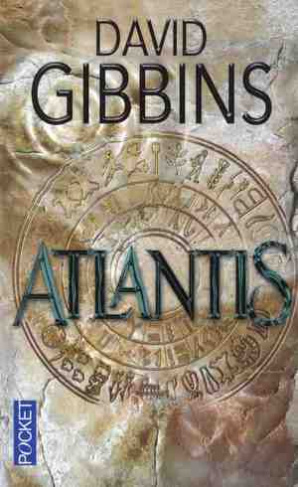
Atlantis
Extrait Chapter OneI'VE NEVER SEEN ANYTHING LIKE IT BEFORE!"The words came from a dry suited diver who had just surfaced behind the stern of the research vessel, his voice breathless with excitement. After swimming over to the ladder, he removed his fins and mask and passed them up to the waiting barge chief. He hauled himself laboriously out of the water, his heavy cylinders causing him momentarily to lose balance, but a heave from above landed him safe and sound on the deck. His dripping shape was quickly surrounded by other members of the team who had been waiting on the dive platform.Jack Howard made his way down from the bridge walkway and smiled at his friend. He still found it amazing that such a bulky figure could be so agile underwater. As he negotiated the clutter of dive equipment on the aft deck he called out, his mocking tone a familiar part of their banter over the years."We thought you'd swum back to Athens for a gin and tonic beside your father's pool. What've you found, the lost treasure of the Queen of Sheba?"Costas Kazantzakis shook his head impatiently as he struggled along the railing towards Jack. He was too agitated even to bother taking off his equipment. "No," he panted. "I'm serious. Take a look at this."Jack silently prayed that the news was good. It had been a solo dive to investigate a silted-up shelf on top of the submerged volcano, and the two divers who had followed Costas would soon be surfacing from the decompression stop. There would be no more dives that season.Costas unclipped a carabiner and passed over an underwater camcorder housing, pressing the replay button as he did so. The other members of the team converged behind the tall Englishman as he flipped open the miniature LCD screen and activated the video. Within moments Jack's sceptical grin had given way to a look of blank amazement.The underwater scene was illuminated by powerful floodlights which gave colour to the gloom almost one hundred metres below. Two divers were kneeling on the seabed using an airlift, a large vacuum tube fed by a low-pressure air hose which sucked up the silt covering the site. One diver wrestled to keep the airlift in position while the other gently wafted sediment up towards the mouth of the tube, the action revealing artifacts just as an archaeologist on land would use a trowel.As the camera zoomed in, the object of the divers' attention came dramatically into view. The dark shape visible upslope was not rock but a concreted mass of metal slabs laid in interlocking rows like shingles."Oxhide ingots," Jack said excitedly. "Hundreds of them. And there's a cushioning layer of brushwood dunnage, just as Homer described in the ship of Odysseus."Each slab was about a metre long with protruding corners, their shape resembling the flayed and stretched hide of an ox. They were the characteristic copper ingots of the Bronze Age, dating back more than three and a half thousand years."It looks like the early type," one of the students on the team ventured. "Sixteenth century BC?""Unquestionably," Jack said. "And still in rows just as they were laden, suggesting the hull may be preserved underneath. We could have the oldest ship ever discovered."Jack's excitement mounted as the camera traversed down the slope. Between the ingots and the divers loomed three giant pottery jars, each as tall as a man and over a metre in girth. They were identical to jars that Jack had seen in the storerooms at Knossos on Crete. Inside, they could see stacks of stemmed cups painted with beautifully naturalistic octopuses and marine motifs, their swirling forms at one with the undulations of the seabed.There was no mistaking the pottery of the Minoans, the remarkable island civilization that flourished at the time of the Egyptian Middle and New Kingdoms but then disappeared suddenly, around 1400 BC. Knossos, the fabled labyrinth of the Minotaur, had been one of the most sensational discoveries of the last century. Following close on the heels of Heinrich Schliemann, excavator of Troy, the English archaeologist Arthur Evans had set out to prove that the legend of the Athenian prince Theseus and his lover Ariadne was as grounded in real events as the Trojan War. The sprawling palace just south of Heraklion was the key to a lost civilization he dubbed Minoan after their legendary king. The maze of passageways and chambers gave extraordinary credence to the story of Theseus' battle with the Minotaur, and showed that the myths of the Greeks centuries later were closer to real history than anyone had dared think."Yes!" Jack punched the air with his free hand, his normal reserve giving way to the emotion of a truly momentous discovery. It was the culmination of years of single-minded passion, the fulfilment of a dream that had driven him since boyhood. It was a find that would rival Tutankhamen’s tomb, a discovery that would secure his team front place in the annals of archaeology.For Jack these images were enough. Yet there was more, much more, and he stood transfixed by the screen. The camera panned down to the divers on a low shelf below the clump of ingots."Probably the stern compartment." Costas was pointing at the screen. "Just beyond this ledge is a row of stone anchors and a wooden steering oar."Immediately in front was an area of shimmering yellow which looked like the reflection of the floodlights off the sediment in the water. As the camera zoomed in, there was a collective gasp of astonishment."That's not sand," the student whispered. "That's gold!"Now they knew what they were looking at, the image was one of surpassing splendour. In the centre was a magnificent golden chalice fit for King Minos himself. It was decorated in relief with an elaborate bullfighting scene. Alongside lay a life-sized golden statue of a woman, her arms raised in supplication and her headdress wreathed in snakes. Her bare breasts had been sculpted from ivory, and a flickering arc of colour showed where her neck was embellished with jewels. Nestled in front was a bundle of golden-handled bronze swords, their blades decorated with fighting scenes made from inlaid silver and blue enamel.The most brilliant reflection came from the area just in front of the divers. Each waft of the hand seemed to reveal another gleaming object. Jack could make out gold bars, royal seals, jewellery and delicate diadem crowns of intertwined leaves, all jumbled together as if they had once been inside a treasure chest.The view suddenly veered up towards the ascent line and the screen abruptly went blank. In the stunned silence that followed, Jack lowered the camera and looked at Costas."I think we're in business," he said quietly. *** Jack had staked his reputation on a far-flung proposal. In the decade since completing his doctorate he had become fixated on discovering a Minoan wreck, a find that would clinch his theory about the maritime supremacy of the Minoans in the Bronze Age. He had become convinced that the most likely spot was a group of reefs and islets some seventy nautical miles north-east of Knossos.Yet for weeks they had searched in vain. A few days earlier their hopes had been raised and then dashed by the discovery of a Roman wreck, a dive Jack expected to be his last of the season. Today was to have been a chance to evaluate new equipment for their next project. Once again Jack's luck had held out."Mind giving me a hand?"Costas had slumped exhausted beside the stern railing on Seaquest, his equipment still unbuckled and the water on his face now joined by rivulets of sweat. The late afternoon sun of the Aegean drenched his form in light. He looked up at the lean physique that towered over him. Jack was an unlikely scion of one of England's most ancient families, his easy grace the only hint of a privileged lineage. His father had been an adventurer who had eschewed his background and used his wealth to take his family away with him to remote locations around the world. His unconventional upbringing had left Jack an outsider, a man most at ease in his own company and beholden to nobody. He was a born leader who commanded respect on the bridge and the foredeck."What would you do without me?" Jack asked with a grin as he lifted the tanks off Costas' back.The son of a Greek shipping tycoon, Costas had spurned the playboy lifestyle which was his for the asking and opted for ten years at Stanford and MIT, emerging as an expert in submersible technology. Surrounded by a vast jumble of tools and parts that only he could navigate, Costas would routinely conjure up wondrous inventions like some latter-day Caractacus Pott. His passion for a challenge was matched by his gregarious nature, a vital asset in a profession where teamwork was essential.The two men had first met at the NATO base at Izmir in Turkey when Jack had been seconded to the Naval Intelligence School and Costas was a civilian adviser to UNANTSUB, the United Nations anti-submarine warfare research establishment. A few years later Jack invited Costas to join him at the International Maritime University, the research institution which had been their home for more than ten years now. In that time Jack had seen his remit as director of field operations at IMU grow to four ships and more than two hundred personnel, and despite an equally burgeoning role in the engineering department, Costas always seemed to find a way to join Jack when things got exciting."Thanks, Jack." Costas slowly stood up, too tired to say more. He only stood as high as Jack's shoulders and had a barrel chest and forearms inherited from generations of Greek sponge fishermen and sailors, with a personality to match. This project had been close to his heart as well, and he was suddenly drained by the excitemen... --Ce texte fait référence à l'édition Poche .ÉPUISÉVOIR PRODUIT9,20 € -
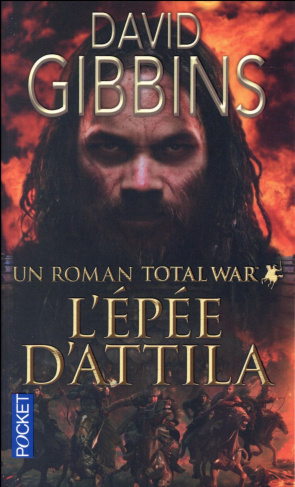
Total War Rome Tome 2 : L'épée d'Attila
Résumé : 439 après J. -C., Rome est au bord du gouffre. En proie à la corruption et à la déliquescence morale, l'Empire risque de perdre sa précieuse Carthage et, pire encore, le contrôle de la Méditerranée. Mais un danger beaucoup plus grand se présente à l'est ; une puissance barbare née dans les rudes steppes d'Asie, des guerriers d'une férocité inouïe qui balaieront tout sur leur passage dans leur soif de conquête : l'armée d'Attila le Hun. Alors que la plus terrible des batailles se prépare, le salut de l'Empire repose sur un petit groupe d'hommes. Inspirés par un glorieux passé, ils se lancent dans une mission d'une audace étonnante pour s'emparer du symbole de guerre le plus puissant jamais forgé par l'homme : l'épée sacrée d'Attila.ÉPUISÉVOIR PRODUIT8,60 € -
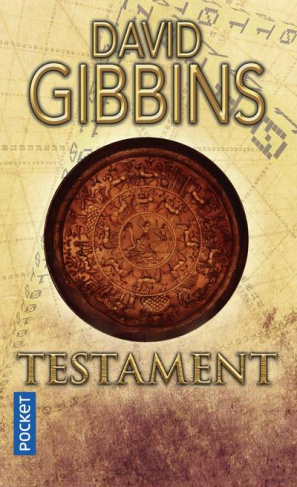
Testament
Résumé : 548 avant J.-C. L'explorateur Hannon revient à Carthage, sa ville natale, après un voyage périlleux. Il raconte à qui veut l'entendre son aventure incroyable et cherche à fuir un ennemi terrifiant. 1943. Alors que la Seconde Guerre mondiale connaît ses heures les plus sombres, les cryptographes de Bletchley Park essaient de décoder le secret d'Enigma. Le temps est compté : un échange de matériel militaire entre les Japonais et les nazis doit être arrêté au plus vite. Aujourd'hui. Le plongeur archéologue Jack Howard et son ami Costas se lancent dans l'une des expéditions de plongée les plus dangereuses de leur vie, à la recherche d'un trésor nazi. Ce qu'ils aperçoivent au fond de l'océan déstabilise les fondements de l'histoire. Jack Howard rassemblera-t-il les pièces manquantes d'un des plus grands mystères de l'humanité ?ÉPUISÉVOIR PRODUIT9,60 € -
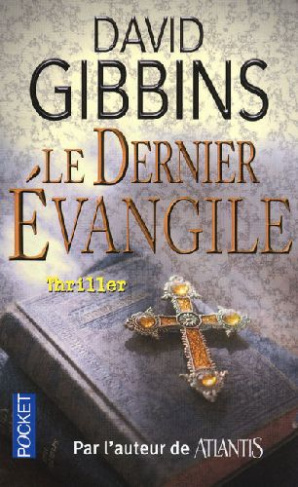
Le dernier évangile
Alors qu'un vieillard, sur les flancs du Vésuve, s'apprête à descendre aux Enfers, les flammes infernales viennent à sa rencontre. Nous sommes en 79 après Jésus-Christ. Au loin, les villes de Pompéi et de Herculanum s'éteignent déjà. L'empereur Claude ne tiendra pas sa promesse - ce serment qu'il prêta jadis à un homme illustre. Un secret que l'archéologue Jack Howard est aujourd'hui destiné à révéler. Preuves en main. Comment croire à ce "dernier Evangile" aux incroyables origines? Reconstituant l'inextricable puzzle paléochrétien, via Claude, Pline et saint Paul, en passant par Rome, Londres et la Terre Sainte, Howard et son équipe devront affronter tous les dangers pour révéler la vérité.ÉPUISÉVOIR PRODUIT9,60 €


Du même éditeur
-

La pensée sauvage
La pensée sauvage" et non "la pensée des sauvages". Car ce livre s'écarte de l'ethnologie traditionnelle en prenant pour thème un attribut universel de l'esprit humain : la pensée à l'état sauvage qui est présente dans tout homme - contemporain ou ancien, proche ou lointain - tant qu'elle n'a pas été cultivée et domestiquée à des fins de rendement. Lévi-Strauss aborde donc les mythes, les rites, les croyances et les autres faits de culture comme autant d'êtres "sauvages" comparables à tous ceux que la nature engendre sous d'innombrables formes, animales, végétales et minérales. Publiée au milieu des années cinquante, "La pensée sauvage" est aujourd'hui considérée comme l'un des classiques de l'ethnologie contemporaine dont l'influence fut décisive sur l'ensemble des disciplines qui forment le domaine des sciences sociales.EN STOCKCOMMANDER9,00 € -
GENESE DE L'ANTISEMITISME
A quelle époque et dans quelles conditions l'antisémitisme fait-il son apparition dans l'histoire ? Avec rigueur et passion, sans éluder aucun témoignage, Jules Isaac a mené son enquête, de l'Antiquité classique jusqu'à l'an mille. A la fois nettes et nuancées, ses conclusions réfutent la thèse d'un antisémitisme du monde antique transmis en héritage à la civilisation chrétienne, et montrent la virulence incomparablement plus grande de l'antisémitisme chrétien, avec ses deux traits essentiels et complémentaires : l'enseignement du mépris et le système d'avilissement. Cette histoire passionnante et pathétique fait aussi partie de notre présent.ÉPUISÉVOIR PRODUIT11,20 € -
Fatherland
Berlin, 1964. Depuis que les forces de l'Axe ont gagné la guerre en 1944, la paix nazie règne sur l'Europe. Seule, l'Amérique a refusé jusqu'ici le joug. Mais dans quelques jours, le président Kennedy viendra conclure une alliance avec le Reich. Ce sera la fin du monde libre. Deux meurtres étranges viennent perturber les préparatifs. Les victimes sont d'anciens S.S. de haut rang jouissant d'une paisible retraite. Chargé de l'affaire, l'inspecteur March s'interroge. S'agit-il d'un règlement de comptes entre dignitaires? Mais, s'il s'agit d'affaires criminelles pourquoi la Gestapo s'intéresse-t-elle à l'enquête? Quelle est cette vérité indicible qui tue tout ceux qui la détiennent et semble menacer les fondations mêmes du régime? Le mystère s'épaissit et, dans Berlin pavoisée, les bourreaux guettent prêts à tout pour étouffer dans la nuit et le brouillard les dernières lueurs de la liberté.EN STOCKCOMMANDER8,10 € -
Le juge d'Egypte/2/La loi du désert
Le testament des Dieux, qui seul assure la légitimité du pharaon Ramsès II, demeure introuvable. Sur la piste d'un complot diabolique qui unit les hommes de pouvoir et d'influence, le juge Pazair est déporté dans un bagne. Mû par une volonté inflexible, il parvient à s'enfuir... De retour à Thèbes, avec l'aide de sa jeune épouse Néféret, médecin réputé, et de ses fidèles amis Kem et Souti, Pazair enfin innocenté poursuit son enquête, avec l'accord tacite du souverain, tandis que meurtres, enlèvements et actes de corruption se multiplient...ÉPUISÉVOIR PRODUIT8,10 €


De la même catégorie
-
Arsène Lupin : L'aiguille creuse
Résumé : Un ouvrage à étudier en classe, idéal pour les élèves de 4e-3e. Le domaine du comte de Gesvres est " visité " en pleine nuit par des cambrioleurs. La fille du comte, et sa nièce, surprennent un homme en train de s'enfuir à travers le parc en transportant ce qui semble être un objet encombrant. Le secrétaire de ce dernier, est retrouvé mort. Seules l'arme du crime et une casquette de chauffeur ont été retrouvées... Un texte intégral accompagné de notes, d'aides à la compréhension de l'oeuvre et de clés d'analyse.ÉPUISÉVOIR PRODUIT4,45 € -
L'inspecteur cadavre
Suicide ? Meurtre ? Un froid matin de janvier, un jeune homme est retrouvé mort sur la voie ferrée près de Saint-Aubin-les-Marais, en Vendée. Pour rendre service à un ami, le commissaire Maigret accepte de quitter Paris pour essayer d'y voir plus clair. Mais il n'est pas le seul à mener l'enquête : un ancien policier devenu détective privé, l'inspecteur Cadavre, s'intéresse lui aussi de très près à cette affaire...ÉPUISÉVOIR PRODUIT8,10 € -
Félicie est là
Félicie est partie faire les courses. À son retour, Jules Lapie, le paisible retraité dont elle tient le ménage, a été assassiné. Le commissaire Maigret, avec sa sagacité habituelle, a tout de suite compris que la jeune fille au physique ingrat savait quelque chose, que derrière ses airs revêches elle cachait un coeur tendre... Comment l'amener à se confier? Qui protège-t-elle en gardant le silence? Rarement un témoin aura donné autant de fil à retordre au célèbre commissaire...ÉPUISÉVOIR PRODUIT6,60 € -
Comedia
Un vieux cinéphile, homme de théâtre à l'identité complexe, est abattu dans les environs de Paris. On sait qui l'a tué, comment, mais on ignore la cause du meurtre ainsi que le passé du tueur et de la victime tous deux baignés dans un monde de secrets. Tout semble reposer sur des faits vieux de trente ans. La mort de son rival n'apaise même pas l'assassin et son étrange besoin de vengeance. L'homme veut prouver mais il ne sait quoi. Il s'épuise. Ses propres services pourtant spéciaux se méfient. Qui est-il lui-même ? Quelle cohérence trouver, dans ces pans de l'histoire européenne qu'il s'acharne à remettre à jour ? Quels liens entre Rosa Luxemburg et l'Espagne de Franco, entre les charniers nazis, les studios d'Hollywood et la France des années 80 ?Notes Biographiques : Né le 19 janvier 1954 à Paris, Thierry Jonquet a une enfance marquée par le cinéma et les livres. Il étudie la philosophie à l'université de Créteil et plus tard l'ergothérapie. Il mène de front pendant longtemps deux activités distinctes : celle de scénariste et celle de romancier. Il écrit de nombreux romans pour la jeunesse et les adultes (publiés notamment dans la collection Folio). Ces derniers sont souvent des romans noirs, habités de faits divers et de satire politique et sociale. Thierry Jonquet s'éteint le 9 août 2009, à Paris, en laissant derrière lui une oeuvre conséquente et récompensée de plusieurs prix (notamment le Trophée 813 du meilleur roman à trois reprises). Son roman "Mygale" est adapté en 2011 au cinéma par le réalisateur espagnol Pedro Almodóvar, sous le titre "La piel que habito".ÉPUISÉVOIR PRODUIT9,50 €


