

LITHIC TREE - A SEARCH FOR NATURAL STEREOTOMY.
So we continue our attempts; although imperfect, they will demonstrate that there is still so much do in the art of construction and that architecture will not take on a new form if she doesn't honestly submit to the new process of our age. (...) We have demonstrated in what manner the vault thrusts could be removed through a system of steel tie rods, (...), eliminate the arch thrust thanks to the combination of the iron and lithic systems. (...) This is nothing more than the application of iron in the ancient way of building." Viollet-le-Duc, Entretiens, 1863. These basic principles gave birth to the "Lithic Tree", a tribute to the fossilization process and lithic transformation, a careful observation of natural phenomena and human modeling and adaptation, an experimental project aimed at the reation of a pattern element suitable for the creation of vaulted spaces covered and/or diaphanous. "Lithic Tree" refers to a tree-like structure with a cantilevered lithic crown, made up of separated stone elements held together with a special steel reinforcement, favouring an optimal working compression dinamic between the voussoirs. The common thread that has guided the design of "Lithic Tree" is based on the fundamental dialectic about the opposites terms lightness vs heaviness that has represented since many years the distinctive feature of our entire research about steretomic architecture. Heaviness related to the natural composition of materials and lightness of the forms to which the project aims. The project approach can be considered as a synthesis between the sculptural soul of the Doric flutted column and the spatial impulse of the Gothic vault, mediated through technological innovation the translates meaning and significance on a different language level compared with the historical condition.
| Date de parution | 12/12/2014 |
|---|---|
| Poids | 496g |
| Largeur | 202mm |

| SKU: | 9782859784843 |
| wmi_id_distributeur: | Not set |
| Is Salable (from plugin): | Yes (In Stock) |
| Is Salable (direct MSI check): | Yes (In Stock) |
| Distributor Name: | Par défaut |
| Availability Value: | 0 |
| Availability Label: | Epuisé |
| Match Result: | |
| Default Availability (Config): | 0 - Epuisé |
| Raw Config Mapping: |
Array
(
    [_1772119784121_121] => Array
        (
            [id] => 12707000
            [name] => 12707000
            [availability] => 1
            [activation_attribute] => 1
        )

)
|
| EAN | 9782859784843 |
|---|---|
| Titre | LITHIC TREE - A SEARCH FOR NATURAL STEREOTOMY. |
| Auteur | FALLACARA/CALABRIA |
| Editeur | PONTS CHAUSSEES |
| Largeur | 202 |
| Poids | 496 |
| Date de parution | 20141212 |
| Nombre de pages | 0,00 € |
Pourquoi choisir Molière ?
Du même auteur
-
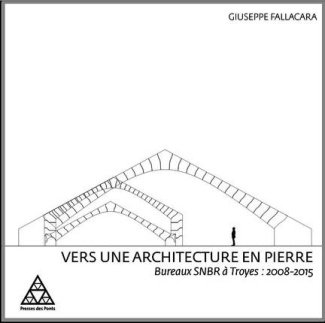
Vers une architecture en pierre. Bureaux SNBR à Troyes : 2008-2015
Le bâtiment de Fallacara proclame clairement sa volonté de se rattacher la grande architecture historique du passé, sans renoncer pour autant à la modernité des techniques et des formes. Il cherche, néanmoins, à renouer avec la tradition, certain que la grande architecture de l'Antiquité demeure une source inépuisable d'inspiration pouvant générer une architecture moderne, dont le lien avec le passé lui permet de s'élever au-dessus de la routine et de la banalité que nous montre souvent l'architecture contemporaine. La SNBR, une des sociétés pionnières dans le domaine de la restauration en France, a su comprendre l'architecture de Giuseppe Fallacara et sa signification profonde. Son engagement dans le domaine de la pierre et du milieu où l'on travaille ce matériau, l'a amenée à devenir une entreprise pionnière dans l'adoption des technologies les plus modernes pour le traitement et la taille de ce matériau. A la SNBR, on est conscients de ce que, tant dans l'architecture contemporaine que dans la restauration, l'avenir de la pierre et de tout un métier séculaire est lié à l'adoption des technologies les plus modernes. Ce bâtiment, siège de la société, résume très clairement les idées exposées ci-dessus. La stéréotomie n'est pas une science morte, elle peut et doit redevenir protagoniste de l'architecture occidentale. José Palacios GonzaloÉPUISÉVOIR PRODUIT30,00 € -

STEREOTOMY - STONE ARCHITECTURE AND NEW RESEARCH.
The age of stone architecture is timeless and has prehistoric roots; it reaches beyond all trends and tendencies; it avoids that sense of transience that marks most contemporary architecture; and, at the same time, it inspires our most varied reflections and experiments, whether of constructive elements or small architectonic works. This book seeks to give a logical and chronological order to those reflections. Through our contribution to the development of stone architecture, we wish to emphasis that there is much still to be investigated and invented with stone, whereby we mean the enthusiastic rediscovery of those techniques and processes that time has forgotten but that hold, nonetheless, promise for the future.ÉPUISÉVOIR PRODUIT49,00 €


Du même éditeur
-
Eléments de mécanique des sols
La mécanique des sols est une discipline essentielle du Génie civil dont le lien avec le calcul des structures s'est constamment développé au cours de ces dernières décennies. C'est, par ailleurs, une science assez différente de la classique résistance des matériaux et pour laquelle l'ingénieur de Génie civil devra se méfier de son intuition naturelle et se rappeler que l'expérience y a une grande importance. Ce cours volontairement réduit a pour but de présenter les notions essentielles de la mécanique des sols sous une forme simple, ne nécessitant que très peu de connaissances préalables, en résistance des matériaux notamment. Il doit cependant permettre d'aborder de façon pratique la plupart des grands problèmes de mécanique des sols, notamment pour les ingénieurs qui seront amenés, de par leurs fonctions, à utiliser ou à interpréter un rapport de sols.ÉPUISÉVOIR PRODUIT56,79 € -

-


