

ANGELS AND INSECTS
13,57 €
Épuisé
EAN :
9780099224310
| Date de parution | 02/06/1998 |
|---|---|
| Poids | 100g |

Distributor Debug Info
| SKU: | 9780099224310 |
| wmi_id_distributeur: | Not set |
| Is Salable (from plugin): | No (Out of Stock) |
| Is Salable (direct MSI check): | No (Out of Stock) |
| Distributor Name: | Par défaut |
| Availability Value: | 0 |
| Availability Label: | Epuisé |
| Match Result: | |
| Default Availability (Config): | 0 - Epuisé |
| Raw Config Mapping: |
Array
(
    [_1772119784121_121] => Array
        (
            [id] => 12707000
            [name] => 12707000
            [availability] => 1
            [activation_attribute] => 1
        )

)
|
Plus d'informations
| EAN | 9780099224310 |
|---|---|
| Titre | ANGELS AND INSECTS |
| ISBN | 0099224313 |
| Auteur | BYATT AS |
| Editeur | RANDOM HOUSE UK |
| Largeur | 0 |
| Poids | 100 |
| Date de parution | 19980602 |
| Nombre de pages | 0,00 € |
Pourquoi choisir Molière ?
Efficacité et rapidité Commandé avant 16h livré demain
Économique et pratique Livraison à domicile dès 5,10 €
Facile et sans frais Retrait gratuit en magasin
Sécurité et tranquillité Paiement 100 % sécurisé
Disponibilité et écoute Contactez-nous sur WhatsApp
Du même auteur
-

-
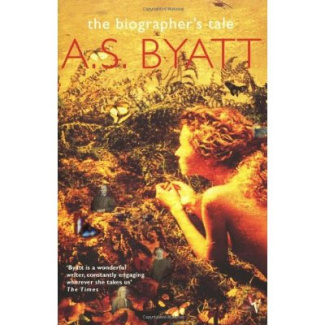
BIOGRAPHER S TALE
Extrait I made my decision, abruptly, in the middle of one of Gareth Butcher's famous theoretical seminars. He was quoting Empedocles, in his plangent, airy voice. "Here sprang up many faces without necks, arms wandered without shoulders, unattached, and eyes strayed alone, in need of foreheads." He frequently quoted Empedocles, usually this passage. We were discussing, not for the first time, Lacan's theory of morcellement, the dismemberment of the imagined body. There were twelve postgraduates, including myself, and Professor Ormerod Goode. It was a sunny day and the windows were very dirty. I was looking at the windows, and I thought, I’m not going to go on with this anymore. Just like that. It was May 8th 1994. I know that, because my mother had been buried the week before, and I'd missed the seminar on Frankenstein.I don't think my mother's death had anything to do with my decision, though as I set it down, I see it might be construed that way. It's odd that I can't remember what text we were supposed to be studying on that last day. We'd been doing a lot of not-too-long texts written by women. And also quite a lot of Freud—we'd deconstructed the Wolf Man, and Dora. The fact that I can't remember, though a little humiliating, is symptomatic of the “reasons” for my abrupt decision. All the seminars, in fact, had a fatal family likeness. They were repetitive in the extreme. We found the same clefts and crevices, transgressions and disintegrations, lures and deceptions beneath, no matter what surface we were scrying. I thought, next we will go on to the phantasmagoria of Bosch, and, in his incantatory way, Butcher obliged. I went on looking at the filthy window above his head, and I thought, I must have things. I know a dirty window is an ancient, well-worn trope for intellectual dissatisfaction and scholarly blindness. The thing is, that the thing was also there. A real, very dirty window, shutting out the sun. A thing.I was sitting next to Ormerod Goode. Ormerod Goode and Gareth Butcher were joint Heads of Department that year, and Goode, for reasons never made explicit, made it his business to be present at Butcher's seminars. This attention was not reciprocated, possibly because Goode was an Anglo-Saxon and Ancient Norse expert, specialising in place-names. Gareth Butcher did not like dead languages, and was not proficient in living ones. He read his Foucault and Lacan in translation, like his Heraclitus and his Empedocles. Ormerod Goode contributed little to the seminars, beyond corrections of factual inaccuracies, which he noticed even when he appeared to be asleep. No one cared much for these interventions. Inaccuracies can be subsumed as an inevitable part of postmodern uncertainty, or play, one or the other or both.I liked sitting next to Goode—most of the other students didn't—because he made inscrutable notes in ancient runes. Also he drew elaborate patterns of carved, interlaced plants and creatures—Celtic, Viking, I didn't know—occasionally improper or obscene, always intricate. I liked the runes because I have always liked codes and secret languages, and more simply, because I grew up on Tolkien. I suppose, if the truth were told, I should have to confess that I ended up as a postgraduate student of literature because of an infantile obsession with Gandalf's Middle Earth. I did like poetry too, and I did—in self-defence—always know Tolkien's poems weren't the real thing. I remember discovering T. S. Eliot. And then Donne and Marvell. Long ago and far away. I don't know, to this day, if Ormerod Goode loved or despised Tolkien. Tolkien's people are sexless and Goode's precisely shadowed graffiti were anything but. Plaisir, consommation, jouissance. Glee. He was—no doubt still is—a monumentally larger man. He has a round bald cranium, round gold glasses round round, darkly brown eyes, a round, soft mouth, several chins, a round belly carried comfortably on pillars of legs between columnar arms. I think of him, always, as orotund Ormerod Goode, adding more Os to his plethora, and a nice complex synaesthetic metaphor—an accurate one—to my idea of him. Anyway, there I was, next to him, when I made my decision, and when I took my eyes away from the dirty glass there was his BB pencil, hovering lazily, tracing a figleaf, a vine, a thigh, hair, fingers, round shiny fruit.I found myself walking away beside him, down the corridor, when it was over. I felt a need to confirm my decision by telling someone about it. He walked with a rapid sailing motion, lightly for such a big man. I had almost to run to keep up with him. I should perhaps say, now, that I am a very small man. "Small but perfectly formed" my father would say, several times a day, before his disappearance. He himself was not much bigger. The family name is Nanson; my full name is Phineas Gilbert Nanson—I sign myself always Phineas G. Nanson. When I discovered—in a Latin class when I was thirteen—that nanus was the Latin for dwarf, cognate with the French nain, I felt a frisson of excited recognition. I was a little person, the child of a little person, I had a name in a system, Nanson. I have never felt anything other than pleasure in my small, delicate frame. Its only disadvantage is the number of cushions I need to see over the dashboard when driving. I am adept and nimble on ladders. But keeping up with Ormerod Goode's lazy pace was a problem. I said, into his wake, "I have just made an important decision."He stopped. His moon-face considered mine, thoughtfully."I have decided to give it all up. I’ve decided I don’t want to be a postmodern literary theorist.""We should drink to that," said Ormerod Goode. "Come into my office."His office, like the rest of our run-down department, had dirty windows, and a dusty, no-coloured carpet. It also had two high green leather wing-chairs, a mahogany desk and a tray of spotless glasses which he must have washed himself. He produced a bottle of malt whisky from a bookcase. He poured us each a generous glass, and enquired what had led to this decision, and was it as sudden as it appeared. I replied that it had seemed sudden, at least had surprised me, but that it appeared to be quite firm. "You may be wise," said Ormerod Goode. "Since it was a bolt from the blue, I take it you have no ideas about what you will do with the open life that now lies before you?"I wondered whether to tell him about the dirty window. I said, "I felt an urgent need for a life full of things." I was pleased with the safe, solid Anglo-Saxon word. I had avoided the trap of talking about "reality" and "unreality" for I knew very well that postmodernist literary theory could be described as a reality. People lived in it. I did, however, fatally, add the Latin-derived word, less exact, redundant even, to my precise one. "I need a life full of things," I said. "Full of facts.""Facts," said Ormerod Goode. "Facts." He meditated. "The richness," he said, "the surprise, the shining solidity of a world full of facts. Every established fact—taking its place in a constellation of glittering facts like planets in an empty heaven, declaring here is matter, and there is vacancy—every established fact illuminates the world. True scholarship once aspired to add its modest light to that illumination. To clear a few cobwebs. No more."His round eyes glowed behind his round lenses. I found myself counting the Os in his pronouncements, as though they were coded clues to a new amplitude. The Glenmorangie slid like smooth flame down my throat. I said that a long time ago I had been in love with poetry, but that now I needed things, facts. "Verbum caro factum est," said Ormerod Goode opaquely. "The art of biography is a despised art because it is an art of things, of facts, of arranged facts. By far the greatest work of scholarship in my time, to my knowledge, is Scholes Destry-Scholes’s biographical study of Sir Elmer Bole. But nobody knows it. It is not considered. And yet, the ingenuity, the passion."I remarked, perhaps brashly, that I had always considered biography a bastard form, a dilettante pursuit. Tales told by those incapable of true invention, simple stories for those incapable of true critical insight. Distractions constructed by amateurs for lady readers who would never grapple with The Waves or The Years but liked to feel they had an intimate acquaintance with the Woolfs and with Bloomsbury, from daring talk of semen on skirts to sordid sexual interference with nervous girls. A gossipy form, I said to Ormerod Goode, encouraged by Glenmorangie and nervous emptiness of spirit. There was some truth in that view, he conceded, rising smoothly from his wing-chair and strolling over to his bookcase. But I should consider, said Ormerod Goode, two things.Gossip, on the one hand, is an essential part of human communication, not to be ignored. And on the other, a great biography is a noble thing. Consider, he said, the fact that no human individual resembles another. We are not clones, we are not haplodiploid beings. From egg to eventual decay, each of us is unique. What can be nobler, he reiterated, or more exacting, than to explore, to constitute, to open, a whole man, a whole opus, to us? What resources—scientific, intellectual, psychological, historical, linguistic and geographic—does a man—or a woman—not need, who would hope to do justice to such a task? I know, I know, he said, that most biographies are arid or sugary parodies of what is wanted. And the true masterpiece—such as Destry-Scholes's magnum opus—is not always recognised when it is made, for biographical readers have taste corrupted ...ÉPUISÉVOIR PRODUIT15,11 € -
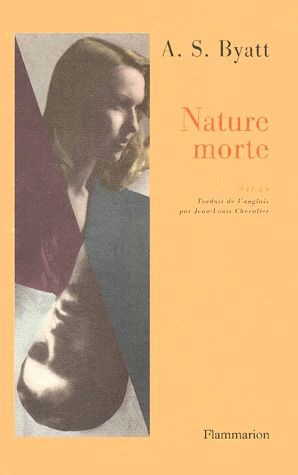
Nature morte
Résumé : " Le germe de ce roman fut un fait qui était également une métaphore : une jeune femme, avec un enfant, regardant un plateau de terre où des plantules non éclaircies sur de pâles tiges étiolées meurent dans leur lutte pour la vie. Elle tenait à la main l'image d'une fleur, le sachet de graines avec son image aux vives couleurs. Capucines géantes, grimpantes, mélangées. " Angleterre, années 60. Frederica Potter, admise à Cambridge, épouse les idées féministes de son temps : elle entend bien faire quelque chose de sa vie et ne pas se laisser enfermer dans le mariage comme sa soeur Stephanie qui attend un deuxième enfant de Daniel. Très courtisée, Froderica côtoie les intellectuels et tisse toutes sortes de complicités amoureuses et artistiques qui lui feront découvrir le raffinement et le luxe. Elle élabore une véritable entomologie des caractères humains, à la fois cruelle et destructrice. Dans cette suite à La Vierge dans le Jardin, A.S. Byatt met en lumière les inextricables conflits entre ambition, vie de famille et accomplissement personnel tout en livrant un portrait subtil et corrosif de ces années de révolte et de libération des moeurs.ÉPUISÉVOIR PRODUIT23,10 € -
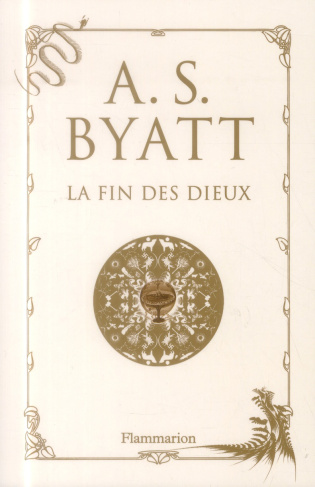
La fin des dieux
Résumé : En pleine Seconde Guerre mondiale, tandis que les bombes pleuvent sur l'Angleterre, une jeune fille est évacuée à la campagne. Elle a bien du mal à comprendre le chaos qui l'entoure, mais un livre de mythes scandinaves va venir bouleverser sa vie. Elle découvre un univers où une meute de loups poursuit inlassablement le soleil et la lune, un serpent gigantesque hante les profondeurs et des dieux se livrent à une bataille sans merci, détruisant la planète par leur inconscience. A S Byatt crée avec La Fin des dieux un conte puissant et prophétique qui interroge notre propre mortalité.ÉPUISÉVOIR PRODUIT17,00 €


Du même éditeur
-

To kill a mockingbird
Résumé : A lawyer's advice to his children as he defends the real mockingbird of Harper Lee's classic novel - a black man charged with the rape of a white girl. Through the young eyes of Scout and Jem Finch, Harper Lee explores with exuberant humour the irrationality of adult attitudes to race and class in the Deep South of the 1930s. The conscience of a town steeped in prejudice, violence and hypocrisy is pricked by the stamina of one man's struggle for justice. But the weight of history will only tolerate so much.EN STOCKCOMMANDER13,00 € -
Memoirs of a geisha
Résumé : This story is a rare and utterly engaging experience. It tells the extraordinary tale of a geisha - summoning up a quarter century, from 1929 to the post-war years of Japan's dramatic history, and opening a window onto a half-hidden world of eroticism and enchantment, exploitation and degradation.ÉPUISÉVOIR PRODUIT15,98 € -
MNENOCH
Extrait I SAW HIM when he came through the front doors. Tall, solidly built dark brown hair and eyes, skin still fairly dark because it had been dark when I'd made him a vampire. Walking a little too fast, but basically passing for a human being. My beloved David.I was on the stairway. The grand stairway, one might say. It was one of those very opulent old hotels, divinely overdone, full of crimson and gold, and rather pleasant. My victim had picked it. I hadn't. My victim was dining with his daughter. And I'd picked up from my victim's mind that this was where he always met his daughter in New York, for the simple reason that St. Patrick's Cathedral was across the street.David saw me at once--a slouching, blond, long-haired youth, bronze face and hands, the usual deep violet sunglasses over my eyes, hair presentably combed for once, body tricked out in a dark-blue, double-breasted Brooks Brothers suit.I saw him smile before he could stop himself. He knew my vanity, and he probably knew that in the early nineties of the twentieth century, Italian fashion had flooded the market with so much shapeless, hangy, bulky, formless attire that one of the most erotic and flattering garments a man could choose was the well-tailored navy-blue Brooks Brothers suit.Besides, a mop of flowing hair and expert tailoring are always a potent combination. Who knows that better than I?I didn't mean to harp on the clothes! To hell with the clothes. It's just I was so proud of myself for being spiffed up and full of gorgeous contradictions--a picture of long locks, the impeccable tailoring, and a regal manner of slumping against the railing and sort of blocking the stairs.He came up to me at once. He smelled like the deep winter outside, where people were slipping in the frozen streets, and snow had turned to filth in the gutters. His face had the subtle preternatural gleam which only I could detect, and love, and properly appreciate, and eventually kiss.We walked together onto the carpeted mezzanine.Momentarily, I hated it that he was two inches taller than me. But I was so glad to see him, so glad to be near him. And it was warm in here, and shadowy and vast, one of the places where people do not stare at others."You've come," I said. "I didn't think you would.""Of course," he scolded, the gracious British accent breaking softly from the young dark face, giving me the usual shock. This was an old man in a young man's body, recently made a vampire, and by me, one of the most powerful of our remaining kind."What did you expect?" he said, tete-a-tete. "Armand told me you were calling me. Maharet told me.""Ah, that answers my first question." I wanted to kiss him, and suddenly I did put out my arms, rather tentatively and politely so that he could get away if he wanted, and when he let me hug him, when he returned the warmth, I felt a happiness I hadn't experienced in months.Perhaps I hadn't experienced it since I had left him, with Louis. We had been in some nameless jungle place, the three of us, when we agreed to part, and that had been a year ago."Your first question?" he asked, peering at me very closely, sizing me up perhaps, doing everything a vampire can do to measure the mood and mind of his maker, because a vampire cannot read his maker's mind, any more than the maker can read the mind of the fledgling.And there we stood divided, laden with preternatural gifts, both fit and rather full of emotion, and unable to communicate except in the simplest and best way, perhaps--with words."My first question," I began to explain, to answer, "was simply going to be: Where have you been, and have you found the others, and did they try to hurt you? All that rot, you know--how I broke the rules when I made you, et cetera.""All that rot," he mocked me, the French accent I still possessed, now couple with something definitely American."What rot.""Come on," I said. "Let's go into the bar there and talk. Obviously no one has done anything to you. I didn't' think they could or they would, or that they'd dare. I wouldn't have let you slip off into the world if I'd thought you were in danger."He smiled, his brown eyes full of gold light for just an instant."Didn't you tell me this twenty-five times, more or less, before we parted company?"We found a small table, cleaving to the wall. The place was half crowded the perfect proportion exactly. What did we look like? A couple of young men on the make for mortal men or women? I don't care."No one has harmed me," he said, "and no one has shown the slightest interest in it."Someone was playing a piano, very tenderly for a hotel bar, I thought. And it was something by Erik Satie. What luck."The tie," he said, leaning forward, white teeth flashing, fangs completely hidden, of course. "This, this big mass of silk around your neck! This is not Brooks Brothers!" He gave a soft teasing laugh. "Look at you, and the wing-tip shoes! My, my. What's going on in your mind? And what is this all about?"The bartender threw a hefty shadow over the small table, and murmured predictable phrases that were lost to me in my excitement and in the noise."Something hot," David said. It didn't surprise me. "You know, rum punch or some such, whatever you can heat up."I nodded and made a little gesture to the indifferent fellow that I would take the same thing.Vampires always ordered hot drinks. They aren't going to drink them; but they can feel the warmth and smell them if they're hot, and that is so good.David looked at me again. Or rather this familiar body with David inside looked at me. Because for me, David would always be the elderly human I'd known and treasured, as well as this magnificent burnished shell of stolen flesh that was slowly being shaped by his expressions and manner and mood.Dear Reader, he switched human bodies before I made him a vampire, worry no more. It has nothing to do with this story."Something's following you again?" he asked. "This is what Armand told me. So did Jesse.""Where did you see them?""Armand?" he asked. "A complete accident. In Paris. He was just walking on the street. He was the first one I saw.""He didn't make any move to hurt you?""Why would he? Why were you calling to me? Who's stalking you? What is all this? --Ce texte fait référence à l'édition Poche .ÉPUISÉVOIR PRODUIT11,40 € -


