Lady Susan. Suivi de Les Watson et Sanditon
Redécouvrir la célèbre romancière britannique dans une nouvelle traduction de Nicolas Porret-Blanc Publiés après la mort de Jane Austen en 1817, les trois oeuvres posthumes présentées dans ce volume sont ici restituées dans une nouvelle traduction de Nicolas Porret-Blanc, professeur spécialiste de littérature anglaise du XIXe siècle à l'Université Paris 13. Lady Susan met en scène une veuve souhaitant privilégier sa liberté. Désargentée, elle est contrainte d'emménager chez son beau-frère, un riche banquier, et cherche à tout prix un bon parti. Or, au jeu de l'amour, les conventions sociales l'emportent souvent... Dans Les Watson, Emma doit retourner vivre parmi les siens, en plein Surrey, après de longues années d'absence. Mais comment combler le fossé qui s'est creusé entre eux... et espérer rencontrer l'amour ? Sanditon, roman inachevé, s'amuse de la prétention des Parker, décidés à faire de leur bourgade un lieu à la mode... Ces trois textes sont une introduction rêvée à l'oeuvre de la grande romancière anglaise, dont ils préfigurent la fine ironie et un sens hors du commun de l'observation.
| Nombre de pages | 312 |
|---|---|
| Date de parution | 03/10/2018 |
| Poids | 183g |
| Largeur | 112mm |

| SKU: | 9782377352197 |
| wmi_id_distributeur: | Not set |
| Is Salable (from plugin): | No (Out of Stock) |
| Is Salable (direct MSI check): | No (Out of Stock) |
| Distributor Name: | Par défaut |
| Availability Value: | 0 |
| Availability Label: | Epuisé |
| Match Result: | |
| Default Availability (Config): | 0 - Epuisé |
| Raw Config Mapping: |
Array
(
    [_1772119784121_121] => Array
        (
            [id] => 12707000
            [name] => 12707000
            [availability] => 1
            [activation_attribute] => 1
        )

)
|
| EAN | 9782377352197 |
|---|---|
| Titre | Lady Susan. Suivi de Les Watson et Sanditon |
| Auteur | Austen Jane ; Porret-Blanc Nicolas |
| Editeur | ARCHIPOCHE |
| Largeur | 112 |
| Poids | 183 |
| Date de parution | 20181003 |
| Nombre de pages | 312,00 € |
Pourquoi choisir Molière ?
Du même auteur
-

Emma (VO)
Chapter OneEMMA WOODHOUSE, handsome, clever, and rich, with a comfortable home and happy disposition seemed to unite some of the best blessings of existence; and had lived nearly twenty-one years in the world with very little to distress or vex her.She was the youngest of the two daughters of a most affectionate, indulgent father; and had, in consequence of her sister's marriage, been mistress of his house from a very early period. Her mother had died too long ago for her to have more than an indistinct remembrance of her caresses; and her place had been supplied by an excellent woman as governess, who had fallen little short of a mother in affection.Sixteen years had Miss Taylor been in Mr. Woodhouse's family, less as a governess than a friend, very fond of both daughters, but particularly of Emma. Between them it was more the intimacy of sisters. Even before Miss Taylor had ceased to hold the nominal office of governess, the mildness of her temper had hardly allowed her to impose any restraint; and the shadow of authority being now long passed away, they had been living together as friend and friend very mutually attached, and Emma doing just what she liked; highly esteeming Miss Taylor's judgment, but directed chiefly by her own.The real evils, indeed, of Emma's situation were the power of having rather too much her own way, and a disposition to think a little too well of herself: these were the disadvantages which threatened alloy to her many enjoyments. The danger, however, was at present so unperceived, that they did not by any means rank as misfortunes with her.Sorrow came-a gentle sorrow-but not at all in the shape of any disagreeable consciousness. Miss Taylor married. It was Miss Taylor's loss which first brought grief. It was on the wedding day of this beloved friend that Emma first sat in mournful thought of any continuance. The wedding over, and the bride people gone, her father and herself were left to dine together, with no prospect of a third to cheer a long evening. Her father composed himself to sleep after dinner, as usual, and she had then only to sit and think of what she had lost.The event had every promise of happiness for her friend. Mr. Weston was a man of unexceptionable character, easy fortune, suitable age, and pleasant manners; and there was some satisfaction in considering with what self-denying, generous friendship she had always wished and promoted the match; but it was a black morning's work for her. The want of Miss Taylor would be felt every hour of every day. She recalled her past kindness-the kindness, the affection of sixteen years-how she had taught and how she had played with her from five years old-how she had devoted all her powers to attach and amuse her in health-and how nursed her through the various illnesses of childhood. A large debt of gratitude was owing here; but the intercourse of the last seven years, the equal footing and perfect unreserve which had soon followed Isabella's marriage, on their being left to each other, was yet a dearer, tenderer recollection. She had been a friend and companion such as few possessed; intelligent, well-informed, useful, gentle, knowing all the ways of the family, interested in all its concerns, and peculiarly interested in herself, in every pleasure, every scheme of hers; one to whom she could speak every thought as it arose, and who had such an affection for her as could never find fault.How was she to bear the change? It was true that her friend was going only half a mile from them; but Emma was aware that great must be the difference between a Mrs. Weston, only half a mile from them, and a Miss Taylor in the house; and with all her advantages, natural and domestic, she was now in great danger of suffering from intellectual solitude. She dearly loved her father, but he was no companion for her. He could not meet her in conversation, rational or playful.The evil of the actual disparity in their ages (and Mr. Woodhouse had not married early) was much increased by his constitution and habits; for having been a valetudinarian all his life, without activity of mind or body, he was a much older man in ways than in years; and though everywhere beloved for the friendliness of his heart and his amiable temper, his talents could not have recommended him at any time.Her sister, though comparatively but little removed by matrimony, being settled in London, only sixteen miles off, was much beyond her daily reach; and many a long October and November evening must be struggled through at Hartfield, before Christmas brought the next visit from Isabella and her husband, and their little children, to fill the house, and give her pleasant society again.Highbury, the large and populous village almost amounting to a town, to which Hartfield, in spite of its separate lawn, and shrubberies, and name, did really belong, afforded her no equals. The Woodhouses were first in consequence there. All looked up to them. She had many acquaintances in the place, for her father was universally civil, but not one among them who could be accepted in lieu of Miss Taylor for even half a day. It was a melancholy change; and Emma could not but sigh over it, and wish for impossible things, till her father awoke, and made it necessary to be cheerful. His spirits required support. He was a nervous man, easily depressed; fond of everybody that he was used to, and hating to part with them; hating change of every kind. Matrimony, as the origin of change, was always disagreeable; and he was by no means yet reconciled to his own daughter's marrying, nor could ever speak of her but with compassion, though it had been entirely a match of affection, when he was now obliged to part with Miss Taylor too; and from his habits of gentle selfishness, and of being never able to suppose that other people could feel differently from himself, he was very much disposed to think Miss Taylor had done as sad a thing for herself as for them, and would have been a great deal happier if she had spent all the rest of her life at Hartfield. Emma smiled and chatted as cheerfully as she could, to keep him from such thoughts; but when tea came, it was impossible for him not to say exactly as he had said at dinner:"Poor Miss Taylor! I wish she were here again. What a pity it is that Mr. Weston ever thought of her!""I cannot agree with you, papa; you know I cannot. Mr. Weston is such a good-humoured, pleasant, excellent man, that he thoroughly deserves a good wife; and you would not have had Miss Taylor live with us for ever, and bear all my odd humours,1 when she might have a house of her own?""A house of her own! but where is the advantage of a house of her own? This is three times as large; and you have never any odd humours, my dear.""How often we shall be going to see them, and they coming to see us! We shall be always meeting! We must begin; we must go and pay our wedding-visit very soon.""My dear, how am I to get so far? Randalls is such a distance. I could not walk half so far.""No, papa; nobody thought of your walking. We must go in the carriage, to be sure.""The carriage! But James will not like to put the horses to for such a little way; and where are the poor horses to be while we are paying our visit?""They are to be put into Mr. Weston's stable, papa. You know we have settled all that already. We talked it all over with Mr. Weston last night. And as for James, you may be very sure he will always like going to Randalls, because of his daughter's being housemaid there. I only doubt whether he will ever take us anywhere else. That was your doing, papa. You got Hannah that good place. Nobody thought of Hannah till you mentioned her-James is so obliged to you!""I am very glad I did think of her. It was very lucky, for I would not have had poor James think himself slighted upon any account; and I am sure she will make a very good servant; she is a civil, pretty-spoken girl; I have a great opinion of her. Whenever I see her, she always curtseys and asks me how I do, in a very pretty manner; and when you have had her here to do needlework, I observe she always turns the lock of the door the right way and never bangs it. I am sure she will be an excellent servant; and it will be a great comfort to poor Miss Taylor to have somebody about her that she is used to see. Whenever James goes over to his daughter, you know, she will be hearing of us. He will be able to tell her how we all are."Emma spared no exertions to maintain this happier flow of ideas, and hoped, by the help of backgammon, to get her father tolerably through the evening, and be attacked by no regrets but her own. The backgammon-table was placed; but a visitor immediately afterwards walked in and made it unnecessary.Mr. Knightley, a sensible man about seven or eight-and-thirty, was not only a very old and intimate friend of the family, but particularly connected with it, as the elder brother of Isabella's husband. He lived about a mile from Highbury, was a frequent visitor, and always welcome, and at this time more welcome than usual, as coming directly from their mutual connections in London. He had returned to a late dinner after some days"absence, and now walked up to Hartfield to say that all were well in Brunswick Square. It was a happy circumstance, and animated Mr. Woodhouse for some time. Mr. Knightley had a cheerful manner, which always did him good; and his many inquiries after "poor Isabella" and her children were answered most satisfactorily. When this was over, Mr. Woodhouse gratefully observed:"It is very kind of you, Mr. Knightley, to come out at this late hour to call upon us. I am afraid you must have had a shocking walk.""Not at all, sir. It is a beautiful moonlight night; and so mild that I must draw back from your great fire.""But you must have found it very damp and dirty. I wish you may not catch cold."&quo..."EN STOCKCOMMANDER5,00 € -

Sense and sensibility (VO)
Extrait Chapter OneThe family of Dashwood had been long settled in Sussex (1). Their estate was large (2), and their residence was at Norland Park, in the centre of their property, where, for many generations, they had lived in so respectable a manner, as to engage (3) the general good opinion of their surrounding acquaintance. The late owner of this estate was a single man, who lived to a very advanced age, and who for many years of his life, had a constant companion and housekeeper (4) in his sister. But her death, which happened ten years before his own, produced a great alteration in his home; for to supply her loss, he invited and received into his house the family of his nephew Mr. Henry Dashwood, the legal inheritor of the Norland estate (5), and the person to whom he intended to bequeath it. In the society of his nephew and niece, and their children, the old Gentleman's days were comfortably spent. His attachment to them all increased. The constant attention of Mr. and Mrs. Henry Dashwood to his wishes, which proceeded not merely from interest, but from goodness of heart, gave him every degree of solid comfort which his age could receive; and the cheerfulness of the children added a relish to his existence.By a former marriage, Mr. Henry Dashwood had one son: by his present lady, three daughters. The son, a steady respectable young man, was amply provided for by the fortune of his mother, which had been large, and half of which devolved on him on his coming of age (6). By his own marriage, likewise, which happened soon afterwards, he added to his wealth (7). To him therefore the succession to the Norland estate was not so really important as to his sisters; for their fortune, independent of what might arise to them from their father's inheriting that property, could be but small. Their mother had nothing, and their father only seven thousand pounds in his own disposal; for the remaining moiety of his first wife's fortune was also secured to her child, and he had only a life interest in it (8).The old Gentleman died; his will was read, and like almost every other will, gave as much disappointment as pleasure (9). He was neither so unjust, nor so ungrateful, as to leave his estate from his nephew;—but he left it to him on such terms as destroyed half the value of the bequest. Mr. Dashwood had wished for it more for the sake of his wife and daughters than for himself or his son:—but to his son, and his son's son, a child of four years old, it was secured, in such a way, as to leave to himself no power of providing for those who were most dear to him, and who most needed a provision, by any charge on the estate (10), or by any sale of its valuable woods (11). The whole was tied up for the benefit of this child (12), who, in occasional visits with his father and mother at Norland (13), had so far gained on the affections of his uncle, by such attractions as are by no means unusual in children of two or three years old; an imperfect articulation, an earnest desire of having his own way, many cunning tricks, and a great deal of noise, as to outweigh all the value of all the attention which, for years, he had received from his niece and her daughters (14). He meant not to be unkind however, and, as a mark of his affection for the three girls, he left them a thousand pounds a-piece.Mr. Dashwood's disappointment was, at first, severe; but his temper was cheerful and sanguine, and he might reasonably hope to live many years, and by living economically, lay by a considerable sum from the produce of an estate already large, and capable of almost immediate improvement (15). But the fortune, which had been so tardy in coming, was his only one twelvemonth. He survived his uncle no longer; and ten thousand pounds, including the late legacies, was all that remained for his widow and daughters (16).His son was sent for, as soon as his danger was known (17), and to him Mr. Dashwood recommended, with all the strength and urgency which illness could command, the interest of his mother-in-law (18) and sisters.Mr. John Dashwood had not the strong feelings of the rest of the family; but he was affected by a recommendation of such a nature at such a time, and he promised to do every thing in his power to make them comfortable. His father was rendered easy by such an assurance, and Mr. John Dashwood had then leisure to consider how much there might prudently be in his power to do for them.He was not an ill-disposed young man, unless to be rather cold hearted, and rather selfish, is to be ill-disposed: but he was, in general, well respected; for he conducted himself with propriety in the discharge of his ordinary duties. Had he married a more amiable woman, he might have been made still more respectable (19) than he was:—he might even have been made amiable (20) himself; for he was very young when he married, and very fond of his wife. But Mrs. John Dashwood was a strong caricature of himself;—more narrow-minded (21) and selfish.When he gave his promise to his father, he meditated within himself to increase the fortunes of his sisters by the present of a thousand pounds a-piece. He then really thought himself equal to it. The prospect of four thousand a-year, in addition to his present income, besides the remaining half of his own mother's fortune (22), warmed his heart and made him feel capable of generosity (23).—"Yes, he would give them three thousand pounds: it would be liberal and handsome! It would be enough to make them completely easy. Three thousand pounds! he could spare so considerable a sum with little inconvenience."—He thought of it all day long, and for many days successively, and he did not repent (26).No sooner was his father's funeral over, than Mrs. John Dashwood, without sending any notice of her intention to her mother-in-law, arrived with her child and their attendants. No one could dispute her right to come; the house was her husband's from the moment of his father's decease; but the indelicacy of her conduct was so much the greater, and to a woman in Mrs. Dashwood's situation, with only common feelings, must have been highly unpleasing (27),—but in her mind there was a sense of honour so keen, a generosity so romantic, that any offence of the kind, by whomsoever given or received, was to her a source of immoveable disgust (28). Mrs. John Dashwood had never been a favourite with any of her husband's family; but she had had no opportunity, till the present, of shewing them with how little attention to the comfort of other people she could act when occasion required it.So acutely did Mrs. Dashwood feel this ungracious behaviour, and so earnestly did she despise her daughter-in-law for it, that, on the arrival of the latter, she would have quitted the house for ever (29), had not the entreaty of her eldest girl induced her first to reflect on the propriety of going, and her own tender love for all her three children determined her afterwards to stay, and for their sakes avoid a breach with their brother.Elinor, this eldest daughter whose advice was so effectual, possessed a strength of understanding, and coolness of judgment, which qualified her, though only nineteen (30), to be the counsellor of her mother, and enabled her frequently to counteract, to the advantage of them all, that eagerness of mind in Mrs. Dashwood which must generally have led to imprudence. She had an excellent heart;—her disposition was affectionate, and her feelings were strong; but she knew how to govern them (31): it was a knowledge which her mother had yet to learn, and which one of her sisters had resolved never to be taught.Marianne's abilities were, in many respects, quite equal to Elinor's (32). She was sensible and clever; but eager in every thing; her sorrows, her joys, could have no moderation. She was generous, amiable, interesting (33): she was every thing but prudent. The resemblance between her and her mother was strikingly great.Elinor saw, with concern, the excess of her sister's sensibility (34); but by Mrs. Dashwood it was valued and cherished. They encouraged each other now in the violence of their affliction. The agony of grief which overpowered them at first, was voluntarily renewed, was sought for, was created again and again (35). They gave themselves up wholly to their sorrow, seeking increase of wretchedness in every reflection that could afford it (36), and resolved against ever admitting (37) consolation in future. Elinor, too, was deeply afflicted; but still she could struggle, she could exert herself. She could consult with her brother, could receive her sister-in-law on her arrival, and treat her with proper attention; and could strive to rouse her mother to similar exertion, and encourage her to similar forbearance.Margaret, the other sister, was a good-humoured well-disposed girl; but as she had already imbibed a good deal of Marianne's romance (38), without having much of her sense, she did not, at thirteen, bid fair to equal her sisters at a more advanced period of life.Annotations1. Sussex: A county south of London.2. The gentry that dominates this and other Jane Austen novels were based in rural estates, whose agricultural profits formed the principal source of their income.3. engage: gain.4. “Housekeeper” was often used to refer to a high-ranking female servant. Here it means that his sister supervised the household, which would include directing and managing the servants, deciding on meals, ordering supplies for the house, and attending to the needs of residents and guests. These tasks were normally performed by women, so a man without a wife would usually have a sister or other unmarried female relative live with him for this purpose. Since unmarried women rarely had homes of their own, she would benefit by gaining a secure home in which she exercised a position of importance and influence.5. When a landowner lacked sons, a paternal nephew, as Henry Dashwood’s... --Ce texte fait référence à l'édition Broché .EN STOCKCOMMANDER5,00 € -

Orgueil et préjugés
Pour les Anglaises du XIXe siècle, hors du mariage, point de salut! Romanesques en diable, les démêlés de la caustique Elizabeth Bennett et du vaniteux Mr Darcy n'ont pas pris une ride! Mais il faut parfois savoir renoncer à son orgueil. Et accepter la tombée des masques pour voir clair dans la nuit. Un classique universel, drôle et émouvant.ÉPUISÉVOIR PRODUIT6,90 € -
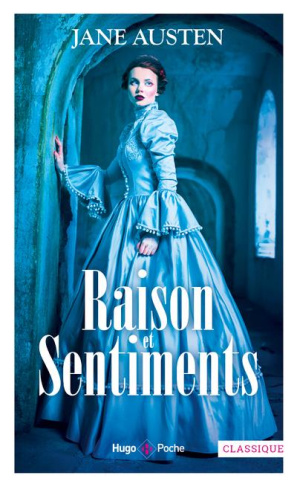
Raison et sentiments
Un classique qui n'a pas pris une ride ! A la mort de leur père, les soeurs Dashwood quittent avec leur mère le comté de Sussex pour s'établir dans la chaumière de Barton, en Devonshire. Pour la raisonnable Elinor et la sensible Maria, toutes deux ravissantes et en âge de se marier, c'est une nouvelle vie qui commence. Traduction : Isabelle de Montolieu (1751-1832). Ecrit vers 1795, Sense and Sensibility parait à Londres en 1811, et sera traduit en français dès 1815. Ce classique de la littérature de la Lady des lettres anglaises qui a influencé nombre d'écrivains majeurs, tels Henry James, Virginia Woolf ou Katherine Mansfield, est considéré comme le premier grand roman anglais du XIXe siècle. De nombreux auteurs de New Romance - Christina Lauren Anna Todd, Audrey Carlan, Mia Sheridan, Laurelin Paige, Brittainy C. Cherry, ou Lexi Ryan... - s'accordent à considérer ce grand classique de la littérature anglaise comme une référence incontournable et une source féconde d'inspiration.ÉPUISÉVOIR PRODUIT6,65 €


Du même éditeur
-

Deux soeurs pour un roi
Je serai sombre, française, à la mode et difficile; vous serez douce, ouverte, anglaise et belle. Quelle paire nous formerons! Quel homme pourra nous résister?" Tels sont les premiers mots prononcés par Anne Boleyn à l'endroit de sa soeur Marie quand elle la rejoint, en 1522, à la cour d'Angleterre. Introduite au palais de Westminster, à l'âge de 14 ans, Marie Boleyn séduit le roi Henri VIII auquel elle donnera deux enfants. D'abord éblouie par le souverain, elle comprend qu'elle sert d'appât au milieu des complots dynastiques. Quand l'intérêt du roi pour elle s'émousse, Anne est chargée de le séduire à son tour. Désir, haine, ambitions, trahisons. Se déroulant sur quinze ans, cette fresque historique, racontée à la première personne par Marie Boleyn, dépeint les rivalités au sein de la dynastie des Tudor. Une histoire qui se terminera dans le sang.ÉPUISÉVOIR PRODUIT9,95 € -
Le don d'Anna
Adam va mourir. Avec lui Anna perd son grand amour. Eux qui avaient mis tant d'années à se l'avouer...Alors Anna se souvient, elle repense à sa vie passée, et aux événements qui l'ont menée là: son enfance dans un Salvador en proie à la guerre civile, le massacre de sa mère et des habitants de son village par la junte, l'orphelinat, l'exil vers les États-Unis, le couvent...Puis cette décision de soeur Josepha de la placer, à 22 ans, chez Adam et Lillian Trevis, riches californiens. Plus que la gouvernante des deux enfants, Anna devient vite le métronome de cette famille. Celle qui, à son insu, embellit le quotidien de chacun.Anna possède un don. Puisant dans cette force intérieure qui lui a permis de continuer à vivre, elle va veiller sur eux, se dévouer, sans rien demander en échange. Jusqu'au jour où, malgré le départ prochain d'Adam, la vie lui offre enfin un cadeau...Optimiste, apaisant, bouleversant... Les qualificatifs n'ont pas manqué pour décrire ce roman vrai et sincère.ÉPUISÉVOIR PRODUIT8,65 € -
Le fils du chiffonnier. Mémoires
Les Mémoires de vedettes américaines sont le plus souvent des produits finis, adaptés au public et passés à la moulinette des services de publicité. Ce livre détonne par sa sincérité, son ton de liberté, et l'absence - rare - de tout snobisme. Le générique compte tout ce qu'il faut de célébrités, du "show-bizz" à la politique, et contient le pourcentage inévitable d'allusions et d'indiscrétions; mais il renferme quelque chose de différent: sous la "success-story" aux couleurs vives d'Hollywood, l'histoire grise d'un petit juif devenu grand qui ne comprend pas pourquoi le monde est si dur... (Gilles Lambert, Le Figaro) Le fils du chiffonnier illettré - russe et juif de surcroît - qui a tenu dans ses bras les plus belles femmes d'Hollywood, Joan Crawford, Rita Hayworth, Marlène Dietrich, et pas seulement au cinéma, se fait tendre pour ses conquêtes, ironique pour ses détracteurs, acide pour la vie frelatée des vedettes. Mais jamais, celui qui fut Van Gogh, Spartacus et le colonel Dax n'oublie qu'il fut d'abord Issur Danielovitch Demsky, sorti à coups de volonté, de travail et de chance de la misère. (Claire Méheust, Marie-Claire)ÉPUISÉVOIR PRODUIT9,65 € -
L'héritage Boleyn
En 1536, Henry VIII, roi d'Angleterre, a fait décapiter pour adultère, inceste et haute trahison sa deuxième épouse, Anne Boleyn, qui n'a pas enfanté l'héritier mâle qu'il espérait. Quelques jours plus tard, il épouse Jane Seymour, qui lui donnera un fils, le futur Edouard VI, mais décèdera en couches en 1537. Moins de trois ans plus tard, il se marie avec Anne de Clèves dans le cadre d'une alliance avec les Protestants. Mais, incapable de consommer son mariage, il décide d'en obtenir l'annulation pour convoler avec la très jeune Katherine Howard, nièce de l'ambitieux Thomas, duc de Norfolk. Malgré la vigilance de Jane Boleyn, sa dame d'atour alliée du duc, la nouvelle reine noue une liaison avec Thomas Culpepper. En 1542, cette infidélité causera sa perte. Elle aussi subira le sort réservé à sa cousine Anne six ans plus tôt. Trois épouses, trois destins tragiques... Avec brio, Philippa Gregory nous plonge dans les arcanes de la cour, où machinations, intrigues et complots pour accéder ou conserver le pouvoir se succèdent, et dont les femmes sont souvent les premières victimes...ÉPUISÉVOIR PRODUIT8,95 €


De la même catégorie
-
En attendant les barbares
L'écrivain sud-africain J.M. Coetzee, qui a reçu le prix Nobel de littérature 2003, a placé l'apartheid et ses stigmates au centre de son oeuvre. D'ascendance anglo-allemande, John Maxwell Coetzee est né en 1940 au Cap, en Afrique du Sud. Scolarisé dans un établissement anglophone, il s'installe en Grande-Bretagne au début des années 1960, où il exerce la profession de programmateur informatique. Il délaisse rapidement cette activité pour embrasser des études d'histoire et de littérature aux Etats-Unis. Il est édité pour la première fois en 1974 avec Terres de crépuscule. Mais c'est en 1980 qu'il connaît le succès international avec En attendant les barbares. En 1983, l'auteur sud-africain décroche le prestigieux Booker Prize pour Michael K, sa vie, son temps. Parallèlement, Coetzee enseigne les lettres et l'anglais à la State University de New York à Buffalo, dans l'Etat américain de New York (nord-est). L'année suivante, il obtient une chaire de professeur de littérature anglaise à l'université du Cap. En 1986, il publie une version revue de Robinson Crusoé dans le roman Foe, avant de revenir à son Afrique du Sud. Il publie en 1990 L'Age de fer. Premier écrivain à recevoir le Booker Prize deux fois (pour son roman Disgrâce en 1999), il s'expatrie en 2002 en Australie, à Adélaïde précisément où il occupe un poste à l'université. Traducteur et critique, il a publié cette année Elizabeth Costello: Eight Lessons.ÉPUISÉVOIR PRODUIT8,40 € -
A livre ouvert. Les carnets intimes de Logan Mountsuart
La vie de l'écrivain Logan Mountstuart est un perpétuel recommencement. Tour à tour journaliste, indic et critique d'art, il rencontre Hemingway, travaille sous les ordres de Ian Fleming et se lie d'amitié avec Picasso. De l'Angleterre au Nigéria, en passant par New York et Paris, il revêt tous les costumes et devient le témoin privilégié des plus grands événements du XXe siècle...William Boyd est né en 1952, au Ghana. Il a enseigné la littérature à Oxford avant de se consacrer à la l'écriture. Il est l'auteur de nouvelles et d'une dizaine de romans, salués par la critique et disponibles en Points, ainsi que son recueil de nouvelles L'amour fait mal." Est-ce que À livre ouvert est le meilleur roman de William Boyd ? Ne suffit-il pas de savoir qu'il est magistral, ambitieux, terriblement original et émouvant ? "LireTraduit de l'anglais par Christiane BesseÉPUISÉVOIR PRODUIT10,80 € -
Une veuve de papier
Résumé : Eté 1958. Ted Cole, auteur de livres pour enfants, pousse son assistant de seize ans dans les bras de sa femme Marion. Il veut précipiter un divorce devenu inévitable depuis la mort de leurs deux fils. Mais la belle et triste Marion décide de tout quitter, laissant derrière elle une petite fille désorientée, Ruth. Automne 1990. Ruth est devenue un écrivain de renom. En tournée à Amsterdam, elle est confrontée à une aventure tout droit sortie de ses terreurs enfantines...ÉPUISÉVOIR PRODUIT11,95 € -
Quand j'avais cinq ans, je m'ai tué
Il voulait voir s'envoler les minutes...Gil n'a que huit ans. Mais son petit coeur a déjà connu de bien grands sentiments. Trop grands. Trop forts...À cause de ce qu'il a fait à Jessica, le voici dans une résidence spécialisée. Seul, face à la bêtise des adultes qui transforment ses rêves en symptômes cliniques, et son amour en attentat. Seul dans une forteresse de silence. Qui pourra l'y rechercher ?Une émotion pure, dans une langue merveilleusement préservée.ÉPUISÉVOIR PRODUIT7,90 €