

Voyage au Maroc. Récit
10,10 €
Épuisé
EAN :
9782070403936
Invitée par Lyautey, résident général de la République française, Edith Wharton découvrit le Maroc en 1917, à une époque où les voyageurs occidentaux étaient rares. Les recommandations dont elle bénéficia lui ouvrirent de nombreuses portes et lui permirent d'être le témoin des derniers instants d'une civilisation millénaire, avant que le Maroc ne s'ouvre au monde. Son témoignage est d'autant plus précieux qu'elle allie don d'observation et grande connaissance de l'histoire marocaine. Ses premières impressions de voyage furent publiées dans des journaux américains, avant d'être réunies en un volume en 1920.
| Nombre de pages | 222 |
|---|---|
| Date de parution | 20/07/1999 |
| Poids | 198g |
| Largeur | 114mm |

Distributor Debug Info
| SKU: | 9782070403936 |
| wmi_id_distributeur: | Not set |
| Is Salable (from plugin): | No (Out of Stock) |
| Is Salable (direct MSI check): | No (Out of Stock) |
| Distributor Name: | Par défaut |
| Availability Value: | 0 |
| Availability Label: | Epuisé |
| Match Result: | |
| Default Availability (Config): | 0 - Epuisé |
| Raw Config Mapping: |
Array
(
    [_1772119784121_121] => Array
        (
            [id] => 12707000
            [name] => 12707000
            [availability] => 1
            [activation_attribute] => 1
        )

)
|
Plus d'informations
| EAN | 9782070403936 |
|---|---|
| Titre | Voyage au Maroc. Récit |
| Auteur | Wharton Edith |
| Editeur | GALLIMARD |
| Largeur | 114 |
| Poids | 198 |
| Date de parution | 19990720 |
| Nombre de pages | 222,00 € |
Pourquoi choisir Molière ?
Efficacité et rapidité Commandé avant 16h livré demain
Économique et pratique Livraison à domicile dès 5,10 €
Facile et sans frais Retrait gratuit en magasin
Sécurité et tranquillité Paiement 100 % sécurisé
Disponibilité et écoute Contactez-nous sur WhatsApp
Du même auteur
-

HOUSE OF MIRTH (THE)
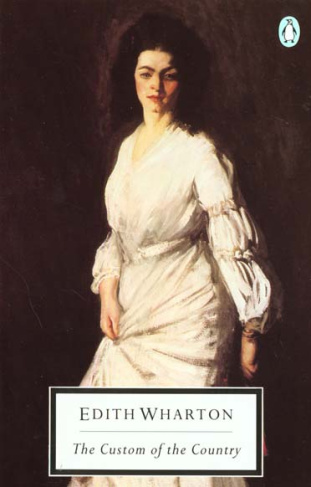
Extrait Chapter 1Selden paused in surprise. In the afternoon rush of the Grand Central Station his eyes had been refreshed by the sight of Miss Lily Bart.It was a Monday in early September, and he was returning to his work from a hurried dip into the country; but what was Miss Bart doing in town at that season? If she had appeared to be catching a train, he might have inferred that he had come on her in the act of transition between one and another of the country-houses which disputed her presence after the close of the Newport season; but her desultory air perplexed him. She stood apart from the crowd, letting it drift by her to the platform or the street, and wearing an air of irresolution which might, as he surmised, be the mask of a very definite purpose. It struck him at once that she was waiting for some one, but he hardly knew why the idea arrested him. There was nothing new about Lily Bart, yet he could never see her without a faint movement of interest: it was characteristic of her that she always roused speculation, that her simplest acts seemed the result of far-reaching intentions.An impulse of curiosity made him turn out of his direct line to the door, and stroll past her. He knew that if she did not wish to be seen she would contrive to elude him; and it amused him to think of putting her skill to the test."Mr. Selden -- what good luck!"She came forward smiling, eager almost, in her resolve to intercept him. One or two persons, in brushing past them, lingered to look; for Miss Bart was a figure to arrest even the suburban traveller rushing to his last train.Selden had never seen her more radiant. Her vivid head, relieved against the dull tints of the crowd, made her more conspicuous than in a ball-room, and under her dark hat and veil she regained the girlish smoothness, the purity of tint, that she was beginning to lose after eleven years of late hours and indefatigable dancing. Was it really eleven years, Selden found himself wondering, and had she indeed reached the nine-and-twentieth birthday with which her rivals credited her?"What luck!" she repeated. "How nice of you to come to my rescue!"He responded joyfully that to do so was his mission in life, and asked what form the rescue was to take."Oh, almost any -- even to sitting on a bench and talking to me. One sits out a cotillion -- why not sit out a train? It isn't a bit hotter here than in Mrs. Van Osburgh's conservatory -- and some of the women are not a bit uglier."She broke off, laughing, to explain that she had come up to town from Tuxedo, on her way to the Gus Trenors' at Bellomont, and had missed the three-fifteen train to Rhinebeck."And there isn't another till half-past five." She consulted the little jewelled watch among her laces. "Just two hours to wait. And I don't know what to do with myself. My maid came up this morning to do some shopping for me, and was to go on to Bellomont at one o'clock, and my aunt's house is closed, and I don't know a soul in town." She glanced plaintively about the station. "It is hotter than Mrs. Van Osburgh's, after all. If you can spare the time, do take me somewhere for a breath of air."He declared himself entirely at her disposal: the adventure struck him as diverting. As a spectator, he had always enjoyed Lily Bart; and his course lay so far out of her orbit that it amused him to be drawn for a moment into the sudden intimacy which her proposal implied."Shall we go over to Sherry's for a cup of tea?"She smiled assentingly, and then made a slight grimace."So many people come up to town on a Monday -- one is sure to meet a lot of bores. I'm as old as the hills, of course, and it ought not to make any difference; but if I'm old enough, you're not," she objected gaily. "I'm dying for tea -- but isn't there a quieter place?"He answered her smile, which rested on him vividly. Her discretions interested him almost as much as her imprudences: he was so sure that both were part of the same carefully-elaborated plan. In judging Miss Bart, he had always made use of the "argument from design.""The resources of New York are rather meagre," he said; "but I'll find a hansom first, and then we'll invent something."He led her through the throng of returning holiday-makers, past sallow-faced girls in preposterous hats, and flat-chested women struggling with paper bundles and palm-leaf fans. Was it possible that she belonged to the same race? The dinginess, the crudity of this average section of womanhood made him feel how highly specialized she was.A rapid shower had cooled the air, and clouds still hung refreshingly over the moist street."How delicious! Let us walk a little," she said as they emerged from the station.They turned into Madison Avenue and began to stroll northward. As she moved beside him, with her long light step, Selden was conscious of taking a luxurious pleasure in her nearness: in the modelling of her little ear, the crisp upward wave of her hair -- was it ever so slightly brightened by art? -- and the thick planting of her straight black lashes. Everything about her was at once vigorous and exquisite, at once strong and fine. He had a confused sense that she must have cost a great deal to make, that a great many dull and ugly people must, in some mysterious way, have been sacrificed to produce her. He was aware that the qualities distinguishing her from the herd of her sex were chiefly external: as though a fine glaze of beauty and fastidiousness had been applied to vulgar clay. Yet the analogy left him unsatisfied, for a coarse texture will not take a high finish; and was it not possible that the material was fine, but that circumstance had fashioned it into a futile shape?As he reached this point in his speculations the sun came out, and her lifted parasol cut off his enjoyment. A moment or two later she paused with a sigh."Oh, dear, I'm so hot and thirsty -- and what a hideous place New York is!" She looked despairingly up and down the dreary thoroughfare. "Other cities put on their best clothes in summer, but New York seems to sit in its shirtsleeves." Her eyes wandered down one of the side streets. "Some one has had the humanity to plant a few trees over there. Let us go into the shade.""I am glad my street meets with your approval," said Selden as they turned the corner."Your street? Do you live here?"She glanced with interest along the new brick and limestone house-fronts, fantastically varied in obedience to the American craving for novelty, but fresh and inviting with their awnings and flower-boxes."Ah, yes -- to be sure: The Benedick. What a nice-looking building! I don't think I've ever seen it before." She looked across at the flat-house with its marble porch and pseudo-Georgian facade. "Which are your windows? Those with the awnings down?""On the top floor -- yes.""And that nice little balcony is yours? How cool it looks up there!"He paused a moment. "Come up and see," he suggested. "I can give you a cup of tea in no time -- and you won't meet any bores."Her colour deepened -- she still had the art of blushing at the right time -- but she took the suggestion as lightly as it was made."Why not? It's too tempting -- I'll take the risk," she declared."Oh, I'm not dangerous," he said in the same key. In truth, he had never liked her as well as at that moment. He knew she had accepted without afterthought: he could never be a factor in her calculations, and there was a surprise, a refreshment almost, in the spontaneity of her consent.On the threshold he paused a moment, feeling for his latchkey."There's no one here; but I have a servant who is supposed to come in the mornings, and it's just possible he may have put out the tea-things and provided some cake."He ushered her into a slip of a hall hung with old prints. She noticed the letters and notes heaped on the table among his gloves and sticks; then she found herself in a small library, dark but cheerful, with its walls of books, a pleasantly faded Turkey rug, a littered desk, and, as he had foretold, a tea-tray on a low table near the window. A breeze had sprung up, swaying inward the muslin curtains, and bringing a fresh scent of mignonette and petunias from the flower-box on the balcony.Lily sank with a sigh into one of the shabby leather chairs."How delicious to have a place like this all to one's self! What a miserable thing it is to be a woman." She leaned back in a luxury of discontent.Selden was rummaging in a cupboard for the cake."Even women," he said, "have been known to enjoy the privileges of a flat.""Oh, governesses -- or widows. But not girls -- not poor, miserable, marriageable girls!""I even know a girl who lives in a flat."She sat up in surprise. "You do?""I do," he assured her, emerging from the cupboard with the sought-for cake."Oh, I know -- you mean Gerty Farish." She smiled a little unkindly. "But I said marriageable -- and besides, she has a horrid little place, and no maid, and such queer things to eat. Her cook does the washing and the food tastes of soap. I should hate that, you know.""You shouldn't dine with her on wash-days," said Selden, cutting the cake.They both laughed, and he knelt by the table to light the lamp under the kettle, while she measured out the tea into a little tea-pot of green glaze. As he watched her hand, polished as a bit of old ivory, with its slender pink nails, and the sapphire bracelet slipping over her wrist, he was struck with the irony of suggesting to her such a life as his cousin Gertrude Farish had chosen. She was so evidently the victim of the civilization which had produced her, that the links of her bracelet seemed like manacles chaining her to her fate.She seemed to read his thought. "It was horrid of me to say that of Gerty," she said with charming compunction. "I forgot she was your cousin. But we... --Ce texte fait référence à une édition épuisée ou non disponible de ce titre.ÉPUISÉVOIR PRODUIT15,11 € -

-

-


Du même éditeur
-

Romans, récits et soties, oeuvres lyriques
Ce volume contient les oeuvres suivantes: Le Traité du Narcisse - Le Voyage d'Urien - La Tentative amoureuse - Paludes - Les Nourritures terrestres - Les Nouvelles nourritures - Le Prométhée mal enchaîné - El Hadj ou Le Traité du faux prophète - L'Immoraliste - Le Retour de l'enfant prodigue - La Porte étroite - Isabelle - Les Caves du Vatican - La Symphonie pastorale - Les Faux-monnayeurs - L'École des femmes - Robert - Geneviève ou La confidence inachevée - Thésée. Introduction de Maurice Nadeau. Notices et bibliographie par Yvonne Davet et Jean-Jacques Thierry.ÉPUISÉVOIR PRODUIT56,00 € -
Oeuvres romanesques et voyages. Tome 1
Résumé : Cette édition s'efforce de présenter les écrits purement littéraires de Chateaubriand dans un ordre à la fois chronologique et thématique. Ainsi le lecteur pourra relire un écrivain qui ne fut pas seulement chantre de sa propre désespérance et du néant, artiste frileux réfléchissant sur son art, historien consciencieux, mais aussi le plus intraitable génie contestataire. Toute son ouvre en effet s'insurge contre une religion mal comprise qui mutile l'homme, contre une fausse civilisation égoïste et cruelle qui monopolise morale et culture. Reflet de son temps, Chateaubriand l'est également du nôtre. Le texte a été établi d'après celui des Ouvres complètes parues chez Ladvocat. On a consulté les manuscrits accessibles et découvert des sources de l'ouvre qui s'ajoutent, nombreuses, à celles que nous connaissions déjà, surtout à propos des Martyrs et du Voyage en Amérique. Cette édition devient ainsi un instrument de travail enrichissant et suggestif.ÉPUISÉVOIR PRODUIT66,50 € -
Anthologie de la poésie française
«La Poésie est comparable à ce génie des Nuits Arabes qui, traqué, prend tour à tour les apparences les plus diverses afin d'éluder la prise, tantôt flamme et tantôt murmure ; tantôt poisson, tantôt oiseau ; et qui se réfugie enfin dans l'insaisissable grain de grenade que voudrait picorer le coq.La Poésie est comparable également à cet exemplaire morceau de cire des philosophes qui consiste on ne sait plus en quoi, du moment qu'il cède l'un après l'autre chacun de ses attributs, forme, dureté, couleur, parfum, qui le rendaient méconnaissable à nos sens. Ainsi voyons-nous aujourd'hui certains poètes, et des meilleurs, refuser à leurs poèmes, rime et mesure et césure (tout le "sine qua non" des vers, eût-on cru), les rejeter comme des attributs postiches sur quoi la Muse prenait appui ; et de même : émotion et pensée, de sorte que plus rien n'y subsiste, semble-t-il, que précisément cette chose indéfinissable et cherchée : la Poésie, grain de grenade où se resserre le génie. Et que tout le reste, auprès, paraisse impur ; tâtonnements pour en arriver là. C'est de ces tâtonnements toutefois qu'est faite l'histoire de notre littérature lyrique.»André Gide.ÉPUISÉVOIR PRODUIT53,00 € -
Iliade - Odyssée
Traduit du grec par Robert Flacelière et Victor Bérard. Édition de Robert Flacelière et de Jean Bérard. Index par René Langumier.EN STOCKCOMMANDER62,50 €


