

WALLACE COLLECTION (THE) - CATALOGUE OF ITALIAN SCULPTURE 2VOL
The new catalogue of Italian sculpture in the Wallace Collection by Jeremy Warren, author of the award-winning catalogue of Medieval and Renaissance Sculpture in the Ashmolean Museum, Oxford, puts onto the map a part of the Wallace Collection which has hitherto been relatively little-known. The 159 entries cover works in bronze, marble, terracotta and wood dating from c. 1400 to 1900, and by or associated with some of the most famous names in Italian sculpture, such as Donatello, Pietro Torrigiani, Giovanni Bologna (Giambologna) and Alessandro Algardi. Each entry is packed with information, with a comprehensive description and bibliography followed by a commentary exploring attribution, dating, function and social and historical context. An introductory essay explores the origins of the Italian sculpture collection in the Wallace Collection, whilst in her technical essay Seoyoung Kim examines some of the results of the programme of alloy analysis of the scultures in bronze and other metals. The painstaking conservation of Pietro Torrigiani's moving head of Christ, once in Westminster Abbey, is described by Alexandra Kosinova. New photography by Cassandra Parsons allows full appreciation of the many outstandingly beautiful pieces in the collection. The research carried out for this groundbreaking new catalogue led to numerous important discoveries, which reconnect many of the sculptures with their origins in Renaissance and Baroque Italy. New archival discoveries in Padua illuminate the life and work of the hitherto mysterious Francesco da Sant'Agata, maker of the Wallace Collection's celebrated boxwood statuette of Herceules. An astonishingly vivid small bronze portrait head, in store for decades, is here published as a portrait of father Antonio Trombetta, the most famous abbot in the long history of the Paduan Basilica of Saint Anthony, by the greatest early Renaissance sculptor of the small bronze, Andrea Riccio. An exquisite but mysterious small cannon turned out to be designed by a 16th century Paduan nobleman, whose chapel and grave in the Basilica are here re-identifi ed. There have too been many discoveries in the later history of the works. A stunning large bronze group of Nessus and Deianira by Giambologna is now known to have once belonged to Sir Joshua Reynolds, whilst a satyr's head in red marble, restored in Rome c. 1630, once belonged to none other than Cardinal Richelieu. The new Wallace Collection catalogue of Italian sculpture will become an indispensable reference work, which will also be read with pleasure by specialists and anybody with a love of this wonderful and varied art form.
| Date de parution | 20/04/2016 |
|---|---|
| Poids | 5 768g |
| Largeur | 355mm |

| SKU: | 9780900785764 |
| wmi_id_distributeur: | Not set |
| Is Salable (from plugin): | No (Out of Stock) |
| Is Salable (direct MSI check): | No (Out of Stock) |
| Distributor Name: | Par défaut |
| Availability Value: | 0 |
| Availability Label: | Epuisé |
| Match Result: | |
| Default Availability (Config): | 0 - Epuisé |
| Raw Config Mapping: |
Array
(
    [_1772119784121_121] => Array
        (
            [id] => 12707000
            [name] => 12707000
            [availability] => 1
            [activation_attribute] => 1
        )

)
|
| EAN | 9780900785764 |
|---|---|
| Titre | WALLACE COLLECTION (THE) - CATALOGUE OF ITALIAN SCULPTURE 2VOL |
| Auteur | WARREN JEREMY |
| Editeur | HOLBERTON |
| Largeur | 355 |
| Poids | 5768 |
| Date de parution | 20160420 |
| Nombre de pages | 0,00 € |
Pourquoi choisir Molière ?
Du même auteur
-

Les fous du roi
Résumé : Robert Penn Warren (1905-1989), romancier du Sud, fut longtemps le grand rival de Faulkner. Les Fous du roi (prix Pulitzer 1946), sans doute son plus grand livre, nous fait assister au douteux combat qu'un homme peut-être sincèrement épris de justice entend livrer - seul d'abord ou presque - contre les forces de la corruption et du mensonge. Nous sommes dans l'Amérique profonde du début des années 30, mais en territoire plutôt familier : trafics d'influence, combines et crapuleries en tout genre, histoires de sexe ou d'argent opportunément déterrées à l'attention d'un ennemi politique ou d'un "ami" devenu gênant - les choses ont décidément peu changé. L'apprenti-sorcier, vite promis à ce qui ressemble à une ascension irrésistible, sera à son tour rattrapé par un passé dont il a imprudemment remué les eaux troubles. Car le temps, ce grand oublié des ambitieux d'où qu'ils viennent, finit toujours par se venger, en y mettant parfois une terrible ironie. Et puis la violence, même au service de la meilleure cause, n'est jamais un instrument facile à manipuler... Un livre féroce et mélancolique, construit à la façon d'une partie d'échecs qui laissera, on le devine, la plupart des acteurs sur le carreau... et les survivants privés de bien des illusions.ÉPUISÉVOIR PRODUIT15,50 € -

-
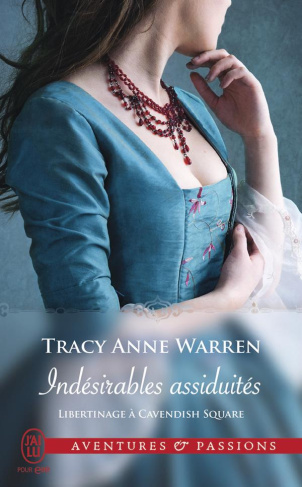
Libertinage à Cavendish Square Tome 1 : Indésirables assiduités
Résumé : Enfant gâté de la gentry, Leopold Byron s'ennuie. Pour se distraire, il décide de relever le défi que lui lance son frère jumeau : devenir l'amant de la scandaleuse lady Thalia, mise au ban de la société à cause de son divorce. Subjugué par sa beauté, Léopold se lance dans une traque sans merci. Mais il a affaire à forte partie. Leurs deux volontés s'affrontent dans une joute farouche où toutes les manipulations et tous les coups bas sont permis. Bientôt, une passion ardente embrase leur duel implacable. Leopold aurait-il gagné son pari ? Pas sûr, car il pressent que, derrière cette femme indomptable, se cache la vraie Thalia, qui persiste à se dérober.ÉPUISÉVOIR PRODUIT7,40 € -
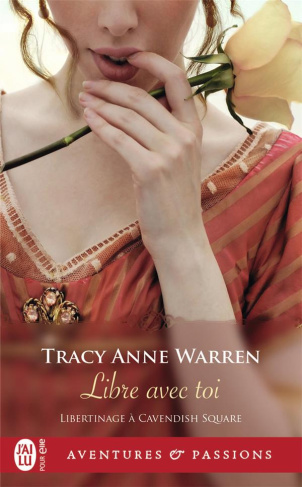
Libertinage à Cavendish Square Tome 3 : Libre avec toi
Traits fins et juvéniles derrière ses grosses lunettes, silhouette menue, voix fluette, Ross Carrow n'est décidément pas un adversaire impressionnant. Ténor du barreau, lord Lawrence Byron pense ne faire qu'une bouchée de cet avocaillon de province. Pourtant, après un affrontement serré au prétoire, Lawrence perd le procès ! Beau joueur, il décide de lier connaissance avec le jeune Carrow et l'entraîne dans les lieux de plaisir fréquentés par les messieurs. Jusqu'au jour où il découvre que Ross s'appelle en réalité... Rosamund. Au mépris des conventions, la jeune femme se travestit afin d'exercer une profession interdite à son sexe. Furieux d'avoir été dupé, Lawrence décide de lui donner une bonne leçon...ÉPUISÉVOIR PRODUIT7,40 €


Du même éditeur
-

-
-
-
GOLD OF THE GREAT STEPPE - PEOPLE, POWER AND PRODUCTION
Résumé : This catalogue accompanies an exhibition which presents artefacts from burial mounds of the Saka people of East Kazakhstan, who, over 2, 500 years ago, lived lives rich in complexity. The Saka people occupied a landscape of seemingly endless steppe to the west, bounded by mountains to the east and south. Known to be fierce warriors, they were also skilled craftspeople, producing intricate gold and other metalwork. Their artistic expression indicates a deep respect for the animals around them - both real and imagined. They dominated their landscapes with huge burial mounds of sophisticated construction, burying their horses with elite members of their society. Recent excavations and analyses, led by archaeologists from Kazakhstan, have demonstrated that by looking through a scientific and social lens at what the Saka left behind we can paint a picture of a complex society. We can start to understand how it affected the way people lived, how they travelled, the things they made and what they believed in. Including contributions from experts at Nazarbayev University, Al-Farabi Kazakh National University, and the University of Cambridge, this publication details the results of new archaeological research from East Kazakhstan. It is richly illustrated with photographs of intricate gold artefacts in the Saka-Scythian animal style, landscape and aerial photography of the burial mounds, and details of the excavations and analyses. Grounded in decades of careful study, papers by the two leading Kazakhstani archaeologists of the East Kazakhstan region, Professors Zainolla Samashev and Abdesh Toleubayev, demonstrate current archaeological thinking in Kazakhstan today. These papers are complemented by material from a team of international scholars, which contribute the results of new scientific analyses on the artefacts, and wider Eurasian perspectives on the Saka people and their practice of horse burial.ÉPUISÉVOIR PRODUIT32,00 €
