MY SECRET LIFE VOL V
6,00 €
Épuisé
EAN :
9781853266331
| Date de parution | 02/06/1998 |
|---|---|
| Poids | 200g |

Distributor Debug Info
| SKU: | 9781853266331 |
| wmi_id_distributeur: | Not set |
| Is Salable (from plugin): | No (Out of Stock) |
| Is Salable (direct MSI check): | No (Out of Stock) |
| Distributor Name: | Par défaut |
| Availability Value: | 0 |
| Availability Label: | Epuisé |
| Match Result: | |
| Default Availability (Config): | 0 - Epuisé |
| Raw Config Mapping: |
Array
(
    [_1772119784121_121] => Array
        (
            [id] => 12707000
            [name] => 12707000
            [availability] => 1
            [activation_attribute] => 1
        )

)
|
Plus d'informations
| EAN | 9781853266331 |
|---|---|
| Titre | MY SECRET LIFE VOL V |
| ISBN | 1853266337 |
| Auteur | WALTER |
| Editeur | WORDSWORTH |
| Largeur | 0 |
| Poids | 200 |
| Date de parution | 19980602 |
| Nombre de pages | 0,00 € |
Pourquoi choisir Molière ?
Efficacité et rapidité Commandé avant 16h livré demain
Économique et pratique Livraison à domicile dès 5,10 €
Facile et sans frais Retrait gratuit en magasin
Sécurité et tranquillité Paiement 100 % sécurisé
Disponibilité et écoute Contactez-nous sur WhatsApp
Du même auteur
-
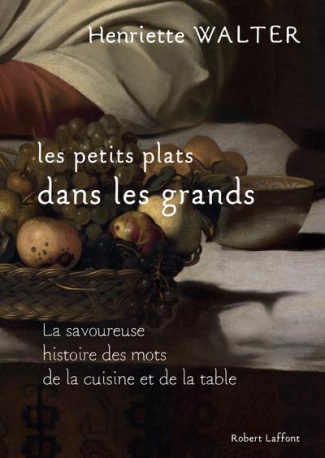
Les petits plats dans les grands. La savoureuse histoire des mots de la cuisine et de la table
Amoureux des mots et des mets, gourmands, gourmets et gastronomes : ce livre est pour vous ! Les plaisirs de la table ont été célébrés depuis l'Antiquité et particulièrement en France, terre de gastronomie, où l'on ne se contente pas d'apprécier la variété ou la subtilité des plats proposés, mais où l'on se délecte, pendant et après les repas, d'en parler abondamment : en simple convive bavard, en gourmand incorrigible, en gourmet exigent, parfois en cuisinier averti. Le nouveau livre d'Henriette Walter - elle-même excellente cuisinière - permet de découvrir avec la même passion ce qui se dissimule sous les mots de la cuisine et de la table, tout en n'étant pas un énième livre de recettes. On n'y trouvera pas une façon inédite de préparer le foie gras ou une nouvelle manière astucieuse d'accommoder le poisson, mais on y apprendra que le nom du foie, en français et dans les langues issues du latin, doit être associé historiquement à celui des figues (en latin ficatum (iecur) " (foie) aux figues ") ; que dans sauce, on peut reconnaître le mot latin sal " sel " un peu modifié ; que huile désignait d'abord seulement l'huile d'olive, ou encore que, dans choucroute, c'est croute qui signifie " chou ", etc. Un peu plus loin, on s'étonnera, à propos de l'arrivée de la pomme de terre en Europe, de voir cités côte à côte deux personnages réputés dans deux domaines tellement éloignés l'un de l'autre : Antoine-Augustin Parmentier, apothicaire-major des armées françaises sous Louis XVI dont le nom reste attaché au hachis Parmentier ; et le grand physicien Alessandro Volta - oui, le célèbre inventeur de la pile électrique fut aussi, pour lutter contre la pénurie de blé en Italie, vers la fin du XVIIIe siècle, le promoteur des gnocchi. De leur côté, les amateurs de cuisine débutants apprendront à identifier dans bar et loup le même poisson, tout comme le même agrume dans bigarade et orange amère, la même baie dans myrtille et brimbelle, ou la même cucurbitacée dans potiron et giraumon. Mais aussi, en poursuivant leur lecture dans le secteur plus raffiné des plats élaborés, ils ne confondront plus soupe, potage et consommé. Bref, quelques exemples parmi tant d'autres de cet ouvrage passionnant, aussi varié et riche que les voyages culinaires, linguistiques et culturels auxquels il invite le lecteur. Avec, comme toujours dans les livres d'Henriette Walter, la dimension ludique d'apprendre en s'amusant : anecdotes, humour et petits jeux pour tester ses connaissances nous accompagnent tout au long de la lecture.ÉPUISÉVOIR PRODUIT21,00 € -

Français et maths CM1
Résumé : Un outil de révision rapide, simple et efficace ! Des fiches pour mémoriser facilement l'essentiel : tous les savoirs fondamentaux en français et en maths. Des leçons synthétiques et très claires grâce à une approche visuelle originale. Des exercices ciblés et rapides pour vérifier ses connaissances.ÉPUISÉVOIR PRODUIT6,90 € -



Du même éditeur
-

-
-
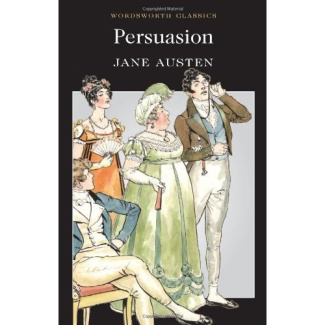
Persuasion (VO)
Extrait Sir Walter Elliot, of Kellynch Hall, in Somersetshire, was a man who, for his own amusement, never took up any book but the Baronetage; there he found occupation for an idle hour, and consolation in a distressed one; there his faculties were roused into admiration and respect by contemplating the limited remnant of the earliest patents; there any unwelcome sensations arising from domestic affairs changed naturally into pity and contempt as he turned over the almost endless creations of the last century; and there, if every other leaf were powerless, he could read his own history with an interest which never failed. This was the page at which the favourite volume always opened:--'ELLIOT OF KELLYNCH HALL''Walter Elliot, born March 1, 1760, married July 15, 1784, Elizabeth, daughter of James Stevenson, Esq., of South Park, in the county of Gloucester; by which lady (who died 1800) he has issue, Elizabeth, born June 1, 1785; Anne, born August 9, 1787; a still-born son, November 5, 1789; Mary, born November 20, 1791.'Precisely such had the paragraph originally stood from the printer's hands; but Sir Walter had improved it by adding, for the information of himself and his family, these words, after the date of Mary's birth:--'Married, December 16, 1810, Charles, son and heir of Charles Musgrove, Esq., of Uppercross, in the county of Somerset,' and by inserting most accurately the day of the month on which he had lost his wife. Then followed the history and rise of the ancient and respectable family in the usual terms; how it had been first settled in Cheshire, how mentioned in Dugdale, serving the office of high sheriff, representing a borough in three successive parliaments, exertions of loyalty, and dignity of baronet, in the first year of Charles II with all the Marys and Elizabeths they had married; forming altogether two handsome quarto pages, and concluding with the arms and motto:--'Principal seat, Kellynch Hall, in the county of Somerset,' and Sir Walter's handwriting again in this finale:--'Heir presumptive, William Walter Elliot, Esq., great-grandson of the second Sir Walter.''Vanity was the beginning and end of Sir Walter Elliot's character: vanity of person and of situation. He had been remarkably handsome in his youth, and at fifty-four was still a very fine man. Few women could think more of their personal appearance than he did, nor could the valet of any new-made lord be more delighted with the place he held in society. He considered the blessing of beauty as inferior only to the blessing of a baronetcy; and the Sir Walter Elliot, who united these gifts, was the constant object of his warmest respect and devotion. His good looks and his rank had one fair claim on his attachment, since to them he must have owed a wife of very superior character to anything deserved by his own. Lady Elliot had been an excellent woman, sensible and amiable, whose judgment and conduct, if they might be pardoned the youthful infatuation which made her Lady Elliot, had never required indulgence afterwards. She had humoured, or softened, or concealed his failings, and promoted his real respectability for seventeen years; and though not the very happiest being in the world herself, had found enough in her duties, her friends, and her children, to attach her to life, and make it no matter of indifference to her when she was called on to quit them. Three girls, the two eldest sixteen and fourteen, was an awful legacy for a mother to bequeath, an awful charge rather, to confide to the authority and guidance of a conceited, silly father. She had, however, one very intimate friend, a sensible, deserving woman, who had been brought, by strong attachment to herself, to settle close by her, in the village of Kellynch; and on her kindness and advice Lady Elliot mainly relied for the best help and maintenance of the good principles and instruction which she had been anxiously giving her daughters. This friend and Sir Walter did not marry, whatever might have been anticipated on that head by their acquaintance. Thirteen years had passed away since Lady Elliot's death, and they were still near neighbours and intimate friends, and one remained a widower, the other a widow. That Lady Russell, of steady age and character, and extremely well provided for, should have no thought of a second marriage, needs no apology to the public, which is rather apt to be unreasonably discontented when a woman does marry again, than when she does not; but Sir Walter's continuing in singleness requires explanation. Be it known, then, that Sir Walter, like a good father (having met with one or two private disappointments in very unreasonable applications), prided himself on remaining single for his dear daughter's sake. For one daughter, his eldest, he would really have given up anything, which he had not been very much tempted to do. Elizabeth had succeeded at sixteen to all that was possible of her mother's rights and consequence; and being very handsome, and very like himself, her influence had always been great, and they had gone on together most happily. His two other children were of very inferior value. Mary had acquired a little artificial importance by becoming Mrs. Charles Musgrove; but Anne, with an elegance of mind and sweetness of character, which must have placed her high with any people of real understanding, was nobody with either father or sister; her word had no weight, her convenience was always to give way--she was only Anne. To Lady Russell, indeed, she was a most dear and highly valued goddaughter, favourite, and friend. Lady Russell loved them all, but it was only in Anne that she could fancy the mother to revive again. A few years before Anne Elliot had been a very pretty girl, but her bloom had vanished early; and as, even in its height, her father had found little to admire in her (so totally different were her delicate features and mild dark eyes from his own), there could be nothing in them, now that she was faded and thin, to excite his esteem. He had never indulged much hope, he had now none, of ever reading her name in any other page of his favourite work. All equality of alliance must rest with Elizabeth, for Mary had merely connected herself with an old country family of respectability and large fortune, and had, therefore, given all the honour and received none: Elizabeth would, one day or other, marry suitably. It sometimes happens that a woman is handsomer at twenty-nine than she was ten years before; and, generally speaking, if there has been neither ill-health nor anxiety, it is a time of life at which scarcely any charm is lost. It was so with Elizabeth, still the same handsome Miss Elliot that she had begun to be thirteen years ago, and Sir Walter might be excused, therefore, in forgetting her age, or, at least, be deemed only half a fool, for thinking himself and Elizabeth as blooming as ever, amidst the wreck of the good looks of everybody else; for he could plainly see how old all the rest of his family and acquaintance were growing. Anne haggard, Mary coarse, every face in the neighbourhood worsting, and the rapid increase of the crow's foot about Lady Russell's temples had long been a distress to him. Elizabeth did not quite equal her father in personal contentment. Thirteen years had seen her mistress of Kellynch Hall, presiding and directing with a self-possession and decision which could never have given the idea of her being younger than she was. For thirteen years had she been doing the honours, and laying down the domestic law at home, and leading the way to the chaise and four, and walking immediately after Lady Russell out of all the drawing-rooms and dining-rooms in the country. Thirteen winters' revolving frosts had seen her opening every ball of credit which a scanty neighbourhood afforded, and thirteen springs shown their blossoms, as she travelled up to London with her father, for a few weeks' annual enjoyment of the great world. She had the remembrance of all this, she had the consciousness of being nine-and-twenty to give her some regrets and some apprehensions; she was fully satisfied of being still quite as handsome as ever, but she felt her approach to the years of danger, and would have rejoiced to be certain of being properly solicited by baronet-blood within the next twelvemonth or two. Then might she again take up the book of books with as much enjoyment as in her early youth, but now she liked it not. Always to be presented with the date of her own birth and see no marriage follow but that of a youngest sister, made the book an evil; and more than once, when her father had left it open on the table near her, had she closed it, with averted eyes, and pushed it away. She had had a disappointment, moreover, which that book and especially the history of her own family, must ever present the remembrance of. The heir presumptive, the very William Walter Elliot, Esq., whose rights had been so generally supported by her father, had disappointed her. She had, while a very young girl, as soon as she had known him to be, in the event of her having no brother, the future baronet, meant to marry him, and her father had always meant that she should. He had not been known to them as a boy; but soon after Lady Elliot's death, Sir Walter had sought the acquaintance, and though his overtures had not been met with any warmth, he had persevered in seeking it, making allowance for the modest drawing-back of youth; and, in one of their spring excursions to London, when Elizabeth was in her first bloom, Mr. Elliot had been forced into the introduction. He was at that time a very young man, just engaged in the study of the law; and Elizabeth found him extremely agreeable, and every plan in his favour was confirmed. He was invited to Kellynch Hall; he was talked of and expected all the rest of the year; but he never came. The following spring he was seen again in town, found equally agreeable, again encouraged, invited, and expected, and again he did not come; and the next tidings were tha... --Ce texte fait référence à l'édition Broché .EN STOCKCOMMANDER5,00 € -