

Art in vienna 1898-1918 : klimt kokoschka schiele and
35,00 €
Épuisé
EAN :
9780714829678
| Date de parution | 26/07/1999 |
|---|---|
| Poids | 1 260g |
| Largeur | 215mm |

Distributor Debug Info
| SKU: | 9780714829678 |
| wmi_id_distributeur: | Not set |
| Is Salable (from plugin): | No (Out of Stock) |
| Is Salable (direct MSI check): | No (Out of Stock) |
| Distributor Name: | Par défaut |
| Availability Value: | 0 |
| Availability Label: | Epuisé |
| Match Result: | |
| Default Availability (Config): | 0 - Epuisé |
| Raw Config Mapping: |
Array
(
    [_1772119784121_121] => Array
        (
            [id] => 12707000
            [name] => 12707000
            [availability] => 1
            [activation_attribute] => 1
        )

)
|
Plus d'informations
| EAN | 9780714829678 |
|---|---|
| Titre | Art in vienna 1898-1918 : klimt kokoschka schiele and |
| Auteur | Vergo P |
| Editeur | PHAIDON PRESS |
| Largeur | 215 |
| Poids | 1260 |
| Date de parution | 19990726 |
| Nombre de pages | 0,00 € |
Pourquoi choisir Molière ?
Efficacité et rapidité Commandé avant 16h livré demain
Économique et pratique Livraison à domicile dès 5,10 €
Facile et sans frais Retrait gratuit en magasin
Sécurité et tranquillité Paiement 100 % sécurisé
Disponibilité et écoute Contactez-nous sur WhatsApp
Du même auteur
-

Emil Nolde
Emil Nolde est l'artiste allemand le plus important de l'époque moderne. Après avoir achevé sa formation à Paris en 1899-1900, il élabore dans la première décennie du XXe siècle un style novateur qui est à l'origine de l'Expressionnisme allemand. La couleur, employée en toute liberté, le dessin, incisif et sans concession, sont au service d'une vision émerveillée et tragique, où s'expriment le sentiment de la nature et le mystère des origines. Attaché à sa terre natale du Schleswig, à la frontière germano-danoise, Nolde n'a pas hésité à rompre les amarres pour un voyage vers la Papouasie et la Nouvelle-Guinée qui marque son ?uvre d'une humanité profonde et universelle. Sa peinture religieuse est probablement l'une des plus significatives de l'époque moderne. Nolde renoue avec une spiritualité archaïque où la joie et la douleur s'expriment avec une émotion sans retenue. Considéré par les nazis comme " artiste dégénéré " à partir de 1937, frappé d'une interdiction de peindre en 1941, Nolde se replie dans sa maison de Seebüll, où il continue en secret son ?uvre. Réhabilité après guerre, il crée avec son épouse Ada une fondation qui lui survit, la Nolde Stiftung Seebüll. Le catalogue, qui réunit les contributions des meilleurs spécialistes de Nolde, français, allemands et anglais, une iconographie abondante et une chronologie détaillée, est la première publication complète en langue française sur l'artiste.ÉPUISÉVOIR PRODUIT30,00 € -

That Divine Order. Music and the Visual Arts from Antiquity to the Eighteenth Century
Résumé : Ever since antiquity, philosophers have pointed to the supposed 'divine' character of music, and following Pythagoras' discovery of the mathematical basis of the musical scale, have posited a link between the mathematical order of music, the physical order of the universe and the moral order of human society. Both practising artists and moralists came to believe that, by demonstrating an analogy with music, they could claim a dignity and value for their art - whether painting, architecture or sculpture - that it might otherwise lack. Why was this so? What was the point of such analogies? What advantages was music believed to enjoy by comparison with the visual arts? Artists and critics frequently cited music as a manifestation of God-given order to which visual arts should aspire. But on what evidence was this belief in the inherently systematic character of music based; and in practical terms, how might visual art seek to emulate any such divine order or system? In what way might Gothic cathedrals have been based on systems of harmonic proportion? How did Poussin's search for a compositional principle derived from antique 'modes' in music resemble, or differ from, Palladio's attempts to embody musical 'harmonies' in architecture? And how did each artist conceive of the sense and value of such analogies? Systematic answers to such questions have hitherto been lacking, and, for the first time, Professor Vergo makes direct and detailed comparisons between musical and pictorial practices in the long period covered by the book. He also provides a broad analysis of changes in the character of the analogies drawn at different times, using in his analyses critical and philosophical sources as well as evidence about artistic and musical practice.ÉPUISÉVOIR PRODUIT69,95 € -
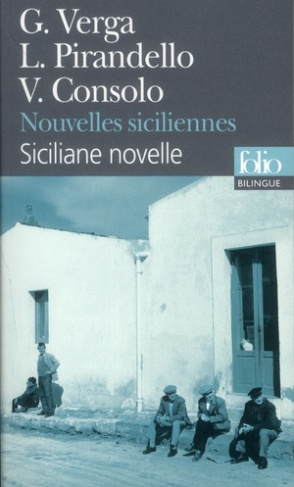
Nouvelles siciliennes. Edition bilingue français-italien
Recueil de nouvelles d?auteurs siciliens emblématiques qui décrivent les Siciliens, paysans un peu rustres, petits commerçants, hommes d?église, et cette île ensoleillée aux confins de l?Orient et de l?Occident. Une excursion au sud de l?Italie et un voyage à travers le temps et la langue, car lesicilien est empreint de dialecte. Entre la sympathie de Giovanni Verga (1840-1922) pour les siciliens, ces rustiques « vaincus de la vie », l?écho insistant de la religion et de l?Histoire chez Luigi Pirandello (1867-1936) et plus récemment chez Vincenzo Consolo (né en 1933) la découverte de « l?Autre », personnifié par les chars américains, un portrait riche et chamarré de la Sicile.EN STOCKCOMMANDER12,60 €


Du même éditeur
-

JONAS WOOD
Résumé : In little more than a decade, Jonas Wood has established himself as one of the most talented and original painters of his generation. Exploring a variety of subjects that include friends, family members, sport celebrities, landscapes, domestic interiors, plants, his own work as well as that of other artists, Wood has developed a representational style where overlapping textures and disorienting compressions of space contribute to create images that transmit a universal sense of familiarity, even when they are deeply private. Defined by an awareness of the predominant role of photography in contemporary culture, yet deeply indebted to the history of painting and the possibilities still therein, a meaningful engagement and exploration with the present emerges. Wood's work challenges the notion of visual authenticity through a process of combining elements from different sources to create an image that is uniquely his. His works constitute a reflection of our present time while paying tobute to the great artists that have influenced Wood's practice, from modern masters Henri Matisse and Pablo Picasso, to California cantor David Hockney, and the celebrated duo of ceramists Michael Frimkess and Magdalena Suarez Frimkess In the Interview Mark Grotjahn and the artist discuss their backgrounds and how they were able to turn their passion into a profession while getting acquainted with the dynamics of the art world Helen Molesworth's Survey is a profound and comprehensive analysis of the historical context in which Wood's practice developed, and how the various elements that compose the fabric of his life inform his paintings. Ian Alteveer focuses on Wood's proclivity for representing interiors and how these resonate with the rest of his work and history of art in general. The comprehensive and previously unpublished selection of images in Studio Visit offers a rare insight into the artist's working environment, his process and sources of inspiration. Finally, Artist's Writings include excerpts from conversations with Corrina Peipon, Katy Donoghue and Jeong Yun Hyeong.ÉPUISÉVOIR PRODUIT39,95 € -


