

LAST ORDERS
15,11 €
Épuisé
EAN :
9780330345606
| Date de parution | 02/06/1998 |
|---|---|
| Poids | 400g |

Distributor Debug Info
| SKU: | 9780330345606 |
| wmi_id_distributeur: | Not set |
| Is Salable (from plugin): | No (Out of Stock) |
| Is Salable (direct MSI check): | No (Out of Stock) |
| Distributor Name: | Par défaut |
| Availability Value: | 0 |
| Availability Label: | Epuisé |
| Match Result: | |
| Default Availability (Config): | 0 - Epuisé |
| Raw Config Mapping: |
Array
(
    [_1772119784121_121] => Array
        (
            [id] => 12707000
            [name] => 12707000
            [availability] => 1
            [activation_attribute] => 1
        )

)
|
Plus d'informations
| EAN | 9780330345606 |
|---|---|
| Titre | LAST ORDERS |
| ISBN | 0330345605 |
| Auteur | SWIFT GRAHAM |
| Editeur | PAN |
| Largeur | 0 |
| Poids | 400 |
| Date de parution | 19980602 |
| Nombre de pages | 0,00 € |
Pourquoi choisir Molière ?
Efficacité et rapidité Commandé avant 16h livré demain
Économique et pratique Livraison à domicile dès 5,10 €
Facile et sans frais Retrait gratuit en magasin
Sécurité et tranquillité Paiement 100 % sécurisé
Disponibilité et écoute Contactez-nous sur WhatsApp
Du même auteur
-
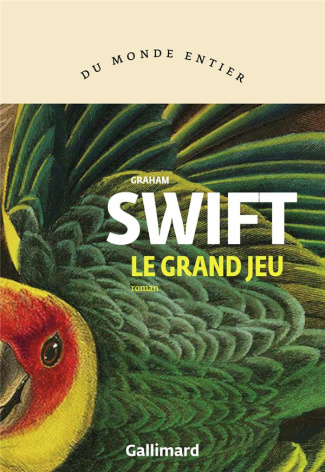
Le grand jeu
4e de couverture : Un vent de magie souffle sur la jetée de Brighton au coeur de l'été 1959. C'est dans le théâtre de cette station balnéaire anglaise que se produisent chaque soir Jack Robbins, Ronnie Deane et Evie White. Cet époustouflant trio offre aux vacanciers du bord de mer un spectacle de variétés à nul autre pareil. Sur les planches, ils deviennent Jack Robinson, malicieux maître de cérémonie, Pablo le Magnifique, magicien hors pair, et Eve, sublime assistante au costume étincelant. Le succès ne se fait pas attendre et leur numéro se retrouve bientôt en haut de l'affiche. Le charme n'opère d'ailleurs pas uniquement sur scène : au fil de l'été, les deux amis succomberont l'un et l'autre à celui, irrésistible, d'Evie. Au risque de tout perdre.Avec délicatesse et maestria, Le grand jeu nous plonge dans les coulisses des spectacles de magie et redonne vie à une époque disparue. Graham Swift révèle une fois de plus son talent de conteur et livre une bouleversante histoire d'amour, de famille et de mystère.ÉPUISÉVOIR PRODUIT18,00 € -

WATERLAND
Extrait Excerpted from the IntroductionI was sitting on the steps of a caravan. It was winter and the sun was out. The house we had bought was still a wreck. I was a junior editor at Penguin and Graham had given me the first sixty or so pages of his new novel. I had worked on Graham’s second novel Shuttlecock and we had become friends. This was his third novel. It was to be called Waterland. Almost at once, from the very opening, from those first few promises of stories and ancestry and mother’s milk, I knew instinctively that I was in the presence of something extra- ordinary, something which, when opened fully, was going to envelop me like a glorious burst of light, changing me and the world I lived in forever. Reading a great book is a discovery of its own. The reader feels an almost limitless thrill, like an archaeologist must when stumbling upon a fabled burial site or the lost skull of civilization. It is as if you have discovered this treasure by yourself, and it is yours and yours alone. You take possession of it, guard it jealously. Sure, that moment will pass. Later you will offer up its secrets to others, allow them to talk of it, handle it with (as far as you are concerned) disturbing familiarity, but for those precious hours and days it belongs to no one else, and you hug it closely, protecting every page. That was how I felt, reading those sixty pages. That is how everyone feels, first reading those sixty pages and beyond. It is yours, made just for you. What is more, to some unfathomable degree, it is your story too, in more ways than you thought possible.Circumstances changed. By the time Graham had finished the novel, I had moved to become editor of Picador. In those days Picador was solely a paperback house, but happily, partly thanks to our previous relationship, it came about that Waterland would be published by Heinemann in hardcover and a year later in paperback, at Picador. I would edit the novel, along with David Godwin at Heinemann. It was a big book for me. It was a big book for Graham. It’s a big book for everyone who reads it.This is a personal introduction, because it seems to me that is what Waterland is. A personal book, a book that speaks to the innermost core of the reader, digging into the psyche, asking questions, unearthing feelings, seeding ideas, suspicions, that have laid dormant, as to who you are and where you came from, and why it is that doubt, unease, a sense of unspoken, fearful history, is always there, floating under the surface of the waters of the unknown. In that respect there is a quality to it reserved for the most part to the symphony, an underlying motif, an inference, which travels through the novel almost in a different life form, hovering above it all – a note, a call, which lies beyond what is written, emanating from a place that is at one and the same time familiar and utterly new. Reson- ance. You travel through Waterland on its reverberation.Waterland is a strange book in that, contrary to accepted wisdom, it lies outside Swift’s usual canon. If one removed Waterland from the body of his work and followed the progres- sion of the other novels, they take on a very particular trajec- tory, his aim (or at least one of them) concentrated on quite a specific target, with clear markers laid out along the way, from The Sweet Shop Owner right through to Wish You Were Here. Swift’s overriding intent, as a writer of prose, is to reduce that prose, the word, the sentence, down to its purest form and thereby to unleash the latent power lying within. Swift becomes, if you like, the novelist’s equivalent of a nuclear physicist, working towards the day when, freed from impurities, he breaks the word down into its seemingly lightest, most weightless form, releasing moments of dazzling, almost limitless energy. Two instances of this spring immediately to mind. The airport scene in The Light of Day – a scene of almost religious intensity – and, more recently, the moment in Wish You Were Here when Major Richards, an army officer and the bearer of bad news, steps out of a car and puts on his cap. That is all he does. He reaches out for his peaked cap resting on the passenger seat, gets out of the car and puts it on, yet in that brief action the weight of the world billows out in shock waves. It is difficult, if not impossible to understand quite how or why. Take the sentences apart, examine them and the power simply slips away, but together, under Swift’s tutelage, the intensity is (to use the word in its correct context) awesome. You stand in awe of it. It takes your breath away.But if all his other novels have been fashioned by the novelist from Los Alamos, then Waterland has been put together in a more familiar manner, made with more familiar tools, from more familiar elements, and in a more familiar design (albeit an astonishing one). Waterland has the appearance of a magnificent engine, a shining and brilliant marvel of construction. It has its oiled wheels, its cogs, its ratchets, its levers. It breathes power. Once begun, there is no stopping Waterland; every part sets another part in motion. It is a glorious, bravura construct, producing story after story in a seemingly unstoppable flow. Reading it, we are conscious of it all (Waterland like a gleaming Flying Scotsman, perfect and polished, powering over the land), and (in the same vein as up on that railway bank, watch- ing the behemoth pass) we stand in wonder of Waterland’s physical appearance, beguiled by its complexities, thrilled by the rhythm and hum of it as the novel does its work. (Waterland does that other steam-engine thing too – being in its presence makes us feel good, makes us feel part of it. It uplifts.) The people – the passengers – are similarly held in thrall to this powerhouse, working through its influence, serving its purpose, carried by its energy and its working parts, its locks and water- ways, its relentless little pump houses. They, like us, are in its power. But though we are (players and readers alike) conscious of it, this great thing, breathing like a beast, its presence never detracts from its intent, never diverts us from its purpose, why it is there, its reason for delivering its stories and its people with a memorizing fecundity, setting them down and moving them (and us) along. We do not mind how deliberately it lies both outside and inside of us, how its power is experienced both internally and externally; in fact we crave it, and are tied to this Waterland as much as those strapped within. We are all affected, readers and passengers alike, harnessed to the wheel, the piston, to the circumstance, to the sluice gates and the waters as they swirl and surround us and carry us off. Here we have it then – Swift as Brunel, brilliant inventor, master builder, blueprint wizard, plotter and planner, a visionary, a user of all materials, creating this Waterland, this wonder of the age, setting his creation free to steam across Great Britain, then continents and oceans to the wider waiting world.Waterland. There it is. He made it for you and me. What did he do, this hatless Isambard? What did he create exactly? What is it, this novel? What is it?Let us start, as the narrator might suggest, at the beginning. Open the first page. Take a look at the blueprint. The Contents. They will give you pause for thought.The first two entries are 1. About the Stars and the Sluice, followed by an oddly resonant phrase (a phrase which accidentally transports us to an age after the book was written), 2. The End of History. So we have three elements already in the mix. Stars - the heavens (space, distance, time), Sluice, a mechanism for controlling current (storing up, letting go – a novelist’s device if ever there was one), and thirdly, The End of History, an unsettling notion, pointing almost to the end of time itself, or when the earth has no more need of it – when perhaps the stars have gone out). For our third and fourth chapters we are delivered to firmer, more habitable ground: About the Fens and Before the Headmaster (place and character), and with Bruise upon a Bruise following in their wake, we have the other stuff of novels: conflict. Read on. Back and forth it goes, like, dare I say it, a shuttlecock, the book laying its pattern down, weaving its web: About the Story-telling Animal, About the Rise of the Atkinsons, About Accidental Death (note the philosophical plural there), then suddenly, De la R ́evolution, a title in French, and later on – after Lock-keepers and Grandfathers – Aux Armes (is that not from the Marseillaise? Aux armes, citoyens! Formez vos bataillons?) It must be, because after Coronation Ale (back to England and English monarchs complete with heads) comes the Fourteenth of July, again in French, Quatorze Juillet, and following fast, the instruction, despite all that, to Forget the Bastille. This novel, it is clear, will be playing with us, taking us we know not where, from one place to another, dropping us in, whipping us out, past, present, water, land, in, out, up, down, round and round. Yes, forget the Bastille, it’s not about that at all, it’s About the Eel, and About the Saviour of the World, About the East Wind, Contemporary Nightmares, Empire-building. In fact, it’s The Whole Story.The Whole Story? Is that what it is?Here you have an inkling, if not a map, of where this novel intends to take you. Everywhere. Waterland is history, it is exploration. Waterland is geography, lineage. It is commerce, decline and fall, the industrial revolution (the French one too, with heads lopped off ) and, like everything around us, it bears the scars of the two great wars of the twentieth century. It is family saga, fam... --Ce texte fait référence à l'édition Broché .ÉPUISÉVOIR PRODUIT15,11 € -
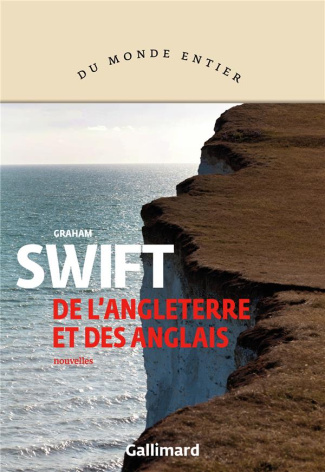
De l'Angleterre et des anglais
Résumé : Des instantanés qui distillent l'essence d'une vie. Des moments pris sur le vif que l'on déroule comme une pellicule. Des héros ordinaires ; ce qui les lie, ce qui les sépare. Un couple de jeunes mariés vient de remplir son testament. Un médecin raconte pour la centième fois l'histoire de son père immigré. Un homme fantasme sur l'épouse de son meilleur ami. Une femme n'arrive plus à dormir dans la même chambre que son mari après les sombres révélations de sa fille. Traversant les palais du XVIIe siècle et les chambres feutrées d'aujourd'hui, le lecteur est témoin de nombreux drames, du plus secret au plus ostensible. Au fil des nouvelles qui composent ce recueil, chaque portrait s'anime pour révéler, dans une prose sobre aux multiples facettes, un émouvant fragment du quotidien. De quoi se compose l'identité de l'Angleterre aujourd'hui ? En détaillant tantôt avec tendresse, tantôt avec cruauté, une cartographie émotionnelle et humaine de son pays, l'auteur du très remarqué Dimanche des mères nous offre ici une vision vivante et cosmopolite de la société britannique.ÉPUISÉVOIR PRODUIT21,00 € -
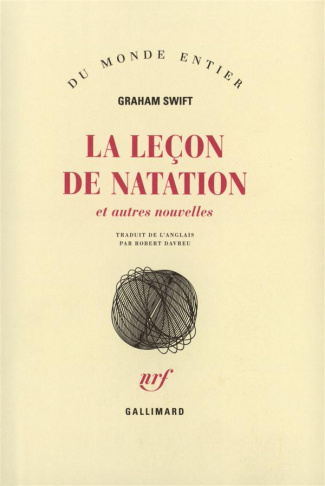
La leçon de natation. Et autres nouvelles
Résumé : Le thème de ces nouvelles de Graham Swift est la percée des apparences, la mise en lumière des mouvements souterrains qui agitent les familles et les couples. Dans La leçon de natation, M. Singleton, un homme dominateur et cruel, terrifie Paul, son petit garçon qui a horreur de l'eau. La mère s'en aperçoit et essaie d'éloigner l'enfant de son père : pris entre ces deux volontés, Paul finit par apprendre à nager afin de connaître solitude et liberté, les seules évasions possibles. Dans Le sérail, une femme qui a avorté s'obstine à inquiéter son mari pendant leurs vacances à Istanbul : a-t-elle, oui on non, été violée par le garçon d'étage ? Ce qu'elle suggère serait-il une sorte de vengeance contre le fait d'avoir perdu son enfant ? Toutes ces nouvelles sont empreintes d'une culpabilité qui ne va pas sans la présence d'un secret plaisir que le coupable refuse d'avouer. La vérité n'existe que pour rester floue et dissimulée. Le style limpide et serré sert une cruauté perverse qui court en filigrane, d'où un malaise plein de suspense ; on dirait que le diable vous chuchote à l'oreille : "Tout est possible".ÉPUISÉVOIR PRODUIT18,60 €


