

Copley and West in England 1775-1815
This beautifully and thoroughly illustrated book, which constitutes the first serious investigation of the relationship between Benjamin West and John Singleton Copley, will be of considerable interest to both British and American art historians, and appeal to art lovers from both countries. West and Copley have always and properly been viewed as the two pre-eminent eighteenth-century American artists, despite the fact that, at the age of twenty-one, West left his native shores in 1760, never to return. He went on to become immensely successful in England, becoming, among other things, the second president of the Royal Academy of Arts. Copley spent half his working life also in England. However, before making the move across the Atlantic, he made his mark as an exceptionally talented artist, who, without any real training, painted likenesses of fellow Bostonians, including ones of fi gures such as John Hancock and Paul Revere, that have become icons of American history. While those portraits remain his most widely admired works, after 1775 and his resettling in England, he started painting distinctly diff erent types of pictures, initially showing modern historical subjects in emulation of the model provided him by West, following, for example, West's celebrated Death of General Wolfe, exhibited in 1771, with his own Death of the Earl of Chatham, begun in 1779. For a brief span of time, the two expatriate Americans had a close working relationship, that we can see substantially refl ected in both the formal language and the subject matter of many of their best works, but it eventually and inevitably turned into rivalry. The book begins with a brief prologue discussing the earliest of West's depictions of recent historical events and of subjects set in America, painted prior to Copley's arrival in England. It then follows the year-by-year evolution of Copley's painting from 1775 to his death in 1815, with an underlying focus upon his ongoing give-and-take with West, and it ends with examination of hitherto little-known and unstudied major late paintings, from after 1800, by both artists.
| Nombre de pages | 176 |
|---|---|
| Date de parution | 11/06/2021 |
| Poids | 1 444g |
| Largeur | 250mm |

| SKU: | 9781916237803 |
| wmi_id_distributeur: | Not set |
| Is Salable (from plugin): | Yes (In Stock) |
| Is Salable (direct MSI check): | Yes (In Stock) |
| Distributor Name: | Par défaut |
| Availability Value: | 0 |
| Availability Label: | Epuisé |
| Match Result: | |
| Default Availability (Config): | 0 - Epuisé |
| Raw Config Mapping: |
Array
(
    [_1772119784121_121] => Array
        (
            [id] => 12707000
            [name] => 12707000
            [availability] => 1
            [activation_attribute] => 1
        )

)
|
| EAN | 9781916237803 |
|---|---|
| Titre | Copley and West in England 1775-1815 |
| Auteur | Staley Allen |
| Editeur | HOLBERTON |
| Largeur | 250 |
| Poids | 1444 |
| Date de parution | 20210611 |
| Nombre de pages | 176,00 € |
Pourquoi choisir Molière ?
Du même auteur
-
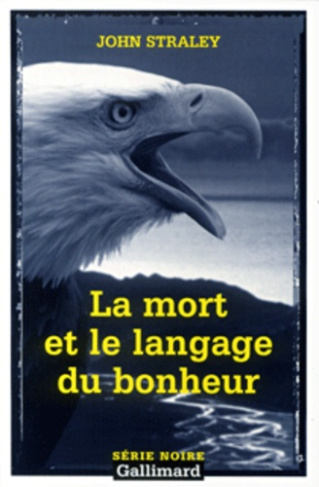
La mort et le langage du bonheur
Résumé : Cecil Younger est un homme que l'absurdité de l'univers rassure, et l'univers ne fait rien pour arranger les choses. La preuve : ce coup de téléphone conjoint de l'avocat et du psy de Cecil qui l'informent qu'un de leur client commun est prêt à payer un paquet d'argent pour l'exécution d'un homme. Cecil a beau se dire qu'un meurtre dans le C.V. d'un détective privé n'est jamais bon pour les affaires, l'état lamentable de ses finances lui interdit de rejeter l'offre. Après tout, on peut toujours voir...ÉPUISÉVOIR PRODUIT13,70 € -

Les curieux s'en mordent les doigts
Résumé : Revoilà Cecil W. Younger et sa gueule de bois chronique et existentielle. Cette fois-ci c'est sur le viol, puis le meurtre d'une employée d'une compagnie minière en Alaska qu'il enquête. Mais, comme toujours avec Younger, les apparences sont trompeuses et l'horreur va bien au-delà du simple crime.ÉPUISÉVOIR PRODUIT9,60 € -
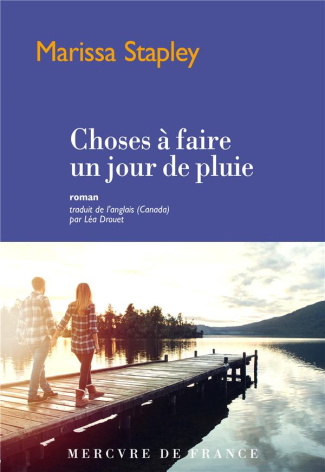
Choses à faire un jour de pluie
Mae découvrit à son réveil que Peter avait disparu. Elle s'assit, tendit l'oreille et se heurta au silence qui enveloppe un espace lorsque la personne que l'on attend n'est pas rentrée. Parfois les gens sortent et ne reviennent pas. Parfois les malheurs surviennent. Mae le sait depuis qu'elle a six ans. Peter. Son compagnon... L'homme qu'elle était sur le point d'épouser. Mae va vite découvrir que son "fiancé" est en réalité un redoutable escroc qui a la police à ses trousses. Eplorée, elle retourne chez ses grands-parents, qui l'ont élevée et tiennent une auberge sur les bords du Saint-Laurent. Au sein d'une nature magnifique, mais qui peut se révéler dangereuse quand le fleuve se déchaîne, elle va retrouver et affronter ses souvenirs : la mort inexpliquée de ses parents dans la fonte des glaces, la disparition brutale de son inséparable ami d'enfance, Gabe, les silences de sa grand-mère... Et tenter de trouver des réponses.ÉPUISÉVOIR PRODUIT23,80 € -



Du même éditeur
-

-
-
-
GOLD OF THE GREAT STEPPE - PEOPLE, POWER AND PRODUCTION
Résumé : This catalogue accompanies an exhibition which presents artefacts from burial mounds of the Saka people of East Kazakhstan, who, over 2, 500 years ago, lived lives rich in complexity. The Saka people occupied a landscape of seemingly endless steppe to the west, bounded by mountains to the east and south. Known to be fierce warriors, they were also skilled craftspeople, producing intricate gold and other metalwork. Their artistic expression indicates a deep respect for the animals around them - both real and imagined. They dominated their landscapes with huge burial mounds of sophisticated construction, burying their horses with elite members of their society. Recent excavations and analyses, led by archaeologists from Kazakhstan, have demonstrated that by looking through a scientific and social lens at what the Saka left behind we can paint a picture of a complex society. We can start to understand how it affected the way people lived, how they travelled, the things they made and what they believed in. Including contributions from experts at Nazarbayev University, Al-Farabi Kazakh National University, and the University of Cambridge, this publication details the results of new archaeological research from East Kazakhstan. It is richly illustrated with photographs of intricate gold artefacts in the Saka-Scythian animal style, landscape and aerial photography of the burial mounds, and details of the excavations and analyses. Grounded in decades of careful study, papers by the two leading Kazakhstani archaeologists of the East Kazakhstan region, Professors Zainolla Samashev and Abdesh Toleubayev, demonstrate current archaeological thinking in Kazakhstan today. These papers are complemented by material from a team of international scholars, which contribute the results of new scientific analyses on the artefacts, and wider Eurasian perspectives on the Saka people and their practice of horse burial.ÉPUISÉVOIR PRODUIT32,00 €

