

Léontine Fay-Volnys. Le théâtre français en Allemagne et en Europe, XVIIIe-XIXe siècle...
83,20 €
Épuisé
EAN :
9783034343305
Partant du destin d'une famille de comédiens, les Rousselois-Fay-Volnys (1747 1876), cette étude de cas retrace les évolutions du statut du comédien. Reconnu citoyen par la Révolution française, ce dernier s'éleva peu à peu au statut de star intégrée aux milieux les plus élevés de la société. La fin des privilèges avait eu pour conséquence le foisonnement des salles de spectacles. Elle coïncida aussi avec une extrême diversification des genres. Le parcours de cette famille, partie de la Cour de Frédéric II en Prusse pour aboutir à la Cour impériale de Saint-Pétersbourg, témoigne d'une époque marquée par la suprématie du modèle culturel français dans les régions centrales et orientales du continent européen.
| Nombre de pages | 552 |
|---|---|
| Date de parution | 04/05/2023 |
| Poids | 653g |
| Largeur | 148mm |

Distributor Debug Info
| SKU: | 9783034343305 |
| wmi_id_distributeur: | Not set |
| Is Salable (from plugin): | Yes (In Stock) |
| Is Salable (direct MSI check): | Yes (In Stock) |
| Distributor Name: | Par défaut |
| Availability Value: | 0 |
| Availability Label: | Epuisé |
| Match Result: | |
| Default Availability (Config): | 0 - Epuisé |
| Raw Config Mapping: |
Array
(
    [_1772119784121_121] => Array
        (
            [id] => 12707000
            [name] => 12707000
            [availability] => 1
            [activation_attribute] => 1
        )

)
|
Plus d'informations
| EAN | 9783034343305 |
|---|---|
| Titre | Léontine Fay-Volnys. Le théâtre français en Allemagne et en Europe, XVIIIe-XIXe siècle... |
| Auteur | Quéval Marie-Hélène ; Valentin Jean-Marie |
| Editeur | PETER LANG AG |
| Largeur | 148 |
| Poids | 653 |
| Date de parution | 20230504 |
| Nombre de pages | 552,00 € |
Pourquoi choisir Molière ?
Efficacité et rapidité Commandé avant 16h livré demain
Économique et pratique Livraison à domicile dès 5,10 €
Facile et sans frais Retrait gratuit en magasin
Sécurité et tranquillité Paiement 100 % sécurisé
Disponibilité et écoute Contactez-nous sur WhatsApp
Du même auteur
-
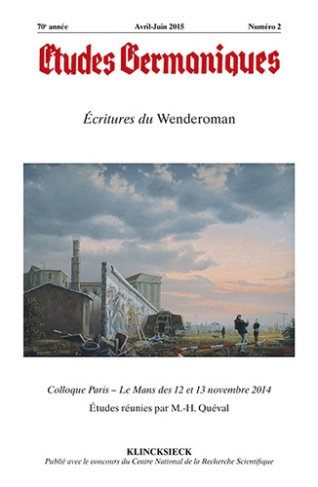
Etudes Germaniques N° 278, 2/2015 : Ecritures du Wenderoman
Marie-Hélène QUEVAL Le Wenderoman et l'impasse postmoderne The Wenderoman is a genre specifcally rooted in the period preceding, including and immediately following the fall of the Berlin Wall in the late 1980s and early 1990s. It however looks beyond this historical frame to question its own form and legitimacy. Bearing witness to when it was written, it is also a discourse on poetics. Neither historical nor autobiographical, neither psychological nor sociological, the Wenderoman links back to baroque allegorical traditions. Tending to use grotesque surrealism, inter- textuality, references, quotations and collage, refusing to allow any single interpretation or explanation, it might seem to belong within postmodernism. While it is informed by post-structuralist philosophy, deconstructionism and Jean-François Lyotard's writings on the postmodern condition, its use of irony and taste for a grotesque brand of surreal- ism produce a distancing effect. Postmodern in its form and its rejection of positivism, the Wenderoman in fact denounces the limitations of postmodernism. Der Wenderoman ist weder ein historischer noch ein autobiographischer Roman. Die Wende und der Post-Strukturalismus liefern zwar den historischen und philosophischen Rahmen, aber jenseits der historischen Verankerung ist er eine literarische Gattung besonderer Art, die über sich selbst und ihre Legitimität refektiert : Seine Tendenz zur Ironie und zur Groteske, die Intertextualität, das Spiel mit den versteckten Zitaten und mit den Referenzen, die Collage, die Skepsis dem utopischen und teleologischen Denken gegenüber machen aus ihm einen postmodernen Roman. In Wirklichkeit wird die Postmodernität selbst als Sackgasse von ihm in Frage gestellt. Bénédicte TERRISSE Wolfgang Hilbig et le Wenderoman Instead of launching into a search for "Wenderomane" in Wolfgang Hilbig's work, the present article questions the relevance of the notion of Wenderoman as a category of literary history by confronting it with Hilbig's texts. After describing how reluctant the author reacted to the injunction of writing a Wenderoman, thus bringing to light the unspoken criterions that defne the category, we will read some of Hilbig's texts as variations on the Wenderoman, i. e. as original and existential ways of treating the 1989-90 upheaval : as a return of the repressed, as a bursting of the dam of the affects. Anstatt sich auf die Suche nach dem Wenderoman in Wolfgang Hilbigs Werk zu begeben, hinterfragt vorliegender Beitrag die Relevanz des Wenderomans als Kategorie der Literaturgeschichte, indem er sie an Hilbigs Texten misst. Nachdem wir die Abwehr des Autors gegenüber der Aufforderung, einen Wenderoman zu schreiben, dargestellt und somit die unausgesprochenen Defnitionskriterien dieser Kategorie zum Vorschein gebracht haben, untersuchen wir Texte von Hilbig, die als Abwandlungen des Wenderomans und eigensinnige, existentielle Auseinander- setzungen mit dem Umbruch 1989/1990 gedeutet werden können : In Form von Wiederkehr des Verdrängten und Dammbruch der Affekte. Heribert TOMMEK Reinhard Jirgls Abschied von den Feinden Roman einer machtpolitischen Zeichenwende The aim of this study is to identify the formal characteristics and the main topics of Jirgl's novel "Abschied von den Feinden". The aesthetic basis of the authors writing can be conceived as an effort for a literary archaeology and genealogy of governmental, religious, ethical, scientifc and technological power according to Nietzsche's and Foucault's philosophy. In this respect the study shows that the fall of the governmental power system of the GDR as well as the German reunifcation are only apparent reasons for the plot. The real impact of the novel is much wider. Like the theatre of Heiner Müller the novel aims at a posthuman criticism of civilisation which pretends the end of the heroic and tragic individual. L'article analyse le contenu et la forme du roman de R. Jirgl. Ce dernier s'appuie sur Nietzsche et Foucault pour proposer une archéologie (généalogie) de la langue du pouvoir d'Etat, religieux, moral, scientifque et technologique. Sur cette base on montre que la réunifcation des deux Allemagnes et l' "adieu" aux instances de pouvoir de la RDA constituent l'arrière-plan du roman et de sa diégèse, mais aussi que la véritable cible du récit se situe au-delà du "tournant" . Tout comme H. Müller, R. Jirgl se fxe pour objectif une critique post-humaniste de la civilisati- on où s'affrme la fn du confit, tel qu'alimenté à la philosophie de l'histoire, entre individualités tragiques et héroïques. Michael BRAUN Das Ende, das ihr kennt Uwe Tellkamps postmemorialer Wenderoman Der Turm Artist Thomas Demand constructs a model (e. g. of a Stasi-offce), takes a photo of it, and then destroys the model. Fictionalizing or simulating a historical scene by delivering it to us a copy is a popular strategy of the so-called "Wenderoman", a controversial phenomenon in contemporary German literature. Uwe Tellkamp's highly praised "Der Turm" (2008) subverts conventional expectations in a historical novel by transforming history into fction. This essay draws the lines of tradition along which Tellkamp writes his portrait of the artist as a young and intellectual man. "Der Turm" is a social panorama of a dying state, a historical sketch of the bourgeois Eighties in Dresden, a surrealistic Bildungsroman, and a literary document of postmemory in which various memories convey a new perspective on the Fall of the Iron Curtain and the End of the GDR. L'artiste Thomas Demand construit un modèle (dans le cas présent : celui d'un bureau de la Stasi), en prend une vue, puis le détruit. Fictionnaliser un moment historique de manière telle qu'il apparaît dans un double statut de simulation et de copie relève d'un procédé narratif courant de ce qu'il est convenu d'appeler "Wenderoman" , ce phénomène controversé de la littérature allemande actuelle. Le roman d'Uwe Tellkamp Der Turm (2008), récompensé par de nombreux prix, subvertit des conventions génériques (celles que l'on attend d'un roman du temps présent) en ce qu'il n'offre pas simplement des photographies de l'effondrement de la RDA, mais "déconstruit son histoire" (M. -H. Quéval). La présente contribu- tion analyse les traditions dans lesquelles Tellkamp exprime le portrait de l'artiste en jeune intellectuel inadapté. Der Turm est le panorama de la société d'un Etat à l'agonie, un roman historique dans la tradition du réalisme bourgeois, un roman de formation aux tendances surréalistes et, ce qui n'est pas le moins important, un roman de la mémoire reconstituée dans lequel apparaissent diverses générations de témoins contemporains des événements - de ce fait, il ouvre une perspective nouvelle sur la chute du rideau de fer et la fn de la RDA. Volker WEHDEKING Uwe Tellkamps Dresdenporträt Der Turm und Eugen Ruges Nomenklatura-Abgesang In Zeiten des abnehmenden Lichts im Kontrast zu Lutz Seilers magischem Hiddensee-Roman Kruso am Ende der DDR The essay claims that after an initial novel period (1989-1995) of a younger generation, especially Thomas Brussig and Jens Sparschuh with their Picaro novels, among the elder writers (born about 1940, Wolfgang Hilbig, Monika Maron and Brigitte Burmeister) with a critical view of the MfS and the East German initial generation, it took twenty years, until a balanced family- and generation-novel could present a full-fedged portrait of the GDR as a quasi-dictorial 'socialism from above'. This long duration of a necessary epic distance for the now widely acknowledged generation novels by Uwe Tellkamp and Eugen Ruge corresponds to the West German Postwar time lag after the Group 47 writers wrote their masterpieces around 1959/60 (Böll, Grass, Walser, and with the East German portrait, Uwe Johnson). Lutz Seiler's Kruso (2014) about the Hiddensee lure toward freedom among fugitives, trying to leave the GDR across the Baltic toward Denmark, and a seemingly nonpolitical friendship of the two main protagonists even more demonstrates the underlying pressures toward freedom of the political revolution in the year 1989. Cet article étudie les vingt années nécessaires au surgissement d'un roman réaliste de la modernité tardive apte à tracer, dans un style mesuré et au travers de sagas familiales et générationnelles, un portrait plus conforme de la dictature en RDA, présentée comme un "socialisme octroyé d'en haut" , après une période initiale (1989-1995) qui, avec la jeune génération, Thomas Brussig et Jens Spars- chuh en particulier, avait fait la part belle au roman picaresque, les plus âgés, nés autour de 1940, Wolfgang Hilbig, Monika Maron et Brigitte Burmeister, attaquant principalement la Stasi et leurs aînés : "die Ankunftgeneration" . Ces vingt années correspondent au fond à la période écoulée avant que les écrivains d'après-guerre réunis dans le groupe 47 (Böll, Grass, Walser et, à l'est, Uwe Johnson) jouissent d'une renommée internationale. Dans Kruso, le roman en apparence apolitique d'une profonde amitié, Lutz Seiler (2014) retrace comment, en cherchant la liberté sur l'île d'Hiddensee, les fugitifs essaient d'atteindre le Danemark par la voie mari- time. Seiler a réussi à rédiger un roman linguistiquement dense avec en fligrane les troubles de la révolution de 1989 et les luttes pour reconquérir la liberté. Anne-Marie CORBIN Günter Grass et Toute une histoire Mise en image et écriture du tournant de 1989 en Allemagne Grass cannot have been aware of the storm that was about to break around him when the frst pages of his new novel appeared in Der Spiegel and Marcel Reich- Ranicki broke his roman Ein weites Feld into pieces. The following article deals with Grass' novel, perhaps a Wende-Roman, through the analysis of its style, illustrated by caricature, flm and symbolic images. This technique lends more weight to the characteristics retained and may explain with this mosaic of combinations why it was so diffcult for such a novel to fnd acceptance, please the readers and escape severe judgments. Grass war sich sicher nicht dessen bewusst, was für ein Sturm der Empörung sein der Wende von 1989 in Deutschland gewidmeter Roman auslösen würde : auf der Titelseite des Spiegels konnte man nämlich sehen, wie Marcel Reich-Ranicki das Buch zerriss. In diesem Beitrag geht es darum, einen von den meisten Kritikern weitgehend vernachlässigten Ansatz zu analysieren und zwar den literarischen Aufbau und den Stil von Ein weites Feld zu erarbeiten, der durch Zeichnungen, Malerei, Lithographie bis auf Film und Comics geprägt ist. Es ist durchaus möglich, dass das Unverständnis, dem Grass in Deutschland begegnete, mit jenem Verfahren zu tun hat. Norbert Otto EKE Zeit aus den Fugen. Konstruktionen der Wende "Wenderomane" are to be seen as aesthetic interventions. As such they obtain informations about the "realities" deposited, mirrored or refected with them as well as about various discourses of memory in a feld of uncertain attributions. They 'observe' the feld of cultural transformations, which they bring clearly to mind in a specifc, more precisely : poetic manner. These considerations lead to the analysis of two different literary contributions on the political turn of 1989 : Volker Braun's journey from the so called "furor melancholicus" to a melancholic composure and serenity on the one hand ; Thomas Hettche's attempt to narrate the 'Wende' by citing de Sade's and Bataille's concepts of eroticism - and at the same time to build bridges from here to a poetry of retelling - on the other hand. Les "romans du tournant" sont des gestes esthétiques et, en tant que tels, des porteurs de signes qui, dans un espace constitué de processus d'attribution mar- qués par l'incertitude, permettent de tirer des conclusions quant aux réalités qu'ils réféchissent, comme aussi aux discours retrouvés. Ils "observent" le champ du changement culturel qu'en même temps ils rendent présent sur un mode spécifque, c'est-à-dire poétique. Ces thèses fournissent le point de départ à l'examen de deux manières littéraires différentes de fgurer le débat sur le "tournant" . Celle, d'une part, du parcours de Volker Braun, qui passe du furor melancholicus à une "sérénité mélancolique" . Celle, d'autre part, expérimentée par Thomas Hettche qui, pour parler du "tournant" , fait du récit la caisse de résonance de l'érotisme noir de Sade et Bataille, jetant ce faisant un pont vers une poétique de la réécriture. Isabelle RUIZ La métaphore du froid et les oasis de chaleur dans Moskauer Eis d'Annett Gröschner Moskauer Eis, published in 2000, was the frst novel of Annett Gröschner, who was known until then for her documentary essays on GDR. The action takes place in Magdeburg by the end of 1991. The heroine and narrator, Annja Kobe, fnds her father frozen in a chest freezer that, however, is not connected to electricity. Was it the last experience of her father, a cryogenic engineer, before liquidation of his research institute by the Treuhand ? The heroine's investigations turn into a half realistic, half fantastic trip into her family history. On this journey, GDR seems to be a big conserva- tion device and the most typical citizens of this dictatorship to be similar to "inhibited blocks of ice". Between requiem and revenge, this post-Wende novel is a testimony of the diffculties to be a former East German. Moskauer Eis, 2000 erschienen, war der erste Roman von Annett Gröschner, die bis dahin für ihre dokumentarischen Essays über die DDR bekannt war. Die Szene spielt Ende 1991 in Magdeburg. Die Heldin und Erzählerin Annja Kobe fndet ihren Vater tiefgefroren in einer Gefriertruhe, die jedoch an keine Steckdose ange- schlossen ist. War es das letzte Experiment des Vaters, eines Kälteingenieurs, vor der Abwicklung seines Forschungsinstituts durch die Treuhand ? Annjas Ermittlungen werden zu einer halb realistisch, halb fantastisch dargestellten Reise in die eigene Familiengeschichte, auf der die DDR als große Konservierungsvorrichtung und ihre typischsten Einwohner als "gehemmte Eisblöcke" erscheinen. Zugleich Requiem und Abrechnung zeugt dieser Wenderoman von der Schwierigkeit, ein(e) ehemalige(r) DDR-Bürger(in) zu sein. Dorle MERCHIERS Christa Wolfs Medea (1996) Der Mythos als Metapher für die Wende The article tries to show how Christa Wolf uses the ancient myth of Medea in her novel, how she appropriates it in her own way which differs from former versions of the myth : she takes over some semantical segments without changing them, but she does not hesitate to transform some others or to create new ones. What is the meaning of such a transformation of the myth ? Undoubtedly the author tries to conjure up the diffcult process of the German unifcation but also her personal experience, so that myth becomes a metaphor. L'article s'efforce de montrer comment Christa Wolf utilise dans son roman l'antique mythe de Médée, comment elle se l'approprie tout en s'éloignant des versions antérieures du mythe : elle reprend certains mythèmes tels quels mais n'hésite pas à en modifer d'autres ou encore à en créer de nouveaux. Quelle signifcation revêt cette transformation du mythe ? L'écrivain veut sans aucun doute évoquer le diffcile processus de la réunifcation allemande mais aussi transposer son expérience personnelle. Le mythe devient ainsi métaphore. Françoise LARTILLOT Relectures du tournant Ingo Schulze, Uwe Tellkamp et Julia Schoch This article proposes to reread three novels written by authors from the former GDR that evoke the transition : Adam und Evelyn by Ingo Schulze, Der Turm by Uwe Tellkamp and Mit der Geschwindigkeit des Sommers by Julia Schoch. We propose to demonstrate that the opposition between myth and fairy tale, as it is used by Franz Fuhmann in his writings on aesthetics but also by Adorno and Horkheimer in the works they have devoted to cultural history, underlies these novels as well. This approach offers us a new perspective on the place of these novels in the history of the German and of the European novel. In diesem Aufsatz nehmen wir die Lektüre von drei Romanen wieder auf, die von Schriftstellern der ehemaligen DDR verfasst worden sind und sich auf die Wende beziehen : Adam und Evelyn von Ingo Schulze, Der Turm von Uwe Tell- kamp und Mit der Geschwindigkeit des Sommers von Julia Schoch. Wir zeigen, dass der Gegensatz von Mythos und Märchen, wie ihn Franz Fühmann in seinen ästhe- tischen Schriften, aber auch Horkheimer/Adorno in ihren Analysen zur Kulturge- schichte entwickelt haben, auch für die Romane strukturbildend ist. Er erlaubt uns darüber hinaus, ihre Bedeutung in der Geschichte des deutschsprachigen Romans auf eine neue Art und Weise festzuhalten. Francine MAIER-SCHAEFFER Le spectre de l'histoire. Weit fort (2008) de Cornelia Schleime, un "Wenderoman seconde génération" ? Is Weit fort (2008) by Cornelia Schleime a "second generation Wenderoman" ? Borrowing the strategy of traumatic repetition from psychoanalysis, the novel rehearses the early trauma of the real author in the light of its fctive repetition, motivated by the political context of the year 2006. The reader is invited to piece together the puzzle of two biographical fgures typical of the dictatorship, the dissident artist and the Stasi informer. Seventeen years on, attention has shifted away from the events leading up to the fall of the Berlin wall, and onto the way in which the alien past has become woven integrated into the society of a reunifed Germany. The focus is on the individual victims of history, whichever side they found themselves on. Weit fort is the product of the therapeutic writing of the survivors of trauma. Ist Weit fort (2008) ein "Wenderoman zweiter Generation" ? Cornelia Schlei- me entleiht der Psychoanalyse die Strategie des traumatischen Wiederholungszwangs. Die traumatischen Erfahrungen der realen Autorin werden im Lichte der durch den politischen Kontext des Jahres 2006 aktivierten fktiven Wiederholung neu betrachtet. Dem Leser kommt die Aufgabe zu, die beiden für die Diktatur typischen Biografen der oppositionellen Künstlerin und des Stasi-Spitzels aus den Erinnerungsfragmenten zusammenzusetzen. Siebzehn Jahre danach gilt das Interesse nicht mehr der "Wende" , sondern der Integration der fremden Vergangen- heit in die bundesrepublikanische Gesellschaft. Im Mittelpunkt steht das Indivi- duum als Opfer der Geschichte, auf welcher Seite es auch immer stand. Weit fort gehört zum therapeutischen Schreiben der Trauma-Überlebenden.ÉPUISÉVOIR PRODUIT24,99 € -
Le sport, le diable au corps
Résumé : Si l'impératif de performance pèse dans le sport plus encore qu'ailleurs, et particulièrement dans le très haut niveau en projetant un corps indéfiniment perfectible, c'est la société tout entière qui est aujourd'hui traversée par l'obsession de la santé parfaite, de la jeunesse et de la beauté éternelles, occultant ainsi la souffrance, la mort, le handicap et la vieillesse. Que voulons-nous faire de notre propre corps ? Tout ce qui est techniquement réalisable doit-il se réaliser ? Par le prisme du sport, ces questions éthiques fondamentales nous sont posées.ÉPUISÉVOIR PRODUIT10,00 € -
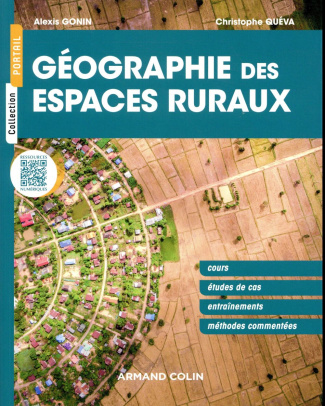
Géographie des espaces ruraux
Dans un contexte d'urbanisation croissante, l'objectif de cet ouvrage est de comprendre la place des espaces ruraux dans le monde et les enjeux qu'ils représentent en termes de pratiques, de fonctions, de représentations, mais aussi en termes d'aménagement et de conflits d'usages. Il s'organise en trois temps forts : - INTRODUCTION : questions essentielles, objectifs de connaissance par chapitre, lectures indispensables et notions clés à maîtriser. - COURS : savoirs fondamentaux assortis d'exemples localisés, de définitions et de focus thématiques, d'une page d'entraînement et d'une étude de cas mobilisant des documents géographiques. - METHODES : méthodologie détaillée de chaque type d'exercice, avec son application commentée. Tous les corrigés et les photographies en couleurs disponibles dans la rubrique "ressources numériques".ÉPUISÉVOIR PRODUIT29,05 € -
Du souci de soi au sport augmenté. Essais sur le corps entraîné, dopé, appareillé
Résumé : L'objet de cet ouvrage est d'explorer ce qui mène du "souci de soi", tel que défini par l'Antiquité grecque, au "corps augmenté", dont le sport de haut niveau propose aujourd'hui une version expérimentale. Ce trajet n'est pas seulement un reflet historique, celui d'une histoire des pratiques corporelles qui inclurait la médecine, les gymnastiques, l'éducation physique et le sport, dans leurs acceptions et finalités variées, et parfois antagonistes, au cours des siècles. Il traduit aussi le noeud problématique qui lie l'exercice physique à la thématique du dépassement : dépassement de soi lorsqu'il s'agit de s'améliorer, de s'entraîner pour "performer" ; dépassement des limites lorsqu'il s'agit de rendre effective la croyance moderne - et sportive - dans l'idée de progrès infini ; dépassement de la nature aussi lorsqu'il s'agit de mettre en question le "corps naturel", tout autant que l' "identité humaine" et ses contours, par l'usage de substances chimiques ou de prothèses. Si l'évolution humaine se définit comme un arrachement permanent à la nature, la question du dopage et celle des exosquelettes pose celles des limites éthiques de la science, du prolongement du corps par la technique et d'un corps-machine d'un nouveau genre. L'impératif de performance pèse sur chacun et croise l'obsession de la santé parfaite, de la jeunesse et de la beauté éternelles. Cette quête s'empare du corps comme d'un prétexte pour viser une transcendance hypothétique, qui fait défaut par ailleurs. Améliorer, augmenter - la forme, les performances, l'apparence - semble toujours possible, occultant les questions de la souffrance et de la mort, du handicap, reléguant la vieillesse dans l'impensé. La chirurgie esthétique, l'entraînement sportif, la diététique, le(s) dopage(s) n'ont pas le même rapport à la temporalité, mais postulent un corps idéal dont la perfection est toujours différée. L'hypercorps entraîné, remodelé, esthétisé, médicalisé, technicisé du sportif d'élite, avec sa valeur d'objet marchand et fantasmatique, est à ce titre exemplaire.ÉPUISÉVOIR PRODUIT20,00 €


Du même éditeur
-

Francois-Xavier Ortoli et l'Europe : réflexion et action
Directeur de cabinet du Premier ministre Georges Pompidou, Commissaire au plan, plusieurs fois ministre, mais aussi directeur général du marché intérieur à Bruxelles à trente-trois ans et premier président français de la Commission européenne, François-Xavier Ortoli (1925-2007) représente une personnalité profondément originale au sein des élites politiques françaises de la deuxième moitié du XXe siècle. Après avoir combattu les Japonais en Indochine - son pays de jeunesse - en 1944 et 1945, il promeut l'ouverture internationale et la modernisation de l'économie française comme jeune fonctionnaire au ministère des Finances, puis à la Commission européenne entre 1958 et 1961. La France, l'Europe, le monde sont dès lors au coeur de ses préoccupations et de son action, tant auprès de Georges Pompidou jusqu'en 1972, qu'à la Commission européenne jusqu'en 1984, ou à travers des canaux institutionnels multiples par la suite. C'est Ortoli lui-même qui parle dans le présent ouvrage où transparaît son goût pour l'analyse prospective. Les textes ici réunis rendent compte de la dimension spécifiquement européenne de sa pensée. Prises de position publiques, notes de réflexion ou de travail mais aussi correspondances révèlent le fonctionnement interne de la Commission ou mettent en avant des initiatives longtemps ignorées d'Ortoli comme Commissaire européen.ÉPUISÉVOIR PRODUIT55,35 € -
Governing Europe. How to Make the EU More Efficient and Democratic
This book is a collection of the contributions to the Governing Europe project, which tackles the current situation and the future developments of the European mechanism of governance, putting forward a series of policy and institutional recommendations for the medium and long term, aimed at improving the democratic nature and the effectiveness of the European decision-making processes.ÉPUISÉVOIR PRODUIT54,00 € -
Le groupe Empain en France. Une saga industrielle et familiale
Le Belge Edouard Empain obtient en 1898 la concession du Métro de Paris, qu'il construit et exploite. Pour alimenter son Métro en énergie, Empain devient producteur d'électricité et fonde la Société d'électricité de Paris. Déjà présent en France depuis les années 1880, le groupe Empain ne cesse dès lors plus de croître dans ce pays. Fleurons d'un empire industriel de dimension mondiale, ses entreprises comptent parmi les plus importantes du paysage économique français. La croissance du groupe Empain en France relève d'une saga à la fois industrielle et familiale. Trois générations se succèdent : un grand industriel européen, visionnaire et innovateur ; son frère ; ses fils. Des personnages hauts en couleur, très différents, reliés pour le meilleur et pour le pire par le sang et l'argent. Cette histoire, dévoilée de l'intérieur et jusqu'alors mal connue, a été enfouie dans la mémoire nationale sous les décombres de la Troisième République et éclipsée après Seconde Guerre mondiale par la nationalisation de l'électricité et la municipalisation du Métro.ÉPUISÉVOIR PRODUIT75,15 €


