

Anne of Green Gables (VO)
13,00 €
En stock
EAN :
9781840227840
Commandé avant 16h, livré demain
Catégories
| Nombre de pages | 1 |
|---|---|
| Date de parution | 07/09/2018 |
| Poids | 300g |

Distributor Debug Info
| SKU: | 9781840227840 |
| wmi_id_distributeur: | Not set |
| Is Salable (from plugin): | Yes (In Stock) |
| Is Salable (direct MSI check): | Yes (In Stock) |
| Distributor Name: | Par défaut |
| Availability Value: | 0 |
| Availability Label: | Epuisé |
| Match Result: | |
| Default Availability (Config): | 0 - Epuisé |
| Raw Config Mapping: |
Array
(
    [_1772119784121_121] => Array
        (
            [id] => 12707000
            [name] => 12707000
            [availability] => 1
            [activation_attribute] => 1
        )

)
|
Plus d'informations
| EAN | 9781840227840 |
|---|---|
| Titre | Anne of Green Gables (VO) |
| Auteur | Montgomery Lucy M. |
| Editeur | GARDNERS |
| Largeur | 0 |
| Poids | 300 |
| Date de parution | 20180907 |
| Nombre de pages | 1,00 € |
Pourquoi choisir Molière ?
Efficacité et rapidité Commandé avant 16h livré demain
Économique et pratique Livraison à domicile dès 5,10 €
Facile et sans frais Retrait gratuit en magasin
Sécurité et tranquillité Paiement 100 % sécurisé
Disponibilité et écoute Contactez-nous sur WhatsApp
Du même auteur
-
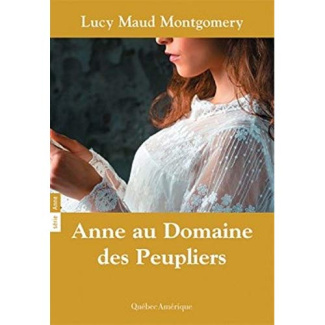
Anne Tome 4 : Anne au domaine des peupliers
Au Domaine des Peupliers, la nouvelle demeure d'Anne, il y a tante Kate et tante Chatty, deux sympathiques veuves, le chat Dusty Miller, et surtout, Rebecca Dew, une grognonne au coeur d'or dont les réparties font notre joie. Il y a aussi la nature omniprésente, les vacances à Avonlea, avec Marilla, Mme Lynde, les jumeaux... et Gilbert Blythe, dont Anne est séparée et à qui elle écrit fidèlement.ÉPUISÉVOIR PRODUIT15,00 € -

Anne Shirley de onze à vingt-deux ans. Coffret en 3 volumes : Anne de Green Gables ; Anne d'Avonlea
Anne, une orpheline de 11 ans bouleverse le quotidien de Marilla et Matthew. Vive, intelligente, bavarde, elle amène de la fantaisie et de nombreuses péripéties dans leur vie et dans celle des habitants d'Avonlea, au Canada Un roman plein de piquants, de tendresse et d'humour ! Intemporel !ÉPUISÉVOIR PRODUIT52,50 € -

Anne Tome 3 : Anne de Redmond
Anne Shirley poursuit ses rêves d'études supérieures et d'envolées créatives. Et c'est en compagnie de ses amis qu'elle découvre l'université de Redmond, en Nouvelle-Écosse. Au programme : cours, écriture, nouvelles rencontres et surtout, toutes sortes de mésaventures. Sans oublier les retours à Green Gables pour se ressourcer, entretenir les vieilles amitiés, garder sur le droit chemin un turbulent petit garçon? et recevoir sa première demande en mariage ! Lucy Maud Montgomery signe de son écriture merveilleuse un charmant bijou littéraire, drôle et tendre, sur le passage à l'âge adulte d'une fascinante jeune fille.4e de couverture : Anne Shirley poursuit ses rêves d'études supérieures et d'envolées créatives. Et c'est en compagnie de ses amis qu'elle découvre l'université de Redmond, en Nouvelle-Écosse. Au programme : cours, écriture, nouvelles rencontres et surtout, toutes sortes de mésaventures. Sans oublier les retours à Green Gables pour se ressourcer, entretenir les vieilles amitiés, garder sur le droit chemin un turbulent petit garçon? et recevoir sa première demande en mariage ! Lucy Maud Montgomery signe de son écriture merveilleuse un charmant bijou littéraire, drôle et tendre, sur le passage à l'âge adulte d'une fascinante jeune fille.EN STOCKCOMMANDER17,50 € -
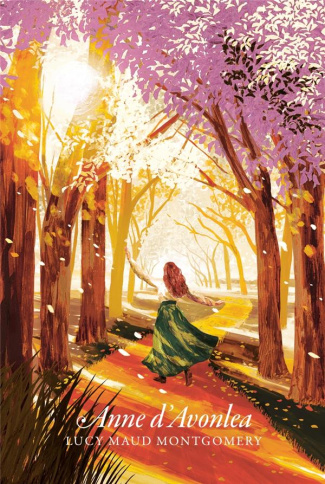
Anne Tome 2 : Anne d'Avonlea
Résumé : Avec Anne d'Avonlea, Lucy Maud Montgomery continue de déployer sous nos yeux ébahis l'univers enchanteur qu'elle a créé autour d'Anne Shirley, l'orpheline aux cheveux de feu adoptée par erreur. Entre les amis de toujours et les nouveaux venus, les idées saugrenues et le bon sens qui pointe son nez, Anne nous entraîne dans les aléas de la vie douce et enchanteresse d'un village hors du temps. Avec ses yeux gris qui brillent comme les étoiles du soir et ses cheveux roux toujours aussi mordants que son tempérament, Anne, désormais âgée de seize ans, a su gagner l'affection des habitants d'Avonlea. Alors qu'elle prend ses fonctions d'institutrice, son caractère se dévoile tout en nuances et envolées idéalistes. Elle fera de nouvelles rencontres, comme Monsieur Harrison, leur voisin à Green Gables, ou Mademoiselle Lewis, qui vit dans le Pavillon aux échos. Il y a également Paul, un élève fascinant et, à n'en pas douter, une future âme soeur, ou les jumeaux Dora et Davy qui débarquent à Green Gables histoire d'épicer le quotidien enfin paisible de Marilla. Alors qu'Anne devient une jeune femme, les péripéties de son existence nous enchantent toujours autant qu'elles nous touchent. A travers les joies et les peines qui font la trame du quotidien, le style si frais et poétique de Lucy Maud Montgomery porte la voix d'Anne dans les aventures, les rêveries et les moments de tendresse. Après Green Gables, quel plaisir de retrouver Avonlea !EN STOCKCOMMANDER17,50 €


Du même éditeur
-

In Pale battalions
Extrait Chapter OneChildhood memories fit their own intricate pattern. They cannot be made to conform to the version of our past we try to impose upon them. Thus I could say that Lord and Lady Powerstock and the home they gave me at Meongate more than compensated for being an orphan, that a silver spoon easily took the place of my mother's smile. I could say it--but every recollection of my early years would deny it.Meongate must once have been the crowded, bustling house of a cheerful family, as the Hallowses must once have been that family. Every favour of nature in its setting where the Hampshire downs met the pastures of the Meon valley, every effort of man in its spacious rooms and landscaped park, had been bestowed on the home of one small child.Yet it was not enough. When I was growing up at Meongate in the early 1920s, most of its grandeur had long since departed. Many of the rooms were shut up and disused, much of the park turned over to farmland. And all the laughing, happy people I imagined filling its empty rooms and treading its neglected lawns had vanished into a past beyond my reach.I grew up with the knowledge that my parents were both dead, my father killed on the Somme, my mother carried off by pneumonia a few days after my birth. It was not kept from me. Indeed, I was constantly reminded of it, constantly confronted with the implication that I must in some way bear the blame for the shadow of grief, or of something worse, that hung over their memory. That shadow, cast by the unknown, lay at the heart of the cold, dark certainty that also grew within me: I was not wanted at Meongate, not welcomed there, not loved.It might have been different had my grandfather not been the grave, withdrawn, perpetually melancholic man that he was. I, who never knew him when he was young, cannot imagine him as anything other than the wheelchair-bound occupant of his ground-floor rooms, deprived by his own morbidity, as much as by the lingering effects of a stroke, of all warmth and fondness. When Nanny Hiles took me, as she regularly did, to kiss him goodnight, all I wanted to do was escape from the cold, fleeting touch of his flesh. When, playing on the lawn, I would look up and see him watching me from his window, all I wanted to do was run away from the mournful, questing sadness in his eyes. Later, I came to sense that he was waiting, waiting for me to be old enough to understand him, waiting in the hope that he would live to see that day.Lady Powerstock, twenty years his junior, was not my real grandmother. She was buried in the village churchyard, another ghost whom I did not know and who could do nothing to help me. I imagined her as everything her successor was not--kind, loving and generous--but it did me no good. Olivia, the woman I was required to address as Grandmama in her place, had once been beautiful and, at fifty, her looks were still with her, her figure still fine, her dress sense impeccable. That we were not related by blood explained, to my satisfaction, why she did not love me. What I could not explain was why she went so far as to hate me, but hate me she undoubtedly did. She did not trouble to disguise the fact. She let it hover, menacing and unspoken, at the edge of all our exchanges, let it grow as an awareness between us, a secret confirmation that she too was only waiting, waiting for death to remove her husband and with him any lingering restraint on her conduct towards me. There was an air of practised vice about her that was to draw men all her life, an air of voluptuous pleasure at her own depravity that made her hatred of me seem merely instinctive. Yet there was always more to it than that. She had drawn some venom from whatever part she had played in the past of that house and had reserved it for me.My only friend in those days, my only guide through Meongate's hidden perils, was Fergus, the taciturn and undemonstrative major-domo, "shifty" as Olivia described him and certainly not as deferential as he should have been, but none the less my sole confidant. Sally, the sullen maid, and humourless Nanny Hiles both went in awe of Olivia, but Fergus treated her with an assurance, bordering on disrespect, that made him my immediate ally. A cautious, solitary, pessimistic man who had expected little from life and consequently been spared many disappointments, perhaps he took pity on a lonely child whose plight he understood better than she did herself. He would take me on covert expeditions through the grounds, or down to the wooded reach of the Meon where he fished of a quiet afternoon, or into Droxford in the trap, when he would buy me a twist of sherbet and leave me sitting on the wall outside Wilsmer's saddlery whilst he went in to haggle over a new bridle for the pony. For such brief moments as those, kicking my heels on Mr. Wilsmer's wall and eating my sherbet in the sunshine, I was happy. But such moments did not last.It was Fergus who first showed me my father's name, recorded with the other war dead of the village, on a plaque at the church. Their Name Liveth for Evermore, the inscription said, and his name--Captain the Honourable John Hallows--is all that did live for me. I would stare at it for what seemed like hours trying to conjure up the real living and breathing father that he had never been to me, seeing only those stiff, expressionless, uniformed figures preserved by photographs in back copies of the Illustrated London News, glimpsing no part of his true self beyond the neatly carved letters of his name.As for my mother, of her there was no record at all, no grave, no memorial of any kind. Fergus, when I questioned him, prevaricated. My mother's grave, if she had one, was far away--and he did not know where. There were, I was to understand, limits to what even he could tell me. Whether he suggested it or not I cannot remember, but, for some reason, I decided to ask Olivia. I cannot recall how old I was when it happened, but I had followed her into the library, where she often went to look at a painting that hung there."Where is my mother's grave?" I said bluntly, partly intending the question to be a challenge. All hatred is, in time, reciprocated and I had come to hate Olivia as much as she hated me; I did not then appreciate how dangerous an enemy she could be.She did not answer in words. She turned aside from that great, high, dark painting and hit me so hard across the face that I nearly fell over. I stood there, clutching the reddening bruise, too shocked by the pain of it to cry, and she stooped over me, her eyes blazing. "If you ever ask that question again," she said, "if you ever mention your mother again, I'll make you suffer."The mystery of my mother thenceforth became the grand and secret obsession of my childhood. My father's death, after all, had a comforting simplicity about it. Every November there was an Armistice Parade in the village to commemorate the sacrifice of Captain the Honourable John Hallows and the many others like him. Though not permitted to join the Brownie troop that took part in the parade, I was allowed to go and watch and could imagine myself marching with all the little girls who, like me, had lost their father. But, at the end of the parade, they went home to their mothers; I could not even remember mine.Sometimes, though, I thought I could remember her. It was impossible, of course, if what I had been told of her was true, but Olivia had succeeded in making me doubt everything I had not personally experienced, and there was one dim, early memory, seemingly at the very dawn of my recollection, to sustain what I so wanted to believe.I was standing on the platform at Droxford railway station. It was a hot summer's day: I could feel the heat of the gravel seeping up through my shoes. A train was standing at the platform, great billows of smoke rising as the engine gathered steam. The man standing beside me, who had been holding my hand, stooped and lifted me up, cradling me in his arms to watch the train pull out. He was stout and white-haired. I remember the rumble of his voice and the brim of his straw hat touching my head as he raised his free hand to wave. And I was waving too, at a woman aboard the train who had wound down the window and was leaning out, waving also and smiling and crying as she did so. She was dressed in blue and held a white handkerchief in her right hand. And the train carried her away. And then I cried too and the stout old man hugged me, the brass buttons on his coat cold against my face.I recounted the memory to Fergus one day, when we were returning from a mushrooming expedition. When I had finished, I asked him who he thought the old man was."Sounds like old Mr. Gladwin," he replied. "The first Lady Powerstock's father. He lived here . . . till she sent him away." By she Fergus always meant Olivia."Why did she do that?""She'd have had her reasons, I don't doubt.""When did he go?""The summer of 1920, when you were three. Back to Yorkshire, so they say. A proper caution, was Mr. Gladwin.""Who was the pretty lady, Fergus?""That I don't know.""Was she . . . my mother?"He pulled up and looked down at me with a frown. "That she was not," he said with deliberate slowness. "Your mother passed away a few days after she had you. You know that. No amount of wanting is going to make you remember her.""Then . . . who was the pretty lady?"His frown became less kindly. "I told you: I don't know. That Mr. Gladwin, he was a close one. Now, look to that napkin or you'll pitch your breakfast into the lane--and mine with it."If the pretty lady wasn't my mother, who was she? What was old Mr. Gladwin, my great-grandfather, to her? There were no answers within my reach, just the secret hope I went on harbouring that maybe my mother wasn't really dead at all, just ....ÉPUISÉVOIR PRODUIT11,79 € -
-
Right behind you (VO)
A hero or a killer ? All she knows is he's back. Thirteen-year-old Sharlah Nash knows that the first time her brother killed eight years ago, he did it to save their lives. Now retired FBI profiler Pierce Quincy and his wife Rainie Conner have offered Sharlah a new life of safety. But when two people are murdered in their local convenience store, Sharlah's brother is identified as the killer. Telly Ray Nash is on the hunt for Sharlah and as the death count rises it becomes clear that nothing and no one will stop him getting to her.ÉPUISÉVOIR PRODUIT10,61 € -
Sense and sensibility (VO)
Extrait Chapter OneThe family of Dashwood had been long settled in Sussex (1). Their estate was large (2), and their residence was at Norland Park, in the centre of their property, where, for many generations, they had lived in so respectable a manner, as to engage (3) the general good opinion of their surrounding acquaintance. The late owner of this estate was a single man, who lived to a very advanced age, and who for many years of his life, had a constant companion and housekeeper (4) in his sister. But her death, which happened ten years before his own, produced a great alteration in his home; for to supply her loss, he invited and received into his house the family of his nephew Mr. Henry Dashwood, the legal inheritor of the Norland estate (5), and the person to whom he intended to bequeath it. In the society of his nephew and niece, and their children, the old Gentleman's days were comfortably spent. His attachment to them all increased. The constant attention of Mr. and Mrs. Henry Dashwood to his wishes, which proceeded not merely from interest, but from goodness of heart, gave him every degree of solid comfort which his age could receive; and the cheerfulness of the children added a relish to his existence.By a former marriage, Mr. Henry Dashwood had one son: by his present lady, three daughters. The son, a steady respectable young man, was amply provided for by the fortune of his mother, which had been large, and half of which devolved on him on his coming of age (6). By his own marriage, likewise, which happened soon afterwards, he added to his wealth (7). To him therefore the succession to the Norland estate was not so really important as to his sisters; for their fortune, independent of what might arise to them from their father's inheriting that property, could be but small. Their mother had nothing, and their father only seven thousand pounds in his own disposal; for the remaining moiety of his first wife's fortune was also secured to her child, and he had only a life interest in it (8).The old Gentleman died; his will was read, and like almost every other will, gave as much disappointment as pleasure (9). He was neither so unjust, nor so ungrateful, as to leave his estate from his nephew;—but he left it to him on such terms as destroyed half the value of the bequest. Mr. Dashwood had wished for it more for the sake of his wife and daughters than for himself or his son:—but to his son, and his son's son, a child of four years old, it was secured, in such a way, as to leave to himself no power of providing for those who were most dear to him, and who most needed a provision, by any charge on the estate (10), or by any sale of its valuable woods (11). The whole was tied up for the benefit of this child (12), who, in occasional visits with his father and mother at Norland (13), had so far gained on the affections of his uncle, by such attractions as are by no means unusual in children of two or three years old; an imperfect articulation, an earnest desire of having his own way, many cunning tricks, and a great deal of noise, as to outweigh all the value of all the attention which, for years, he had received from his niece and her daughters (14). He meant not to be unkind however, and, as a mark of his affection for the three girls, he left them a thousand pounds a-piece.Mr. Dashwood's disappointment was, at first, severe; but his temper was cheerful and sanguine, and he might reasonably hope to live many years, and by living economically, lay by a considerable sum from the produce of an estate already large, and capable of almost immediate improvement (15). But the fortune, which had been so tardy in coming, was his only one twelvemonth. He survived his uncle no longer; and ten thousand pounds, including the late legacies, was all that remained for his widow and daughters (16).His son was sent for, as soon as his danger was known (17), and to him Mr. Dashwood recommended, with all the strength and urgency which illness could command, the interest of his mother-in-law (18) and sisters.Mr. John Dashwood had not the strong feelings of the rest of the family; but he was affected by a recommendation of such a nature at such a time, and he promised to do every thing in his power to make them comfortable. His father was rendered easy by such an assurance, and Mr. John Dashwood had then leisure to consider how much there might prudently be in his power to do for them.He was not an ill-disposed young man, unless to be rather cold hearted, and rather selfish, is to be ill-disposed: but he was, in general, well respected; for he conducted himself with propriety in the discharge of his ordinary duties. Had he married a more amiable woman, he might have been made still more respectable (19) than he was:—he might even have been made amiable (20) himself; for he was very young when he married, and very fond of his wife. But Mrs. John Dashwood was a strong caricature of himself;—more narrow-minded (21) and selfish.When he gave his promise to his father, he meditated within himself to increase the fortunes of his sisters by the present of a thousand pounds a-piece. He then really thought himself equal to it. The prospect of four thousand a-year, in addition to his present income, besides the remaining half of his own mother's fortune (22), warmed his heart and made him feel capable of generosity (23).—"Yes, he would give them three thousand pounds: it would be liberal and handsome! It would be enough to make them completely easy. Three thousand pounds! he could spare so considerable a sum with little inconvenience."—He thought of it all day long, and for many days successively, and he did not repent (26).No sooner was his father's funeral over, than Mrs. John Dashwood, without sending any notice of her intention to her mother-in-law, arrived with her child and their attendants. No one could dispute her right to come; the house was her husband's from the moment of his father's decease; but the indelicacy of her conduct was so much the greater, and to a woman in Mrs. Dashwood's situation, with only common feelings, must have been highly unpleasing (27),—but in her mind there was a sense of honour so keen, a generosity so romantic, that any offence of the kind, by whomsoever given or received, was to her a source of immoveable disgust (28). Mrs. John Dashwood had never been a favourite with any of her husband's family; but she had had no opportunity, till the present, of shewing them with how little attention to the comfort of other people she could act when occasion required it.So acutely did Mrs. Dashwood feel this ungracious behaviour, and so earnestly did she despise her daughter-in-law for it, that, on the arrival of the latter, she would have quitted the house for ever (29), had not the entreaty of her eldest girl induced her first to reflect on the propriety of going, and her own tender love for all her three children determined her afterwards to stay, and for their sakes avoid a breach with their brother.Elinor, this eldest daughter whose advice was so effectual, possessed a strength of understanding, and coolness of judgment, which qualified her, though only nineteen (30), to be the counsellor of her mother, and enabled her frequently to counteract, to the advantage of them all, that eagerness of mind in Mrs. Dashwood which must generally have led to imprudence. She had an excellent heart;—her disposition was affectionate, and her feelings were strong; but she knew how to govern them (31): it was a knowledge which her mother had yet to learn, and which one of her sisters had resolved never to be taught.Marianne's abilities were, in many respects, quite equal to Elinor's (32). She was sensible and clever; but eager in every thing; her sorrows, her joys, could have no moderation. She was generous, amiable, interesting (33): she was every thing but prudent. The resemblance between her and her mother was strikingly great.Elinor saw, with concern, the excess of her sister's sensibility (34); but by Mrs. Dashwood it was valued and cherished. They encouraged each other now in the violence of their affliction. The agony of grief which overpowered them at first, was voluntarily renewed, was sought for, was created again and again (35). They gave themselves up wholly to their sorrow, seeking increase of wretchedness in every reflection that could afford it (36), and resolved against ever admitting (37) consolation in future. Elinor, too, was deeply afflicted; but still she could struggle, she could exert herself. She could consult with her brother, could receive her sister-in-law on her arrival, and treat her with proper attention; and could strive to rouse her mother to similar exertion, and encourage her to similar forbearance.Margaret, the other sister, was a good-humoured well-disposed girl; but as she had already imbibed a good deal of Marianne's romance (38), without having much of her sense, she did not, at thirteen, bid fair to equal her sisters at a more advanced period of life.Annotations1. Sussex: A county south of London.2. The gentry that dominates this and other Jane Austen novels were based in rural estates, whose agricultural profits formed the principal source of their income.3. engage: gain.4. “Housekeeper” was often used to refer to a high-ranking female servant. Here it means that his sister supervised the household, which would include directing and managing the servants, deciding on meals, ordering supplies for the house, and attending to the needs of residents and guests. These tasks were normally performed by women, so a man without a wife would usually have a sister or other unmarried female relative live with him for this purpose. Since unmarried women rarely had homes of their own, she would benefit by gaining a secure home in which she exercised a position of importance and influence.5. When a landowner lacked sons, a paternal nephew, as Henry Dashwood’s... --Ce texte fait référence à l'édition Broché .EN STOCKCOMMANDER5,00 €


