

GUILLAUME JEAN CONSTANTIN (1755 1816) - A DRAWINGS DEALER IN PARIS
This extraordinary and original study traces the career of the influential Paris art dealer Guillaume Jean Constantin (1755-1816). Using Constantin's dealer's mark and a wealth of unpublished archival material, Joachim Jacoby reconstructs Constantin's hitherto unknown business activities and rediscovers an early and important instance of a bourgeois art dealer. In the course of the 18th century, drawings by old and contemporary masters became an esteemed collectors' item and, in consequence, a highly valued commodity of the art market. This study looks at this business from the perspective of the art dealer Guillaume Jean Constantin (1755-1816), who was active in Paris during the last quarter of the 18th and the first years of the 19th century. Constantin's transactions are reconstructed on the evidence of his dealer's mark applied to drawings - here identified for the first time - and unpublished material drawn from archives in Paris. His dealership in drawings is analysed with a focus on his business network within France and his far-reaching contacts, which also covered other regions of Europe, including England, Italy, Germany and Russia. Due to a particlularly rich documentation, his relationship with Johann Friedrich Städel, a Frankfurt collector and founder of the eponymous institute, can be described in detail. Other aspects of Constantin's multi-faceted activities were his work as an expert in estate evaluation, as an auctioneer and as a print publisher, including in 1794 the publication of the famous portrait of the revolutionary hero Jean-Paul Marat after a design by Jacques-Louis David. He also served as paintings curator to Empress Joséphine, Napoleon's wife. Working in proximity to the contemporary art world, he promoted living artists, among them his close friend Pierre-Paul Prud'hon. Constantin's working life spanned the period between the French Revolution and the Empire, established under Napoleon. His changing allegiances are to be seen against this historical background. This handsomely produced book is published by Ad Ilissvm in a new series, The Fondation Custodia Studies in the History of Art, which reflects and continues forward into the present the scholarly interests of the institution's founder, Frits Lugt. The next book in the series, prepared by Jean-Paul Bouillon, will publish a previously unknown collection of letters, recently acquired by the Fondation Custodia, by Edouard Manet to his friend the painter and printmaker Félix Bracquemond.
| Date de parution | 08/02/2019 |
|---|---|
| Poids | 715g |
| Largeur | 188mm |

| SKU: | 9781912168125 |
| wmi_id_distributeur: | Not set |
| Is Salable (from plugin): | Yes (In Stock) |
| Is Salable (direct MSI check): | Yes (In Stock) |
| Distributor Name: | Par défaut |
| Availability Value: | 0 |
| Availability Label: | Epuisé |
| Match Result: | |
| Default Availability (Config): | 0 - Epuisé |
| Raw Config Mapping: |
Array
(
    [_1772119784121_121] => Array
        (
            [id] => 12707000
            [name] => 12707000
            [availability] => 1
            [activation_attribute] => 1
        )

)
|
| EAN | 9781912168125 |
|---|---|
| Titre | GUILLAUME JEAN CONSTANTIN (1755 1816) - A DRAWINGS DEALER IN PARIS |
| Auteur | JACOBY JOACHIM |
| Editeur | HOLBERTON |
| Largeur | 188 |
| Poids | 715 |
| Date de parution | 20190208 |
| Nombre de pages | 0,00 € |
Pourquoi choisir Molière ?
Du même auteur
-

-
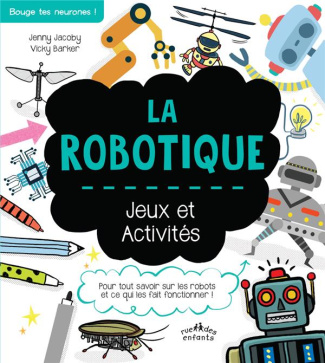
La robotique. Jeux et activités
La robotique, c'est l'ensemble des techniques qui permettent aux ingénieurs de fabriquer et de programmer des robots. Grâce à ce livre rempli d'activités et de jeux illustrés, tous les apprentis ingénieurs pourront s'exercer et comprendre pourquoi un programme est essentiel dans une machine. De quoi éveiller son cerveau et sa créativité en même temps ! C'est le début d'une nouvelle passion pour la robotique !ÉPUISÉVOIR PRODUIT8,95 € -
-
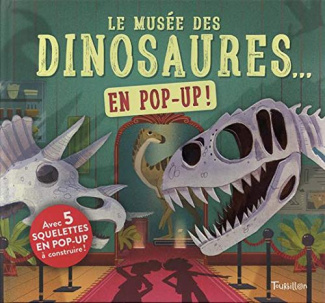
Le musée des dinosaures... en pop up ! Avec 5 squelettes en pop-up à construire !
Une nouvelle caisse de fossiles et autres trouvailles archéologiques est arrivée au musée ! A toi de les assembler pour reconstituer les squelettes des dinosaures et organiser toute une exposition. Des herbivores aux prédateurs, en passant par les reptiles de la mer ou encore du ciel, les jeunes lecteurs devront suivre des instructions simples pour créer 5 pop-ups et assembler les "trouvailles" dans les salles d'exposition du musée, sans colle ni ciseaux ! Un documentaire ingénieux, où l'enfant se documente à travers la manipulation et la construction de 5 pop-up de dinosaures emblématiques : le tricératops, le stégosaure, le T-rex, le liopleurodon et le ptéranodon.ÉPUISÉVOIR PRODUIT16,60 €


Du même éditeur
-

GOLD OF THE GREAT STEPPE - PEOPLE, POWER AND PRODUCTION
Résumé : This catalogue accompanies an exhibition which presents artefacts from burial mounds of the Saka people of East Kazakhstan, who, over 2, 500 years ago, lived lives rich in complexity. The Saka people occupied a landscape of seemingly endless steppe to the west, bounded by mountains to the east and south. Known to be fierce warriors, they were also skilled craftspeople, producing intricate gold and other metalwork. Their artistic expression indicates a deep respect for the animals around them - both real and imagined. They dominated their landscapes with huge burial mounds of sophisticated construction, burying their horses with elite members of their society. Recent excavations and analyses, led by archaeologists from Kazakhstan, have demonstrated that by looking through a scientific and social lens at what the Saka left behind we can paint a picture of a complex society. We can start to understand how it affected the way people lived, how they travelled, the things they made and what they believed in. Including contributions from experts at Nazarbayev University, Al-Farabi Kazakh National University, and the University of Cambridge, this publication details the results of new archaeological research from East Kazakhstan. It is richly illustrated with photographs of intricate gold artefacts in the Saka-Scythian animal style, landscape and aerial photography of the burial mounds, and details of the excavations and analyses. Grounded in decades of careful study, papers by the two leading Kazakhstani archaeologists of the East Kazakhstan region, Professors Zainolla Samashev and Abdesh Toleubayev, demonstrate current archaeological thinking in Kazakhstan today. These papers are complemented by material from a team of international scholars, which contribute the results of new scientific analyses on the artefacts, and wider Eurasian perspectives on the Saka people and their practice of horse burial.ÉPUISÉVOIR PRODUIT32,00 € -
-
-
