

THE REMAINS OF THE DAY
Extrait Excerpted from the Introduction by Salman Rushdie Introduction ‘I was very consciously trying to write for an international audience,’ Kazuo Ishiguro says of The Remains of the Day in his Paris Review interview (‘The Art of Fiction’, No. 196). ‘One of the ways I thought I could do this was to take a myth of England that was known internationally – in this case, the English butler.’ ‘Jeeves was a big influence.’ This is a necessary genuflection. No literary butler can ever quite escape the gravitational field of Wodehouse’s shimmering Reginald, gentleman’s gentleman par excellence, saviour, so often, of Bertie Wooster’s imperilled bacon. But, even in the Wodehousian canon, Jeeves does not stand alone. Behind him can be seen the rather more louche figure of the Earl of Emsworth’s man, Sebastian Beach, enjoying a quiet tipple in the butler’s pantry at Blandings Castle. And other butlers – Meadowes, Maple, Mulready, Purvis – float in and out of Wodehouse’s world, not all of them pillars of probity. The English butler, the shadow that speaks, is, like all good myths, multiple and contradictory. One can’t help feeling that Gordon Jackson’s portrayal of the stoic Hudson in the 1970s TV series Upstairs, Downstairs may have been as important to Ishiguro as Jeeves: the butler as liminal figure, standing on the border between the worlds of ‘Upstairs’ and ‘Downstairs’, ‘Mr Hudson’ to the servants, plain ‘Hudson’ to the gilded creatures he serves. Now that the popularity of another television series, Downton Abbey, has introduced a new generation to the bizarreries of the English class system, Ishiguro’s powerful, understated entry into that lost time to make, as he says, a portrait of a ‘wasted life’ provides a salutary, disenchanted counterpoint to the less sceptical methods of Julian Fellowes’s TV drama. The Remains of the Day, in its quiet, almost stealthy way, demolishes the value system of the whole upstairs-downstairs world. (It should be said that Ishiguro’s butler is in his way as complete a fiction as Jeeves. Just as Wodehouse made immortal a world that never existed except in his imagination, so also Ishiguro projects his imagination into a poorly documented zone. ‘I was surprised to find,’ he says, ‘how little there was about servants written by servants, given that a sizable proportion of people in this country were employed in service right up until the Second World War. It was amazing that so few of them had thought their lives worth writing about. So most of the stuff in The Remains of the Day...was made up.’) * The surface of The Remains of the Day is almost perfectly still. Stevens, a butler well past his prime, is on a week’s motoring holiday in the West Country. He tootles around, taking in the sights and encountering a series of green-and-pleasant country folk who seem to have escaped from one of those English films of the 1950s in which the lower orders doff their caps and behave with respect towards a gent with properly creased trousers and flattened vowels. It is, in fact, July 1956 – the month in which Nasser’s nationalization of the Suez Canal triggered the Suez Crisis – but such contemporaneities barely impinge upon the text. (Ishiguro’s first novel, A Pale View of Hills, was set in post-war Nagasaki but hardly mentioned the Bomb. The Remains of the Day ignores Suez, even though that débâcle marked the end of the kind of Britain whose passing is a central subject of the novel.) Nothing much happens. The high point of Mr Stevens’s little outing is his visit to Miss Kenton, the former housekeeper at Darlington Hall, the great house to which Stevens is still attached as ‘part of the package’, even though ownership has passed from Lord Darlington to a jovial American named Farraday who has a disconcerting tendency to banter. Stevens hopes to persuade Miss Kenton to return to the Hall. His hopes come to nothing. He makes his way home. Tiny events; but why, then, is the ageing manservant to be found, near the end of his holiday, weeping before a complete stranger on the pier at Weymouth? Why, when the stranger tells him that he ought to put his feet up and enjoy the evening of his life, is it so hard for Stevens to accept such sensible, if banal, advice? What has blighted the remains of his day? --Ce texte fait référence à l'édition Relié .
| Date de parution | 01/04/2010 |
|---|---|
| Poids | 214g |
| Largeur | 116mm |

| SKU: | 9780571258246 |
| wmi_id_distributeur: | Not set |
| Is Salable (from plugin): | Yes (In Stock) |
| Is Salable (direct MSI check): | Yes (In Stock) |
| Distributor Name: | Par défaut |
| Availability Value: | 0 |
| Availability Label: | Epuisé |
| Match Result: | |
| Default Availability (Config): | 0 - Epuisé |
| Raw Config Mapping: |
Array
(
    [_1772119784121_121] => Array
        (
            [id] => 12707000
            [name] => 12707000
            [availability] => 1
            [activation_attribute] => 1
        )

)
|
| EAN | 9780571258246 |
|---|---|
| Titre | THE REMAINS OF THE DAY |
| Auteur | ISHIGURO KAZUO |
| Editeur | FABER ET FABER |
| Largeur | 116 |
| Poids | 214 |
| Date de parution | 20100401 |
| Nombre de pages | 0,00 € |
Pourquoi choisir Molière ?
Du même auteur
-

-

2 nouvelles musicales
Résumé : "Mon manager, Bradley Stevenson, qui au cours des années a été un ami précieux à sa manière, soutient que j'ai en moi l'étoffe d'un vrai pro. Pas seulement comme musicien de studio, mais comme vedette de première division. Il est faux que les saxophonistes ne deviennent plus des vedettes, affirme-t-il, et il répète sa liste de noms. Marcus Lightfoot. Silvio Tarrentini. Ce sont tous des musiciens de jazz, fais-je remarquer. C'est bien ce que tu es, non ? réplique-t-il. Mais je ne le suis encore que dans mes rêves les plus secrets. Dans le monde réel - quand je n'ai pas le visage entièrement enveloppé de pansements comme en ce moment - je suis juste un ténor payé à la journée, raisonnablement sollicité pour l'enregistrement en studio, ou lorsqu'un groupe a perdu son saxo habituel. S'ils veulent de la pop, je joue de la pop. R&B ? Parfait. Publicités pour des voitures, thème musical d'un talk show, j'accepte. Ces temps-ci je suis un musicien de jazz seulement quand je suis enfermé dans mon réduit". Dans ces deux nouvelles construites en écho, se croisent et se répondent, de Venise à Beverly Hills, quelques magnifiques figures de musiciens désenchantés.ÉPUISÉVOIR PRODUIT2,00 € -
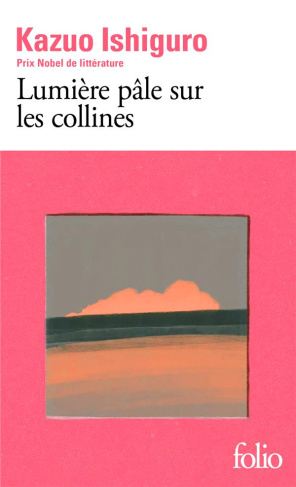
Lumière pâle sur les collines
Résumé : Après le suicide de sa fille aînée, Etsuko, une Japonaise installée en Angleterre, se replonge dans les souvenirs de sa vie. Keiko, née d'un premier mariage au Japon, ne s'est jamais acclimatée à l'Angleterre, et surtout elle n'accepta pas le remariage de sa mère avec un homme qu'elle considéra toute sa vie comme un parfait étranger. Mais peut-être l'explication du drame demeure-t-elle enfouie dans le Japon de l'après-guerre, à Nagasaki, ville martyre qui se relevait des plaies de la guerre et du traumatisme de la bombe, durant cet étrange été où, alors qu'elle attendait la naissance de Keiko, Etsuko se lia d'amitié avec la plus solitaire de ses voisines, Sachiko, une jeune veuve qui élevait sa fille, la petite Mariko... Premier roman de Kazuo Ishiguro, Lumière pâle sur les collines est de ces livres dont on ne sort pas indemne. Ecrit dans un style dépouillé, limpide, tout en demi-teintes et en non-dits, reflet d'un passé mystérieux, il possède un rare pouvoir d'envoûtement.EN STOCKCOMMANDER9,20 € -
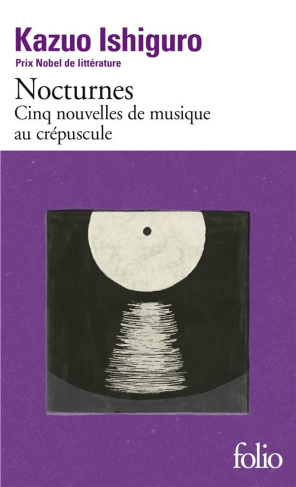
Nocturnes. Cinq nouvelles de musique au crépuscule
Des piazzas italiennes aux collines de Malvern, d'un appartement londonien à l'étage feutré d'un hôtel de Hollywood, voici des musiciens de rue, des stars déchues, tous en quête d'un nouveau mouvement à jouer. Si la musique demande des sacrifices, un saxophoniste doit-il accepter la chirurgie esthétique pour réussir ? Faut-il qu'un crooner change d'existence pour retrouver le succès ? Kazuo Ishiguro alterne humour et mélancolie pour nous conter le destin de passionnés. Les thèmes évoqués sont éternels : l'amour, la musique, le combat de chacun pour conserver intact le charme de la vie quand les espoirs s'émoussent.Notes Biographiques : Kazuo Ishiguro, né à Nagasaki en 1954, est arrivé en Grande-Bretagne à l'âge de cinq ans. Décrit par le New York Times comme " un génie original et remarquable", il est l'auteur de huit romans : Lumière pâle sur les collines, Un artiste du monde flottant (Whitbread Award 1986), Les vestiges du jour (Booker Prize 1989), L'inconsolé, Quand nous étions orphelins, Auprès de moi toujours, Le géant enfoui, Klara et le Soleil, et d'un recueil de nouvelles, Nocturnes. Tous ses ouvrages sont traduits dans plus de quarante langues. En 1995, Kazuo Ishiguro a été décoré de l'ordre de l'Empire britannique pour ses services rendus à la littérature, et, en 1998, la France l'a fait chevalier de l'ordre des Arts et des Lettres. Deux de ses livres ont été adaptés au cinéma : Les vestiges du jour et Auprès de moi toujours. Les droits cinématographiques du Géant enfoui ont été vendus à Hollywood. Kazuo Ishiguro vit à Londres avec son épouse. Il a reçu le prix Nobel de littérature en 2017.ÉPUISÉVOIR PRODUIT9,20 €


Du même éditeur


De la même catégorie
-

The handmaid's tale (VO)
One of the New Windmills series for schools, this is the story of Offred, one of the few women in the Republic of Gilead left with functioning ovaries, whose only function it is to breed. If she deviates, she will be hanged as a dissenter. But Offred is determined to find a way out.EN STOCKCOMMANDER13,00 € -
1984 (VO)
George Orwell's dystopian masterpiece, Nineteen Eighty-Four is perhaps the most pervasively influential book of the twentieth century, making famous Big Brother, newspeak and Room 101.'Who controls the past controls the future: who controls the present controls the past'Hidden away in the Record Department of the sprawling Ministry of Truth, Winston Smith skilfully rewrites the past to suit the needs of the Party. Yet he inwardly rebels against the totalitarian world he lives in, which demands absolute obedience and controls him through the all-seeing telescreens and the watchful eye of Big Brother, symbolic head of the Party. In his longing for truth and liberty, Smith begins a secret love affair with a fellow-worker Julia, but soon discovers the true price of freedom is betrayal.Eric Arthur Blair (1903-1950), better known by his pen-name, George Orwell, was born in India, where his father worked for the Civil Service. An author and journalist, Orwell was one of the most prominent and influential figures in twentieth-century literature. His unique political allegory Animal Farm was published in 1945, and it was this novel, together with the dystopia of Nineteen Eighty-Four (1949), which brought him world-wide fame. All his novels and non-fiction, including Burmese Days (1934), Down and Out in Paris and London (1933), The Road to Wigan Pier (1937) and Homage to Catalonia (1938) are published in Penguin Modern Classics. If you enjoyed Nineteen Eighty-Four, you might like Orwell's Animal Farm, also available in Penguin Great Orwell.'His final masterpiece... enthralling and indispensible for understanding modern history'Timothy Garton-Ash, New York Review of Books'The book of the twentieth century... haunts us with an ever-darker relevance'IndependentEN STOCKCOMMANDER10,00 € -
ROMEO AND JULIET
Résumé : Set in a city torn apart by feuds and gang warfare, Shakespeare's immortal drama tells the story of star-crossed lovers, rival dynasties and bloody revenge. Romeo and Juliet is a hymn to youth and the thrill of forbidden love, charged with sexual passion and violence, but also a warning of death : a dazzling combination of bawdy comedy and high tragedy.EN STOCKCOMMANDER12,00 € -
The help (VO)
The other side of Gone with the Wind - and just as unputdownable (The Sunday Times )A big, warm girlfriend of a book (The Times )Harper Lee's classic novel To Kill a Mockingbird has changed lives. It's direct descendent The Help has the same potential...an astonishing feat of accomplishment (Daily Express )Outstanding, immensely funny, very compelling, brilliant (Daily Telegraph )Immensely readable (Observer )Daring, vitally important and very courageous, I loved and admired The Help. Fantastic (Marian Keyes )A laugh-out-loud, vociferously angry must-read (Marie Claire )Touching, disgraceful, funny. Highly recommended (Daily Mail )Utterly brilliant (She )Remarkable, shocking, brave, brilliant (Easy Living )Wonderfully engaging dialogue (Good Housekeeping )A compelling, great first novel, with soaring highs, poignant side stories and laugh-out-loud anecdotes. You'll be sorry to finish it (Psychologies )A winning story of courage and truth (Woman & Home )A brisk, involving read (Metro )An exciting and atmospheric story (Rachel Cooke Observer Books of the Year )A wise, poignant novel. You'll catch yourself cheering out loud (People )EN STOCKCOMMANDER13,00 €


