

L'héritage Davenall
11,40 €
En stock
EAN :
9782253261926
1882. St John's Wood. Un homme se présente aux portes de la maison de Constance Trenchard. A la stupéfaction de tous, il prétend être James Davenall, l'ancien fiancé de Constance, disparu une semaine avant leur mariage et que tout le monde pense mort depuis dix ans. Si la jeune femme le reconnaît et le croit, toute la famille de James Davenall, en particulier sa mère et son frère, Sir Hugo, héritier du prestigieux domaine de Cleave Court, prétend qu'il s'agit d'un imposteur. Sur fond de secrets de famille, c'est le début, d'un incroyable puzzle qui, après de multiples rebondissements, connaîtra une conclusion tout à fait inattendue.
Commandé avant 16h, livré demain
Catégories
| Nombre de pages | 854 |
|---|---|
| Date de parution | 04/11/2020 |
| Poids | 415g |
| Largeur | 109mm |

Distributor Debug Info
| SKU: | 9782253261926 |
| wmi_id_distributeur: | Not set |
| Is Salable (from plugin): | Yes (In Stock) |
| Is Salable (direct MSI check): | Yes (In Stock) |
| Distributor Name: | Par défaut |
| Availability Value: | 0 |
| Availability Label: | Epuisé |
| Match Result: | |
| Default Availability (Config): | 0 - Epuisé |
| Raw Config Mapping: |
Array
(
    [_1772119784121_121] => Array
        (
            [id] => 12707000
            [name] => 12707000
            [availability] => 1
            [activation_attribute] => 1
        )

)
|
Plus d'informations
| EAN | 9782253261926 |
|---|---|
| Titre | L'héritage Davenall |
| Auteur | Goddard Robert |
| Editeur | LGF |
| Largeur | 109 |
| Poids | 415 |
| Date de parution | 20201104 |
| Nombre de pages | 854,00 € |
Pourquoi choisir Molière ?
Efficacité et rapidité Commandé avant 16h livré demain
Économique et pratique Livraison à domicile dès 5,10 €
Facile et sans frais Retrait gratuit en magasin
Sécurité et tranquillité Paiement 100 % sécurisé
Disponibilité et écoute Contactez-nous sur WhatsApp
Du même auteur
-

Heather Mallender a disparu
Journaliste puis enseignant, Robert Goddard a dirigé un établissement scolaire dans le Devon pendant plusieurs années avant de se consacrer entièrement à l'écriture. Il vit aujourd'hui à Truro, dans les Cornouailles.EN STOCKCOMMANDER11,90 € -
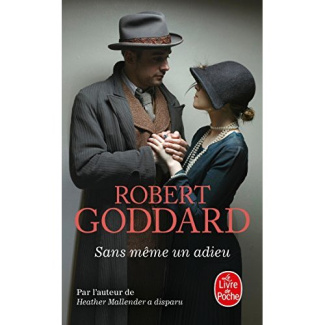
Sans même un adieu
Résumé : 1911. Geoffrey Staddon, un jeune et talentueux architecte, vient de concevoir une magnifique demeure, Clouds Frome. En travaillant sur ce projet, il est tombé fou amoureux de l'épouse de son commanditaire, Consuela Caswell. Alors que les amants projettent de vivre ensemble, Geoffrey abandonne finalement la jeune femme à son triste sort, préférant se consacrer pleinement à ses ambitions professionnelles. 1923. Geoffrey apprend par un article de presse que Consuela Caswell est accusée de meurtre et risque la peine capitale. Bouleversé par cette nouvelle qui réveille bien des fantômes et ravive son sentiment de culpabilité, il décide de retourner à Clouds Frome. Il ne sait pas encore que ce qu'il va y découvrir bouleversera son existence.ÉPUISÉVOIR PRODUIT10,75 € -

In Pale battalions
Extrait Chapter OneChildhood memories fit their own intricate pattern. They cannot be made to conform to the version of our past we try to impose upon them. Thus I could say that Lord and Lady Powerstock and the home they gave me at Meongate more than compensated for being an orphan, that a silver spoon easily took the place of my mother's smile. I could say it--but every recollection of my early years would deny it.Meongate must once have been the crowded, bustling house of a cheerful family, as the Hallowses must once have been that family. Every favour of nature in its setting where the Hampshire downs met the pastures of the Meon valley, every effort of man in its spacious rooms and landscaped park, had been bestowed on the home of one small child.Yet it was not enough. When I was growing up at Meongate in the early 1920s, most of its grandeur had long since departed. Many of the rooms were shut up and disused, much of the park turned over to farmland. And all the laughing, happy people I imagined filling its empty rooms and treading its neglected lawns had vanished into a past beyond my reach.I grew up with the knowledge that my parents were both dead, my father killed on the Somme, my mother carried off by pneumonia a few days after my birth. It was not kept from me. Indeed, I was constantly reminded of it, constantly confronted with the implication that I must in some way bear the blame for the shadow of grief, or of something worse, that hung over their memory. That shadow, cast by the unknown, lay at the heart of the cold, dark certainty that also grew within me: I was not wanted at Meongate, not welcomed there, not loved.It might have been different had my grandfather not been the grave, withdrawn, perpetually melancholic man that he was. I, who never knew him when he was young, cannot imagine him as anything other than the wheelchair-bound occupant of his ground-floor rooms, deprived by his own morbidity, as much as by the lingering effects of a stroke, of all warmth and fondness. When Nanny Hiles took me, as she regularly did, to kiss him goodnight, all I wanted to do was escape from the cold, fleeting touch of his flesh. When, playing on the lawn, I would look up and see him watching me from his window, all I wanted to do was run away from the mournful, questing sadness in his eyes. Later, I came to sense that he was waiting, waiting for me to be old enough to understand him, waiting in the hope that he would live to see that day.Lady Powerstock, twenty years his junior, was not my real grandmother. She was buried in the village churchyard, another ghost whom I did not know and who could do nothing to help me. I imagined her as everything her successor was not--kind, loving and generous--but it did me no good. Olivia, the woman I was required to address as Grandmama in her place, had once been beautiful and, at fifty, her looks were still with her, her figure still fine, her dress sense impeccable. That we were not related by blood explained, to my satisfaction, why she did not love me. What I could not explain was why she went so far as to hate me, but hate me she undoubtedly did. She did not trouble to disguise the fact. She let it hover, menacing and unspoken, at the edge of all our exchanges, let it grow as an awareness between us, a secret confirmation that she too was only waiting, waiting for death to remove her husband and with him any lingering restraint on her conduct towards me. There was an air of practised vice about her that was to draw men all her life, an air of voluptuous pleasure at her own depravity that made her hatred of me seem merely instinctive. Yet there was always more to it than that. She had drawn some venom from whatever part she had played in the past of that house and had reserved it for me.My only friend in those days, my only guide through Meongate's hidden perils, was Fergus, the taciturn and undemonstrative major-domo, "shifty" as Olivia described him and certainly not as deferential as he should have been, but none the less my sole confidant. Sally, the sullen maid, and humourless Nanny Hiles both went in awe of Olivia, but Fergus treated her with an assurance, bordering on disrespect, that made him my immediate ally. A cautious, solitary, pessimistic man who had expected little from life and consequently been spared many disappointments, perhaps he took pity on a lonely child whose plight he understood better than she did herself. He would take me on covert expeditions through the grounds, or down to the wooded reach of the Meon where he fished of a quiet afternoon, or into Droxford in the trap, when he would buy me a twist of sherbet and leave me sitting on the wall outside Wilsmer's saddlery whilst he went in to haggle over a new bridle for the pony. For such brief moments as those, kicking my heels on Mr. Wilsmer's wall and eating my sherbet in the sunshine, I was happy. But such moments did not last.It was Fergus who first showed me my father's name, recorded with the other war dead of the village, on a plaque at the church. Their Name Liveth for Evermore, the inscription said, and his name--Captain the Honourable John Hallows--is all that did live for me. I would stare at it for what seemed like hours trying to conjure up the real living and breathing father that he had never been to me, seeing only those stiff, expressionless, uniformed figures preserved by photographs in back copies of the Illustrated London News, glimpsing no part of his true self beyond the neatly carved letters of his name.As for my mother, of her there was no record at all, no grave, no memorial of any kind. Fergus, when I questioned him, prevaricated. My mother's grave, if she had one, was far away--and he did not know where. There were, I was to understand, limits to what even he could tell me. Whether he suggested it or not I cannot remember, but, for some reason, I decided to ask Olivia. I cannot recall how old I was when it happened, but I had followed her into the library, where she often went to look at a painting that hung there."Where is my mother's grave?" I said bluntly, partly intending the question to be a challenge. All hatred is, in time, reciprocated and I had come to hate Olivia as much as she hated me; I did not then appreciate how dangerous an enemy she could be.She did not answer in words. She turned aside from that great, high, dark painting and hit me so hard across the face that I nearly fell over. I stood there, clutching the reddening bruise, too shocked by the pain of it to cry, and she stooped over me, her eyes blazing. "If you ever ask that question again," she said, "if you ever mention your mother again, I'll make you suffer."The mystery of my mother thenceforth became the grand and secret obsession of my childhood. My father's death, after all, had a comforting simplicity about it. Every November there was an Armistice Parade in the village to commemorate the sacrifice of Captain the Honourable John Hallows and the many others like him. Though not permitted to join the Brownie troop that took part in the parade, I was allowed to go and watch and could imagine myself marching with all the little girls who, like me, had lost their father. But, at the end of the parade, they went home to their mothers; I could not even remember mine.Sometimes, though, I thought I could remember her. It was impossible, of course, if what I had been told of her was true, but Olivia had succeeded in making me doubt everything I had not personally experienced, and there was one dim, early memory, seemingly at the very dawn of my recollection, to sustain what I so wanted to believe.I was standing on the platform at Droxford railway station. It was a hot summer's day: I could feel the heat of the gravel seeping up through my shoes. A train was standing at the platform, great billows of smoke rising as the engine gathered steam. The man standing beside me, who had been holding my hand, stooped and lifted me up, cradling me in his arms to watch the train pull out. He was stout and white-haired. I remember the rumble of his voice and the brim of his straw hat touching my head as he raised his free hand to wave. And I was waving too, at a woman aboard the train who had wound down the window and was leaning out, waving also and smiling and crying as she did so. She was dressed in blue and held a white handkerchief in her right hand. And the train carried her away. And then I cried too and the stout old man hugged me, the brass buttons on his coat cold against my face.I recounted the memory to Fergus one day, when we were returning from a mushrooming expedition. When I had finished, I asked him who he thought the old man was."Sounds like old Mr. Gladwin," he replied. "The first Lady Powerstock's father. He lived here . . . till she sent him away." By she Fergus always meant Olivia."Why did she do that?""She'd have had her reasons, I don't doubt.""When did he go?""The summer of 1920, when you were three. Back to Yorkshire, so they say. A proper caution, was Mr. Gladwin.""Who was the pretty lady, Fergus?""That I don't know.""Was she . . . my mother?"He pulled up and looked down at me with a frown. "That she was not," he said with deliberate slowness. "Your mother passed away a few days after she had you. You know that. No amount of wanting is going to make you remember her.""Then . . . who was the pretty lady?"His frown became less kindly. "I told you: I don't know. That Mr. Gladwin, he was a close one. Now, look to that napkin or you'll pitch your breakfast into the lane--and mine with it."If the pretty lady wasn't my mother, who was she? What was old Mr. Gladwin, my great-grandfather, to her? There were no answers within my reach, just the secret hope I went on harbouring that maybe my mother wasn't really dead at all, just ....ÉPUISÉVOIR PRODUIT11,79 € -
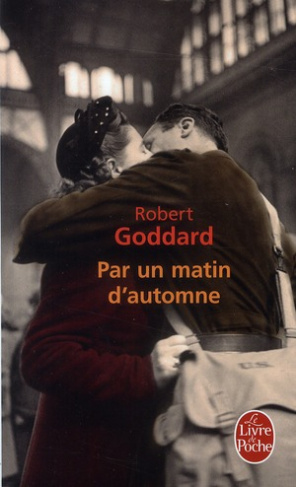
Par un matin d'automne
Un roman fascinant dans une atmosphère étouffante et feutrée, sur fond de Première Guerre Mondiale, avec un lourd secret de famille, se situant dans la campagne anglaise... Le tout dans des récits enchâssés ! PASSIONNANT !!!EN STOCKCOMMANDER11,10 €


Du même éditeur
-

Autre-Monde/05/Oz
Présentation de l'éditeur La guerre avec les Cyniks terminée, les Pans se croyaient enfin en sécurité. Mais Entropia se rapproche inexorablement et rien ne semble pouvoir arrêter sa course dévastatrice. Rien, sauf peut-être la réunion des Cœurs de la Terre. Pour L'Alliance des Trois, c'est la mission de la dernière chance. Objectif : l'Europe, dont on est sans nouvelles. Mais que reste-t-il, là-bas, de l'ancien monde ? Obstacles, pièges, trahisons, les jeunes héros parviendront-ils à leurs fins ? Le sort d'Autre-Monde est en jeu...EN STOCKCOMMANDER11,10 € -
Prague fatale
Résumé : Quand, en septembre 1941, Bernie Gunther revient du front russe, la capitale du Reich a bien changé. Pénurie, rationnement, couvre-feu, crimes. Berlin rime avec misère et terreur. La découverte d'un cadavre sur une voie de chemin de fer puis l'agression d'une jeune femme précipitent Bernie, affecté au département des homicides de la sinistre Kripo, dans de nouvelles enquêtes criminelles. Invité par le général SS Reinhard Heydrich à le rejoindre à Prague pour démasquer un espion infiltré dans son entourage, Bernie est à peine arrivé qu'un des fidèles du Reichsprotektor de Bohême-Moravie est assassiné. Bernie doit trouver le coupable. et vite, s'il veut sauver sa peau. Philip Kerr réussit la prouesse de dépeindre avec minutie les quelques mois ayant précédé l'assassinat d'Heydrich. Terrifiant et palpitant. Macha Séry, Le Monde des livres.ÉPUISÉVOIR PRODUIT11,10 € -
Naissance
Résumé : La naissance ne saurait être biologique : on choisit toujours ses parents. Naître, c'est semer ses géniteurs. Non pas tuer le père, mais tuer en nous le fils. Laisser son sang derrière, s'affranchir de ses gènes. Chercher, trouver d'autres parents : spirituels. Naître biologiquement, c'est à la portée du premier chiot venu, des grenouilles, des huîtres. Naître spirituellement, naître à soi-même, c'est à la portée de ceux-là seuls qui préfèrent les orphelins aux fils de famille, les adoptés aux programmés, les déviances aux descendances. Toute naissance est devant soi.ÉPUISÉVOIR PRODUIT19,30 € -
Les deux messieurs de Bruxelles
Présentation de l'éditeur « En amour, on croit être deux alors qu'on est trois. » Cinq nouvelles sur le mystère des sentiments inavoués. Une femme entretenue et gâtée par deux hommes qu’elle ne connaît pas. Un vieil homme qui se tue à la mort de son chien. Un mari qui rappelle constamment sa nouvelle femme au respect de l’époux précédent. Une mère généreuse qui se met à haïr un enfant. Un couple dont le bonheur repose sur un meurtre. Dans la lignée de Concerto à la mémoire d'un ange, de La rêveuse d'Ostende et d’Odette Toulemonde, Eric-Emmanuel Schmitt parle de l'amour sous toutes ses formes : conjugal, clandestin, paternel, filial, mais aussi, amour de l'art ou amour de l'humanité. À travers un suspense subtil et ensorcelant, il dévoile les secrets de plusieurs âmes pour déjouer la complexité du cœur humain.EN STOCKCOMMANDER9,95 €


De la même catégorie
-
Middlesex
À quarante et un ans, Cal aborde une autre étape de sa vie : intrigué par l'histoire de sa famille, une famille au fort degré de consanguinité, il a décidé de consigner une fois pour toutes l'errance mouvementée à travers le temps de ses lointains parents, et du gène à l'origine de sa « double » nature. Tout a commencé à Smyrne en 1922. Desdémone élève des vers à soie, elle vit avec son frère Lefty qui va les vendre sur le marché. Lorsque les Turcs mettent le feu à la ville, ils fuient et s'embarquent sur un paquebot. C'est l'occasion de « reconstruire » leur vie sur la seule chose finalement qu'ils n'ont pas perdue, leur désir. Durant le long voyage qui les mènera à Detroit, ils se marient, tout en gardant le silence sur la nature incestueuse de leur union. À Detroit, Lefty ouvre un bar. Leur fils, Milton, le reprend dans les années 50, après avoir épousé sa cousine Tessie. Il le fait prospérer au point de rêver à une autre affaire. Les émeutes sociales de Detroit en juillet 1967 précipitent son projet : le bar brûle et Milton investit dans une fabrique de hot dogs. Il fait fortune et peut enfin s'installer dans les beaux quartiers : il achète la maison la plus excentrique de Grosse Pointe, la banlieue résidentielle de Detroit, une maison « moderne », rue Middlesex. Et il envoie sa fille, Calliope, dans une école pour jeunes filles de bonne famille, jusqu'au jour où elle se lie avec l'une d'elles, une « rousse originaire de Grosse Pointe » qu'elle surnomme « L'Objet Obscur »...EN STOCKCOMMANDER10,80 € -
Le monde selon Garp
Jenny Fields ne veut pas d'homme dans sa vie mais elle désire un enfant. Ainsi naît Garp. Il grandit dans un collège où sa mère est infirmière. Puis ils décident tous deux d'écrire, et Jenny devient une icône du féminisme. Garp, heureux mari et père, vit pourtant dans la peur : dans son univers dominé par les femmes, la violence des hommes n'est jamais loin... Un livre culte, à l'imagination débridée, facétieuse satire de notre monde.EN STOCKCOMMANDER11,40 € -
L'hôtel New Hampshire
Un des ouvrages les plus célèbres de l'auteur du Monde selon Garp, L'Hotel New Hampshire contient tous les éléments que l'on retrouve habituellement dans son oeuvre. En effet, drôle, astucieuse, originale et enthousiasmante est la saga de cette famille peu conventionnelle. Nostalgique et passionnée est la voix de John Berry, le narrateur qui parle sans équivoque du rêve de son père : tenir un hôtel. La famille Berry, les deux parents et leurs cinq enfants, ainsi qu'un ours et un chien, vont ainsi vivre des péripéties hilarantes dans trois hôtels différents, sur deux continents. Avec gravité, parfois, et toujours avec un humour grinçant, Irving fascine le lecteur au travers de cette histoire peu banale. Frank, l'aîné, Franny, la plus étrange, John, Lily et Egg le cadet sont les héros d'aventures loufoques. Des déboires de leur labrador Sorrow, d'abord empaillé puis victime d'un cruel accident d'avion, aux désirs incestueux de John et Franny, c'est un monde étrange selon Irving auquel nous sommes ici confrontés. Ce roman fait d'Irving l'un des écrivains les plus talentueux et imaginatifs de sa génération.ÉPUISÉVOIR PRODUIT10,80 € -
Double Assassinat dans la rue Morgue ; La Lettre volée
Dupin est le roi de la déduction. Et quand il décide de mener l?enquête, c?est avant tout pour prouver que tout s?explique, même les histoires les plus extraordinaires. Afin d?illustrer ce propos, le narrateur nous raconte deux affaires que son jeune ami a résolues. D?abord, celle du double assassinat d?une mère et de sa fille, particulièrement affreux, survenu de nuit dans une rue sombre de Paris. Ensuite, celle de la cachette introuvable dans laquelle un maître chanteur avait placé une lettre volée fort compromettante pour sa propriétaire.ÉPUISÉVOIR PRODUIT3,95 €


