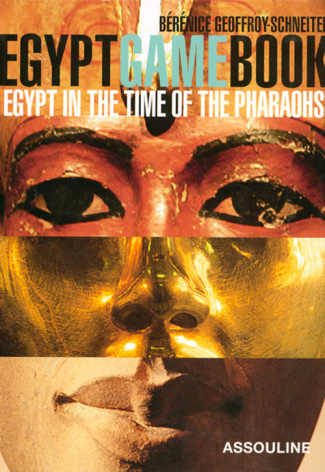
EGYPTE GAME BOOK
Que contient une pyramide? Pourquoi le chat est-il une divinité égyptienne? D'où vient l'obélisque de la Concorde? Comment distinguer les portraits de pharaons? Quelle fonction avait le Sphinx? Comment se passait une fête en Haute Égypte? Que mangeait Néfertiti? Érudit et ludique tout à la fois, Égypte Game Book aborde toutes les facettes de l'Égypte antique (de l'art à l'architecture, en passant par la vie quotidienne et la religion), sous la forme de questions/réponses, de jeux et de pistes visuelles à explorer. Reconstitutions de tombes, illustrations de sites et de musées, chronologie et lexique complètent ce panorama d'une Égypte toujours aussi captivante et fantasmée. Biographie: Archéologue et historienne de l'art de formation, Bérénice Geoffroyschneiter est journaliste et critique d'art. Elle a déjà publié plusieurs livres sur l'Égypte (dont Fayoum aux éditions Assouline). Elle a en outre rédigé tous les chapitres sur les antiquités égyptiennes, orientales et gréco-romaines pour le guide du musée du Louvre, édité par la RMN.
| Date de parution | 17/04/2008 |
|---|---|
| Poids | 980g |
| Largeur | 162mm |

| SKU: | 9782759401390 |
| wmi_id_distributeur: | Not set |
| Is Salable (from plugin): | No (Out of Stock) |
| Is Salable (direct MSI check): | No (Out of Stock) |
| Distributor Name: | Par défaut |
| Availability Value: | 0 |
| Availability Label: | Epuisé |
| Match Result: | |
| Default Availability (Config): | 0 - Epuisé |
| Raw Config Mapping: |
Array
(
    [_1772119784121_121] => Array
        (
            [id] => 12707000
            [name] => 12707000
            [availability] => 1
            [activation_attribute] => 1
        )

)
|
| EAN | 9782759401390 |
|---|---|
| Titre | EGYPTE GAME BOOK |
| Auteur | GEOFFROY-SCHNEITER B |
| Editeur | ASSOULINE |
| Largeur | 162 |
| Poids | 980 |
| Date de parution | 20080417 |
Pourquoi choisir Molière ?
Du même auteur
-
-
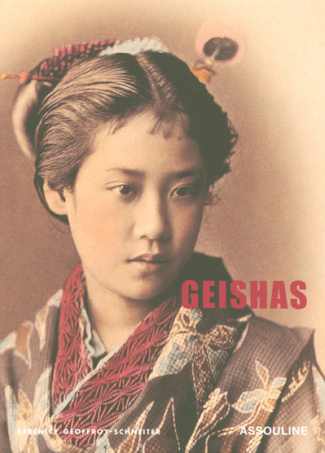
GEISHAS -ANGLAIS-
Geisha... at the slightest evocation of this little Japanese word there appears instantly before the eyes of Westerners a succession of images swaying gently between languorous voluptuousness and erotic fantasy. And yet, far from being a simple "creature" destined to satisfy carnal pleasures, the "geisha" sums up the quintessence of Japanese refinement. A source of inspiration for print artists who took the curve of a shoulder, the roundness of a breast and the delicacy of a neck to satiation, she embodies, above all, the ideal "Woman." This intelligent and cultured coutesan is simultaneously musician, poet and dancer. Westerners prefer to celebrate in her the myth of the girl-woman, mid-way between spouse and doll.ÉPUISÉVOIR PRODUIT24,95 € -
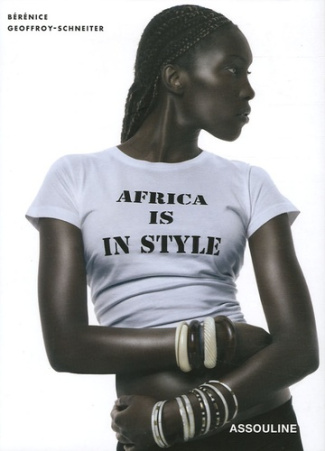
AFRICA IS IN STYLE
Résumé : It is not unusual to see the colors and hear the rhythms of Africa at runway shows in Paris, New York, or Milan. But despite its influence on Western designers, African fashion is still struggling to make itself known. With the ambitions pursuit of reinventing urban fashion, many young African designers are breaking away from the expectations imposed on them to infuse ethnic and folkloric themes into their work, but without ignoring rich textiles and fashion heritage. Bringing together archival images, illustrations, and photographs, Africa Is In Style paints a lively picture of this constantly evolving world, looking at designers and labels from Alphadi to Xuly Bët, from Oumou Sy to Juliette Ombang, Mickaël Kra, and others. This book accompanies the competition of young African stylists organized by the French Association for Artistic Action (AFAA) at the 2005 International Festival of African Fashion (FIMA) in Niamey, Niger.ÉPUISÉVOIR PRODUIT24,95 € -