

The Furniture of Carlo Mollino
Original and inventive, the work of Carlo Mollino (1905-73) is a unique chapter in the history of twentieth-century Italian design and architecture. For the first time, The Furniture of Carlo Mollino presents his complete works in furniture and interior design. Most of Mollino's furniture was site specific with one-off pieces created for specially commissioned interiors. Rarely available, these works are highly sought after by collectors and design enthusiasts alike. The 1948 table featured on the jacket and on page 143 recently created a new world auction record for a piece of twentieth-century furniture when it sold for almost $4 million, double the previous record. From the start, both Mollino's interests and personality set him apart from his contemporaries. Influenced by the Second Futurist and Surrealist avant-gardes, Mollino was a modern-day Renaissance man active in an impressive number of fields, such as aeronautics, automobile design, art, photography, set design, town planning, furniture, interior decoration and architecture. Through his extensive artistic research, he was able to combine various contrasting forms of expression, which gave his work a remarkable and unusual dynamic. Mollino's furniture was based on organic shapes, such as tree branches, animal horns and the human body, with the female profile especially promirent in his designs. Beyond this highly personal aesthetic, his workinvolved research into materials and technology, and the development of complex construction techniques, as with the celebrated bent plywood 'Arabesque' table of 1950. Illustrated with original drawings, sketches and archival photographs, The Furniture of Carlo Mollino represents the most comprehensive record of Mollino's design production. Realized in collaboration with the Museo Casa Mollino and written by the museum's curators, Napoleone and Fulvio Ferrari, this monograph offers an exceptional insight into Mollino's groundbreaking oeuvre.
| Nombre de pages | 240 |
|---|---|
| Date de parution | 21/04/2006 |
| Poids | 1 610g |
| Largeur | 257mm |

| SKU: | 9780714845326 |
| wmi_id_distributeur: | Not set |
| Is Salable (from plugin): | No (Out of Stock) |
| Is Salable (direct MSI check): | No (Out of Stock) |
| Distributor Name: | Par défaut |
| Availability Value: | 0 |
| Availability Label: | Epuisé |
| Match Result: | |
| Default Availability (Config): | 0 - Epuisé |
| Raw Config Mapping: |
Array
(
    [_1772119784121_121] => Array
        (
            [id] => 12707000
            [name] => 12707000
            [availability] => 1
            [activation_attribute] => 1
        )

)
|
| EAN | 9780714845326 |
|---|---|
| Titre | The Furniture of Carlo Mollino |
| Auteur | Ferrari Fulvio ; Ferrari Napoleone |
| Editeur | PHAIDON PRESS |
| Largeur | 257 |
| Poids | 1610 |
| Date de parution | 20060421 |
| Nombre de pages | 240,00 € |
Pourquoi choisir Molière ?
Du même auteur
-

-
-
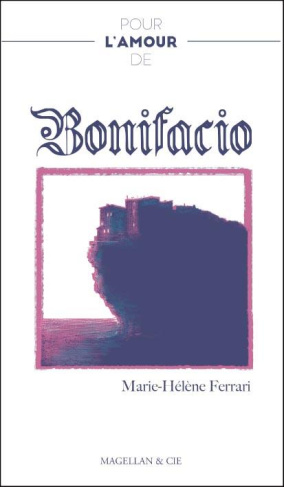
Pour l'amour de Bonifacio
C'est par la mer, idéalement, qu'il faut arriver à Bonifacio pour la première fois. Sillonner la crête huileuse des vagues, devant cette pâle muraille inexpugnable, chercher la faille. Porter sur le cuirassier blanc le regard carnassier, fiévreux et amoureux, concupiscent, exigeant, jaloux et délirant des Barbaresques, des pirates, des Pisans, des Génois. Il faut convoiter Bonifacio avant de la voir et la voir enfin pour la désirer. C'est une ville qui suscite l'envie, l'envie d'être là, de vivre là, de se lever là, déjeuner devant le soleil matinal et verdissant ou sous le charme de la splendeur suspendue du soleil couchant. C'est une ville à la peau pâle et douce, qu'on doit pourchasser de ses rêves." Sous la plume de Marie-Hélène Ferrari, l'une de ses plus fines observatrices, la ville de Bonifacio, prend toute sa singularité, à la fois par son histoire mouvementée et par sa vie quotidienne originale. Son point de vue corse est clairement assumé, d'autant plus qu'il s'agit du témoignage d'une femme libre qui a décidé de s'installer là, et pas ailleurs, au sud de l'île de beauté.ÉPUISÉVOIR PRODUIT10,00 €


Du même éditeur
-

JONAS WOOD
Résumé : In little more than a decade, Jonas Wood has established himself as one of the most talented and original painters of his generation. Exploring a variety of subjects that include friends, family members, sport celebrities, landscapes, domestic interiors, plants, his own work as well as that of other artists, Wood has developed a representational style where overlapping textures and disorienting compressions of space contribute to create images that transmit a universal sense of familiarity, even when they are deeply private. Defined by an awareness of the predominant role of photography in contemporary culture, yet deeply indebted to the history of painting and the possibilities still therein, a meaningful engagement and exploration with the present emerges. Wood's work challenges the notion of visual authenticity through a process of combining elements from different sources to create an image that is uniquely his. His works constitute a reflection of our present time while paying tobute to the great artists that have influenced Wood's practice, from modern masters Henri Matisse and Pablo Picasso, to California cantor David Hockney, and the celebrated duo of ceramists Michael Frimkess and Magdalena Suarez Frimkess In the Interview Mark Grotjahn and the artist discuss their backgrounds and how they were able to turn their passion into a profession while getting acquainted with the dynamics of the art world Helen Molesworth's Survey is a profound and comprehensive analysis of the historical context in which Wood's practice developed, and how the various elements that compose the fabric of his life inform his paintings. Ian Alteveer focuses on Wood's proclivity for representing interiors and how these resonate with the rest of his work and history of art in general. The comprehensive and previously unpublished selection of images in Studio Visit offers a rare insight into the artist's working environment, his process and sources of inspiration. Finally, Artist's Writings include excerpts from conversations with Corrina Peipon, Katy Donoghue and Jeong Yun Hyeong.ÉPUISÉVOIR PRODUIT39,95 € -
RUIN AND REDEMPTION IN ARCHITECTURE
Résumé : Explores the power of abandoned architecture, capturing the awe-inspiring drama of lost and forgotten, as well as reimagined and transformed structures across the globe. From Victorian gas holders, railway stations and factories, to World War Il flak towers and bunkers, from Gothic churches, as well as Modernist and Brutalist masterpieces, this book demonstrates that transforming our built heritage has the power to change lives, communities, neighbourhoods and cities the world over.ÉPUISÉVOIR PRODUIT49,95 € -


