

Titian, the Della Rovere Dynasty, and His Portrait of Guidobaldo II and his Son. Edition
Le portrait Klesch, par Titien, de Guidobaldo II avec son fils Francesco Maria représente le duc d'Urbino dans ses pleins pouvoirs de commandant suprême des troupes papales avec son héritier à ses côtés. Ce rare double portrait en pied vient seulement d'être attribué à Titien après avoir entrepris des analyses et une restauration minutieuses qui révèlent une belle peinture au style "non finito" avec de superbes touches d'empâtement totalement typiques au maître. Tout ceci est illustré et développé dans ce nouveau livre. Titian provided portraits for the greatest men and women of Europe, Charles V and Philip II of Spain primary among them. For years the Klesch portrait was dismissed as a workshop product - partly because poor condition hid its true quality, but also because it was not believed that Titian could have deigned to create one for Guidobaldo, whose father Guidobaldo della Rovere (1514-1574) and family had a long history of patronizing the artist. Recent research, however, has thrown Guidobaldo's geopolitical significance into relief. He was supreme commander of Venice, the Papal States and then Spain. He sent thousands of soldiers to the major conflicts of his day, particularly the defense of Malta (1565) and the Battle of Lepanto (1571) and his engineers were sought throughout Europe for their ingenuity. In this volume full of new research, Ian Verstegen reveals that Guidobaldo was not peripheral but central to Italian politics and was regarded at several points in history as a key figure who could bring peace or who could influence major conflicts on the Italian peninsula, particularly the War of Siena, and then Pope Paul IV's offensive war against Spain. Anne-Marie Eze gives the first comprehensive examination of the painting's provenance, outlining the portrait's vicissitudes and reception at different moments in its near 500-year history, reexamining received wisdom about its past ownership, and presenting new documentary evidence to expand on and fill gaps in our knowledge of its whereabouts. Finally, Matthew Hayes and Ian Kennedy reflect on the technique, date, recent conservation, and authorship of the painting, proving it to be a masterpiece that only the great Titian could have created.
| Nombre de pages | 80 |
|---|---|
| Date de parution | 05/11/2021 |
| Poids | 728g |
| Largeur | 222mm |

| SKU: | 9781913645090 |
| wmi_id_distributeur: | Not set |
| Is Salable (from plugin): | Yes (In Stock) |
| Is Salable (direct MSI check): | Yes (In Stock) |
| Distributor Name: | Par défaut |
| Availability Value: | 0 |
| Availability Label: | Epuisé |
| Match Result: | |
| Default Availability (Config): | 0 - Epuisé |
| Raw Config Mapping: |
Array
(
    [_1772119784121_121] => Array
        (
            [id] => 12707000
            [name] => 12707000
            [availability] => 1
            [activation_attribute] => 1
        )

)
|
| EAN | 9781913645090 |
|---|---|
| Titre | Titian, the Della Rovere Dynasty, and His Portrait of Guidobaldo II and his Son. Edition |
| Auteur | Eze Anne-Marie ; Hayes Matthew ; Kennedy Ian-G ; V |
| Editeur | HOLBERTON |
| Largeur | 222 |
| Poids | 728 |
| Date de parution | 20211105 |
| Nombre de pages | 80,00 € |
Pourquoi choisir Molière ?
Du même auteur
-

The Peacekeeper's Wife
Lorsqu'Issa rejoint, comme des milliers d'hommes, la mission pour le maintien de la paix au Congo, sa nouvelle épouse, Malika l'attend impuissante et les voit avec horreur s'embourber dans une guerre qui n'est pas la leur. Issa protège la base de l'ONU, empêche les rebelles de violer des enfants, patrouille aux frontières d'un territoire en ruines, bien que toujours riche. Dans leur maison à Ségol, Malika est écrasée par cette séparation et vit une descente aux enfers dévastatrice. Fatimata, sa belle-mère, désespérée par l'absence de son fils, l'accuse d'être une sorcière et la remet à un marabout, Bintou. Le conflit entre Malika et Fatimata a dégénéré, attisé par le feu de leurs deux solitudes. The Peacekeeper's Wife montre la catastrophe qu'est la guerre.ÉPUISÉVOIR PRODUIT20,50 € -

-
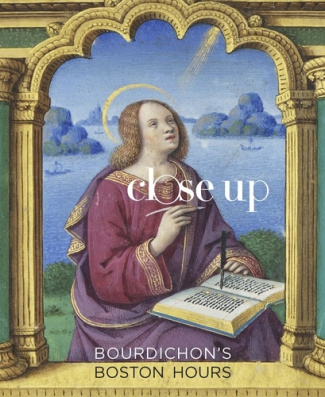
Bourdichon's Boston Hours
This absorbing book explores the crown jewel of the Isabella Stewart Gardner Museum's collection of rare books and manuscripts : Jean Bourdichon's Boston Hours. As court artist to King François I of France, Bourdichon produced paintings, books and even parade floats for the sovereign and his entourage. This publication accompanies the museum's first ever exhibition dedicated to this spectacular illuminated manuscript. Painter to two kings, Jean Bourdichon remains today one of the most celebrated artists of the French Renaissance. By age twenty-four, he was already serving as "peintre du roy, " a title which Bourdichon held for the rest of his life. His illustrious career at the French royal court led to a wide range of commissions- from portraits to wall maps to stained glass-but he is remembered principally for astonishing illuminated manuscripts. The peerless Grandes Heures for Queen Anne of Brittany remains the touchstone of this group which includes some of the most lavishly painted books of hours ever produced. One of these masterpieces-Bourdichon's Boston Hours-in the collection of the Isabella Stewart Gardner Museum is the subject of this book. Bourdichon's only intact book of hours in the United States was acquired by Isabella Stewart Gardner in 1890 and became the crown jewel of her collection of rare books and manuscripts. Leading scholars Nicholas Herman and Anne-Marie Eze explore its history in depth, shedding new light on the book's patronage and provenance- from the shelves of a wealthy Catholic landowner in Lincolnshire to the shop of a Venetian art and antiques dealer. This book is the latest in the Gardner's Close Up series, each installment focusing on an individual, outstanding work of art in the collection. This publication is the first dedicated to this rare treasure, and precedes an exhibition opening in summer 2022.ÉPUISÉVOIR PRODUIT20,00 €


Du même éditeur
-

Charleston: The Bloomsbury Muse
Accompanying an exhibition at Philip Mould & Company, this lavish catalogue tells the story of Vanessa Bell and Duncan Grant's enduring attachment to their home at Charleston Farmhouse, and showcases the work the artists produced between the two world wars. This stunning collection of artwork is beautifully presented alongside illuminating, illustrated essays, an interview and complete catalogue. Vanessa Bell and Duncan Grant's enduring attachment to their home at Charleston Farmhouse, its idyllic surroundings, and constant fl ow of visitors can be witnessed through their art. Beginning with radical modern works infl uenced by European trends - from painted furniture to depictions of food preparation in the kitchen, from the barns to the pond, the people to the household cat - this catalogue tells a story of over thirty years of astonishing artistic productivity. Charleston was not just the Bloomsbury Group's country retreat but a venue for their progressive social self-expression. It was also a family home. Focusing on Vanessa and Duncan's most productive years of creativity, between and including two world wars, this catalogue will explore how Charleston fed their artistic impulses and ideas to produce a glorious canon of art.ÉPUISÉVOIR PRODUIT32,00 € -
GOLD OF THE GREAT STEPPE - PEOPLE, POWER AND PRODUCTION
Résumé : This catalogue accompanies an exhibition which presents artefacts from burial mounds of the Saka people of East Kazakhstan, who, over 2, 500 years ago, lived lives rich in complexity. The Saka people occupied a landscape of seemingly endless steppe to the west, bounded by mountains to the east and south. Known to be fierce warriors, they were also skilled craftspeople, producing intricate gold and other metalwork. Their artistic expression indicates a deep respect for the animals around them - both real and imagined. They dominated their landscapes with huge burial mounds of sophisticated construction, burying their horses with elite members of their society. Recent excavations and analyses, led by archaeologists from Kazakhstan, have demonstrated that by looking through a scientific and social lens at what the Saka left behind we can paint a picture of a complex society. We can start to understand how it affected the way people lived, how they travelled, the things they made and what they believed in. Including contributions from experts at Nazarbayev University, Al-Farabi Kazakh National University, and the University of Cambridge, this publication details the results of new archaeological research from East Kazakhstan. It is richly illustrated with photographs of intricate gold artefacts in the Saka-Scythian animal style, landscape and aerial photography of the burial mounds, and details of the excavations and analyses. Grounded in decades of careful study, papers by the two leading Kazakhstani archaeologists of the East Kazakhstan region, Professors Zainolla Samashev and Abdesh Toleubayev, demonstrate current archaeological thinking in Kazakhstan today. These papers are complemented by material from a team of international scholars, which contribute the results of new scientific analyses on the artefacts, and wider Eurasian perspectives on the Saka people and their practice of horse burial.ÉPUISÉVOIR PRODUIT32,00 € -
-


