

ARTE POVERA
It was in 1967 that Italian art critic Germano Celant coined the term Arte Povera (poor art) to describe the work of a generation of young Italian artists. Emerging alongside such international movements as Land Art, Minimalism and Conceptual Art, Arte Povera used simple, "poor" gestures and materials - twigs, metals, glass, fabric, stone, even live animals - to turn away from traditional "high" art. They explored the relation between art and life as it is made manifest in natural processes or cultural dynamics. First exhibiting together in Italy in the late 1960s, artists Giovanni Anselmo, Alighiero Boetti, Pier Paolo Calzolari, Luciano Fabro, Jannis Kounellis, Mario Merz, Marisa Merz, Giulio Paolini, Pino Pascali, Giuseppe Penone, Michelangelo Pistoletto, Emilio Prini and Gilberto Zorio went on to become internationally renowned. Bridging the natural and the artificial, the urban and the rural, Mediterranean life and Western modernity, Arte Povera's impact still resounds.
| Date de parution | 02/10/2014 |
|---|---|
| Poids | 1 056g |
| Largeur | 250mm |

| SKU: | 9780714868592 |
| wmi_id_distributeur: | Not set |
| Is Salable (from plugin): | Yes (In Stock) |
| Is Salable (direct MSI check): | Yes (In Stock) |
| Distributor Name: | Par défaut |
| Availability Value: | 0 |
| Availability Label: | Epuisé |
| Match Result: | |
| Default Availability (Config): | 0 - Epuisé |
| Raw Config Mapping: |
Array
(
    [_1772119784121_121] => Array
        (
            [id] => 12707000
            [name] => 12707000
            [availability] => 1
            [activation_attribute] => 1
        )

)
|
| EAN | 9780714868592 |
|---|---|
| Titre | ARTE POVERA |
| Auteur | CHRISTOV BAKARG |
| Editeur | PHAIDON PRESS |
| Largeur | 250 |
| Poids | 1056 |
| Date de parution | 20141002 |
| Nombre de pages | 0,00 € |
Pourquoi choisir Molière ?
Du même auteur
-

-
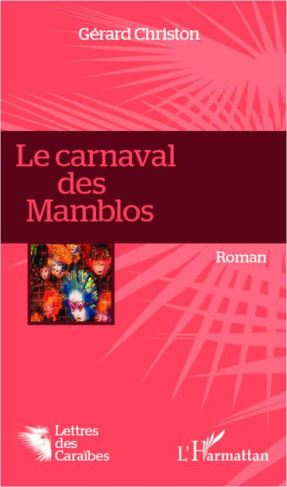
Le carnaval des Mamblos
Récit singulier des événements de juillet 1985 à Pointe - à - Pitre vécus par un citadin prisonnier de son appartement dans un HLM du centre-ville et qui assiste, impuissant, au saccage de la ville et à un drôle de ballet carnavalesque entre Mamblos et manifestants... Cette retraite forcée se révèle une occasion de revivre des passages de son enfance et de son adolescence...ÉPUISÉVOIR PRODUIT13,00 € -

Un ami
- Papa ! J'aimerais bien avoir un petit animal domestique... - Lequel voudrais-tu ? - Un hippocampe ! " Aussitôt, Pierre et son papa construisent un bathyscaphe et une fois celui-ci installé dans la baignoire, les voilà partis explorer les fonds marins. Arrivés à la grande barrière de corail, ils découvrent les hippocampes qui vivent là en famille. Mais lequel prendre ? Il n'est pas question de voler un bébé ou d'enlever les parents d'un petit hippocampe ! Alors, que veut Pierre exactement ?ÉPUISÉVOIR PRODUIT14,00 €


Du même éditeur
-

-
JONAS WOOD
Résumé : In little more than a decade, Jonas Wood has established himself as one of the most talented and original painters of his generation. Exploring a variety of subjects that include friends, family members, sport celebrities, landscapes, domestic interiors, plants, his own work as well as that of other artists, Wood has developed a representational style where overlapping textures and disorienting compressions of space contribute to create images that transmit a universal sense of familiarity, even when they are deeply private. Defined by an awareness of the predominant role of photography in contemporary culture, yet deeply indebted to the history of painting and the possibilities still therein, a meaningful engagement and exploration with the present emerges. Wood's work challenges the notion of visual authenticity through a process of combining elements from different sources to create an image that is uniquely his. His works constitute a reflection of our present time while paying tobute to the great artists that have influenced Wood's practice, from modern masters Henri Matisse and Pablo Picasso, to California cantor David Hockney, and the celebrated duo of ceramists Michael Frimkess and Magdalena Suarez Frimkess In the Interview Mark Grotjahn and the artist discuss their backgrounds and how they were able to turn their passion into a profession while getting acquainted with the dynamics of the art world Helen Molesworth's Survey is a profound and comprehensive analysis of the historical context in which Wood's practice developed, and how the various elements that compose the fabric of his life inform his paintings. Ian Alteveer focuses on Wood's proclivity for representing interiors and how these resonate with the rest of his work and history of art in general. The comprehensive and previously unpublished selection of images in Studio Visit offers a rare insight into the artist's working environment, his process and sources of inspiration. Finally, Artist's Writings include excerpts from conversations with Corrina Peipon, Katy Donoghue and Jeong Yun Hyeong.ÉPUISÉVOIR PRODUIT39,95 € -

