

Du fond de mon coeur. Lettres à ses nièces
De Jane Austen on sait peu de choses, les sources de renseignements étant rares. Les lettres qu'elle écrivit à ses trois nièces préférées dressent un portrait émouvant de l'auteur d'Orgueil et préjugés et témoignent de son caractère vif et généreux. Restée célibataire et sans enfants, c'est avec l'affection d'une grande soeur attentionnée qu'elle guide et conseille ses jeunes nièces. Elle leur parle d'écriture, de stratégie amoureuse, de sa vie à la campagne, avec l'humour et l'élégance qui font le sel de ses romans. Ces échanges révèlent une touchante intimité, et l'on acquiert bien vite la conviction que Jane Austen n'avait rien à envier à ses attachantes héroïnes. Austen se montre tendre et enjouée. Ses lettres poursuivent l'exploration de la tension inépuisable entre " raison " et " sentiment ", passion et conventions sociales. Un prolongement attachant de son univers romanesque.
| Nombre de pages | 192 |
|---|---|
| Date de parution | 04/01/2017 |
| Poids | 122g |
| Largeur | 110mm |

| SKU: | 9782253070009 |
| wmi_id_distributeur: | 09556601 |
| Is Salable (from plugin): | Yes (In Stock) |
| Is Salable (direct MSI check): | Yes (In Stock) |
| Distributor Name: | Par défaut |
| Availability Value: | 0 |
| Availability Label: | Epuisé |
| Match Result: | |
| Default Availability (Config): | 0 - Epuisé |
| Raw Config Mapping: |
Array
(
    [_1772119784121_121] => Array
        (
            [id] => 12707000
            [name] => 12707000
            [availability] => 1
            [activation_attribute] => 1
        )

)
|
| EAN | 9782253070009 |
|---|---|
| Titre | Du fond de mon coeur. Lettres à ses nièces |
| Auteur | Austen Jane |
| Editeur | LGF |
| Largeur | 110 |
| Poids | 122 |
| Date de parution | 20170104 |
| Nombre de pages | 192,00 € |
Pourquoi choisir Molière ?
Du même auteur
-

Pride and prejudice (VO)
When Elizabeth Bennet first meets eligible bachelor Fitzwilliam Darcy, she thinks him arrogant and conceited; he is indifferent to her good looks and lively mind. When she later discovers that Darcy has involved himself in the troubled relationship between his friend Bingley and her beloved sister Jane, she is determined to dislike him more than ever. In the sparkling comedy of manners that follows, Jane Austen shows the folly of judging by first impressions and superbly evokes the friendships,gossip and snobberies of provincial middle-class life.EN STOCKCOMMANDER12,00 € -

Sense and sensibility (VO)
Extrait Chapter OneThe family of Dashwood had been long settled in Sussex (1). Their estate was large (2), and their residence was at Norland Park, in the centre of their property, where, for many generations, they had lived in so respectable a manner, as to engage (3) the general good opinion of their surrounding acquaintance. The late owner of this estate was a single man, who lived to a very advanced age, and who for many years of his life, had a constant companion and housekeeper (4) in his sister. But her death, which happened ten years before his own, produced a great alteration in his home; for to supply her loss, he invited and received into his house the family of his nephew Mr. Henry Dashwood, the legal inheritor of the Norland estate (5), and the person to whom he intended to bequeath it. In the society of his nephew and niece, and their children, the old Gentleman's days were comfortably spent. His attachment to them all increased. The constant attention of Mr. and Mrs. Henry Dashwood to his wishes, which proceeded not merely from interest, but from goodness of heart, gave him every degree of solid comfort which his age could receive; and the cheerfulness of the children added a relish to his existence.By a former marriage, Mr. Henry Dashwood had one son: by his present lady, three daughters. The son, a steady respectable young man, was amply provided for by the fortune of his mother, which had been large, and half of which devolved on him on his coming of age (6). By his own marriage, likewise, which happened soon afterwards, he added to his wealth (7). To him therefore the succession to the Norland estate was not so really important as to his sisters; for their fortune, independent of what might arise to them from their father's inheriting that property, could be but small. Their mother had nothing, and their father only seven thousand pounds in his own disposal; for the remaining moiety of his first wife's fortune was also secured to her child, and he had only a life interest in it (8).The old Gentleman died; his will was read, and like almost every other will, gave as much disappointment as pleasure (9). He was neither so unjust, nor so ungrateful, as to leave his estate from his nephew;—but he left it to him on such terms as destroyed half the value of the bequest. Mr. Dashwood had wished for it more for the sake of his wife and daughters than for himself or his son:—but to his son, and his son's son, a child of four years old, it was secured, in such a way, as to leave to himself no power of providing for those who were most dear to him, and who most needed a provision, by any charge on the estate (10), or by any sale of its valuable woods (11). The whole was tied up for the benefit of this child (12), who, in occasional visits with his father and mother at Norland (13), had so far gained on the affections of his uncle, by such attractions as are by no means unusual in children of two or three years old; an imperfect articulation, an earnest desire of having his own way, many cunning tricks, and a great deal of noise, as to outweigh all the value of all the attention which, for years, he had received from his niece and her daughters (14). He meant not to be unkind however, and, as a mark of his affection for the three girls, he left them a thousand pounds a-piece.Mr. Dashwood's disappointment was, at first, severe; but his temper was cheerful and sanguine, and he might reasonably hope to live many years, and by living economically, lay by a considerable sum from the produce of an estate already large, and capable of almost immediate improvement (15). But the fortune, which had been so tardy in coming, was his only one twelvemonth. He survived his uncle no longer; and ten thousand pounds, including the late legacies, was all that remained for his widow and daughters (16).His son was sent for, as soon as his danger was known (17), and to him Mr. Dashwood recommended, with all the strength and urgency which illness could command, the interest of his mother-in-law (18) and sisters.Mr. John Dashwood had not the strong feelings of the rest of the family; but he was affected by a recommendation of such a nature at such a time, and he promised to do every thing in his power to make them comfortable. His father was rendered easy by such an assurance, and Mr. John Dashwood had then leisure to consider how much there might prudently be in his power to do for them.He was not an ill-disposed young man, unless to be rather cold hearted, and rather selfish, is to be ill-disposed: but he was, in general, well respected; for he conducted himself with propriety in the discharge of his ordinary duties. Had he married a more amiable woman, he might have been made still more respectable (19) than he was:—he might even have been made amiable (20) himself; for he was very young when he married, and very fond of his wife. But Mrs. John Dashwood was a strong caricature of himself;—more narrow-minded (21) and selfish.When he gave his promise to his father, he meditated within himself to increase the fortunes of his sisters by the present of a thousand pounds a-piece. He then really thought himself equal to it. The prospect of four thousand a-year, in addition to his present income, besides the remaining half of his own mother's fortune (22), warmed his heart and made him feel capable of generosity (23).—"Yes, he would give them three thousand pounds: it would be liberal and handsome! It would be enough to make them completely easy. Three thousand pounds! he could spare so considerable a sum with little inconvenience."—He thought of it all day long, and for many days successively, and he did not repent (26).No sooner was his father's funeral over, than Mrs. John Dashwood, without sending any notice of her intention to her mother-in-law, arrived with her child and their attendants. No one could dispute her right to come; the house was her husband's from the moment of his father's decease; but the indelicacy of her conduct was so much the greater, and to a woman in Mrs. Dashwood's situation, with only common feelings, must have been highly unpleasing (27),—but in her mind there was a sense of honour so keen, a generosity so romantic, that any offence of the kind, by whomsoever given or received, was to her a source of immoveable disgust (28). Mrs. John Dashwood had never been a favourite with any of her husband's family; but she had had no opportunity, till the present, of shewing them with how little attention to the comfort of other people she could act when occasion required it.So acutely did Mrs. Dashwood feel this ungracious behaviour, and so earnestly did she despise her daughter-in-law for it, that, on the arrival of the latter, she would have quitted the house for ever (29), had not the entreaty of her eldest girl induced her first to reflect on the propriety of going, and her own tender love for all her three children determined her afterwards to stay, and for their sakes avoid a breach with their brother.Elinor, this eldest daughter whose advice was so effectual, possessed a strength of understanding, and coolness of judgment, which qualified her, though only nineteen (30), to be the counsellor of her mother, and enabled her frequently to counteract, to the advantage of them all, that eagerness of mind in Mrs. Dashwood which must generally have led to imprudence. She had an excellent heart;—her disposition was affectionate, and her feelings were strong; but she knew how to govern them (31): it was a knowledge which her mother had yet to learn, and which one of her sisters had resolved never to be taught.Marianne's abilities were, in many respects, quite equal to Elinor's (32). She was sensible and clever; but eager in every thing; her sorrows, her joys, could have no moderation. She was generous, amiable, interesting (33): she was every thing but prudent. The resemblance between her and her mother was strikingly great.Elinor saw, with concern, the excess of her sister's sensibility (34); but by Mrs. Dashwood it was valued and cherished. They encouraged each other now in the violence of their affliction. The agony of grief which overpowered them at first, was voluntarily renewed, was sought for, was created again and again (35). They gave themselves up wholly to their sorrow, seeking increase of wretchedness in every reflection that could afford it (36), and resolved against ever admitting (37) consolation in future. Elinor, too, was deeply afflicted; but still she could struggle, she could exert herself. She could consult with her brother, could receive her sister-in-law on her arrival, and treat her with proper attention; and could strive to rouse her mother to similar exertion, and encourage her to similar forbearance.Margaret, the other sister, was a good-humoured well-disposed girl; but as she had already imbibed a good deal of Marianne's romance (38), without having much of her sense, she did not, at thirteen, bid fair to equal her sisters at a more advanced period of life.Annotations1. Sussex: A county south of London.2. The gentry that dominates this and other Jane Austen novels were based in rural estates, whose agricultural profits formed the principal source of their income.3. engage: gain.4. “Housekeeper” was often used to refer to a high-ranking female servant. Here it means that his sister supervised the household, which would include directing and managing the servants, deciding on meals, ordering supplies for the house, and attending to the needs of residents and guests. These tasks were normally performed by women, so a man without a wife would usually have a sister or other unmarried female relative live with him for this purpose. Since unmarried women rarely had homes of their own, she would benefit by gaining a secure home in which she exercised a position of importance and influence.5. When a landowner lacked sons, a paternal nephew, as Henry Dashwood’s... --Ce texte fait référence à l'édition Broché .EN STOCKCOMMANDER5,00 € -

Northanger abbey
Austen is the hot property of the entertainment world with new feature film versions of Persuasion and Sense and Sensibility on the silver screen and Pride and Prejudice hitting the TV airwaves on PBS. Such high visibility will inevitably draw renewed interest in the original source materials. These new Modern Library editions offer quality hardcovers at affordable prices.Copyright 1996 Reed Business Information, Inc.ÉPUISÉVOIR PRODUIT7,80 € -
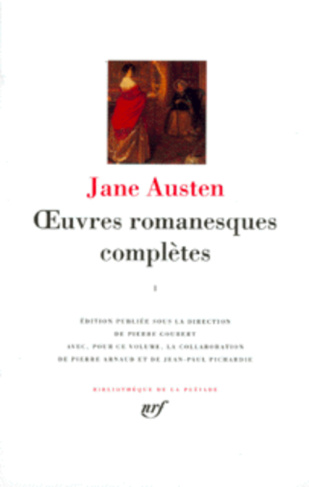
Oeuvres romanesques complètes. Tome 1
Ce volume contient les oeuvres suivantes: L'Abbaye de Northanger - Le Coeur et la Raison - Orgueil et préjugé. Appendices: Lady Susan - Les Watson. Oeuvres de jeunesse: Amour et amitié - Histoire de l'Angleterre. Avec, pour ce volume, la collaboration de Pierre Arnaud et de Jean-Paul Pichardie.EN STOCKCOMMANDER68,00 €


Du même éditeur
-

L'Ombre douce
Résumé : 1954, dans un hôpital militaire de Hanoi, Yann, un soldat breton, est soigné par Mai. Ils tombent amoureux, mais le père de la jeune fille l'a promise à un autre. Elle s'insurge, elle est bannie de la famille... Ils se marient en toute hâte, avant que Yann rejoigne la cuvette de Diên Biên Phu. Après la défaite de l'armée française, Yann est emmené dans un camp d'internement. Dans une langue poétique, avec grâce et pudeur, Hoai Huong Nguyen peint le Vietnam d'hier et un amour qui affronte la violence d'une guerre. L'histoire bouleversante de Mai et de Yann laisse percer la lumière des humbles héros qui croient à la liberté et à l'absolu malgré les vicissitudes de l'Histoire. Tout est là : l'Histoire, l'histoire, la manière de les faire s'imbriquer, la netteté de l'écriture, la volonté de trouver une parole adéquate à la tragédie, la complexité des psychologies... "Un instant de littérature pure." Yann Moix, Le Figaro littéraire.ÉPUISÉVOIR PRODUIT7,20 € -
La reine de la baltique
Revue de presse [Une] intrigue bien ficelée et un suspense permanent. --Version Fémina --Ce texte fait référence à l'édition Broché .EN STOCKCOMMANDER11,30 € -
Autre-Monde/05/Oz
Présentation de l'éditeur La guerre avec les Cyniks terminée, les Pans se croyaient enfin en sécurité. Mais Entropia se rapproche inexorablement et rien ne semble pouvoir arrêter sa course dévastatrice. Rien, sauf peut-être la réunion des Cœurs de la Terre. Pour L'Alliance des Trois, c'est la mission de la dernière chance. Objectif : l'Europe, dont on est sans nouvelles. Mais que reste-t-il, là-bas, de l'ancien monde ? Obstacles, pièges, trahisons, les jeunes héros parviendront-ils à leurs fins ? Le sort d'Autre-Monde est en jeu...EN STOCKCOMMANDER11,10 € -
Prague fatale
Résumé : Quand, en septembre 1941, Bernie Gunther revient du front russe, la capitale du Reich a bien changé. Pénurie, rationnement, couvre-feu, crimes. Berlin rime avec misère et terreur. La découverte d'un cadavre sur une voie de chemin de fer puis l'agression d'une jeune femme précipitent Bernie, affecté au département des homicides de la sinistre Kripo, dans de nouvelles enquêtes criminelles. Invité par le général SS Reinhard Heydrich à le rejoindre à Prague pour démasquer un espion infiltré dans son entourage, Bernie est à peine arrivé qu'un des fidèles du Reichsprotektor de Bohême-Moravie est assassiné. Bernie doit trouver le coupable. et vite, s'il veut sauver sa peau. Philip Kerr réussit la prouesse de dépeindre avec minutie les quelques mois ayant précédé l'assassinat d'Heydrich. Terrifiant et palpitant. Macha Séry, Le Monde des livres.ÉPUISÉVOIR PRODUIT11,10 €


De la même catégorie
-
Correspondance 1923-1941
C?est au cours d?un dîner, en 1922, que Virginia Woolf rencontra Vita Sackville-West, qui allait être, jusqu?à sa mort, une des personnes les plus importantes de sa vie. En lisant leur correspondance, qui se poursuivit sur plus de dix-huit ans, on ne peut douter de la profondeur de la passion indestructible qui lia ces deux femmes exceptionnelles. Vita-Sackville West excellait dans l?art de la correspondance, que ce soit pour dépeindre les jardins anglais, les montagnes de la Perse ou les déserts de l?Arizona. Ses lettres nous transportent dans une époque où Gide et Proust choquaient, où un procès en obscénité était intenté à une romancière accusée de saphisme. Virginia Woolf, pour sa part, se débattait sans cesse dans les affres de l?enfantement de « sa » vérité de l?écriture. À travers cette correspondance, c?est un nouvel aspect de son fascinant et multiple visage que nous apprenons à connaître.ÉPUISÉVOIR PRODUIT10,50 € -
Ecrits sur Rimbaud
Résumé : A son arrivée à Paris, en septembre 1871, Rimbaud apparaît à Verlaine comme un enfant "au visage parfaitement ovale d'ange en exil". Ce sera le début d'une relation tumultueuse, qui prendra brusquement fin en juillet 1873, à Bruxelles. Témoin privilégié de son compagnon, Verlaine en devient alors le promoteur et l'éditeur : inaugurant "en quelque sorte la gloire" de Rimbaud, comme il l'écrit lui-même, il distribue ses souvenirs dans des essais et des poèmes émus. Ces pages, ici recueillies, restituent le visage authentique du poète "aux semelles de vent".ÉPUISÉVOIR PRODUIT7,70 € -
Lettres choisies de la famille Brontë (1821-1855)
Voici une famille hors norme, qui a produit quatre écrivains, tous fauchés en plein vol (morts avant quarante ans), soudés autour du père, vivant et créant ensemble, entre mélancolie et humour noir. Face aux drames des jours sombres, le clan fait bloc. Face à la difficulté d'être une femme qui écrit, les soeurs Brontë publient d'abord sous pseudonyme masculin (Charlotte, Jane Eyre ; Emily, Les Hauts de Hurlevent), souhaitant que leurs livres les consolent du destin, rendent possible l'amour et soient assez puissants pour enlever au lecteur tout désir d'en connaître l'auteur. Leur succès en a décidé autrement. Leur voeu d'invisibilité est aujourd'hui rompu, leur idée de l'intime nous est devenue étrangère. Il est temps de reconnaître qu'une oeuvre embrasse aussi tout ce qui lui a permis de surgir. Cette correspondance passionnante en est la preuve. Sur les mille lettres échangées par le père et les quatre enfants, entre 1821 (mort de la mère) et 1855 (mort de Charlotte), cette édition en retient trois cent dix. On entre dans ce recueil sur la pointe des pieds, comme si quelqu'un, en ouvrant une porte dérobée, nous faisait signe de nous approcher et nous rendait témoins de l'extraordinaire force de vie qui anime ces cinq êtres : le désir de prendre son envol, d'aimer, d'écrire - de vivre malgré tout.ÉPUISÉVOIR PRODUIT10,50 € -
Journal
Le succès des Aventures d'Alice au pays des merveilles et La Traversée du miroir, l'intérêt porté par les amateurs à ses travaux de photographe ont fait de Lewis Carroll un des auteurs de langue anglaise les plus connus du grand public. Pourtant il aura fallu plus de cinquante ans dans son pays et plus de quatre-vingts en France pour que les chercheurs, curieux ou simples lecteurs puissent prendre connaissance de ces Journaux qui révèlent un Charles Lutvidge Dogson très différent de la légende. On ne trouvera pas dans ces Journaux de révélations sensationnelles qui expliqueraient l'attitude réticente de la famille, en fait surtout soucieuse de tranquillité et ne prêtant pas à ces pages-là pendant des années un intérêt suffisant, mais on découvrira un gentleman plein de bonté, de simplicité, passionné de théâtre, d'opéra, courant les expositions, déambulant dans Londres pour tout voir et rencontrer les gens qui compteront. Passionnant document sur le père d'Alice, ces Journaux constituent aussi un extraordinaire reportage sur la vie quotidienne à Londres au XIXe siècle.ÉPUISÉVOIR PRODUIT12,00 €


