

Raison et sentiments ; Orgueil et préjugés ; Northanger Abbey. Trois chefs-d'oeuvre illustrés
Depuis leur parution, entre 1811 et 1818, les romans de Jane Austen sont devenus au fil du temps des incontournables de la littérature mondiale. Tendrement ironiques et doucement cruels, ils doivent leur immense succès au subtil mélange que ce grand écrivain aux allures de cousine pauvre a su réaliser entre la romance et la critique sociale, la délicatesse et l'humour. Cet album grand format est illustré de plus de 60 dessins dont 22 hors-texte en couleurs. Les illustrateurs, Hugh Thomson (1860-1920) et Charles Edmund Brock (1870-1938), sont tous les deux célèbres pour avoir illustré avec humour et élégance les romans de Jane Austen.. Née en 1775, fille d'un modeste clergyman, Jane Austen vit dans le presbytère d'une petite paroisse du Hampshire, au milieu d'une famille nombreuse et aimante. Si son père ne peut lui offrir des études, il lui ouvre sans réserve sa riche bibliothèque. La même liberté entoure ses essais d'écriture, qu'elle entreprend dès l'âge de douze ans. Elle a vingt et un ans lorsqu'elle commence, avec les encouragements de son père, la première version de ce qui deviendra Orgueil et préjugés. Mais ce n'est que seize ans plus tard, en 1811, qu'un éditeur accepte de publier Raison et sentiments signé "par une dame". Le succès est immédiat et, deux ans plus tard, paraît Orgueil et préjugés, puis ce sont Mansfield Park et Emma. Deux autres romans, Persuasion et Northanger Abbey, seront édités après sa mort, survenue le 18 juillet 1817.
| Nombre de pages | 832 |
|---|---|
| Date de parution | 28/09/2017 |
| Poids | 2 670g |
| Largeur | 209mm |

| SKU: | 9782258146785 |
| wmi_id_distributeur: | Not set |
| Is Salable (from plugin): | Yes (In Stock) |
| Is Salable (direct MSI check): | Yes (In Stock) |
| Distributor Name: | Par défaut |
| Availability Value: | 0 |
| Availability Label: | Epuisé |
| Match Result: | |
| Default Availability (Config): | 0 - Epuisé |
| Raw Config Mapping: |
Array
(
    [_1772119784121_121] => Array
        (
            [id] => 12707000
            [name] => 12707000
            [availability] => 1
            [activation_attribute] => 1
        )

)
|
| EAN | 9782258146785 |
|---|---|
| Titre | Raison et sentiments %3B Orgueil et préjugés %3B Northanger Abbey. Trois chefs-d'oeuvre illustrés |
| Auteur | Austen Jane ; Privat Jean ; Leconte Valentine ; Pr |
| Editeur | OMNIBUS |
| Largeur | 209 |
| Poids | 2670 |
| Date de parution | 20170928 |
| Nombre de pages | 832,00 € |
Pourquoi choisir Molière ?
Du même auteur
-

Northanger abbey
Austen is the hot property of the entertainment world with new feature film versions of Persuasion and Sense and Sensibility on the silver screen and Pride and Prejudice hitting the TV airwaves on PBS. Such high visibility will inevitably draw renewed interest in the original source materials. These new Modern Library editions offer quality hardcovers at affordable prices.Copyright 1996 Reed Business Information, Inc.ÉPUISÉVOIR PRODUIT7,80 € -
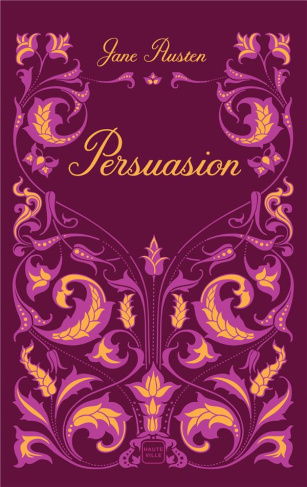
Persuasion
Résumé : Lorsque Anne Elliot et Frederick Wentworth se rencontrent, ils tombent amoureux et se fiancent secrètement. Mais la marraine d'Anne, considérant le jeune homme peu convenable, la persuade de mettre fin à cette relation. Après avoir fait fortune dans la Marine, Wentworth, devenu capitaine, revient en Angleterre et croise de nouveau Anne après des années de silence. Le temps, les non-dits et les incompréhensions auront-ils raison de leur coeur ?EN STOCKCOMMANDER7,95 € -
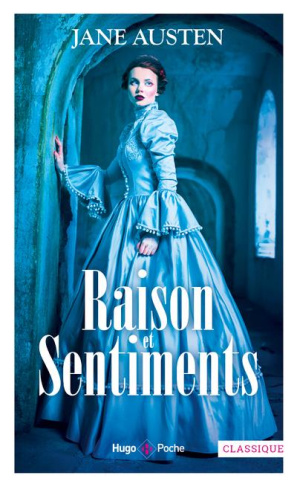
Raison et sentiments
Un classique qui n'a pas pris une ride ! A la mort de leur père, les soeurs Dashwood quittent avec leur mère le comté de Sussex pour s'établir dans la chaumière de Barton, en Devonshire. Pour la raisonnable Elinor et la sensible Maria, toutes deux ravissantes et en âge de se marier, c'est une nouvelle vie qui commence. Traduction : Isabelle de Montolieu (1751-1832). Ecrit vers 1795, Sense and Sensibility parait à Londres en 1811, et sera traduit en français dès 1815. Ce classique de la littérature de la Lady des lettres anglaises qui a influencé nombre d'écrivains majeurs, tels Henry James, Virginia Woolf ou Katherine Mansfield, est considéré comme le premier grand roman anglais du XIXe siècle. De nombreux auteurs de New Romance - Christina Lauren Anna Todd, Audrey Carlan, Mia Sheridan, Laurelin Paige, Brittainy C. Cherry, ou Lexi Ryan... - s'accordent à considérer ce grand classique de la littérature anglaise comme une référence incontournable et une source féconde d'inspiration.ÉPUISÉVOIR PRODUIT6,65 € -

Sense and sensibility (VO)
Extrait Chapter OneThe family of Dashwood had been long settled in Sussex (1). Their estate was large (2), and their residence was at Norland Park, in the centre of their property, where, for many generations, they had lived in so respectable a manner, as to engage (3) the general good opinion of their surrounding acquaintance. The late owner of this estate was a single man, who lived to a very advanced age, and who for many years of his life, had a constant companion and housekeeper (4) in his sister. But her death, which happened ten years before his own, produced a great alteration in his home; for to supply her loss, he invited and received into his house the family of his nephew Mr. Henry Dashwood, the legal inheritor of the Norland estate (5), and the person to whom he intended to bequeath it. In the society of his nephew and niece, and their children, the old Gentleman's days were comfortably spent. His attachment to them all increased. The constant attention of Mr. and Mrs. Henry Dashwood to his wishes, which proceeded not merely from interest, but from goodness of heart, gave him every degree of solid comfort which his age could receive; and the cheerfulness of the children added a relish to his existence.By a former marriage, Mr. Henry Dashwood had one son: by his present lady, three daughters. The son, a steady respectable young man, was amply provided for by the fortune of his mother, which had been large, and half of which devolved on him on his coming of age (6). By his own marriage, likewise, which happened soon afterwards, he added to his wealth (7). To him therefore the succession to the Norland estate was not so really important as to his sisters; for their fortune, independent of what might arise to them from their father's inheriting that property, could be but small. Their mother had nothing, and their father only seven thousand pounds in his own disposal; for the remaining moiety of his first wife's fortune was also secured to her child, and he had only a life interest in it (8).The old Gentleman died; his will was read, and like almost every other will, gave as much disappointment as pleasure (9). He was neither so unjust, nor so ungrateful, as to leave his estate from his nephew;—but he left it to him on such terms as destroyed half the value of the bequest. Mr. Dashwood had wished for it more for the sake of his wife and daughters than for himself or his son:—but to his son, and his son's son, a child of four years old, it was secured, in such a way, as to leave to himself no power of providing for those who were most dear to him, and who most needed a provision, by any charge on the estate (10), or by any sale of its valuable woods (11). The whole was tied up for the benefit of this child (12), who, in occasional visits with his father and mother at Norland (13), had so far gained on the affections of his uncle, by such attractions as are by no means unusual in children of two or three years old; an imperfect articulation, an earnest desire of having his own way, many cunning tricks, and a great deal of noise, as to outweigh all the value of all the attention which, for years, he had received from his niece and her daughters (14). He meant not to be unkind however, and, as a mark of his affection for the three girls, he left them a thousand pounds a-piece.Mr. Dashwood's disappointment was, at first, severe; but his temper was cheerful and sanguine, and he might reasonably hope to live many years, and by living economically, lay by a considerable sum from the produce of an estate already large, and capable of almost immediate improvement (15). But the fortune, which had been so tardy in coming, was his only one twelvemonth. He survived his uncle no longer; and ten thousand pounds, including the late legacies, was all that remained for his widow and daughters (16).His son was sent for, as soon as his danger was known (17), and to him Mr. Dashwood recommended, with all the strength and urgency which illness could command, the interest of his mother-in-law (18) and sisters.Mr. John Dashwood had not the strong feelings of the rest of the family; but he was affected by a recommendation of such a nature at such a time, and he promised to do every thing in his power to make them comfortable. His father was rendered easy by such an assurance, and Mr. John Dashwood had then leisure to consider how much there might prudently be in his power to do for them.He was not an ill-disposed young man, unless to be rather cold hearted, and rather selfish, is to be ill-disposed: but he was, in general, well respected; for he conducted himself with propriety in the discharge of his ordinary duties. Had he married a more amiable woman, he might have been made still more respectable (19) than he was:—he might even have been made amiable (20) himself; for he was very young when he married, and very fond of his wife. But Mrs. John Dashwood was a strong caricature of himself;—more narrow-minded (21) and selfish.When he gave his promise to his father, he meditated within himself to increase the fortunes of his sisters by the present of a thousand pounds a-piece. He then really thought himself equal to it. The prospect of four thousand a-year, in addition to his present income, besides the remaining half of his own mother's fortune (22), warmed his heart and made him feel capable of generosity (23).—"Yes, he would give them three thousand pounds: it would be liberal and handsome! It would be enough to make them completely easy. Three thousand pounds! he could spare so considerable a sum with little inconvenience."—He thought of it all day long, and for many days successively, and he did not repent (26).No sooner was his father's funeral over, than Mrs. John Dashwood, without sending any notice of her intention to her mother-in-law, arrived with her child and their attendants. No one could dispute her right to come; the house was her husband's from the moment of his father's decease; but the indelicacy of her conduct was so much the greater, and to a woman in Mrs. Dashwood's situation, with only common feelings, must have been highly unpleasing (27),—but in her mind there was a sense of honour so keen, a generosity so romantic, that any offence of the kind, by whomsoever given or received, was to her a source of immoveable disgust (28). Mrs. John Dashwood had never been a favourite with any of her husband's family; but she had had no opportunity, till the present, of shewing them with how little attention to the comfort of other people she could act when occasion required it.So acutely did Mrs. Dashwood feel this ungracious behaviour, and so earnestly did she despise her daughter-in-law for it, that, on the arrival of the latter, she would have quitted the house for ever (29), had not the entreaty of her eldest girl induced her first to reflect on the propriety of going, and her own tender love for all her three children determined her afterwards to stay, and for their sakes avoid a breach with their brother.Elinor, this eldest daughter whose advice was so effectual, possessed a strength of understanding, and coolness of judgment, which qualified her, though only nineteen (30), to be the counsellor of her mother, and enabled her frequently to counteract, to the advantage of them all, that eagerness of mind in Mrs. Dashwood which must generally have led to imprudence. She had an excellent heart;—her disposition was affectionate, and her feelings were strong; but she knew how to govern them (31): it was a knowledge which her mother had yet to learn, and which one of her sisters had resolved never to be taught.Marianne's abilities were, in many respects, quite equal to Elinor's (32). She was sensible and clever; but eager in every thing; her sorrows, her joys, could have no moderation. She was generous, amiable, interesting (33): she was every thing but prudent. The resemblance between her and her mother was strikingly great.Elinor saw, with concern, the excess of her sister's sensibility (34); but by Mrs. Dashwood it was valued and cherished. They encouraged each other now in the violence of their affliction. The agony of grief which overpowered them at first, was voluntarily renewed, was sought for, was created again and again (35). They gave themselves up wholly to their sorrow, seeking increase of wretchedness in every reflection that could afford it (36), and resolved against ever admitting (37) consolation in future. Elinor, too, was deeply afflicted; but still she could struggle, she could exert herself. She could consult with her brother, could receive her sister-in-law on her arrival, and treat her with proper attention; and could strive to rouse her mother to similar exertion, and encourage her to similar forbearance.Margaret, the other sister, was a good-humoured well-disposed girl; but as she had already imbibed a good deal of Marianne's romance (38), without having much of her sense, she did not, at thirteen, bid fair to equal her sisters at a more advanced period of life.Annotations1. Sussex: A county south of London.2. The gentry that dominates this and other Jane Austen novels were based in rural estates, whose agricultural profits formed the principal source of their income.3. engage: gain.4. “Housekeeper” was often used to refer to a high-ranking female servant. Here it means that his sister supervised the household, which would include directing and managing the servants, deciding on meals, ordering supplies for the house, and attending to the needs of residents and guests. These tasks were normally performed by women, so a man without a wife would usually have a sister or other unmarried female relative live with him for this purpose. Since unmarried women rarely had homes of their own, she would benefit by gaining a secure home in which she exercised a position of importance and influence.5. When a landowner lacked sons, a paternal nephew, as Henry Dashwood’s... --Ce texte fait référence à l'édition Broché .EN STOCKCOMMANDER5,00 €


Du même éditeur
-

Ecrire le désir. 2000 ans de littérature érotique féminine illustrée
Conteuses, philosophes, illustres mystiques, mystérieuses inconnues, aristocrates ou courtisanes, libertines et poétesses, contraintes parfois de se travestir ou d'avancer masquées, de Sappho, en 600 avant J.-C., à Pauline Réage qui publie, en 1954, Histoire d'O, ces femmes ont osé prendre la plume pour écrire la volupté. Des textes qui viennent de l'enfer des bibliothèques et révèlent tout un monde, celui de l'anonymat, des éditeurs clandestins, des alcôves. Car, plus encore que les hommes, les femmes doivent ruser pour contourner la censure, et usent à l'envi de pseudonymes et d'artifices multiples.ÉPUISÉVOIR PRODUIT29,00 € -
1001 films à voir avant de mourir. 11e édition
Résumé : En 1001 films, du Voyage dans la Lune de Méliès à Black Panther de Ryan Coogler, voici un vaste panorama du cinéma mondial. Westerns, films noirs ou fantastiques, dessins animés, avant-garde ou superproductions, les oeuvres qui ont compté dans la construction du 7e art sont présentées et commentées par une équipe internationale de critiques. Abondamment illustrée de photos et d'affiches originales, émaillée de citations et d'anecdotes pittoresques ou insolites, cette "filmothèque idéale" consacre les classiques et révèle des chefs-d'oeuvre plus discrets ou méconnus. Pour voir, revoir, découvrir. Et vivre toujours avec émotion ces Mille et Une Nuits de l'amoureux de cinéma.ÉPUISÉVOIR PRODUIT33,00 € -
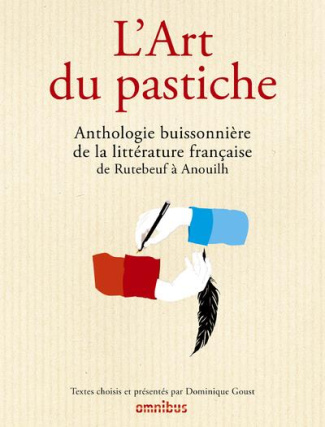
L'art du pastiche. Anthologie buissonnière de la littérature français de Rutebeuf à Anhouilh
Le pastiche est un véritable genre littéraire, certes mineur, qui fut en vogue jusqu'au début du XXe siècle et auquel se sont frottés les plus grands écrivains. Avec le pastiche, on se coule dans la plume d'un auteur pour restituer et faire revivre sa langue et son esprit - il se distingue de la parodie, qui se contente de reproduire ses tics par la caricature, et de la supercherie, qui cherche à abuser critiques et spécialistes. La présente anthologie regroupe un choix de plus de 200 textes courts des plus grands écrivains de notre patrimoine littéraire sous l'habit que leur donnent leurs imitateurs les plus habiles. Le résultat est cette " anthologie buissonnière " qui revisite non sans humour l'histoire des lettres où l'on retrouve tous les grands noms, via des textes qu'ils n'ont pas signés mais que l'on reconnaît pourtant. Leurs pasticheurs, d'ailleurs, sont eux-mêmes des écrivains réputés : ainsi trouve-t-on Rutebeuf par Jean Moréas, Montaigne par La Bruyère, Molière par Courteline, Voltaire par Anatole France, Stendhal par Jacques Laurent, Verlaine par Arthur Rimbaud, Chateaubriand par Gustave Flaubert, Flaubert par Marcel Proust, Proust par André Maurois... et bien sûr des textes de pasticheurs virtuoses tels que Nicolas Chatelain, Charles Pornon ou Henri Bellaunay. Ces textes sont accompagnés de notices sur les pasticheurs et les pastichés par Dominique Goust, qui signe également une longue préface sur l'importance du pastiche dans les lettres.ÉPUISÉVOIR PRODUIT24,00 € -
Jalna : La saga des Whiteoak Tome 3 : Finch Whiteoak ; Le Maître de Jalna ; La moisson de Jalna ; Le
Préfacé par Alexandra Lapierre, voici le troisième volume de la saga des Whiteoak, Jalna, l'un des plus grands succès de la littérature nord-américaine qui a fait rêver des millions de lectrices et de lecteurs du monde entier. Finch Whiteoak, Le Maître de Jalna, La Moisson de Jalna, Le Destin de Wakefield Préfacée par Katherine Pancol, Geneviève Brisac, Alexandra Lapierre et Françoise Nyssen, voici l'intégrale de la saga des Whiteoak, Jalna, best-seller international depuis la parution du premier des seize romans en 1927, aussi réputée qu'Autant en emporte le vent de Margaret Mitchell. La saga des Whiteoak Tome 3 Finch Whiteoak Finch, heureux d'avoir aidé Renny et Piers à rétablir la situation à Jalna, quitte le Canada. Il va rejoindre en Angleterre sa tante Augusta et son frère Eden, le poète, la brebis galeuse des Whiteoak. C'est là qu'il rencontre Sarah, belle, riche et égoïste. Finch est violemment attiré par la jeune femme mais, inconsciemment, il la sent dangereuse. Le Maître de Jalna Un domaine aussi vaste que Jalna est bien lourd à entretenir. Meg, qui a enfin épousé Maurice, voudrait le vendre, à la grande fureur de Renny. Sarah, déjà veuve et très riche, débarque un jour à Jalna : elle est libre maintenant, peut-être décidera-t-elle enfin Finch à l'épouser. La Moisson de Jalna Le combat que Renny a entrepris pour tenter de sauver Jalna de la faillite, l'épuise. Un soir de détresse, il a trompé sa femme Alayne. Celle-ci l'apprend et sa fierté supporte mal l'offense. Elle quitte Jalna. Renny, qui n'avait désiré qu'un moment d'oubli, se sent incapable de continuer seul cette lutte épuisante. Il aime Alayne et pour la première fois de sa vie, il est prêt à s'humilier, à implorer son pardon. Le Destin de Wakefield La vocation religieuse de Wakefield a été de courte durée. En ce début 1939, il vit à Londres, résolu à se faire un nom dans le théâtre. Il obtient un rôle dans une création, en même temps qu'une jeune comédienne, Molly Griffith, dont il tombe amoureux. Préface de Alexandra Lapierre : Grand prix des lectrices de Elle en 1993 pour Fanny Stevenson, elle vient de publier Belle Green.ÉPUISÉVOIR PRODUIT29,00 €



De la même catégorie
-
Oeuvres complètes. Romans, nouvelles, essais, correspondance
Résumé : " Mr. Greenleaf accourait vers elle, brandissant son fusil, et elle le vit venir à elle, bien qu'elle ne regardât pas dans sa direction. Elle le vit s'approcher en longeant la lisière d'un cercle invisible, et la ligne d'arbres était béante derrière lui, et ses pieds ne foulaient que le vide. Il visa l'oeil de la bête et fit feu quatre fois. Elle n'entendit pas les détonations, mais elle perçut le tremblement de l'énorme corps alors que le taureau s'affaissait et l'entraînait dans sa chute, rivée à sa tête au point qu'elle semblait, lorsque Mr. Greenleaf fut près d'elle, se pencher sur l'oreille de l'animal et lui chuchoter une ultime révélation.". Mon mal vient de plus loin, " Greenleaf ".ÉPUISÉVOIR PRODUIT32,00 € -
Oeuvres
Résumé : Si Truman Capote est surtout connu pour deux titres, De sang-froid et Petit déjeuner chez Tiffany, il fut extraordinairement doué pour des genres très variés : romans, nouvelles, journalisme, enquêtes, portraits sont connus. Mais il mérite tout autant d'être redécouvert comme auteur de récits de voyage, de scénarios, de pièces de théâtre, et même d'une comédie musicale. Ses entretiens comme sa correspondance, sont émaillés de phrases cinglantes - on le traitait volontiers de langue de vipère... - qui, avec le recul du temps, semblent le plus souvent pertinentes malgré leur extrême méchanceté : il écrit ainsi à propos d'un roman qui vient de paraître " J'ai sûrement lu pire, mais je ne m'en souviens pas "... Cet homme immensément cultivé fut aussi l'un des pionniers, sinon l'inventeur, d'un genre littéraire, avec De sang-froid qui répond à un défi : " transformer la vérité en fiction ou la fiction en vérité ". Il aura beaucoup d'imitateurs, mais peu parviendront à atteindre la même profondeur. Enfin, ce " solitaire mondain " a connu " tout le monde " en Europe et aux Etats-Unis, a été photographié par les plus grands photographes (Richard Avedon, Cartier-Bresson ou le futur lord Snowdon), était présent dans les shows de télévision et dans les pages de Playboy et de Vanity Fair. À travers ses écrits comme à travers les documents présentés dans le " Vie et oeuvre " c'est tout le milieu littéraire et artistique de son temps qui revit.ÉPUISÉVOIR PRODUIT32,00 € -
Walden ou la Vie dans les bois
Le temps n'est que la rivière où je m'en vais pêcher. Je bois son eau; et tout en buvant, je vois le fond sablonneux et remarque comme il est peu profond. Son faible courant entraîne toutes choses, mais l'éternité demeure. J'aimerais boire plus profond; pêcher dans le ciel, dont le fond caillouteux est semé d'étoiles. Je ne peux compter jusqu'à un. Je ne connais pas la première lettre de l'alphabet. J'ai toujours regretté de ne pas être aussi sage que le jour de ma naissance.ÉPUISÉVOIR PRODUIT10,50 € -
1984 (VO)
George Orwell's dystopian masterpiece, Nineteen Eighty-Four is perhaps the most pervasively influential book of the twentieth century, making famous Big Brother, newspeak and Room 101.'Who controls the past controls the future: who controls the present controls the past'Hidden away in the Record Department of the sprawling Ministry of Truth, Winston Smith skilfully rewrites the past to suit the needs of the Party. Yet he inwardly rebels against the totalitarian world he lives in, which demands absolute obedience and controls him through the all-seeing telescreens and the watchful eye of Big Brother, symbolic head of the Party. In his longing for truth and liberty, Smith begins a secret love affair with a fellow-worker Julia, but soon discovers the true price of freedom is betrayal.Eric Arthur Blair (1903-1950), better known by his pen-name, George Orwell, was born in India, where his father worked for the Civil Service. An author and journalist, Orwell was one of the most prominent and influential figures in twentieth-century literature. His unique political allegory Animal Farm was published in 1945, and it was this novel, together with the dystopia of Nineteen Eighty-Four (1949), which brought him world-wide fame. All his novels and non-fiction, including Burmese Days (1934), Down and Out in Paris and London (1933), The Road to Wigan Pier (1937) and Homage to Catalonia (1938) are published in Penguin Modern Classics. If you enjoyed Nineteen Eighty-Four, you might like Orwell's Animal Farm, also available in Penguin Great Orwell.'His final masterpiece... enthralling and indispensible for understanding modern history'Timothy Garton-Ash, New York Review of Books'The book of the twentieth century... haunts us with an ever-darker relevance'IndependentEN STOCKCOMMANDER10,00 €


