

Emma. Edition collector
Redécouvrez l'un des plus grands classiques de la littérature anglaise grâce à une édition inédite en France. Publiée en 1896 en Angleterre, cette édition comporte des illustrations de Hugh Thomson, célèbre illustrateur victorien, dont le travail sur Orgueil et Préjugés est devenu une référence dans le monde entier. Depuis qu'Emma a réussi à arranger le mariage de son ancienne gouvernante, elle se met en tête d'unir tous les gens qui l'entourent. Désormais maîtresse de maison, elle s'attribue ce rôle d'entremetteuse sans savoir que son inexpérience des êtres et des coeurs peut la mener à de nombreuses déconvenues. Entre les nouvelles rencontres, les visites de Mr Knightley, un vieil ami de la famille, et ses projets de mariage, Emma finit par se perdre elle-même sans s'apercevoir que ce dont elle rêve depuis toujours risque de lui échapper à tout jamais... Publié en 1815, Emma est l'un des romans les plus novateurs et les plus aboutis de Jane Austen. A la fois comédie de moeurs et roman d'apprentissage, il dépeint avec ironie une héroïne attachante qui s'initie malgré elle à l'amour. Considérée comme l'une des plus grandes romancières de son temps, Jane Austen (1775-1817) charme depuis toujours ses nombreux lecteurs grâce à son style, à son ironie et à ses portraits satiriques. Disparue trop jeune, elle n'aura eu le temps d'écrire que six romans, ainsi que quelques autres pièces littéraires. Lus à travers le monde entier, les écrits de Jane Austen resteront à jamais les fidèles témoignages de la régence anglaise.
| Nombre de pages | 537 |
|---|---|
| Date de parution | 14/11/2018 |
| Poids | 630g |
| Largeur | 143mm |

| SKU: | 9782811230913 |
| wmi_id_distributeur: | 09556601 |
| Is Salable (from plugin): | Yes (In Stock) |
| Is Salable (direct MSI check): | Yes (In Stock) |
| Distributor Name: | Par défaut |
| Availability Value: | 0 |
| Availability Label: | Epuisé |
| Match Result: | |
| Default Availability (Config): | 0 - Epuisé |
| Raw Config Mapping: |
Array
(
    [_1772119784121_121] => Array
        (
            [id] => 12707000
            [name] => 12707000
            [availability] => 1
            [activation_attribute] => 1
        )

)
|
| EAN | 9782811230913 |
|---|---|
| Titre | Emma. Edition collector |
| Auteur | Austen Jane ; Thomson Hugh ; Goubert Pierre ; Lapr |
| Editeur | HAUTEVILLE |
| Largeur | 143 |
| Poids | 630 |
| Date de parution | 20181114 |
| Nombre de pages | 537,00 € |
Pourquoi choisir Molière ?
Du même auteur
-
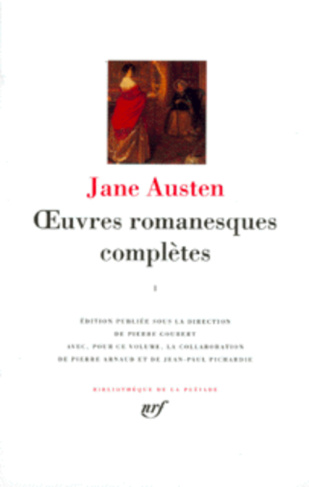
Oeuvres romanesques complètes. Tome 1
Ce volume contient les oeuvres suivantes: L'Abbaye de Northanger - Le Coeur et la Raison - Orgueil et préjugé. Appendices: Lady Susan - Les Watson. Oeuvres de jeunesse: Amour et amitié - Histoire de l'Angleterre. Avec, pour ce volume, la collaboration de Pierre Arnaud et de Jean-Paul Pichardie.EN STOCKCOMMANDER68,00 € -

Sense and sensibility (VO)
Extrait Chapter OneThe family of Dashwood had been long settled in Sussex (1). Their estate was large (2), and their residence was at Norland Park, in the centre of their property, where, for many generations, they had lived in so respectable a manner, as to engage (3) the general good opinion of their surrounding acquaintance. The late owner of this estate was a single man, who lived to a very advanced age, and who for many years of his life, had a constant companion and housekeeper (4) in his sister. But her death, which happened ten years before his own, produced a great alteration in his home; for to supply her loss, he invited and received into his house the family of his nephew Mr. Henry Dashwood, the legal inheritor of the Norland estate (5), and the person to whom he intended to bequeath it. In the society of his nephew and niece, and their children, the old Gentleman's days were comfortably spent. His attachment to them all increased. The constant attention of Mr. and Mrs. Henry Dashwood to his wishes, which proceeded not merely from interest, but from goodness of heart, gave him every degree of solid comfort which his age could receive; and the cheerfulness of the children added a relish to his existence.By a former marriage, Mr. Henry Dashwood had one son: by his present lady, three daughters. The son, a steady respectable young man, was amply provided for by the fortune of his mother, which had been large, and half of which devolved on him on his coming of age (6). By his own marriage, likewise, which happened soon afterwards, he added to his wealth (7). To him therefore the succession to the Norland estate was not so really important as to his sisters; for their fortune, independent of what might arise to them from their father's inheriting that property, could be but small. Their mother had nothing, and their father only seven thousand pounds in his own disposal; for the remaining moiety of his first wife's fortune was also secured to her child, and he had only a life interest in it (8).The old Gentleman died; his will was read, and like almost every other will, gave as much disappointment as pleasure (9). He was neither so unjust, nor so ungrateful, as to leave his estate from his nephew;—but he left it to him on such terms as destroyed half the value of the bequest. Mr. Dashwood had wished for it more for the sake of his wife and daughters than for himself or his son:—but to his son, and his son's son, a child of four years old, it was secured, in such a way, as to leave to himself no power of providing for those who were most dear to him, and who most needed a provision, by any charge on the estate (10), or by any sale of its valuable woods (11). The whole was tied up for the benefit of this child (12), who, in occasional visits with his father and mother at Norland (13), had so far gained on the affections of his uncle, by such attractions as are by no means unusual in children of two or three years old; an imperfect articulation, an earnest desire of having his own way, many cunning tricks, and a great deal of noise, as to outweigh all the value of all the attention which, for years, he had received from his niece and her daughters (14). He meant not to be unkind however, and, as a mark of his affection for the three girls, he left them a thousand pounds a-piece.Mr. Dashwood's disappointment was, at first, severe; but his temper was cheerful and sanguine, and he might reasonably hope to live many years, and by living economically, lay by a considerable sum from the produce of an estate already large, and capable of almost immediate improvement (15). But the fortune, which had been so tardy in coming, was his only one twelvemonth. He survived his uncle no longer; and ten thousand pounds, including the late legacies, was all that remained for his widow and daughters (16).His son was sent for, as soon as his danger was known (17), and to him Mr. Dashwood recommended, with all the strength and urgency which illness could command, the interest of his mother-in-law (18) and sisters.Mr. John Dashwood had not the strong feelings of the rest of the family; but he was affected by a recommendation of such a nature at such a time, and he promised to do every thing in his power to make them comfortable. His father was rendered easy by such an assurance, and Mr. John Dashwood had then leisure to consider how much there might prudently be in his power to do for them.He was not an ill-disposed young man, unless to be rather cold hearted, and rather selfish, is to be ill-disposed: but he was, in general, well respected; for he conducted himself with propriety in the discharge of his ordinary duties. Had he married a more amiable woman, he might have been made still more respectable (19) than he was:—he might even have been made amiable (20) himself; for he was very young when he married, and very fond of his wife. But Mrs. John Dashwood was a strong caricature of himself;—more narrow-minded (21) and selfish.When he gave his promise to his father, he meditated within himself to increase the fortunes of his sisters by the present of a thousand pounds a-piece. He then really thought himself equal to it. The prospect of four thousand a-year, in addition to his present income, besides the remaining half of his own mother's fortune (22), warmed his heart and made him feel capable of generosity (23).—"Yes, he would give them three thousand pounds: it would be liberal and handsome! It would be enough to make them completely easy. Three thousand pounds! he could spare so considerable a sum with little inconvenience."—He thought of it all day long, and for many days successively, and he did not repent (26).No sooner was his father's funeral over, than Mrs. John Dashwood, without sending any notice of her intention to her mother-in-law, arrived with her child and their attendants. No one could dispute her right to come; the house was her husband's from the moment of his father's decease; but the indelicacy of her conduct was so much the greater, and to a woman in Mrs. Dashwood's situation, with only common feelings, must have been highly unpleasing (27),—but in her mind there was a sense of honour so keen, a generosity so romantic, that any offence of the kind, by whomsoever given or received, was to her a source of immoveable disgust (28). Mrs. John Dashwood had never been a favourite with any of her husband's family; but she had had no opportunity, till the present, of shewing them with how little attention to the comfort of other people she could act when occasion required it.So acutely did Mrs. Dashwood feel this ungracious behaviour, and so earnestly did she despise her daughter-in-law for it, that, on the arrival of the latter, she would have quitted the house for ever (29), had not the entreaty of her eldest girl induced her first to reflect on the propriety of going, and her own tender love for all her three children determined her afterwards to stay, and for their sakes avoid a breach with their brother.Elinor, this eldest daughter whose advice was so effectual, possessed a strength of understanding, and coolness of judgment, which qualified her, though only nineteen (30), to be the counsellor of her mother, and enabled her frequently to counteract, to the advantage of them all, that eagerness of mind in Mrs. Dashwood which must generally have led to imprudence. She had an excellent heart;—her disposition was affectionate, and her feelings were strong; but she knew how to govern them (31): it was a knowledge which her mother had yet to learn, and which one of her sisters had resolved never to be taught.Marianne's abilities were, in many respects, quite equal to Elinor's (32). She was sensible and clever; but eager in every thing; her sorrows, her joys, could have no moderation. She was generous, amiable, interesting (33): she was every thing but prudent. The resemblance between her and her mother was strikingly great.Elinor saw, with concern, the excess of her sister's sensibility (34); but by Mrs. Dashwood it was valued and cherished. They encouraged each other now in the violence of their affliction. The agony of grief which overpowered them at first, was voluntarily renewed, was sought for, was created again and again (35). They gave themselves up wholly to their sorrow, seeking increase of wretchedness in every reflection that could afford it (36), and resolved against ever admitting (37) consolation in future. Elinor, too, was deeply afflicted; but still she could struggle, she could exert herself. She could consult with her brother, could receive her sister-in-law on her arrival, and treat her with proper attention; and could strive to rouse her mother to similar exertion, and encourage her to similar forbearance.Margaret, the other sister, was a good-humoured well-disposed girl; but as she had already imbibed a good deal of Marianne's romance (38), without having much of her sense, she did not, at thirteen, bid fair to equal her sisters at a more advanced period of life.Annotations1. Sussex: A county south of London.2. The gentry that dominates this and other Jane Austen novels were based in rural estates, whose agricultural profits formed the principal source of their income.3. engage: gain.4. “Housekeeper” was often used to refer to a high-ranking female servant. Here it means that his sister supervised the household, which would include directing and managing the servants, deciding on meals, ordering supplies for the house, and attending to the needs of residents and guests. These tasks were normally performed by women, so a man without a wife would usually have a sister or other unmarried female relative live with him for this purpose. Since unmarried women rarely had homes of their own, she would benefit by gaining a secure home in which she exercised a position of importance and influence.5. When a landowner lacked sons, a paternal nephew, as Henry Dashwood’s... --Ce texte fait référence à l'édition Broché .EN STOCKCOMMANDER5,00 € -

Pride and prejudice (VO)
When Elizabeth Bennet first meets eligible bachelor Fitzwilliam Darcy, she thinks him arrogant and conceited; he is indifferent to her good looks and lively mind. When she later discovers that Darcy has involved himself in the troubled relationship between his friend Bingley and her beloved sister Jane, she is determined to dislike him more than ever. In the sparkling comedy of manners that follows, Jane Austen shows the folly of judging by first impressions and superbly evokes the friendships,gossip and snobberies of provincial middle-class life.EN STOCKCOMMANDER12,00 € -

Orgueil et préjugés
Pour les Anglaises du XIXe siècle, hors du mariage, point de salut! Romanesques en diable, les démêlés de la caustique Elizabeth Bennett et du vaniteux Mr Darcy n'ont pas pris une ride! Mais il faut parfois savoir renoncer à son orgueil. Et accepter la tombée des masques pour voir clair dans la nuit. Un classique universel, drôle et émouvant.ÉPUISÉVOIR PRODUIT6,90 €


Du même éditeur
-

Persuasion
Lorsque Anne Elliot et Frederick Wentworth se rencontrent, ils tombent amoureux et se fiancent secrètement. Mais la marraine d'Anne, considérant le jeune homme peu convenable, la persuade de mettre fin â cette relation. Après avoir fait fortune dans la Marine, Wentworth, devenu capitaine, revient en Angleterre et croise de nouveau Anne après des années de silence. Le temps, les non-dits et les incompréhensions auront-ils raison de leur coeur ?ÉPUISÉVOIR PRODUIT7,90 € -
A un fil
Georgie est au trente-sixième dessous : cela faisait des années que son mariage battait de l'aile, mais cette fois, c'est la fin. Alors que son mari est parti passer Noël avec ses enfants dans le Nebraska, elle reste seule à Los Angeles, car elle a pris la fâcheuse habitude de faire passer sa carrière avant sa famille. C'est alors qu'elle tombe sur un vieux téléphone jaune à cadran rotatif. Contre toute attente, cette antiquité va lui permettre de faire un bond de quinze ans en arrière et de communiquer avec Neal dans le passé. N'est-ce pas l'occasion rêvée pour résoudre leurs désaccords et retomber amoureux comme au premier jour ?ÉPUISÉVOIR PRODUIT7,90 € -
La mariée de Ceylan
Dense et incroyablement évocateur, La Mariée de Ceylan est un best en matière de fiction historique. Tout simplement captivant. " The Sunday express " Le moment était venu. Elle leva la main pour essuyer ses larmes. Elle interrompit son geste, ouvrit la bouche pour parler, mais hésita. En cet instant, en cette fraction de seconde qui allait à jamais changer sa vie, elle en était tout simplement incapable. " A dix-neuf ans, Gwendolyn Hooper débarque à Ceylan pleine d'espoir et impatiente de retrouver son nouvel époux, un riche planteur de thé. Mais l'homme qui l'accueille se révèle rapidement très différent de celui dont elle est tombée amoureuse à Londres. Sombre et distant, Laurence se consacre à son travail, laissant sa jeune épouse découvrir seule la plantation. Folle de joie lorsqu'elle tombe enceinte, Gwen sombre pourtant vite dans un cauchemar. Lors de l'accouchement, la jeune mère est confrontée à un terrible dilemme et doit faire un choix... Si un jour la vérité éclate, Laurence parviendra-t-il à comprendre et à lui pardonner ? Woman & Home Reader's Choice Award pour la meilleure fiction historique sentimentale de l'année 2016 Mot de l'éditeur : " Ce pays n'est que couleurs. " Tout en nuances, La Mariée de Ceylan nous transporte dans un univers empreint de mystères et de suspense où l'air embaume les épices et où les couleurs dominent. Faisant par moment penser à Rebecca de Daphnée du Maurier, ce roman met en lumière les agitations politiques qui ont secoué Ceylan pendant les années 1920 et les conflits intérieurs d'une femme qui se retrouve seule face à un secret trop lourd pour elle. " Un retour dans le passé jubilatoire et singulier : c'est Rebecca sous les tropiques. " The Independent " Une histoire de jalousie, de tromperie, de secrets et de coeurs brisés. Rebondissements et suspense insufflent un souffle gothique à l'intrigue haletante de Dinah Jefferies. " Romance Times Book Review " Dinah Jefferies redonne vie à l'exotisme de Ceylan lors de l'époque coloniale. Maîtres et serviteurs, riches et pauvres, cannelle et jasmin, ombre et lumière : mais sans jamais perdre de vue le racisme inhérent au colonialisme en décomposition qui sert de toile de fond politique à ce dangereux drame humain où la tension est palpable. " Lancashire Evening Post " Dinah Jefferies a réussi une fois encore à créer un roman haut en couleur et sous haute tension. Un récit poignant et fascinant. " Isabel Wolff " A Ceylan, dans les années 1920, une jeune Anglaise épouse un séduisant planteur de thé, veuf d'un premier mariage, et découvre les terribles secrets qui le hantent. Les conséquences en seront catastrophiques. " GoodreadsÉPUISÉVOIR PRODUIT8,20 € -
99 jours avec toi
Emma et Nathan ne survivront peut-être pas à leurs vingt-sept ans. Jeune bibliothécaire dévouée à sa mère malade, Emma vit par procuration à travers les pages de ses romans préférés. Moniteur de parachutisme, Nathan passe ses journées à faire des acrobaties aériennes et vit à mille à l'heure. Tout les oppose, mais le destin a de grands projets pour eux. Alors que leur vie est bouleversée du jour au lendemain, ils se font la promesse de vivre chaque jour comme si c'était le dernier. Emma n'a jamais embrassé un homme, bu de champagne, ni voyagé à l'étranger. Nathan, lui, n'a jamais été amoureux. Leur temps est compté, mais est-il trop tard pour s'aimer ?ÉPUISÉVOIR PRODUIT18,90 €


De la même catégorie
-
Oeuvres
Résumé : Si Truman Capote est surtout connu pour deux titres, De sang-froid et Petit déjeuner chez Tiffany, il fut extraordinairement doué pour des genres très variés : romans, nouvelles, journalisme, enquêtes, portraits sont connus. Mais il mérite tout autant d'être redécouvert comme auteur de récits de voyage, de scénarios, de pièces de théâtre, et même d'une comédie musicale. Ses entretiens comme sa correspondance, sont émaillés de phrases cinglantes - on le traitait volontiers de langue de vipère... - qui, avec le recul du temps, semblent le plus souvent pertinentes malgré leur extrême méchanceté : il écrit ainsi à propos d'un roman qui vient de paraître " J'ai sûrement lu pire, mais je ne m'en souviens pas "... Cet homme immensément cultivé fut aussi l'un des pionniers, sinon l'inventeur, d'un genre littéraire, avec De sang-froid qui répond à un défi : " transformer la vérité en fiction ou la fiction en vérité ". Il aura beaucoup d'imitateurs, mais peu parviendront à atteindre la même profondeur. Enfin, ce " solitaire mondain " a connu " tout le monde " en Europe et aux Etats-Unis, a été photographié par les plus grands photographes (Richard Avedon, Cartier-Bresson ou le futur lord Snowdon), était présent dans les shows de télévision et dans les pages de Playboy et de Vanity Fair. À travers ses écrits comme à travers les documents présentés dans le " Vie et oeuvre " c'est tout le milieu littéraire et artistique de son temps qui revit.ÉPUISÉVOIR PRODUIT32,00 € -
Front de lune
Avant de s'engager dans l'armée iranienne pour combattre l'ennemi irakien, Amir Yamini était un playboy, qui passait le plus clair de son temps à séduire les femmes et exaspérer sa très pieuse famille. Cinq ans plus tard, sa mère et sa soeur le retrouvent, amputé de son bras gauche, dans un hôpital psychiatrique pour soldats traumatisés. Quasi amnésique, Amir est hanté par la vision d'une mystérieuse femme sans visage, au front orné d'un croissant de lune. De retour à Téhéran, le fils prodigue est tour à tour salué comme un martyr de la Révolution islamique et confiné dans sa chambre comme un fou dangereux. Avec la complicité de sa soeur, il s'évade en escaladant le mur de leur jardin et repart sur le champ de bataille à la recherche de celle qu'il surnomme "Front de lune" , accompagné dans ce périple au fil de la mémoire par deux scribes perchés sur ses épaules - l'ange de la vertu et l'ange du péché - qui consignent depuis toujours son histoire. Avec cette épopée amoureuse, guerrière et poétique d'une inventivité exubérante, porteuse d'un regard subtil sur la société iranienne contemporaine et empreinte d'une sensualité tout droit héritée de la grande tradition des contes persans, le grand romancier iranien Shahriar Mandanipour signe une oeuvre forte, envoûtante et pleine d'humanité.ÉPUISÉVOIR PRODUIT23,00 € -
Là où chantent les écrevisses
Un roman puissant qui raconte la vie inimaginable et incroyable de Kya, une enfant abandonnée par les siens au cœur d'un marais. Ce lieu devient son refuge et sa seule famille. Une histoire passionnante, enrichissante et douce-amère. Un superbe hymne à la nature !ÉPUISÉVOIR PRODUIT22,50 € -
1984 (VO)
George Orwell's dystopian masterpiece, Nineteen Eighty-Four is perhaps the most pervasively influential book of the twentieth century, making famous Big Brother, newspeak and Room 101.'Who controls the past controls the future: who controls the present controls the past'Hidden away in the Record Department of the sprawling Ministry of Truth, Winston Smith skilfully rewrites the past to suit the needs of the Party. Yet he inwardly rebels against the totalitarian world he lives in, which demands absolute obedience and controls him through the all-seeing telescreens and the watchful eye of Big Brother, symbolic head of the Party. In his longing for truth and liberty, Smith begins a secret love affair with a fellow-worker Julia, but soon discovers the true price of freedom is betrayal.Eric Arthur Blair (1903-1950), better known by his pen-name, George Orwell, was born in India, where his father worked for the Civil Service. An author and journalist, Orwell was one of the most prominent and influential figures in twentieth-century literature. His unique political allegory Animal Farm was published in 1945, and it was this novel, together with the dystopia of Nineteen Eighty-Four (1949), which brought him world-wide fame. All his novels and non-fiction, including Burmese Days (1934), Down and Out in Paris and London (1933), The Road to Wigan Pier (1937) and Homage to Catalonia (1938) are published in Penguin Modern Classics. If you enjoyed Nineteen Eighty-Four, you might like Orwell's Animal Farm, also available in Penguin Great Orwell.'His final masterpiece... enthralling and indispensible for understanding modern history'Timothy Garton-Ash, New York Review of Books'The book of the twentieth century... haunts us with an ever-darker relevance'IndependentEN STOCKCOMMANDER10,00 €


