

Orgueil et préjugés
A Longbourn, petit bourg du Hertfordshire, Mrs Bennet, femme de pasteur, est déterminée à marier ses cinq filles afin d'assurer leur avenir. Lorsqu'un riche jeune homme loue le domaine voisin de Netherfield. elle espère vivement qu'une de ses filles saura lui plaire et met tout en oeuvre pour arriver à ses fins. Elizabeth observe avec ironie les manigances de sa mère. Si elle apprécie le charmant Mr Bingley, elle est tout d'abord irritée par le comportement dédaigneux du fier Mr Darcy. Avec le récit des aventures sentimentales des cinq filles Bennet, Jane Austen offre une satire pleine d'esprit des conventions sociales de la bonne société anglaise à la fin du XVIIIe siècle. Publié en 1813. Orgueil et Préjugés est considéré comme le chef-d'oeuvre de son auteur. Ce roman sentimental et psychologique. qui suit la trame d'une comédie romantique, a donné lieu à de nombreuses adaptations au cinéma.
| Nombre de pages | 430 |
|---|---|
| Date de parution | 03/04/2013 |
| Poids | 250g |
| Largeur | 103mm |

| SKU: | 9782352874522 |
| wmi_id_distributeur: | Not set |
| Is Salable (from plugin): | No (Out of Stock) |
| Is Salable (direct MSI check): | No (Out of Stock) |
| Distributor Name: | Par défaut |
| Availability Value: | 0 |
| Availability Label: | Epuisé |
| Match Result: | |
| Default Availability (Config): | 0 - Epuisé |
| Raw Config Mapping: |
Array
(
    [_1772119784121_121] => Array
        (
            [id] => 12707000
            [name] => 12707000
            [availability] => 1
            [activation_attribute] => 1
        )

)
|
| EAN | 9782352874522 |
|---|---|
| Titre | Orgueil et préjugés |
| Auteur | Austen Jane ; Leconte Valentine ; Pressoir Charlot |
| Editeur | ARCHIPOCHE |
| Largeur | 103 |
| Poids | 250 |
| Date de parution | 20130403 |
| Nombre de pages | 430,00 € |
Pourquoi choisir Molière ?
Du même auteur
-

Orgueil et préjugés
Pour les Anglaises du XIXe siècle, hors du mariage, point de salut! Romanesques en diable, les démêlés de la caustique Elizabeth Bennett et du vaniteux Mr Darcy n'ont pas pris une ride! Mais il faut parfois savoir renoncer à son orgueil. Et accepter la tombée des masques pour voir clair dans la nuit. Un classique universel, drôle et émouvant.ÉPUISÉVOIR PRODUIT6,90 € -

Pride and prejudice (VO)
When Elizabeth Bennet first meets eligible bachelor Fitzwilliam Darcy, she thinks him arrogant and conceited; he is indifferent to her good looks and lively mind. When she later discovers that Darcy has involved himself in the troubled relationship between his friend Bingley and her beloved sister Jane, she is determined to dislike him more than ever. In the sparkling comedy of manners that follows, Jane Austen shows the folly of judging by first impressions and superbly evokes the friendships,gossip and snobberies of provincial middle-class life.EN STOCKCOMMANDER12,00 € -
Raison et sentiments
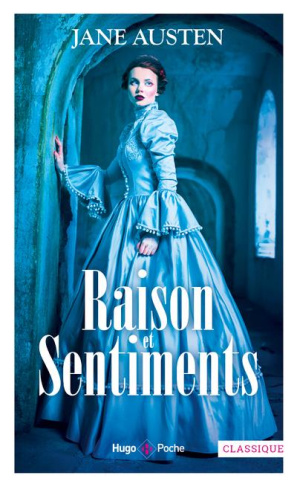
Un classique qui n'a pas pris une ride ! A la mort de leur père, les soeurs Dashwood quittent avec leur mère le comté de Sussex pour s'établir dans la chaumière de Barton, en Devonshire. Pour la raisonnable Elinor et la sensible Maria, toutes deux ravissantes et en âge de se marier, c'est une nouvelle vie qui commence. Traduction : Isabelle de Montolieu (1751-1832). Ecrit vers 1795, Sense and Sensibility parait à Londres en 1811, et sera traduit en français dès 1815. Ce classique de la littérature de la Lady des lettres anglaises qui a influencé nombre d'écrivains majeurs, tels Henry James, Virginia Woolf ou Katherine Mansfield, est considéré comme le premier grand roman anglais du XIXe siècle. De nombreux auteurs de New Romance - Christina Lauren Anna Todd, Audrey Carlan, Mia Sheridan, Laurelin Paige, Brittainy C. Cherry, ou Lexi Ryan... - s'accordent à considérer ce grand classique de la littérature anglaise comme une référence incontournable et une source féconde d'inspiration.ÉPUISÉVOIR PRODUIT6,65 € -

Sense and sensibility (VO)
Extrait Chapter OneThe family of Dashwood had been long settled in Sussex (1). Their estate was large (2), and their residence was at Norland Park, in the centre of their property, where, for many generations, they had lived in so respectable a manner, as to engage (3) the general good opinion of their surrounding acquaintance. The late owner of this estate was a single man, who lived to a very advanced age, and who for many years of his life, had a constant companion and housekeeper (4) in his sister. But her death, which happened ten years before his own, produced a great alteration in his home; for to supply her loss, he invited and received into his house the family of his nephew Mr. Henry Dashwood, the legal inheritor of the Norland estate (5), and the person to whom he intended to bequeath it. In the society of his nephew and niece, and their children, the old Gentleman's days were comfortably spent. His attachment to them all increased. The constant attention of Mr. and Mrs. Henry Dashwood to his wishes, which proceeded not merely from interest, but from goodness of heart, gave him every degree of solid comfort which his age could receive; and the cheerfulness of the children added a relish to his existence.By a former marriage, Mr. Henry Dashwood had one son: by his present lady, three daughters. The son, a steady respectable young man, was amply provided for by the fortune of his mother, which had been large, and half of which devolved on him on his coming of age (6). By his own marriage, likewise, which happened soon afterwards, he added to his wealth (7). To him therefore the succession to the Norland estate was not so really important as to his sisters; for their fortune, independent of what might arise to them from their father's inheriting that property, could be but small. Their mother had nothing, and their father only seven thousand pounds in his own disposal; for the remaining moiety of his first wife's fortune was also secured to her child, and he had only a life interest in it (8).The old Gentleman died; his will was read, and like almost every other will, gave as much disappointment as pleasure (9). He was neither so unjust, nor so ungrateful, as to leave his estate from his nephew;—but he left it to him on such terms as destroyed half the value of the bequest. Mr. Dashwood had wished for it more for the sake of his wife and daughters than for himself or his son:—but to his son, and his son's son, a child of four years old, it was secured, in such a way, as to leave to himself no power of providing for those who were most dear to him, and who most needed a provision, by any charge on the estate (10), or by any sale of its valuable woods (11). The whole was tied up for the benefit of this child (12), who, in occasional visits with his father and mother at Norland (13), had so far gained on the affections of his uncle, by such attractions as are by no means unusual in children of two or three years old; an imperfect articulation, an earnest desire of having his own way, many cunning tricks, and a great deal of noise, as to outweigh all the value of all the attention which, for years, he had received from his niece and her daughters (14). He meant not to be unkind however, and, as a mark of his affection for the three girls, he left them a thousand pounds a-piece.Mr. Dashwood's disappointment was, at first, severe; but his temper was cheerful and sanguine, and he might reasonably hope to live many years, and by living economically, lay by a considerable sum from the produce of an estate already large, and capable of almost immediate improvement (15). But the fortune, which had been so tardy in coming, was his only one twelvemonth. He survived his uncle no longer; and ten thousand pounds, including the late legacies, was all that remained for his widow and daughters (16).His son was sent for, as soon as his danger was known (17), and to him Mr. Dashwood recommended, with all the strength and urgency which illness could command, the interest of his mother-in-law (18) and sisters.Mr. John Dashwood had not the strong feelings of the rest of the family; but he was affected by a recommendation of such a nature at such a time, and he promised to do every thing in his power to make them comfortable. His father was rendered easy by such an assurance, and Mr. John Dashwood had then leisure to consider how much there might prudently be in his power to do for them.He was not an ill-disposed young man, unless to be rather cold hearted, and rather selfish, is to be ill-disposed: but he was, in general, well respected; for he conducted himself with propriety in the discharge of his ordinary duties. Had he married a more amiable woman, he might have been made still more respectable (19) than he was:—he might even have been made amiable (20) himself; for he was very young when he married, and very fond of his wife. But Mrs. John Dashwood was a strong caricature of himself;—more narrow-minded (21) and selfish.When he gave his promise to his father, he meditated within himself to increase the fortunes of his sisters by the present of a thousand pounds a-piece. He then really thought himself equal to it. The prospect of four thousand a-year, in addition to his present income, besides the remaining half of his own mother's fortune (22), warmed his heart and made him feel capable of generosity (23).—"Yes, he would give them three thousand pounds: it would be liberal and handsome! It would be enough to make them completely easy. Three thousand pounds! he could spare so considerable a sum with little inconvenience."—He thought of it all day long, and for many days successively, and he did not repent (26).No sooner was his father's funeral over, than Mrs. John Dashwood, without sending any notice of her intention to her mother-in-law, arrived with her child and their attendants. No one could dispute her right to come; the house was her husband's from the moment of his father's decease; but the indelicacy of her conduct was so much the greater, and to a woman in Mrs. Dashwood's situation, with only common feelings, must have been highly unpleasing (27),—but in her mind there was a sense of honour so keen, a generosity so romantic, that any offence of the kind, by whomsoever given or received, was to her a source of immoveable disgust (28). Mrs. John Dashwood had never been a favourite with any of her husband's family; but she had had no opportunity, till the present, of shewing them with how little attention to the comfort of other people she could act when occasion required it.So acutely did Mrs. Dashwood feel this ungracious behaviour, and so earnestly did she despise her daughter-in-law for it, that, on the arrival of the latter, she would have quitted the house for ever (29), had not the entreaty of her eldest girl induced her first to reflect on the propriety of going, and her own tender love for all her three children determined her afterwards to stay, and for their sakes avoid a breach with their brother.Elinor, this eldest daughter whose advice was so effectual, possessed a strength of understanding, and coolness of judgment, which qualified her, though only nineteen (30), to be the counsellor of her mother, and enabled her frequently to counteract, to the advantage of them all, that eagerness of mind in Mrs. Dashwood which must generally have led to imprudence. She had an excellent heart;—her disposition was affectionate, and her feelings were strong; but she knew how to govern them (31): it was a knowledge which her mother had yet to learn, and which one of her sisters had resolved never to be taught.Marianne's abilities were, in many respects, quite equal to Elinor's (32). She was sensible and clever; but eager in every thing; her sorrows, her joys, could have no moderation. She was generous, amiable, interesting (33): she was every thing but prudent. The resemblance between her and her mother was strikingly great.Elinor saw, with concern, the excess of her sister's sensibility (34); but by Mrs. Dashwood it was valued and cherished. They encouraged each other now in the violence of their affliction. The agony of grief which overpowered them at first, was voluntarily renewed, was sought for, was created again and again (35). They gave themselves up wholly to their sorrow, seeking increase of wretchedness in every reflection that could afford it (36), and resolved against ever admitting (37) consolation in future. Elinor, too, was deeply afflicted; but still she could struggle, she could exert herself. She could consult with her brother, could receive her sister-in-law on her arrival, and treat her with proper attention; and could strive to rouse her mother to similar exertion, and encourage her to similar forbearance.Margaret, the other sister, was a good-humoured well-disposed girl; but as she had already imbibed a good deal of Marianne's romance (38), without having much of her sense, she did not, at thirteen, bid fair to equal her sisters at a more advanced period of life.Annotations1. Sussex: A county south of London.2. The gentry that dominates this and other Jane Austen novels were based in rural estates, whose agricultural profits formed the principal source of their income.3. engage: gain.4. “Housekeeper” was often used to refer to a high-ranking female servant. Here it means that his sister supervised the household, which would include directing and managing the servants, deciding on meals, ordering supplies for the house, and attending to the needs of residents and guests. These tasks were normally performed by women, so a man without a wife would usually have a sister or other unmarried female relative live with him for this purpose. Since unmarried women rarely had homes of their own, she would benefit by gaining a secure home in which she exercised a position of importance and influence.5. When a landowner lacked sons, a paternal nephew, as Henry Dashwood’s... --Ce texte fait référence à l'édition Broché .EN STOCKCOMMANDER5,00 €


Du même éditeur
-

Les Borgia
Ce roman est issu des Crimes célèbres d'Alexandre Dumas (1839-1840), l'un des premiers recueils de Dumas. Modèle du Prince de Machiavel (l'une des lectures de Dumas), César Borgia, fils du pape Alexandre VI, étend sa puissance sur Rome. Tous les moyens sont bons pour écarter ennemis et rivaux. Ses crimes n'auront aucune limite, puisqu'il va jusqu'à éliminer, par le poison ou les armes, les membres de sa propre famille: son frère aîné Francesco, les maris de sa soeur Lucrèce et les maîtresses qui eurent le malheur de se laisser attirer par son pouvoir et de partager son lit. Le poison qu'il verse finira cependant par se retourner contre lui...Écrivant cette sanglante histoire, Dumas revient à la voluptueuse et cruelle Renaissance, cadre de son premier triomphe théâtral, Henri III et sa cour (1829).ÉPUISÉVOIR PRODUIT8,95 € -
Le chant des secrets
Australie, 1921. Viola et Duncan Summer font partie d'une troupe de comédiens ambulants quand naît Catriona. Très tôt, leur fillette montre d'étonnantes prédispositions pour le chant et entame une carrière dans les villes et villages de l'outback.Mais un premier drame survient. La grande dépression sévit, la troupe se sépare et Duncan meurt accidentellement. Catriona est âgée de 11 ans quand sa mère et elle sont prises sous l'aile protectrice de Francis Kane. Mais ce dernier profite de la situation précaire des deux femmes et abuse de Catriona. Témoin de la scène, Viola l'abat. À la suite de ce viol, Catriona accouche à 13 ans d'une fille, que Viola confie à une mère adoptive avant de fuir pour Sydney, où Catriona suit des cours de chant.Bien des années ont passé. À 67 ans, Catriona a connu une carrière de diva internationale et s'est produite sur les plus grandes scènes du monde. Mais, sa vie privée est un échec. Au crépuscule de sa vie, elle décide de se consacrer à la recherche de sa fille. Une quête qui révélera bien des secrets...ÉPUISÉVOIR PRODUIT8,95 € -
La mémoire d'une autre
En pleine tempête de neige, une jeune femme est victime d'un accident de voiture et perd connaissance. A son réveil, elle est incapable de se rappeler qui elle est ni d'où elle vient... Jade, la fillette de l'homme qui l'a recueillie, lui annonce alors que sa soeur Ambre l'avait prévenue de son arrivée. La jeune femme est troublée. Mais quel choc quand elle apprend qu'Ambre est morte deux ans plus tôt et que, depuis, Jade n'avait plus prononcé le moindre mot ! L'inconnue n'est cependant pas au bout de ses surprises. Pour tenter de recouvrer la mémoire, elle se soumet à des séances d'hypnose. Lui reviennent alors des souvenirs qui ne sont pas les siens, mais ceux d'une femme ayant vécu au XIXe siècle... Une héroïne attachante, une maison qui renferme des secrets et un zeste de surnaturel apportent à cette histoire d'amour une dimension hors du commun.ÉPUISÉVOIR PRODUIT7,65 € -
La dame en blanc
Biographie de l'auteur Wilkie Collins (1824-1889), l'un des auteurs les plus populaires de l'ère victorienne, a laissé près de trente romans, dont Le Secret (1857, Archipoche numéro 218), et La Pierre de lune (1868, Archipoche numéro243). "Il lui revient le mérite, dira Henry James, d'avoir introduit dans l'espace romanesque les plus mystérieux des mystères : ceux qui se cachent derrière nos portes".ÉPUISÉVOIR PRODUIT9,95 €


De la même catégorie
-
Une veuve de papier
Résumé : Eté 1958. Ted Cole, auteur de livres pour enfants, pousse son assistant de seize ans dans les bras de sa femme Marion. Il veut précipiter un divorce devenu inévitable depuis la mort de leurs deux fils. Mais la belle et triste Marion décide de tout quitter, laissant derrière elle une petite fille désorientée, Ruth. Automne 1990. Ruth est devenue un écrivain de renom. En tournée à Amsterdam, elle est confrontée à une aventure tout droit sortie de ses terreurs enfantines...ÉPUISÉVOIR PRODUIT11,95 € -
L'hôtel New Hampshire
Un des ouvrages les plus célèbres de l'auteur du Monde selon Garp, L'Hotel New Hampshire contient tous les éléments que l'on retrouve habituellement dans son oeuvre. En effet, drôle, astucieuse, originale et enthousiasmante est la saga de cette famille peu conventionnelle. Nostalgique et passionnée est la voix de John Berry, le narrateur qui parle sans équivoque du rêve de son père : tenir un hôtel. La famille Berry, les deux parents et leurs cinq enfants, ainsi qu'un ours et un chien, vont ainsi vivre des péripéties hilarantes dans trois hôtels différents, sur deux continents. Avec gravité, parfois, et toujours avec un humour grinçant, Irving fascine le lecteur au travers de cette histoire peu banale. Frank, l'aîné, Franny, la plus étrange, John, Lily et Egg le cadet sont les héros d'aventures loufoques. Des déboires de leur labrador Sorrow, d'abord empaillé puis victime d'un cruel accident d'avion, aux désirs incestueux de John et Franny, c'est un monde étrange selon Irving auquel nous sommes ici confrontés. Ce roman fait d'Irving l'un des écrivains les plus talentueux et imaginatifs de sa génération.ÉPUISÉVOIR PRODUIT10,80 € -
En attendant les barbares
L'écrivain sud-africain J.M. Coetzee, qui a reçu le prix Nobel de littérature 2003, a placé l'apartheid et ses stigmates au centre de son oeuvre. D'ascendance anglo-allemande, John Maxwell Coetzee est né en 1940 au Cap, en Afrique du Sud. Scolarisé dans un établissement anglophone, il s'installe en Grande-Bretagne au début des années 1960, où il exerce la profession de programmateur informatique. Il délaisse rapidement cette activité pour embrasser des études d'histoire et de littérature aux Etats-Unis. Il est édité pour la première fois en 1974 avec Terres de crépuscule. Mais c'est en 1980 qu'il connaît le succès international avec En attendant les barbares. En 1983, l'auteur sud-africain décroche le prestigieux Booker Prize pour Michael K, sa vie, son temps. Parallèlement, Coetzee enseigne les lettres et l'anglais à la State University de New York à Buffalo, dans l'Etat américain de New York (nord-est). L'année suivante, il obtient une chaire de professeur de littérature anglaise à l'université du Cap. En 1986, il publie une version revue de Robinson Crusoé dans le roman Foe, avant de revenir à son Afrique du Sud. Il publie en 1990 L'Age de fer. Premier écrivain à recevoir le Booker Prize deux fois (pour son roman Disgrâce en 1999), il s'expatrie en 2002 en Australie, à Adélaïde précisément où il occupe un poste à l'université. Traducteur et critique, il a publié cette année Elizabeth Costello: Eight Lessons.ÉPUISÉVOIR PRODUIT8,40 € -
Le monde selon Garp
Jenny Fields ne veut pas d'homme dans sa vie mais elle désire un enfant. Ainsi naît Garp. Il grandit dans un collège où sa mère est infirmière. Puis ils décident tous deux d'écrire, et Jenny devient une icône du féminisme. Garp, heureux mari et père, vit pourtant dans la peur : dans son univers dominé par les femmes, la violence des hommes n'est jamais loin... Un livre culte, à l'imagination débridée, facétieuse satire de notre monde.EN STOCKCOMMANDER11,40 €


