

Lady Susan. Roman extrait des Oeuvres romanesques complètes I
2,00 €
Épuisé
EAN :
9782070337569
Une veuve spirituelle et jolie, mais sans un sou, trouve refuge chez son beau-frère, un riche banquier. Est-elle sans scrupules, prête à tout pour faire un beau mariage, ou juste une coquette qui veut s'amuser ? Le jeune Reginald risque de payer cher la réponse à cette question... Grande dame du roman anglais, Jane Austen trace le portrait très spirituel d'une aventurière, dans la lignée des personnages d'Orgueil et préjugé et de Raison et sentiments.
Catégories
| Nombre de pages | 115 |
|---|---|
| Date de parution | 11/05/2006 |
| Poids | 84g |
| Largeur | 110mm |

Distributor Debug Info
| SKU: | 9782070337569 |
| wmi_id_distributeur: | Not set |
| Is Salable (from plugin): | No (Out of Stock) |
| Is Salable (direct MSI check): | No (Out of Stock) |
| Distributor Name: | Par défaut |
| Availability Value: | 0 |
| Availability Label: | Epuisé |
| Match Result: | |
| Default Availability (Config): | 0 - Epuisé |
| Raw Config Mapping: |
Array
(
    [_1772119784121_121] => Array
        (
            [id] => 12707000
            [name] => 12707000
            [availability] => 1
            [activation_attribute] => 1
        )

)
|
Plus d'informations
| EAN | 9782070337569 |
|---|---|
| Titre | Lady Susan. Roman extrait des Oeuvres romanesques complètes I |
| Auteur | Austen Jane ; Goubert Pierre |
| Editeur | FOLIO |
| Largeur | 110 |
| Poids | 84 |
| Date de parution | 20060511 |
| Nombre de pages | 115,00 € |
Pourquoi choisir Molière ?
Efficacité et rapidité Commandé avant 16h livré demain
Économique et pratique Livraison à domicile dès 5,10 €
Facile et sans frais Retrait gratuit en magasin
Sécurité et tranquillité Paiement 100 % sécurisé
Disponibilité et écoute Contactez-nous sur WhatsApp
Du même auteur
-
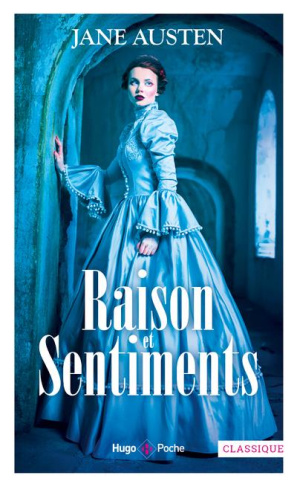
Raison et sentiments
Un classique qui n'a pas pris une ride ! A la mort de leur père, les soeurs Dashwood quittent avec leur mère le comté de Sussex pour s'établir dans la chaumière de Barton, en Devonshire. Pour la raisonnable Elinor et la sensible Maria, toutes deux ravissantes et en âge de se marier, c'est une nouvelle vie qui commence. Traduction : Isabelle de Montolieu (1751-1832). Ecrit vers 1795, Sense and Sensibility parait à Londres en 1811, et sera traduit en français dès 1815. Ce classique de la littérature de la Lady des lettres anglaises qui a influencé nombre d'écrivains majeurs, tels Henry James, Virginia Woolf ou Katherine Mansfield, est considéré comme le premier grand roman anglais du XIXe siècle. De nombreux auteurs de New Romance - Christina Lauren Anna Todd, Audrey Carlan, Mia Sheridan, Laurelin Paige, Brittainy C. Cherry, ou Lexi Ryan... - s'accordent à considérer ce grand classique de la littérature anglaise comme une référence incontournable et une source féconde d'inspiration.ÉPUISÉVOIR PRODUIT6,65 € -

Sense and sensibility (VO)
Extrait Chapter OneThe family of Dashwood had been long settled in Sussex (1). Their estate was large (2), and their residence was at Norland Park, in the centre of their property, where, for many generations, they had lived in so respectable a manner, as to engage (3) the general good opinion of their surrounding acquaintance. The late owner of this estate was a single man, who lived to a very advanced age, and who for many years of his life, had a constant companion and housekeeper (4) in his sister. But her death, which happened ten years before his own, produced a great alteration in his home; for to supply her loss, he invited and received into his house the family of his nephew Mr. Henry Dashwood, the legal inheritor of the Norland estate (5), and the person to whom he intended to bequeath it. In the society of his nephew and niece, and their children, the old Gentleman's days were comfortably spent. His attachment to them all increased. The constant attention of Mr. and Mrs. Henry Dashwood to his wishes, which proceeded not merely from interest, but from goodness of heart, gave him every degree of solid comfort which his age could receive; and the cheerfulness of the children added a relish to his existence.By a former marriage, Mr. Henry Dashwood had one son: by his present lady, three daughters. The son, a steady respectable young man, was amply provided for by the fortune of his mother, which had been large, and half of which devolved on him on his coming of age (6). By his own marriage, likewise, which happened soon afterwards, he added to his wealth (7). To him therefore the succession to the Norland estate was not so really important as to his sisters; for their fortune, independent of what might arise to them from their father's inheriting that property, could be but small. Their mother had nothing, and their father only seven thousand pounds in his own disposal; for the remaining moiety of his first wife's fortune was also secured to her child, and he had only a life interest in it (8).The old Gentleman died; his will was read, and like almost every other will, gave as much disappointment as pleasure (9). He was neither so unjust, nor so ungrateful, as to leave his estate from his nephew;—but he left it to him on such terms as destroyed half the value of the bequest. Mr. Dashwood had wished for it more for the sake of his wife and daughters than for himself or his son:—but to his son, and his son's son, a child of four years old, it was secured, in such a way, as to leave to himself no power of providing for those who were most dear to him, and who most needed a provision, by any charge on the estate (10), or by any sale of its valuable woods (11). The whole was tied up for the benefit of this child (12), who, in occasional visits with his father and mother at Norland (13), had so far gained on the affections of his uncle, by such attractions as are by no means unusual in children of two or three years old; an imperfect articulation, an earnest desire of having his own way, many cunning tricks, and a great deal of noise, as to outweigh all the value of all the attention which, for years, he had received from his niece and her daughters (14). He meant not to be unkind however, and, as a mark of his affection for the three girls, he left them a thousand pounds a-piece.Mr. Dashwood's disappointment was, at first, severe; but his temper was cheerful and sanguine, and he might reasonably hope to live many years, and by living economically, lay by a considerable sum from the produce of an estate already large, and capable of almost immediate improvement (15). But the fortune, which had been so tardy in coming, was his only one twelvemonth. He survived his uncle no longer; and ten thousand pounds, including the late legacies, was all that remained for his widow and daughters (16).His son was sent for, as soon as his danger was known (17), and to him Mr. Dashwood recommended, with all the strength and urgency which illness could command, the interest of his mother-in-law (18) and sisters.Mr. John Dashwood had not the strong feelings of the rest of the family; but he was affected by a recommendation of such a nature at such a time, and he promised to do every thing in his power to make them comfortable. His father was rendered easy by such an assurance, and Mr. John Dashwood had then leisure to consider how much there might prudently be in his power to do for them.He was not an ill-disposed young man, unless to be rather cold hearted, and rather selfish, is to be ill-disposed: but he was, in general, well respected; for he conducted himself with propriety in the discharge of his ordinary duties. Had he married a more amiable woman, he might have been made still more respectable (19) than he was:—he might even have been made amiable (20) himself; for he was very young when he married, and very fond of his wife. But Mrs. John Dashwood was a strong caricature of himself;—more narrow-minded (21) and selfish.When he gave his promise to his father, he meditated within himself to increase the fortunes of his sisters by the present of a thousand pounds a-piece. He then really thought himself equal to it. The prospect of four thousand a-year, in addition to his present income, besides the remaining half of his own mother's fortune (22), warmed his heart and made him feel capable of generosity (23).—"Yes, he would give them three thousand pounds: it would be liberal and handsome! It would be enough to make them completely easy. Three thousand pounds! he could spare so considerable a sum with little inconvenience."—He thought of it all day long, and for many days successively, and he did not repent (26).No sooner was his father's funeral over, than Mrs. John Dashwood, without sending any notice of her intention to her mother-in-law, arrived with her child and their attendants. No one could dispute her right to come; the house was her husband's from the moment of his father's decease; but the indelicacy of her conduct was so much the greater, and to a woman in Mrs. Dashwood's situation, with only common feelings, must have been highly unpleasing (27),—but in her mind there was a sense of honour so keen, a generosity so romantic, that any offence of the kind, by whomsoever given or received, was to her a source of immoveable disgust (28). Mrs. John Dashwood had never been a favourite with any of her husband's family; but she had had no opportunity, till the present, of shewing them with how little attention to the comfort of other people she could act when occasion required it.So acutely did Mrs. Dashwood feel this ungracious behaviour, and so earnestly did she despise her daughter-in-law for it, that, on the arrival of the latter, she would have quitted the house for ever (29), had not the entreaty of her eldest girl induced her first to reflect on the propriety of going, and her own tender love for all her three children determined her afterwards to stay, and for their sakes avoid a breach with their brother.Elinor, this eldest daughter whose advice was so effectual, possessed a strength of understanding, and coolness of judgment, which qualified her, though only nineteen (30), to be the counsellor of her mother, and enabled her frequently to counteract, to the advantage of them all, that eagerness of mind in Mrs. Dashwood which must generally have led to imprudence. She had an excellent heart;—her disposition was affectionate, and her feelings were strong; but she knew how to govern them (31): it was a knowledge which her mother had yet to learn, and which one of her sisters had resolved never to be taught.Marianne's abilities were, in many respects, quite equal to Elinor's (32). She was sensible and clever; but eager in every thing; her sorrows, her joys, could have no moderation. She was generous, amiable, interesting (33): she was every thing but prudent. The resemblance between her and her mother was strikingly great.Elinor saw, with concern, the excess of her sister's sensibility (34); but by Mrs. Dashwood it was valued and cherished. They encouraged each other now in the violence of their affliction. The agony of grief which overpowered them at first, was voluntarily renewed, was sought for, was created again and again (35). They gave themselves up wholly to their sorrow, seeking increase of wretchedness in every reflection that could afford it (36), and resolved against ever admitting (37) consolation in future. Elinor, too, was deeply afflicted; but still she could struggle, she could exert herself. She could consult with her brother, could receive her sister-in-law on her arrival, and treat her with proper attention; and could strive to rouse her mother to similar exertion, and encourage her to similar forbearance.Margaret, the other sister, was a good-humoured well-disposed girl; but as she had already imbibed a good deal of Marianne's romance (38), without having much of her sense, she did not, at thirteen, bid fair to equal her sisters at a more advanced period of life.Annotations1. Sussex: A county south of London.2. The gentry that dominates this and other Jane Austen novels were based in rural estates, whose agricultural profits formed the principal source of their income.3. engage: gain.4. “Housekeeper” was often used to refer to a high-ranking female servant. Here it means that his sister supervised the household, which would include directing and managing the servants, deciding on meals, ordering supplies for the house, and attending to the needs of residents and guests. These tasks were normally performed by women, so a man without a wife would usually have a sister or other unmarried female relative live with him for this purpose. Since unmarried women rarely had homes of their own, she would benefit by gaining a secure home in which she exercised a position of importance and influence.5. When a landowner lacked sons, a paternal nephew, as Henry Dashwood’s... --Ce texte fait référence à l'édition Broché .EN STOCKCOMMANDER5,00 € -
-
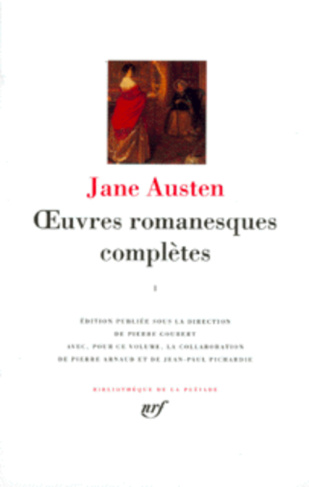
Oeuvres romanesques complètes. Tome 1
Ce volume contient les oeuvres suivantes: L'Abbaye de Northanger - Le Coeur et la Raison - Orgueil et préjugé. Appendices: Lady Susan - Les Watson. Oeuvres de jeunesse: Amour et amitié - Histoire de l'Angleterre. Avec, pour ce volume, la collaboration de Pierre Arnaud et de Jean-Paul Pichardie.EN STOCKCOMMANDER68,00 €


Du même éditeur
-

Quelqu'un d'autre
Changer d?activité, de femme, d?environnement, de personnalité voire même d?apparence physique? tout mettre en oeuvre pour devenir quelqu?un d?autre, c?est le pari improbable qu?ont décidé de se lancer un soir deux inconnus alcoolisés, l?encadreur Thierry Blin et le commercial Nicolas Gredzinski. A travers le portrait taillé serré de ces deux anonymes, Tonino Benacquista revisite le mythe de la quête identitaire, de ses enjeux incertains à ses implications souvent cruelles. Blin et Gredzinski avaient tout pour être heureux, un travail, des amis, une femme, mais pour autant, ils ne l?étaient pas. Leur rencontre aussi fortuite que déterminante sur un court de tennis va renverser leur vie, qui prend alors une direction distincte et inconnue. Mais si les deux hommes finissent bien par changer, en bien ou en mal, leur façon de faire est très différente. Quand le premier agit avec conscience et méthode pour se transformer point par point en son contraire, et devenir détective privé à l?identité nouvelle, le second ne fait rien, ou plutôt croit ne rien faire, si ce n?est de se laisser tomber dans l?alcool, avec un plaisir grinçant... Cette opposition de styles dessinée chapitre après chapitre autour des deux personnages qui ne se reverront plus, confère au roman toute sa verve et son originalité. Certes, on ne rit pas là beaucoup, le sujet ainsi traité nous renvoyant souvent à nos propres questionnements, mais on apprécie d?être le spectateur discret d?une transformation qu?on aurait rêvé être la nôtre sans oser se l?avouer? --Guillaume FollieroÉPUISÉVOIR PRODUIT9,20 € -
Les amoureux de l'Hôtel de Ville
Le Baiser de l'Hôtel de Ville. Je n'aimais pas cette photo. Tout ce noir et blanc, ce gris flou, c'était juste les couleurs que je ne voulais pas pour la mémoire. " La librairie où François travaille ferme ses portes; à l'approche de la quarantaine, il se retrouve face à lui-même. Les souvenirs se bousculent, amplifiés par la vogue des années cinquante. Il éprouve alors le sentiment d'être dépossédé de son enfance. Pourquoi ses parents ont-ils toujours prétendu être les amoureux que l'on voit sur cette photo de DoisneauÉPUISÉVOIR PRODUIT8,10 € -
La Dame à la Licorne
Désireux d'orner les murs de sa nouvelle demeure parisienne, le noble Jean Le Viste commande une série de six tapisseries à Nicolas des Innocents, miniaturiste renommé à la cour du roi de France, Charles VIII. Surpris d'avoir été choisi pour un travail si éloigné de sa spécialité, l'artiste accepte néanmoins après avoir entrevu la fille de Jean Le Viste dont il s'éprend. La passion entraînera Nicolas dans le labyrinthe de relations délicates entre maris et femmes, parents et enfants, amants et servantes. En élucidant le mystère d'un chef-d'oeuvre magique, Tracy Chevalier ressuscite un univers de passion et de désirs dans une France où le Moyen Age s'apprête à épouser la Renaissance. Tracy Chevalier est américaine et vit à Londres depuis 1984 avec son mari et son fils. Son roman La jeune fille à la perle a rencontré un succès international.EN STOCKCOMMANDER9,50 € -
Montedidio
«Chacun de nous vit avec un ange, c'est ce qu'il dit, et les anges ne voyagent pas, si tu pars, tu le perds, tu dois en rencontrer un autre. Celui qu'il trouve à Naples est un ange lent, il ne vole pas, il va à pied: "Tu ne peux pas t'en aller à Jérusalem", lui dit-il aussitôt. Et que dois-je attendre, demande Rafaniello. "Cher Rav Daniel, lui répond l'ange qui connaît son vrai nom, tu iras à Jérusalem avec tes ailes. Moi je vais à pied même si je suis un ange et toi tu iras jusqu'au mur occidental de la ville sainte avec une paire d'ailes fortes, comme celles du vautour." Et qui me les donnera, insiste Rafaniello. "Tu les as déjà, lui dit celui-ci, elles sont dans l'étui de ta bosse." Rafaniello est triste de ne pas partir, heureux de sa bosse jusqu'ici un sac d'os et de pommes de terre sur le dos, impossible à décharger : ce sont des ailes, ce sont des ailes, me raconte-t-il en baissant de plus en plus la voix et les taches de rousseur remuent autour de ses yeux verts fixés en haut sur la grande fenêtre.»EN STOCKCOMMANDER8,60 €


De la même catégorie
-
Double Assassinat dans la rue Morgue ; La Lettre volée
Dupin est le roi de la déduction. Et quand il décide de mener l?enquête, c?est avant tout pour prouver que tout s?explique, même les histoires les plus extraordinaires. Afin d?illustrer ce propos, le narrateur nous raconte deux affaires que son jeune ami a résolues. D?abord, celle du double assassinat d?une mère et de sa fille, particulièrement affreux, survenu de nuit dans une rue sombre de Paris. Ensuite, celle de la cachette introuvable dans laquelle un maître chanteur avait placé une lettre volée fort compromettante pour sa propriétaire.ÉPUISÉVOIR PRODUIT3,95 € -
En attendant les barbares
L'écrivain sud-africain J.M. Coetzee, qui a reçu le prix Nobel de littérature 2003, a placé l'apartheid et ses stigmates au centre de son oeuvre. D'ascendance anglo-allemande, John Maxwell Coetzee est né en 1940 au Cap, en Afrique du Sud. Scolarisé dans un établissement anglophone, il s'installe en Grande-Bretagne au début des années 1960, où il exerce la profession de programmateur informatique. Il délaisse rapidement cette activité pour embrasser des études d'histoire et de littérature aux Etats-Unis. Il est édité pour la première fois en 1974 avec Terres de crépuscule. Mais c'est en 1980 qu'il connaît le succès international avec En attendant les barbares. En 1983, l'auteur sud-africain décroche le prestigieux Booker Prize pour Michael K, sa vie, son temps. Parallèlement, Coetzee enseigne les lettres et l'anglais à la State University de New York à Buffalo, dans l'Etat américain de New York (nord-est). L'année suivante, il obtient une chaire de professeur de littérature anglaise à l'université du Cap. En 1986, il publie une version revue de Robinson Crusoé dans le roman Foe, avant de revenir à son Afrique du Sud. Il publie en 1990 L'Age de fer. Premier écrivain à recevoir le Booker Prize deux fois (pour son roman Disgrâce en 1999), il s'expatrie en 2002 en Australie, à Adélaïde précisément où il occupe un poste à l'université. Traducteur et critique, il a publié cette année Elizabeth Costello: Eight Lessons.ÉPUISÉVOIR PRODUIT8,40 € -
Replay
À 43 ans, Jeff Winston meurt subitement d'une crise cardiaque, laissant derrière lui une vie médiocre et un mariage à la dérive. Quelle n'est pas sa stupeur lorsqu'il se réveille... dans sa chambre d'étudiant, âgé de 18 ans. Dans le passé, sa vie recommence comme avant. Sauf qu'il a gardé le souvenir de sa précédente existence...Qui n'a jamais rêvé de pouvoir revivre son passé fort de son expérience d'aujourd'hui ?EN STOCKCOMMANDER9,90 € -
Une veuve de papier
Résumé : Eté 1958. Ted Cole, auteur de livres pour enfants, pousse son assistant de seize ans dans les bras de sa femme Marion. Il veut précipiter un divorce devenu inévitable depuis la mort de leurs deux fils. Mais la belle et triste Marion décide de tout quitter, laissant derrière elle une petite fille désorientée, Ruth. Automne 1990. Ruth est devenue un écrivain de renom. En tournée à Amsterdam, elle est confrontée à une aventure tout droit sortie de ses terreurs enfantines...ÉPUISÉVOIR PRODUIT11,95 €


