Orgueil et préjugés
7,90 €
En stock
EAN :
9782253088905
Les péripéties de l'histoire d'amour contrariée entre l'orgueilleuse Elizabeth Bennett et son nouveau voisin Mr Darcy, sur fond de campagne anglaise au début du XIXe siècle, offrent un plaisir de lecture qui ne s'atténue pas quel que soit l'âge du lecteur. Cette peinture pleine d'humour de la vie quotidienne des jeunes filles de la gentry, avec ses bals, ses militaires en garnison, ses demandes en mariage, est aussi le premier grand roman psychologique de la littérature anglo-saxonne.
Commandé avant 16h, livré demain
Catégories
| Nombre de pages | 510 |
|---|---|
| Date de parution | 30/11/2011 |
| Poids | 274g |
| Largeur | 109mm |

Distributor Debug Info
| SKU: | 9782253088905 |
| wmi_id_distributeur: | 09556601 |
| Is Salable (from plugin): | Yes (In Stock) |
| Is Salable (direct MSI check): | Yes (In Stock) |
| Distributor Name: | Par défaut |
| Availability Value: | 0 |
| Availability Label: | Epuisé |
| Match Result: | |
| Default Availability (Config): | 0 - Epuisé |
| Raw Config Mapping: |
Array
(
    [_1772119784121_121] => Array
        (
            [id] => 12707000
            [name] => 12707000
            [availability] => 1
            [activation_attribute] => 1
        )

)
|
Plus d'informations
| EAN | 9782253088905 |
|---|---|
| Titre | Orgueil et préjugés |
| Auteur | Austen Jane ; Chiari Sophie |
| Editeur | LGF |
| Largeur | 109 |
| Poids | 274 |
| Date de parution | 20111130 |
| Nombre de pages | 510,00 € |
Pourquoi choisir Molière ?
Efficacité et rapidité Commandé avant 16h livré demain
Économique et pratique Livraison à domicile dès 5,10 €
Facile et sans frais Retrait gratuit en magasin
Sécurité et tranquillité Paiement 100 % sécurisé
Disponibilité et écoute Contactez-nous sur WhatsApp
Du même auteur
-

Sense and sensibility (VO)
Extrait Chapter OneThe family of Dashwood had been long settled in Sussex (1). Their estate was large (2), and their residence was at Norland Park, in the centre of their property, where, for many generations, they had lived in so respectable a manner, as to engage (3) the general good opinion of their surrounding acquaintance. The late owner of this estate was a single man, who lived to a very advanced age, and who for many years of his life, had a constant companion and housekeeper (4) in his sister. But her death, which happened ten years before his own, produced a great alteration in his home; for to supply her loss, he invited and received into his house the family of his nephew Mr. Henry Dashwood, the legal inheritor of the Norland estate (5), and the person to whom he intended to bequeath it. In the society of his nephew and niece, and their children, the old Gentleman's days were comfortably spent. His attachment to them all increased. The constant attention of Mr. and Mrs. Henry Dashwood to his wishes, which proceeded not merely from interest, but from goodness of heart, gave him every degree of solid comfort which his age could receive; and the cheerfulness of the children added a relish to his existence.By a former marriage, Mr. Henry Dashwood had one son: by his present lady, three daughters. The son, a steady respectable young man, was amply provided for by the fortune of his mother, which had been large, and half of which devolved on him on his coming of age (6). By his own marriage, likewise, which happened soon afterwards, he added to his wealth (7). To him therefore the succession to the Norland estate was not so really important as to his sisters; for their fortune, independent of what might arise to them from their father's inheriting that property, could be but small. Their mother had nothing, and their father only seven thousand pounds in his own disposal; for the remaining moiety of his first wife's fortune was also secured to her child, and he had only a life interest in it (8).The old Gentleman died; his will was read, and like almost every other will, gave as much disappointment as pleasure (9). He was neither so unjust, nor so ungrateful, as to leave his estate from his nephew;—but he left it to him on such terms as destroyed half the value of the bequest. Mr. Dashwood had wished for it more for the sake of his wife and daughters than for himself or his son:—but to his son, and his son's son, a child of four years old, it was secured, in such a way, as to leave to himself no power of providing for those who were most dear to him, and who most needed a provision, by any charge on the estate (10), or by any sale of its valuable woods (11). The whole was tied up for the benefit of this child (12), who, in occasional visits with his father and mother at Norland (13), had so far gained on the affections of his uncle, by such attractions as are by no means unusual in children of two or three years old; an imperfect articulation, an earnest desire of having his own way, many cunning tricks, and a great deal of noise, as to outweigh all the value of all the attention which, for years, he had received from his niece and her daughters (14). He meant not to be unkind however, and, as a mark of his affection for the three girls, he left them a thousand pounds a-piece.Mr. Dashwood's disappointment was, at first, severe; but his temper was cheerful and sanguine, and he might reasonably hope to live many years, and by living economically, lay by a considerable sum from the produce of an estate already large, and capable of almost immediate improvement (15). But the fortune, which had been so tardy in coming, was his only one twelvemonth. He survived his uncle no longer; and ten thousand pounds, including the late legacies, was all that remained for his widow and daughters (16).His son was sent for, as soon as his danger was known (17), and to him Mr. Dashwood recommended, with all the strength and urgency which illness could command, the interest of his mother-in-law (18) and sisters.Mr. John Dashwood had not the strong feelings of the rest of the family; but he was affected by a recommendation of such a nature at such a time, and he promised to do every thing in his power to make them comfortable. His father was rendered easy by such an assurance, and Mr. John Dashwood had then leisure to consider how much there might prudently be in his power to do for them.He was not an ill-disposed young man, unless to be rather cold hearted, and rather selfish, is to be ill-disposed: but he was, in general, well respected; for he conducted himself with propriety in the discharge of his ordinary duties. Had he married a more amiable woman, he might have been made still more respectable (19) than he was:—he might even have been made amiable (20) himself; for he was very young when he married, and very fond of his wife. But Mrs. John Dashwood was a strong caricature of himself;—more narrow-minded (21) and selfish.When he gave his promise to his father, he meditated within himself to increase the fortunes of his sisters by the present of a thousand pounds a-piece. He then really thought himself equal to it. The prospect of four thousand a-year, in addition to his present income, besides the remaining half of his own mother's fortune (22), warmed his heart and made him feel capable of generosity (23).—"Yes, he would give them three thousand pounds: it would be liberal and handsome! It would be enough to make them completely easy. Three thousand pounds! he could spare so considerable a sum with little inconvenience."—He thought of it all day long, and for many days successively, and he did not repent (26).No sooner was his father's funeral over, than Mrs. John Dashwood, without sending any notice of her intention to her mother-in-law, arrived with her child and their attendants. No one could dispute her right to come; the house was her husband's from the moment of his father's decease; but the indelicacy of her conduct was so much the greater, and to a woman in Mrs. Dashwood's situation, with only common feelings, must have been highly unpleasing (27),—but in her mind there was a sense of honour so keen, a generosity so romantic, that any offence of the kind, by whomsoever given or received, was to her a source of immoveable disgust (28). Mrs. John Dashwood had never been a favourite with any of her husband's family; but she had had no opportunity, till the present, of shewing them with how little attention to the comfort of other people she could act when occasion required it.So acutely did Mrs. Dashwood feel this ungracious behaviour, and so earnestly did she despise her daughter-in-law for it, that, on the arrival of the latter, she would have quitted the house for ever (29), had not the entreaty of her eldest girl induced her first to reflect on the propriety of going, and her own tender love for all her three children determined her afterwards to stay, and for their sakes avoid a breach with their brother.Elinor, this eldest daughter whose advice was so effectual, possessed a strength of understanding, and coolness of judgment, which qualified her, though only nineteen (30), to be the counsellor of her mother, and enabled her frequently to counteract, to the advantage of them all, that eagerness of mind in Mrs. Dashwood which must generally have led to imprudence. She had an excellent heart;—her disposition was affectionate, and her feelings were strong; but she knew how to govern them (31): it was a knowledge which her mother had yet to learn, and which one of her sisters had resolved never to be taught.Marianne's abilities were, in many respects, quite equal to Elinor's (32). She was sensible and clever; but eager in every thing; her sorrows, her joys, could have no moderation. She was generous, amiable, interesting (33): she was every thing but prudent. The resemblance between her and her mother was strikingly great.Elinor saw, with concern, the excess of her sister's sensibility (34); but by Mrs. Dashwood it was valued and cherished. They encouraged each other now in the violence of their affliction. The agony of grief which overpowered them at first, was voluntarily renewed, was sought for, was created again and again (35). They gave themselves up wholly to their sorrow, seeking increase of wretchedness in every reflection that could afford it (36), and resolved against ever admitting (37) consolation in future. Elinor, too, was deeply afflicted; but still she could struggle, she could exert herself. She could consult with her brother, could receive her sister-in-law on her arrival, and treat her with proper attention; and could strive to rouse her mother to similar exertion, and encourage her to similar forbearance.Margaret, the other sister, was a good-humoured well-disposed girl; but as she had already imbibed a good deal of Marianne's romance (38), without having much of her sense, she did not, at thirteen, bid fair to equal her sisters at a more advanced period of life.Annotations1. Sussex: A county south of London.2. The gentry that dominates this and other Jane Austen novels were based in rural estates, whose agricultural profits formed the principal source of their income.3. engage: gain.4. “Housekeeper” was often used to refer to a high-ranking female servant. Here it means that his sister supervised the household, which would include directing and managing the servants, deciding on meals, ordering supplies for the house, and attending to the needs of residents and guests. These tasks were normally performed by women, so a man without a wife would usually have a sister or other unmarried female relative live with him for this purpose. Since unmarried women rarely had homes of their own, she would benefit by gaining a secure home in which she exercised a position of importance and influence.5. When a landowner lacked sons, a paternal nephew, as Henry Dashwood’s... --Ce texte fait référence à l'édition Broché .EN STOCKCOMMANDER5,00 € -

Northanger abbey
Austen is the hot property of the entertainment world with new feature film versions of Persuasion and Sense and Sensibility on the silver screen and Pride and Prejudice hitting the TV airwaves on PBS. Such high visibility will inevitably draw renewed interest in the original source materials. These new Modern Library editions offer quality hardcovers at affordable prices.Copyright 1996 Reed Business Information, Inc.ÉPUISÉVOIR PRODUIT7,80 € -
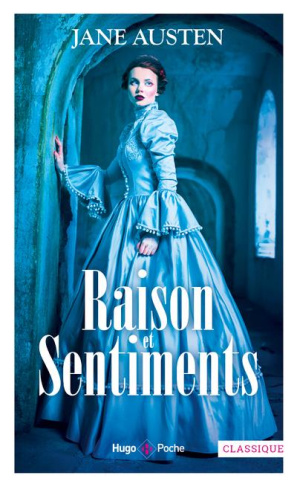
Raison et sentiments
Un classique qui n'a pas pris une ride ! A la mort de leur père, les soeurs Dashwood quittent avec leur mère le comté de Sussex pour s'établir dans la chaumière de Barton, en Devonshire. Pour la raisonnable Elinor et la sensible Maria, toutes deux ravissantes et en âge de se marier, c'est une nouvelle vie qui commence. Traduction : Isabelle de Montolieu (1751-1832). Ecrit vers 1795, Sense and Sensibility parait à Londres en 1811, et sera traduit en français dès 1815. Ce classique de la littérature de la Lady des lettres anglaises qui a influencé nombre d'écrivains majeurs, tels Henry James, Virginia Woolf ou Katherine Mansfield, est considéré comme le premier grand roman anglais du XIXe siècle. De nombreux auteurs de New Romance - Christina Lauren Anna Todd, Audrey Carlan, Mia Sheridan, Laurelin Paige, Brittainy C. Cherry, ou Lexi Ryan... - s'accordent à considérer ce grand classique de la littérature anglaise comme une référence incontournable et une source féconde d'inspiration.ÉPUISÉVOIR PRODUIT6,65 € -
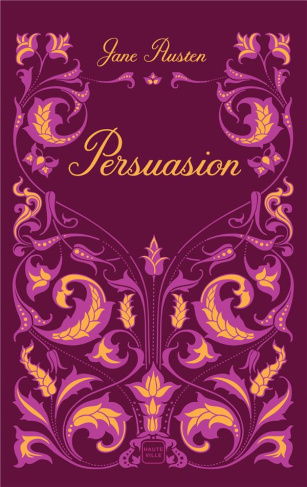
Persuasion
Résumé : Lorsque Anne Elliot et Frederick Wentworth se rencontrent, ils tombent amoureux et se fiancent secrètement. Mais la marraine d'Anne, considérant le jeune homme peu convenable, la persuade de mettre fin à cette relation. Après avoir fait fortune dans la Marine, Wentworth, devenu capitaine, revient en Angleterre et croise de nouveau Anne après des années de silence. Le temps, les non-dits et les incompréhensions auront-ils raison de leur coeur ?EN STOCKCOMMANDER7,95 €


Du même éditeur
-

Naissance
Résumé : La naissance ne saurait être biologique : on choisit toujours ses parents. Naître, c'est semer ses géniteurs. Non pas tuer le père, mais tuer en nous le fils. Laisser son sang derrière, s'affranchir de ses gènes. Chercher, trouver d'autres parents : spirituels. Naître biologiquement, c'est à la portée du premier chiot venu, des grenouilles, des huîtres. Naître spirituellement, naître à soi-même, c'est à la portée de ceux-là seuls qui préfèrent les orphelins aux fils de famille, les adoptés aux programmés, les déviances aux descendances. Toute naissance est devant soi.ÉPUISÉVOIR PRODUIT19,30 € -
Psycho killer
Présentation de l'éditeur Tout semble paisible à B Movie Hell (« L’Enfer du film de série B »). Jusqu’à ce qu’un tueur mystérieux – sous un masque en forme de crâne surmonté d’une crête rouge – se mette à assassiner très tranquillement certains habitants de la ville. Le FBI confie l’affaire à Milena Fonseca et Jack Munson, dit le Fantôme, deux spécialistes des opérations clandestines. Mais bientôt des liens apparaissent entre cette terrifiante série de meurtres et un projet top secret du Département d’État. Les habitants de B Movie Hell sont bien résolus à mettre fin eux-mêmes et sans l’aide de personne à cette situation cauchemardesque… Un thriller drôle et saignant, bourré de références cinématographiques, hommage aux séries B et films d’horreur, par l’auteur de la tétralogie consacrée au Bourbon Kid (Le Livre sans nom, L’Œil de la lune…). Un cocktail explosif et délirant d’humour et de suspense. Stéphane Loignon, Le Parisien magazine.EN STOCKCOMMANDER10,50 € -
Les deux messieurs de Bruxelles
Présentation de l'éditeur « En amour, on croit être deux alors qu'on est trois. » Cinq nouvelles sur le mystère des sentiments inavoués. Une femme entretenue et gâtée par deux hommes qu’elle ne connaît pas. Un vieil homme qui se tue à la mort de son chien. Un mari qui rappelle constamment sa nouvelle femme au respect de l’époux précédent. Une mère généreuse qui se met à haïr un enfant. Un couple dont le bonheur repose sur un meurtre. Dans la lignée de Concerto à la mémoire d'un ange, de La rêveuse d'Ostende et d’Odette Toulemonde, Eric-Emmanuel Schmitt parle de l'amour sous toutes ses formes : conjugal, clandestin, paternel, filial, mais aussi, amour de l'art ou amour de l'humanité. À travers un suspense subtil et ensorcelant, il dévoile les secrets de plusieurs âmes pour déjouer la complexité du cœur humain.EN STOCKCOMMANDER9,95 € -
Une enquête de Kay Scarpetta : Trainée de poudre
Résumé : A la suite d'une enquête sur une tuerie de masse, Kay Scarpetta reçoit un appel des plus troublants. Le corps d'une jeune femme a été découvert sur le campus du Massachusetts Institute of Technology à Boston. La victime, jeune et riche diplômée du MIT, est morte moins de deux semaines avant son procès contre la très confidentielle société fiduciaire Double S. Son corps est positionné de manière particulière et recouvert d'un résidu fluorescent de couleur rouge sang, vert émeraude et bleu saphir. Ces deux indices semblent lier l'affaire à une série d'homicides sur lesquels travaille Benton, agent du FBI et mari de Kay. Le docteur Scarpetta est entraînée dans un univers sordide de corruption et de meurtres. Avec, comme seul fil conducteur pour traquer le meurtrier, quelques traînées de poudre.ÉPUISÉVOIR PRODUIT11,90 €


De la même catégorie
-
Liberté pour les ours !
Résumé : Siggy et Graff, les deux narrateurs farfelus de ce roman, sont une version moderne de Don Quichotte et Sancho Pança. Seules différences : ils sillonnent la campagne autrichienne sur une énorme moto et se battent pour la libération des animaux du zoo de Vienne. Avec sa richesse, sa vitalité, sa fraîcheur, Liberté pour les ours !, premier roman de John Irving, cache cependant une intrigue plus grave : celle qui explore l'histoire, tour à tour tragique et grotesque, de l'Europe centrale de ces cinq dernières décennies.ÉPUISÉVOIR PRODUIT9,90 € -
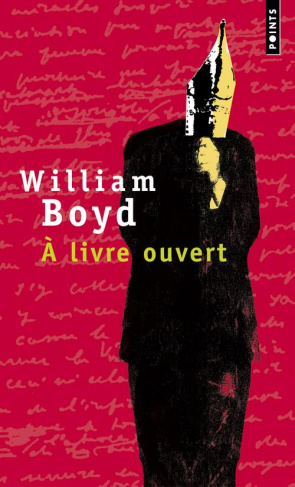
A livre ouvert. Les carnets intimes de Logan Mountsuart
La vie de l'écrivain Logan Mountstuart est un perpétuel recommencement. Tour à tour journaliste, indic et critique d'art, il rencontre Hemingway, travaille sous les ordres de Ian Fleming et se lie d'amitié avec Picasso. De l'Angleterre au Nigéria, en passant par New York et Paris, il revêt tous les costumes et devient le témoin privilégié des plus grands événements du XXe siècle...William Boyd est né en 1952, au Ghana. Il a enseigné la littérature à Oxford avant de se consacrer à la l'écriture. Il est l'auteur de nouvelles et d'une dizaine de romans, salués par la critique et disponibles en Points, ainsi que son recueil de nouvelles L'amour fait mal." Est-ce que À livre ouvert est le meilleur roman de William Boyd ? Ne suffit-il pas de savoir qu'il est magistral, ambitieux, terriblement original et émouvant ? "LireTraduit de l'anglais par Christiane BesseÉPUISÉVOIR PRODUIT10,80 € -
Une veuve de papier
Résumé : Eté 1958. Ted Cole, auteur de livres pour enfants, pousse son assistant de seize ans dans les bras de sa femme Marion. Il veut précipiter un divorce devenu inévitable depuis la mort de leurs deux fils. Mais la belle et triste Marion décide de tout quitter, laissant derrière elle une petite fille désorientée, Ruth. Automne 1990. Ruth est devenue un écrivain de renom. En tournée à Amsterdam, elle est confrontée à une aventure tout droit sortie de ses terreurs enfantines...ÉPUISÉVOIR PRODUIT11,95 € -
Armadillo
Un matin d'hiver, Lorimer Black, jeune, beau, sûr de lui - en apparence -, découvre l'homme avec lequel il avait rendez-vous pendu parmi les décombres de son usine. Tout va alors basculer dans la vie de Lorimer. Privé de son emploi, de ses amitiés, de ressources et de sommeil, l'ex-expert en sinistres auprès d'une compagnie d'assurances se retrouve désarmé dans une société cynique et malhonnête. Avec Londres en toile de fond, le septième roman de William Boyd est une anatomie comiquement révélatrice de la nature déconcertante de la vie contemporaine. A la fois ironique et émouvant, Armadillo explore des zones qui nous touchent tous: la quête vaine des certitudes, l'immense besoin de sécurité et la soif éternelle d'aimer quelqu'un d'un amour payé de retour...ÉPUISÉVOIR PRODUIT7,90 €