

PILLARS OF GLOBALIZATION
Globalization as a process has been effecting human civilizations since the beginning of documented history. Where ibis process has brought us and where it is leading our policies, our security, and our future largely depends on the decisions that states take today. This publication also emphasizes chat for globalization to benefit humanity, the three major cultures of the world (Eastern cultures, Arab-Islamic cultures, and Western cultures), along with others, have to unite and uphold the world together (represented diagrammatically on the front caver) and not separately from one another. Three diagnostic tools provide the means for measuring the impact of globalization from a number of perspectives and outline what we can expect for the future of the international system. The proposed timeline of globalization is very comprehensive and provides unique historical insights that are not focused only on events in Western civilizations. The reader will be surprised at their relevance to today's world events and their depth. In defining globalization, the authors provide an innovative and inclusive yet simple new definition of globalization which states chat : "Globalization is a process that encompasses the causes, course, and consequences of transnational and transculturel integration of human and non-human activities". The authors also provide the basis for careful analysis and conceptualization through the use of an innovative globalization matrix designed to predict patterns and policy as States handle the effects of ibis process as well as matrices for security and stability. This book provides an evolutionary and encyclopaedic reference to this vital concept and should provide a cornerstone for any further study when assessing the impact of globalization on our historical, modem, and future world.
| Date de parution | 10/01/2007 |
|---|---|
| Poids | 550g |
| Largeur | 150mm |

| SKU: | 9782051020138 |
| wmi_id_distributeur: | Not set |
| Is Salable (from plugin): | Yes (In Stock) |
| Is Salable (direct MSI check): | Yes (In Stock) |
| Distributor Name: | Par défaut |
| Availability Value: | 0 |
| Availability Label: | Epuisé |
| Match Result: | |
| Default Availability (Config): | 0 - Epuisé |
| Raw Config Mapping: |
Array
(
    [_1772119784121_121] => Array
        (
            [id] => 12707000
            [name] => 12707000
            [availability] => 1
            [activation_attribute] => 1
        )

)
|
| EAN | 9782051020138 |
|---|---|
| Titre | PILLARS OF GLOBALIZATION |
| Auteur | AL-RODHAN/STOUDMANN |
| Editeur | SLATKINE |
| Largeur | 150 |
| Poids | 550 |
| Date de parution | 20070110 |
| Nombre de pages | 0,00 € |
Pourquoi choisir Molière ?
Du même auteur
-

STABILITY OF STATES. THE NEXUS BETWEEN TRANSNATIONAL THREATS,GLOBALIZATION AND INTERNAL RESILIENCE
In this study, the authors contend that in our globalized world the stability of any individual state (irrespective of its size and importance) plays a critical role in the stability of the entire international system. There are multiple ways to achieve state stability, whether through western-style democracies or through other forms of good and effective governance that are in keeping with local cultures and histories. Regardless of whichever system is used, it is critical that there are certain minimal criteria of governance that are adhered to and must include human dignity, equality, and prosperity. This book contributes a timely analysis of ways to achieve and the methods required to maintain global stability and provides a valuable tool to anyone who is interested in true and lasting transnational security.ÉPUISÉVOIR PRODUIT18,00 € -

Le jour où Nina Simone a cessé de chanter
Née en 1968 au Liban d'une mère libanaise chiite et d'un père journaliste et écrivain syrien farouchement laïc, rebelle à toute oppression, Darina al-Joundi raconte la folie de la guerre civile qui a ravagé le Liban durant dix-sept ans et qui lui a donné à vivre ses plus belles amours et ses pires désillusions.ÉPUISÉVOIR PRODUIT7,10 € -

A PROPOSAL FOR INCLUSIVE PEACE AND SECURITY
In this era of globalization, a multitude of threats impact the security of populations everywhere. These threats now increasingly transgress the traditional boundaries of states and are often non-military in nature, requiring more comprehensive and multifaceted approaches and policy responses. While every threat is unique in terms of its root causes and remedies, philosophical and conceptual methods exist that offer valuable tools for analysis and potential policy recommendations for states facing such threats. This book presents in a novel way eight such approaches that - when applied against any transnational threat - may help to enhance the effectiveness of states in their pursuit of longterm and durable security.ÉPUISÉVOIR PRODUIT18,00 € -
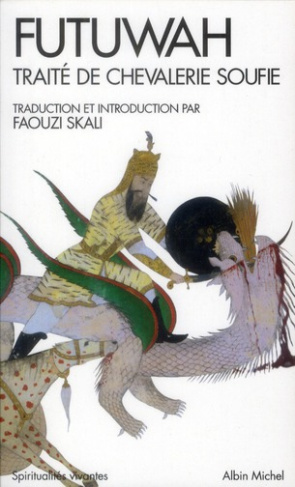
Futuwah. Traité de chevalerie soufie
En Islam comme dans le monde chrétien médiéval, l'esprit de chevalerie était loin de se réduire à une éthique militaire. Au contraire, la futuwah, c'est-à-dire l'ensemble des traditions, coutumes et pratiques qui constituaient le code de la vie chevaleresque musulmane au Moyen Âge, s'entendait avant tout au sens spirituel et éthique. Véritable initiation, la futuwah amène l'individu à suivre la noble voie du service divin ; elle forme le sommet de la démarche soufie. Le présent livre, traduction d'un texte arabe dû à un auteur d'origine persane du Xe-XIe siècle, Abû Abd al-Rahman ibn al-Husayn al-Sulamî, est commenté par Faouzi Skali, l'un des auteurs de langue française les plus lus sur le soufisme. Futuwah fait partie de ces grands classiques de la spiritualité universelle que l'on relit sans cesse.ÉPUISÉVOIR PRODUIT8,85 €


